
Train stations in Milan
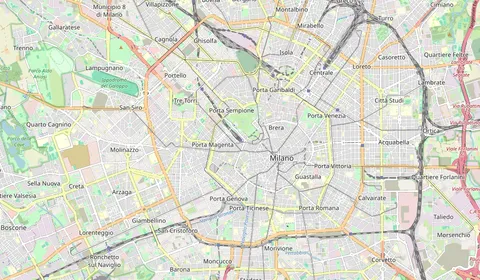
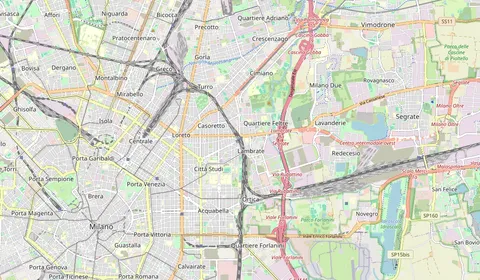
Milan has five train stations. Most long-distance trains use Milano Centrale; Paris TGVs use Porta Garibaldi, and station choice varies by operator.
- Stations
- 5
- Primary station
- Milano Centrale
- Passenger operators
- 6
- Routes covered
- 12
Milan has several useful stations. Check the full Milano station name before paying, then compare the train and city connection.
Confirm the exact Milan station before paying
For most long-distance journeys, start with Milano Centrale. The ticket still has the final word. If a booking result says only Milano, open the details before paying and read the complete station name on both legs.
| Station | Choose it for | Check before booking |
|---|---|---|
| Milano Centrale | Most domestic high-speed and long-distance trains, many international trains and one Malpensa Express route | Operator, train number and exact departure station |
| Milano Porta Garibaldi | Direct SNCF TGV trains from Paris, regional and suburban trains and Malpensa Express | Whether an onward train leaves from Garibaldi or Centrale |
| Milano Rogoredo | Selected high-speed, Intercity, EuroCity and regional trains south and east of the centre | Metro timing and the full station name |
| Milano Lambrate | Regional and selected long-distance trains that explicitly call there | Platform access and assistance arrangements |
| Milano Cadorna | The shorter central Malpensa Express route and Trenord regional trains | Do not use it for Trenitalia or Italo high-speed departures |
These are separate stations, not platforms in one complex. Before accepting a connection, check where the first train arrives, where the next one leaves and what happens if a delay breaks the connection.
Milano Centrale is the long-distance default
Search Centrale first for Rome, Florence, Naples, Turin, Venice and many international journeys. Trenitalia and Italo both use it, but neither uses it for every Milan departure. A cheap fare is no use if the train leaves from Rogoredo while you are waiting at Centrale.
Centrale connects with Metro M2 and M3 and has airport trains, taxis, shops and left luggage. Access to the platforms is controlled, so keep the ticket ready and leave time to find the right gate. For a step-free trip, check the lift status and arrange assistance for the booked train because platform and train-floor heights do not always match.
The other Milan stations have separate jobs
Porta Garibaldi is the Milan terminus for direct SNCF TGV trains from Paris. It also handles suburban and regional trains, Malpensa Express services and Metro M2 and M5. If the next train leaves from Centrale, allow for a cross-city journey rather than treating it as a platform change.
Rogoredo is southeast of the centre and has Metro M3 towards Duomo and Centrale. Some high-speed, regional and longer-distance trains stop there. A Rogoredo departure can work well, but plan the metro leg before booking and check late-evening service when the train arrives at night.
Lambrate is on M2 and is useful only when the ticket names Milano Lambrate. It handles regional and selected long-distance trains. Travellers who need step-free boarding should confirm the platform route and assistance arrangements because access is more limited than at Centrale.
Cadorna sits on M1 and M2 near the western side of the centre. Use it for the shorter Malpensa Express journey or a named Trenord regional train. Trenitalia and Italo high-speed trains do not leave from Cadorna.
High-speed trains suit the main domestic routes
Trenitalia Frecciarossa and Italo both link Milan with major Italian cities. The fastest direct Milan to Rome trains take about 2 hours 50 minutes. Florence can take under two hours, Turin under an hour and Venice about 2 hours 30 minutes. Direct Naples trains can take under five hours. These are useful benchmarks, but check the journey time and Milan station for the departure you plan to book.
Compare both operators when they serve the route. Look beyond the first fare to the refund rules, change conditions, arrival station and whether the journey is direct. Italo fares from Milan to Venice can start at €14.90, although availability and fare conditions vary. The lowest price may be a poor trade if your plans are uncertain.
For Lombardy and nearby cities, regional trains often make more sense. Start with high-speed trains for a long trip to Rome or Naples, then switch to a regional option only when its station, flexibility or destination works better.
The operator determines the Paris station
SNCF TGV INOUI trains from Paris use Milano Porta Garibaldi. Trenitalia Frecciarossa trains use Milano Centrale. Both operators can provide a direct trip, but their fare conditions, pass reservations and timetables differ. Search the exact travel date before choosing one.
EuroCity trains link Milan with Zurich, Basel, Bern, Geneva and Lausanne. Many use Centrale, while planned works and through services can change the calling pattern. Check the full itinerary when the Swiss train connects with a separately booked service.
An overnight journey towards Austria or Germany needs an exact-date search. Do not assume that an overnight train uses Rogoredo, Centrale or any other Milan station. Confirm the operator, accommodation, Milan stop and arrival time first.
Ticket rules depend on the product
Book high-speed trains with the operator when possible. A reseller can still help with a complex international itinerary, but Trenitalia and Italo set their own fares, conditions and class names. Frecciarossa commonly has Standard, Premium, Business and Executive. Italo uses Smart, Prima Business and Club Executive. Compare the included features before paying for an upgrade because seats, lounge access and onboard service differ.
Not every Italian train ticket needs validation. A high-speed ticket is tied to a named train and includes a reserved place. Trenord digital rail and Malpensa Express tickets activate automatically for the selected date and time, while STIBM digital products need activation before the first journey. Follow the instruction on the ticket in your hand.
Buy a high-speed ticket earlier when a low fare or one particular departure matters, as the cheapest fares can sell out. Trenord regional ticket prices instead depend on distance, class and passenger type. If a flight or separate train makes a missed departure expensive, flexibility may matter more than the headline price.
Rail passes still require bookings on some trains
Interrail and Eurail cover participating Trenitalia services, but not Italo. Choose a pass-valid Trenitalia train or buy a separate Italo ticket. A pass alone is not enough to board a Frecciarossa.
Frecce trains require a pass-holder reservation. Pass-holder seat reservations cost €13 on Frecciarossa and Frecciargento and €10 on Frecciabianca. Confirm the exact train and booking channel before paying. EuroCity, TGV and night trains follow separate rules, and sleeping accommodation costs more than an ordinary seat reservation.
Malpensa Express airport trains and Milan urban transport are outside Interrail and Eurail coverage. Other Trenord regional trains can be included. Look up the specific service in the pass planner and buy the airport or local ticket separately when needed.
Match each Milan airport to its transport link
Malpensa Express runs from both Cadorna and Centrale to Terminal 1 and Terminal 2, usually twice an hour. Cadorna to Terminal 1 takes about 37 minutes. Centrale takes about 51 minutes and its trains also call at Porta Garibaldi. Check the airline terminal before boarding.
The adult airport fare is €15 one way. A return ticket costs €25, but online and paper tickets have different validity rules. Read those conditions before choosing the return, and do not try to use an ordinary Milan urban ticket for the airport journey.
For Linate, take Metro M4. It reaches central Milan in about 12 minutes, and every M4 station has lifts and escalators. The Mi1 to Mi3 ticket costs €2.20 and lasts 90 minutes. At an interchange that requires leaving one set of gates, touch out and back in with the same ticket or contactless card.
Milan Bergamo Airport needs a road leg. A direct coach from the Centrale area is usually simplest. A train to Bergamo followed by the Airport Bus can suit someone stopping in Bergamo, but it adds a change. Check both legs and the last useful bus before committing.
Metro is usually best for station changes
M2 links Centrale with Porta Garibaldi and also serves Lambrate. M3 links Centrale with Rogoredo, while Cadorna has M1 and M2. The €2.20 Mi1 to Mi3 ticket is valid for 90 minutes on the relevant ATM metro and surface network. One contactless card or device pays for one traveller only.
Allow at least 30 minutes between trains at Centrale and Garibaldi, and about 40 minutes between Centrale and Rogoredo. Those are sensible planning margins, not promised metro journey times. Add time for luggage, reduced mobility, separate tickets or an unfamiliar station, then check planned engineering works and the last metro for a late change.
M3 from Centrale is usually the practical choice for a hotel near Duomo. Garibaldi works well for Porta Nuova and Isola, while Cadorna can suit the western centre. Check the final walk before choosing accommodation because a station name alone says little about the last kilometre.
Choose the Lake Como town before the ticket
For Como city, direct Trenord trains from Milano Centrale to Como S. Giovanni take about 40 minutes and usually run hourly. Second-class tickets start at €5.20. For Varenna and the central lake, choose Varenna Esino. The direct journey takes about 64 minutes, usually runs hourly and starts at €7.40 in second class.
Como S. Giovanni and Varenna Esino lead to different parts of the lake. Pick the town first. Then check the train, boat connection and final return, especially at weekends when engineering work may change the service.
Arrange luggage and assistance for the exact station
Centrale is the safest default when you need left luggage, but opening hours and the latest collection time still matter. Do not assume Garibaldi, Rogoredo, Lambrate or Cadorna has the same facility because it is a large station. If arrival and departure use different stations, a hotel luggage hold may be more reliable.
RFI assistance is available at Centrale, Porta Garibaldi and Rogoredo. Lambrate has more limited arrangements. Book help for the exact station and train, then recheck lifts and ramps on the travel day. Confirm the step-free route from the street to the platform and onto the booked train.
Where to book
Train tickets
- Check times & prices
Omio
Omio connects you with over 1,000 transport providers - trains, buses, flights, and more - to simplify your travel planning.
Rail Europe
Rail Europe is a leading travel tech company specializing in European train bookings for over 15,000 travel professionals worldwide.
Trainline
Trainline sells rail and coach tickets worldwide on behalf of major UK and European transport companies.


Passenger train operators
- Check times & prices
Italo is Italy's private high-speed operator, linking Milan, Rome and Florence with trains reaching 300 km/h; book early for lower fares.
Official website - Check times & prices
ÖBB is Austria's national railway, with Railjet high-speed and Nightjet sleeper services plus regional trains across Austria and neighbouring countries.
Official website - Check times & prices
SBB is Switzerland's national railway, connecting cities, towns and mountain villages. InterCity trains generally do not require reservations.
Official website - Check times & prices
SNCF operates France's TGV and regional trains. SNCF Connect books domestic and many international journeys, with fares ranging from flexible to non-refundable.
Official website - Check times & prices
Trenitalia runs Italy's Frecce high-speed, Intercity and regional trains; Super Economy fares are cheapest but allow no changes or refunds.
Official website - Check times & prices
Trenord runs Lombardy's regional and suburban trains, the Malpensa Express airport link, and STIBM zone tickets around Milan.
Official website
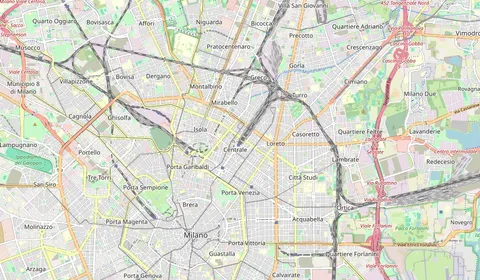
Train stations in Milan


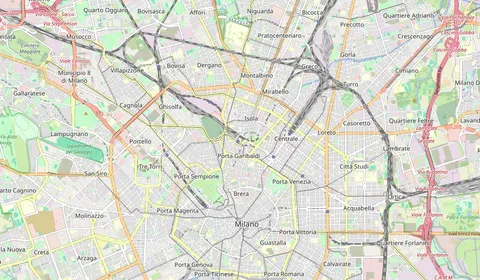
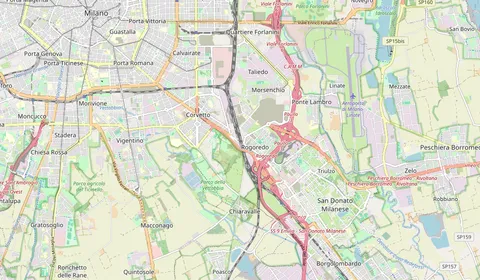
Train routes to and from Milan
Find places to stay in Milan

Before you travel
Milano Centrale is the first station to check for most long-distance Milan rail journeys, but Milan has other important stations that may be better placed for some routes or local transfers. Confirm the named station before planning your cross-city movement.
Milan station choice can affect both the rail leg and the easiest way across the city. Use the station list to understand the main alternatives, then follow the exact station name shown in the timetable rather than assuming every train uses Milano Centrale.
Milano is the Italian name used in station names. If your ticket says Porta Garibaldi, Cadorna, Rogoredo, or another named station, treat that as a separate Milan station decision rather than a platform within Centrale.
Frequently asked questions
Can I use contactless payment on Milan's S-line trains?
No. ATM's bank-card pay-as-you-go system does not cover Trenord or S-line trains. Buy the rail or STIBM ticket valid for your route, then activate or validate it as its format requires before boarding.
Can I take an earlier Trenord train with a digital ticket?
Yes. On the chosen travel date, select Activate early in the Trenord app. The ticket becomes usable straight away and remains valid for six hours.
Do children under 14 need a public transport ticket in Milan?
Passengers younger than 14 travel free throughout the STIBM area with proof of age. On Trenord journeys within STIBM, a child travelling alone needs an Under 14 card.
Where is the assistance point at Milano Centrale?
The Sala Blu office is at platform 4. For assistance between 07:45 and 22:30, book by phone or in person at least one hour ahead; assistance overnight needs 12 hours' notice.
Can a Trenord ticket to Milan be used on the urban railway?
Yes. A Trenord ticket with Milano as the destination, including one bought with the dedicated airport fare, also covers the urban railway network and Passante lines.