
Interrail Benelux Pass
The Interrail Benelux Pass covers participating services within Belgium, the Netherlands and Luxembourg, with 3, 4, 5, 6 or 8 travel days to use in one month.

- Countries
- 3
- Operators
- 3
The Interrail Benelux Pass covers train travel in Belgium, the Netherlands and Luxembourg, and only inside those three countries.
It is sold to people who live in Europe, which makes it a short-break pass rather than a grand tour ticket. If you live in Belgium, the Netherlands or Luxembourg you may use it, with one limit: not for journeys that stay inside your own country. A Belgian resident can use it in the Netherlands and Luxembourg, but not to travel from one Belgian city to another. The three countries fit inside a few hours of train travel, and the pass will not carry you across the border that brought you there. Work out how many days you will genuinely be on the move, then price the same journeys as ordinary tickets before you buy. On plenty of Benelux trips, single tickets still win.
Coverage inside the three countries
One pass covers Belgium, the Netherlands and Luxembourg together. That is unusual for a One Country Pass. It is valid with participating train, ferry and public transport companies inside that area, and the only borders you may cross are the borders between the three countries. A journey from Belgium into the Netherlands therefore stays inside the covered area, while a journey on into Germany does not.
Coverage on any given train still depends on that train company participating, so read the pass as a country-level permission rather than a promise about a particular service. Confirm that the train you are planning around is a participating one before you count on it. Expect high-speed trains to want a paid seat reservation on top.
Each travel day gives you unlimited journeys on participating services until 23:59, and all three countries share one time zone, so an evening train from the Netherlands back into Belgium stays on the day it left. The pass is flexi only. You choose 3, 4, 5, 6 or 8 travel days and spread them across one month, and there is no version that gives you continuous travel for a fortnight.
Two restrictions that catch European residents
Two conditions decide whether this pass can work for you at all, and both come straight from Interrail.
The first concerns where you live, and the Benelux Pass is a documented special case. Interrail's Conditions of Use say a One Country Pass cannot be used within your country of residence, then list three exceptions, and this pass is one of them: you may use a Benelux Pass if you are a resident of Belgium, the Netherlands or Luxembourg, except for travel within your own country. So a Dutch resident can spend travel days in Belgium and Luxembourg, but not on a journey that begins and ends in the Netherlands. Home journeys are the only part you lose.
The ordering page may not reflect that. It still carries the general condition that you cannot order a One Country Pass for the country where you live, so a resident of one of the three may be pushed towards a Global Pass at checkout. If that happens, contact Interrail customer service and point to the Benelux exception in the Conditions of Use, which is the binding document. Do not read a nudge in the buying flow as the rule itself.
The second concerns direction of travel. Interrail's condition is that you cannot use a One Country Pass to travel to or from the country your pass is valid in, and that it is valid only for travel with participating companies inside the covered country. So the train that brings you into the region is not covered. Neither is the train home. The same conditions do allow a One Country Pass to cross the border in limited cases, and the Rail Network Guide in the Rail Planner app is where those cases are listed, so look there before you assume one crossing is included.
Reaching the Benelux from elsewhere in Europe
If you live in Germany, France, Britain or anywhere else outside the three countries, budget separately for the journey in and the journey out. Two approaches work. Buy ordinary international tickets for those two legs and keep the pass for travel inside the region, or buy a Global Pass, which is the product that covers travel beyond the Benelux area.
Book those legs as soon as your dates are firm, because popular trains fill up fast and the reservation a high-speed or international train needs is sold separately from the ticket. Confirm which Brussels or Amsterdam station your international train uses before you pay. Booking pages often show only the city name.
Choosing between a pass and ordinary tickets
Do the arithmetic first, because it usually decides the question. Price the three or four journeys you would really take as ordinary tickets on the relevant national operator's own site, which means NS in the Netherlands and SNCB in Belgium, then compare that total with the pass price for the same number of travel days. Domestic distances here are short, so the tickets a pass has to beat are shorter and cheaper than the ones it beats in Spain or Sweden.
Luxembourg needs no such lookup, and this is the fact that changes the sum most. Second class public transport throughout the Grand Duchy, CFL trains included, has been free of charge since 1 March 2020, for residents and visitors alike. CFL still sells you a ticket for 1st class, and for any journey that crosses the Luxembourg border. A trip that starts and ends inside Luxembourg therefore costs nothing in 2nd class, pass or no pass. Never spend a travel day on one.
A pass earns its keep when you are moving on most days of the trip, when several journeys cross a Benelux border, when you want to change plans on the day, or when you would otherwise buy walk-up fares at the station. Ordinary tickets usually win when the trip is two cities and one journey each way, when you stay put for days at a time, or when the single fares for your journeys add up to less than the pass. A two-city long weekend usually falls in the second group.
| Trip shape | Sensible default | Check before you pay |
|---|---|---|
| Two cities, one journey each way | Ordinary tickets | The single-fare total for both legs |
| Four or more journeys across all three countries in a week | Benelux Pass | Whether long legs can share one travel day |
| Day trips out of a single base | Ordinary tickets, or nothing at all from a Luxembourg base | Whether your day trips stay inside Luxembourg in 2nd class |
| Benelux plus Paris, Cologne or London | Global Pass, or separate international tickets | That no pass day covers the leg in or out |
The one calculation people skip is the reservation cost. A pass day that includes a high-speed or international train can still cost you a reservation fee on top, so add those fees to the pass total before you compare.
Seat reservations inside the region
Most local and regional trains in the Benelux can be boarded on the pass alone. That is what makes short hops easy. High-speed, international and night trains usually require a paid seat reservation, and reservation fees are not included in the pass price. A reservation fee is not a ticket price and it does not become cheaper because you hold a pass. One night train is excluded outright rather than reservable, because Interrail's Conditions of Use state that the Benelux Pass is not valid on European Sleeper, which calls in both Belgium and the Netherlands. Buy an ordinary ticket if you want that one.
Do not guess which of your trains need one. Check each departure you depend on in the timetable and reservations section of the Interrail site, and book the reservation as soon as bookings for that train open if your plan has no slack. Where two connections between the same pair of cities exist, one on a high-speed service and one on a regional service, taking the slower train can remove the reservation and the fee entirely.
Choosing how many travel days to buy
Three travel days suit a long weekend with three moving days: in on Friday, one city hop, out on Sunday, with the international legs bought separately. Four or five days fit a week that mixes travel with staying put. Six or eight days only make sense if you are genuinely moving on most days. An unused travel day is money already spent.
Count the moving days on a calendar, then chain your long journeys onto the same date, because one travel day can carry two or three legs in a row. Split them and you spend two days where one would have done. If you are between two options, buy the smaller one. One ordinary ticket for a single extra journey is easier to absorb than a travel day you never used.
Age bands, children and travel class
Age is assessed on the date you choose to start your trip, not on the day you happen to travel. That matters near a boundary. The Youth band runs from 12 to 27 and the Senior band from 60, and both are cheaper than the Adult fare that applies from 28 to 59. If a birthday falls close to your dates, the band you qualify for is fixed by your age on the start date you choose.
Children under 4 travel free and need no pass, though they may be asked to sit on a lap when a train is busy. Children aged 4 to 11 travel free on a Child Pass, and that Child Pass has to be added to the order before you pay, because it cannot be added afterwards. Each accompanying Adult, Youth or Senior pass holder can take up to two children. The accompanying person must be 18 or older and need not be a relative, and a Child Pass can only be combined with a Youth Pass once that youth is 18 or older. Children under 12 travel in the same class as the adult they are with.
A 1st class pass is valid in both 1st and 2nd class carriages, while a 2nd class pass is valid in 2nd class only. Inside the Benelux, journeys are short enough that 2nd class is the sensible default for most travellers.
Refunds, activation and promotional passes
You have 11 months from purchase to start using a standard pass. A pass bought in a sale is a different matter, because Interrail warns that a promotional pass can carry a different validity period, and a promotional pass may be neither refundable nor exchangeable depending on the conditions attached to that promotion. Read those conditions before you buy a discounted pass for a trip that might not happen.
Standard passes can be refunded or exchanged while they are unused, but there is a clock on it. Interrail refunds a standard pass in full within 7 days of purchase. After that a refund carries a fee per pass and an exchange carries a fixed fee, unless you bought Refund Protection with the pass, which keeps the refund full and the exchange free of an exchange fee, though the protection itself is no longer refunded. Check which of those cases applies to your order in the current refund and exchange policy on the Interrail site before you commit.
Comparing the Benelux Pass with a Global Pass
Choose the Benelux Pass when the whole trip sits inside Belgium, the Netherlands and Luxembourg and you will be moving on most of your days. Choose a Global Pass when you need the train that brings you into the region, when you want to carry on to Paris, Cologne or Copenhagen afterwards, or when the shape of the trip is still undecided. The Global Pass covers the borders this one will not.
Prices for both change, and the current grid sits on the Interrail Benelux Pass page itself, with the traveller ages and travel-day options side by side. It shows EUR by default, though the site can switch currency depending on your location settings. Check it against your own count of moving days, and against ordinary ticket prices for the same journeys. Do that before you commit.
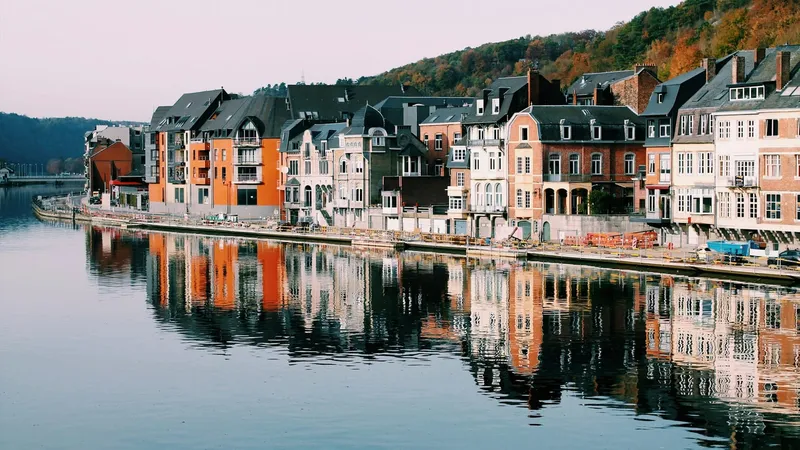
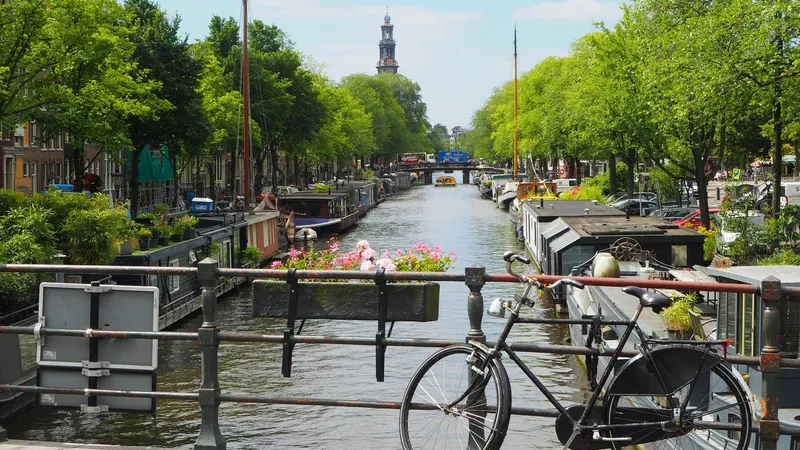
Covered countries

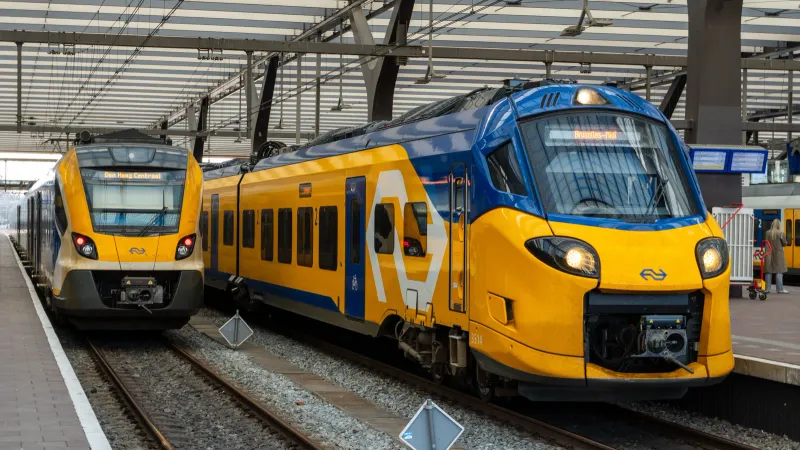
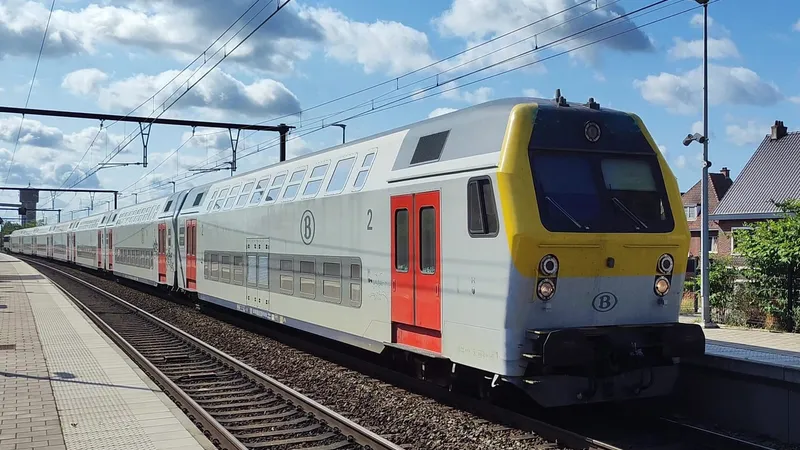
Train companies that accept Interrail Benelux Pass

Frequently asked questions
Who can buy an Interrail Benelux Pass?
Interrail passes are for people who live in Europe, so the Benelux Pass is the version European residents buy, while non-European residents need the Eurail equivalent. Living in one of the three covered countries does not shut you out. Interrail's Conditions of Use name the Benelux Pass as an exception to the own-country rule: you may use it if you are a resident of Belgium, the Netherlands or Luxembourg, except for travel within your own country. A resident of Luxembourg can therefore use it in Belgium and the Netherlands, but not for a journey that stays inside Luxembourg. The product page still carries the general condition that you cannot order a One Country Pass for the country where you live, so if the ordering flow steers you to a Global Pass, contact Interrail customer service and quote that exception.
Can I use the Benelux Pass for the journey into the Benelux?
No. The pass is valid only inside the covered area, and Interrail states that you cannot use a One Country Pass to travel to or from the country your pass is valid in. The only borders it lets you cross are the borders between Belgium, the Netherlands and Luxembourg. Buy an ordinary international ticket for the leg that gets you in and the leg that takes you home, or choose a Global Pass, which covers travel beyond the region. Add those tickets to your budget before you compare the pass with ordinary tickets.
Is the Benelux Pass cheaper than buying single tickets?
Not automatically, and on short trips it often is not. Add up what your journeys would cost as ordinary tickets, using the Dutch operator NS and the Belgian operator SNCB for their own domestic fares, then set that total against the pass price for the travel days you need and add any seat reservation fees to the pass side. Leave Luxembourg out of the sum, because second class travel inside the country has been free for everyone since 1 March 2020, so a pass day buys you nothing there. The pass tends to win when you are on the move most days and crossing Benelux borders.
Do I need seat reservations with the Benelux Pass?
On most local and regional trains, no, you can board on the pass alone. High-speed, international and night trains usually require a paid seat reservation, and that fee is not included in the pass price. One train is out of reach whatever you pay: the Conditions of Use state that the Benelux Pass is not valid on European Sleeper, the night train calling in both Belgium and the Netherlands, so that journey needs an ordinary ticket instead. Check each train you depend on in the timetable and reservations section of the Interrail site rather than assuming, and book early where your plan has no slack. Where a regional service runs the same city pair as a high-speed one, taking the slower train can avoid the reservation and its fee.
How many travel days should I choose?
The Benelux Pass is a flexi pass with 3, 4, 5, 6 or 8 travel days to use inside one month, and each travel day carries unlimited journeys on participating services until 23:59. Count the days you will actually move, not the length of the trip. One travel day covers as many journeys as you can fit into it, so three legs on a single date still spends one day. Where your count sits on the line between two durations, take the shorter one, because that leaves you buying one extra ticket rather than paying for a day you never use.
How do children travel on the Benelux Pass?
Children under 4 travel free and need no pass, though they may be asked to sit on a lap when a train is busy. Children aged 4 to 11 travel free on a Child Pass, which has to be added to the order before you pay, because it cannot be added later. Each accompanying Adult, Youth or Senior pass holder can bring up to two children, and that person must be 18 or older but need not be a relative. A Child Pass can be combined with a Youth Pass only once the youth is 18 or older.