
Train travel in Ireland
Ireland's rail network is Dublin-centred: Irish Rail links Cork, Galway and Belfast; DART serves the coast, and Leap can save up to 30% versus cash singles.
- Stations
- 1
- Main operators
- 1
- Routes covered
- 1
- Rail passes valid
- 4
Ireland's rail network is useful when you plan around its shape. Most long-distance trains start or finish in Dublin, and the first practical choice is often whether you need Heuston or Connolly.
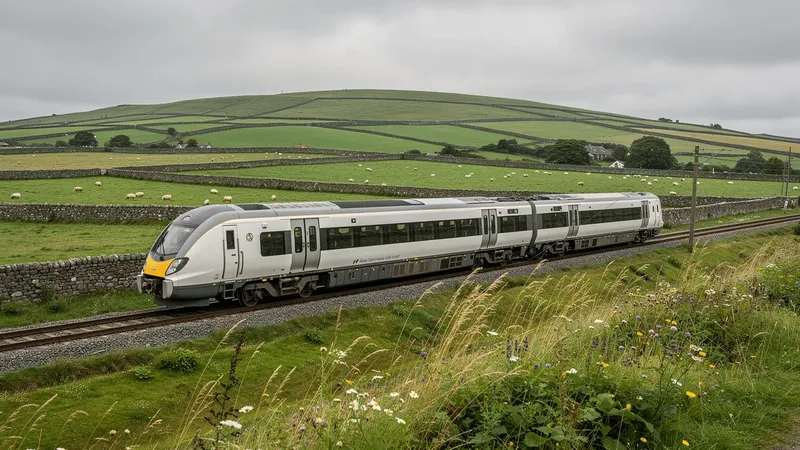
Irish Rail, officially Iarnród Éireann, runs most passenger trains in the Republic of Ireland. Use the train for Dublin, Belfast, Cork, Galway, Limerick, Waterford, Sligo, Westport, Tralee, Killarney, and Rosslare Europort. For smaller towns, rural areas, and parts of the west coast, check whether a bus gives you a more direct trip.
Ireland's rail network is useful but Dublin-centred
Start with the Irish Rail Journey Planner, then use the route PDFs only for the bigger picture. Irish Rail says the Journey Planner gives the more up to date timetable, which matters when you are tying a train to a hotel check-in, ferry, or bus connection.
The strongest rail pattern is still Dublin outward. The main routes run from Dublin to Cork, Galway, Limerick and Ennis, Waterford, Westport and Ballina, Tralee and Killarney, Sligo, Rosslare Europort, and Belfast. Galway to Limerick and Waterford to Limerick Junction are useful exceptions, but many cross-country journeys still need a change.
Do not assume every major Irish trip has a simple direct train. Rail is a good city-to-city choice on several corridors. It does not cover every coastal or rural trip well.
Choose the right Dublin station first
Check the station name before you book a hotel transfer or taxi in Dublin. Heuston and Connolly are both practical central stations, but they serve different long-distance routes.
Use Dublin Heuston for Cork, Galway, Limerick, Tralee and Killarney, Waterford, Westport, and Ballina. Use Dublin Connolly for Belfast, Sligo, Rosslare Europort, Dundalk, and many north-side commuter and DART services.
This split catches visitors because journey searches can show more than one Dublin station. "Dublin" is not enough. Match the station on your ticket.
Main routes work best from Dublin
For most visitors, the easiest Irish rail trips are the radial routes from Dublin. Cork, Galway, Limerick, Waterford, Sligo, Westport, Tralee, Killarney, and Rosslare all have useful rail connections, but the timetable and directness vary by route.
Choose the train when it takes you cleanly between city centres or avoids a long bus transfer. Compare carefully when the route needs a change or your final stop is not near a rail-served town. A cheap train fare can still be the wrong choice if it leaves you with a slow onward bus.
Use Irish Rail for domestic tickets in the Republic of Ireland. At busy times, check earlier rather than waiting until the day, because the cheapest web fares are quota-controlled.
DART and commuter trains are the easiest way around Dublin
For Dublin local rail, start with a Leap Card or another TFI-supported payment option instead of a cash fare. Transport for Ireland says Leap is the easiest way to pay for DART and commuter trains and can save up to 30 percent compared with cash singles.
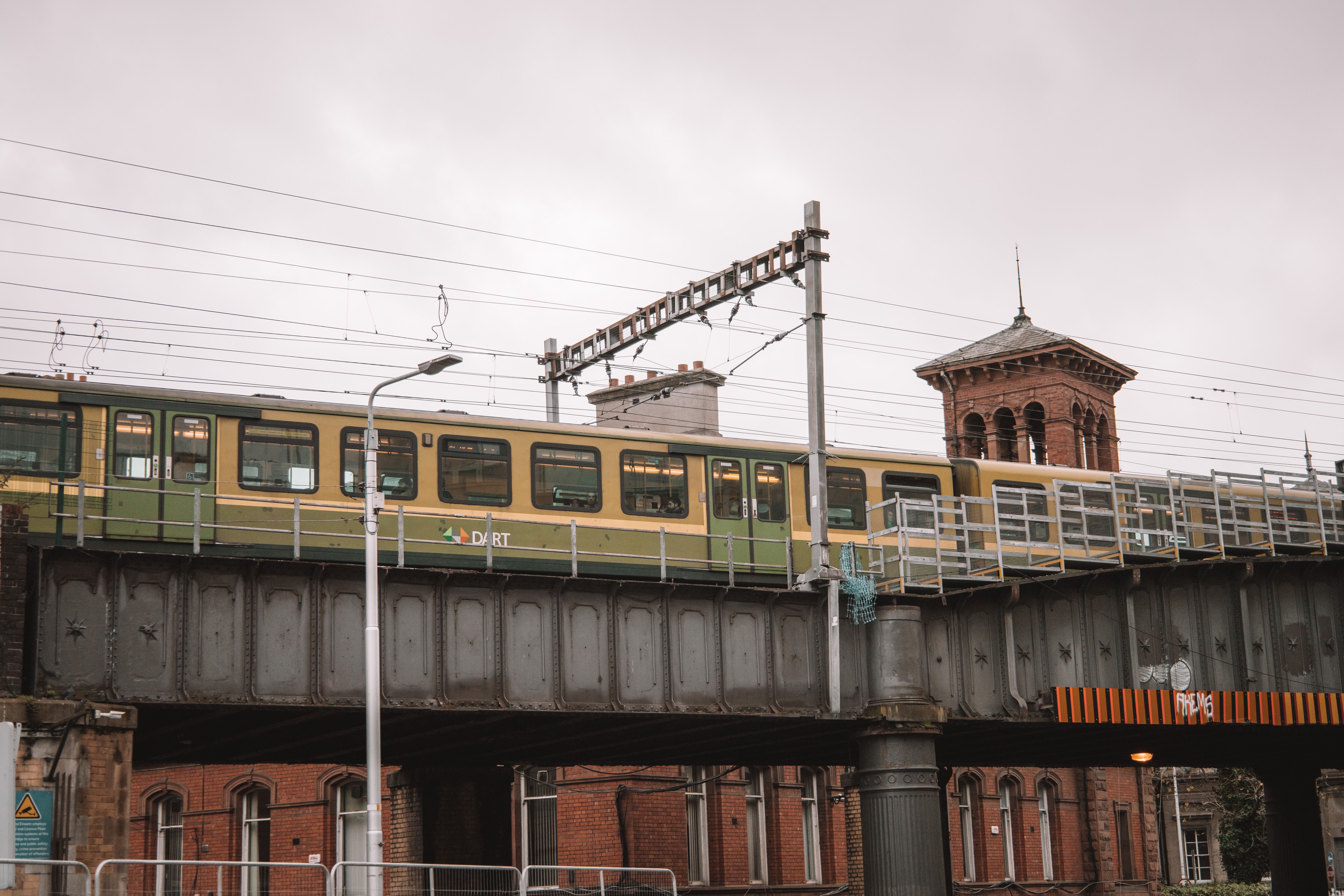
DART is Dublin's coastal electric railway. It runs from Malahide or Howth in north County Dublin south to Greystones in County Wicklow, and Irish Rail advertises DART services every 10 minutes all day. It is the simplest rail option for coastal suburbs, beaches, and short hops across the Dublin area.
The commuter network stretches beyond DART to places such as Dundalk, Longford, M3 Parkway, Portlaoise, Gorey, Cobh, and Midleton. Check the zone and fare product before travel, especially if you plan to mix train, Luas, and bus in the same day.
The Enterprise is the main train to Belfast
Use the Enterprise for the direct Dublin to Belfast train. It runs between Dublin Connolly and Belfast Grand Central, with Irish Rail advertising hourly departures, 15 daily services Monday to Saturday, and 8 on Sunday.
If you start in Dublin, Irish Rail is the natural booking route and fare examples are shown in euros. Irish Rail advertises low web fares from EUR 13.99 each way for adults, EUR 8.75 for young adults, and EUR 8 for children on the Enterprise. Treat these as lowest web fares, not a guaranteed price for every train.
Book a return if you know you will come back by train from Belfast. Irish Rail advises that a journey starting in Northern Ireland needs to be booked through Translink unless it is part of a return from Ireland.
Tickets are cheapest when you book early
Irish Rail's lowest web fares are useful, but they are not walk-up fares. Irish Rail advertises examples from Dublin such as Galway from EUR 13.99, Cork from EUR 21.49, Limerick from EUR 14.99, Waterford from EUR 12.39, Westport from EUR 16.00, Sligo from EUR 14.79, and Rosslare or Wexford from EUR 9.99.
Use those figures as a reason to book ahead, not as a promise. Low fares have quotas and prices can rise with demand. Irish Rail purchase flows also state that tickets are available up to 90 days in advance.
If you choose ticket-machine collection, collect the ticket before boarding. Irish Rail also offers QR PDF tickets, which are simpler for most visitors.
Interrail and Eurail passes still need Irish Rail checks
Interrail and Eurail can be useful in Ireland when Ireland is part of a wider rail trip, but do not treat the pass as the whole booking. For domestic Ireland reservations, Eurail directs travellers to Irish Rail.
Irish Rail's Reservation Only option applies to valid ticket holders, including InterRail ticket holders. Free online allocation can be limited. When that allocation is gone, Irish Rail says remaining InterCity seats for valid ticket holders can be reserved for EUR 2.50 per journey.
For a short Ireland-only trip, compare the pass against point-to-point fares before buying. Ireland's advance web fares can be low, and a pass becomes more useful when you need flexibility or you are combining Ireland with other countries.
Before you travel
Check three things before you travel: station, ticket fulfilment, and live timetable. The station matters most in Dublin. The ticket fulfilment matters if you selected collection at a machine. The live timetable matters because Irish Rail updates the Journey Planner more directly than static PDFs.
Check catering before relying on food on board. Irish Rail currently lists catering on Dublin to Cork and the Dublin to Belfast Enterprise, but not on other Republic of Ireland intercity routes, so buy food at the station for longer trips if it matters.
Pack light enough to handle station changes and onward transfers yourself. Ireland's rail trips are straightforward on the main corridors, but many holidays continue by bus, ferry, taxi, or car after the train. The best rail plan is the one that includes that last leg.
Where to book
Train tickets
- Check times & prices
Omio
Omio connects you with over 1,000 transport providers - trains, buses, flights, and more - to simplify your travel planning.
Trainline
Trainline sells rail and coach tickets worldwide on behalf of major UK and European transport companies.


Train service
- Check times & prices
Irish Rail runs the Republic of Ireland's national rail network, with InterCity trains to Cork, Galway and Limerick; InterCity reservations are optional.
Official website

Rail pass guides
Main routes in Ireland
Major stations and cities in Ireland
Frequently asked questions
Who runs trains in Ireland?
Most passenger trains in the Republic of Ireland are run by Irish Rail, officially Iarnród Éireann. Use Irish Rail for domestic intercity, DART, and commuter train planning. For a Belfast-origin Enterprise journey, Irish Rail directs travellers to Translink unless it is part of a return from Ireland.
Which Dublin station do I need for Irish trains?
Use Dublin Heuston for Cork, Galway, Limerick, Tralee and Killarney, Waterford, Westport, and Ballina. Use Dublin Connolly for Belfast, Sligo, Rosslare Europort, Dundalk, and many north-side commuter and DART services. Always match the station on your ticket before booking onward transport.
Is there a direct train from Dublin to Belfast?
Yes. The Enterprise runs between Dublin Connolly and Belfast Grand Central. Irish Rail advertises hourly departures, with 15 daily services Monday to Saturday and 8 on Sunday. If your journey starts in Northern Ireland, check whether you need to book through Translink.
How much do Irish train tickets cost?
Irish Rail advertises low web fare examples in euros, such as Dublin to Galway from EUR 13.99, Dublin to Cork from EUR 21.49, and Dublin to Belfast from EUR 13.99. Treat these as quota-controlled lowest fares. Check the live fare for your train before booking.
Do Interrail and Eurail passes work in Ireland?
They can, but check the reservation step with Irish Rail. Eurail directs travellers to Irish Rail for Ireland reservations, and Irish Rail's Reservation Only option applies to valid ticket holders, including InterRail ticket holders. Free online allocation can be limited, and remaining InterCity seats can cost EUR 2.50 per journey to reserve.
What is the best way to pay for DART and commuter trains in Dublin?
For most short Dublin rail trips, start with a Leap Card or another TFI-supported payment option. Transport for Ireland says Leap is the easiest way to pay for DART and commuter trains and can save up to 30 percent compared with cash singles.