
Interrail in Ireland
Interrail covers rail travel across the Republic of Ireland and Northern Ireland; a 3-day One Country Pass costs €137, but advance fares are often cheaper.
- Country
- Ireland
- Coverage
- Covered
Planning to explore Ireland by train with an Interrail pass? Before you buy, you should know that this is one European destination where the pass doesn’t always deliver the savings you might expect. This guide breaks down how Interrail works across the island, what extra costs to anticipate, and whether you’d be better off booking point-to-point tickets instead.
Quick verdict on Interrail in Ireland
The honest answer is that Interrail can be convenient in Ireland, but it’s often poorer value than advance point-to-point fares, especially outside peak summer season. An adult Interrail Ireland One Country Pass costs €137 for 3 days of travel within 1 month in second class, while a Global Pass starts at €283 for 4 days in 1 month. Travellers aged 27 or under pay about 25% less.
Ireland’s rail network is relatively small and almost entirely centred on Dublin, with services radiating out to Cork, Galway, Limerick, Belfast, and other cities from the capital’s two main stations: Dublin Heuston and Dublin Connolly. The pass makes financial sense primarily for travellers doing several long intercity trips in a short period: think Dublin-Cork-Killarney-Limerick-Galway-Belfast packed into 5 to 7 days.
One advantage Ireland offers over many continental countries is that there are very few mandatory reservation fees here. Most intercity trains let you simply board with your pass. However, this benefit is offset by the fact that Irish Rail and NI Railways frequently sell cheap fixed-date tickets online, sometimes as low as €15 to €25 for major routes when booked in advance. Throughout this guide, we’ll compare the One Country Ireland Pass and the Global Pass, explain what reservations and supplements actually cost, and finish with a frank verdict on whether a pass is worth your money.
Interrail coverage in Ireland (Republic and Northern Ireland)
An Interrail Pass covers both the Republic of Ireland and Northern Ireland on the same ticket, even though the island spans two jurisdictions and two currencies. This is one of the simpler aspects of rail travel here, you don’t need separate passes or tickets for crossing the border.
Operators accepting Interrail:
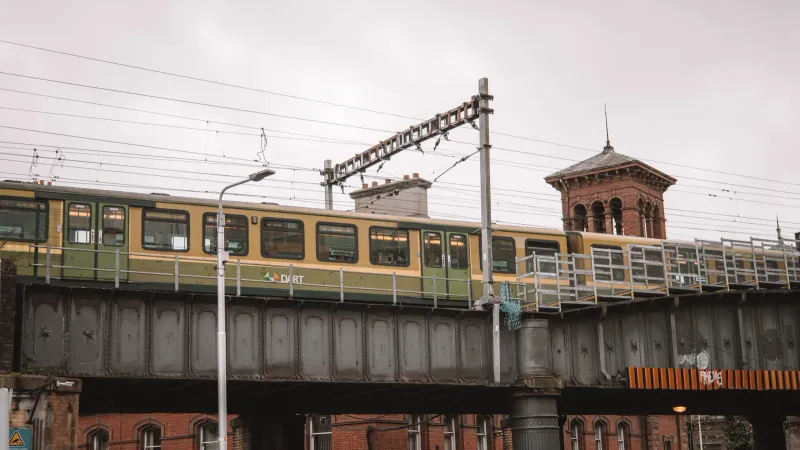
- Irish Rail (Iarnród Éireann) runs all intercity trains in the Republic plus the DART suburban network along Dublin’s coast
- NI Railways (operated by Translink) covers Northern Ireland routes including Belfast-Derry/Londonderry, Belfast-Bangor, and Belfast-Portrush
What’s NOT covered:
- Dublin’s Luas tram (you’ll need separate tickets)
- Belfast’s Glider bus rapid transit and Metro buses
- Local bus services throughout the island
The key intercity routes you’ll likely use include:
- From Dublin Heuston: Cork, Limerick, Killarney/Tralee, Waterford, Galway
- From Dublin Connolly: Sligo, Belfast (via the Enterprise), Wexford/Rosslare
One practical quirk to note: there’s no direct train connection between Dublin’s two main stations. If your journey requires switching from Heuston to Connolly (or vice versa), you’ll need to take the Luas tram or a city bus, neither of which is covered by your Interrail pass.
The Enterprise cross-border train between Dublin and Belfast takes about 2 hours 15 minutes to 2 hours 30 minutes. It’s the only “international” route on the island and is fully covered by Interrail with optional reservations.
A few practical details worth knowing: the Republic uses the euro (€), while Northern Ireland uses pound sterling (£). Station signage in the Republic is bilingual, you’ll see Irish names like “Corcaigh” for Cork and “Gaillimh” for Galway on departure boards and tickets.
Interrail One Country Pass for Ireland
The Interrail Ireland Pass (One Country) gives you unlimited rail travel across the entire island, both the Republic and Northern Ireland, during a set number of travel days within a 1-month window.
Second class prices by age, checked August 2026:
| Travel Days | Adult | Youth (12 to 27) | Senior (60+) |
|---|---|---|---|
| 3 days in 1 month | €137 | €103 | €123 |
| 4 days in 1 month | €165 | €124 | €149 |
| 5 days in 1 month | €191 | €143 | €173 |
| 6 days in 1 month | €216 | €162 | €194 |
| 8 days in 1 month | €259 | €194 | €233 |
Prices are indicative and subject to change. Children under 12 can often travel free when accompanied by an adult.
Eligibility: European residents (including UK residents) use Interrail passes; non-European residents purchase Eurail passes, but the conditions and coverage in Ireland are effectively identical.
What’s included:
- All Irish Rail intercity and regional services
- DART local trains in the Dublin area
- All NI Railways routes within Northern Ireland
- The Enterprise Dublin-Belfast cross-border service
Additional perks: Pass holders typically receive around 20 to 30% discounts on several ferries connecting Ireland with Great Britain and France. Routes like Dublin-Holyhead, Rosslare-Pembroke/Fishguard, and some connections to Cherbourg via Stena Line and Irish Ferries often qualify. Note that these are discounts only, you still need to purchase a separate ferry ticket.
When the One Country Pass makes financial sense:
The pass works best for intensive touring. Realistic itineraries where you’d likely save money include:
- 5 to 7 day loop: Dublin-Cork-Killarney-Limerick-Galway-Dublin, with 3 to 4 big travel days
- Cross-island exploration: Dublin-Galway-Limerick-Killarney-Cork-Rosslare, packing multiple intercity journeys into consecutive days
- Republic and Northern Ireland combination: Dublin-Belfast-Derry-Belfast-Dublin plus side trips to Cork or Galway
Using a Global Pass in Ireland (as part of a longer European trip)
The Interrail Global Pass covers 33 countries including both the Republic of Ireland and Northern Ireland. It’s primarily designed for multi-country European trips rather than Ireland-only travel.
Key consideration: There are no rail connections from mainland Europe to Ireland. Global Pass holders must reach the island via discounted ferries, typically Holyhead-Dublin or Fishguard/Pembroke-Rosslare from Wales, or routes via France to Rosslare or Cork. These ferries usually offer 20 to 30% off the standard passenger fare for pass holders.
Example multi-country itinerary:
A traveller with a 15-day Global Pass might connect Paris-London by Eurostar, then London-Holyhead by train, ferry to Dublin, travel Dublin-Galway-Belfast by Irish trains, ferry Belfast/Cairnryan to Scotland, then continue Glasgow-Amsterdam by rail. The Irish segments become a pleasant add-on rather than the main value driver.
Ferry and travel day rules: Whether a ferry journey counts as a “travel day” depends on the specific route and current Interrail rules. Some ferry crossings can be made using just the discount without activating a pass day. Check the current conditions on Interrail’s official site before booking.
Continental comparison: The Global Pass is typically purchased for long, expensive high-speed journeys in France, Spain, Germany, or Italy. On routes like TGV, AVE, or Eurostar, Global Pass holders often pay €10 to €30 per seat in compulsory reservation fees. Ireland, by contrast, has no high-speed domestic trains and almost no mandatory supplements, making it one of the simpler countries to use your pass.
Reservations and supplements in Ireland: what extra costs to expect
Unlike many continental countries where Interrail users face compulsory reservation fees on high-speed trains, Ireland has very few mandatory charges for pass holders. This is one area where using your pass here is genuinely straightforward.
Irish Rail reservation policy:
- On intercity trains (Dublin-Cork, Dublin-Galway, Dublin-Tralee, etc.) and on the Enterprise, reservations are optional
- Reservations are recommended at busy times: Friday evenings out of Dublin, Sunday afternoons back into Dublin, bank holiday weekends, and major sporting events
- Online second-class seat reservation typically costs around €2.50 per journey
- No additional “passholder supplements” exist beyond the basic reservation fee
First-class quirk: If you hold a first-class Interrail Pass, you generally cannot book first-class reservations online with Irish Rail. Instead, request reservations in person at an Irish Rail ticket desk: the operator lists Cork, Galway, Limerick, Waterford and Sligo for Interrail enquiries. In Northern Ireland the operator is Translink, whose Belfast hub is Belfast Grand Central.
NI Railways (Northern Ireland):
- Services like Belfast-Derry/Londonderry, Belfast-Bangor, and Belfast-Portrush/Coleraine do not require seat reservations
- No supplements are charged. Just board with a valid travel day recorded on your pass
What doesn’t exist in Ireland:
- No high-speed trains with mandatory reservation fees
- No night trains (and therefore no couchette or sleeper supplements)
- No premium branded services requiring special passholder payments
The bottom line: while you might choose to reserve seats for peace of mind on busy routes, you won’t encounter the €10 to €30 per journey supplement fees that are common on trains across Europe.
Interrail versus point-to-point tickets in Ireland
Here’s where you need to run the numbers carefully. In Ireland, buying individual tickets is often cheaper for light or moderate travel. An Interrail pass only beats point-to-point costs if you’re taking several long-distance trains in a short period, especially at short notice.
Irish Rail fare structure:
- Advance online fares for Dublin-Cork or Dublin-Galway can be as low as €15 to €25 each way when booked weeks ahead
- Flexible last-minute walk-up fares for the same routes typically run €40 to €60
- The sweet spot for pass value lies between these extremes
Example comparison (narrative):
Suppose you’re planning three big travel days: Dublin-Galway-Dublin, Dublin-Cork-Dublin, and Dublin-Belfast-Dublin. Using mid-range fares (not the absolute cheapest advance but not last-minute either), you might spend roughly €40 to €50 on the Galway return, €45 to €60 on Cork, and €40 to €50 on Belfast, totalling around €125 to €160 in point-to-point tickets.
A 3-day Ireland One Country Pass costs €137 for adults. Add optional reservations (perhaps €15 to €20 total across all journeys if you book each leg), and your all-in pass cost lands around €152 to €157.
The verdict on this example: Point-to-point wins across most of that range, and it wins comfortably if you book ahead and grab the cheapest advance fares. The pass only draws level at the top of the fare range, when you are travelling at peak times with short booking windows.
Northern Ireland alternatives:
For visitors focused on Northern Ireland, local products often undercut Interrail:
- An iLink smartcard gives unlimited bus and rail travel for a day within its zone, from £6 in Belfast up to £19 for all of Northern Ireland, plus £1 for the card itself. The separate Sunday Day Tracker is £10 and covers rail only, on Sundays
- Using an entire Interrail travel day for a Belfast-Portrush-Derry-Belfast loop delivers weak value compared to these local options
When Interrail wins in Ireland:
- Last-minute, high-frequency travel during peak summer (June-August)
- Spontaneous itineraries where you can’t commit to specific trains
- Using Ireland as part of a longer Global Pass journey where Irish segments have zero marginal cost
When point-to-point wins:
- 1 to 2 long intercity return trips plus some local DART travel
- Ability to book 2 to 4 weeks ahead and accept specific departure times
- Northern Ireland day trips where local tickets provide better value
Practical tips for Interrail travel in Ireland
Once you’ve decided to use a pass, here’s how to make the most of it:
Journey planning:
- Use the official Irish Rail website and app for Republic services, timetables are accurate and include real-time updates
- Use Translink/NI Railways for Northern Ireland routes
- Service frequencies are modest compared to densely populated European countries, often hourly or every two hours on main routes, so plan ahead
Typical journey times:
- Dublin-Cork: ~2h 30min
- Dublin-Galway: ~2h 20min
- Dublin-Limerick (via Limerick Junction): ~2h 05min
- Dublin-Killarney: ~3h 15min-3h 30min (usually with a change at Mallow)
- Belfast-Derry: ~2h
Connecting rail to key sights:
- Galway serves as your base for Cliffs of Moher tours (bus required for the final leg)
- Coleraine or Portrush stations for the Giant’s Causeway (local bus connection)
- Killarney for Killarney National Park access
- Kilkenny for a medieval city stop between Dublin and Waterford
What Interrail won’t cover: Some headline destinations, Cliffs of Moher, Ring of Kerry, Connemara, aren’t on the rail network. Budget separately for bus or tour tickets to reach these spots.
Station names: Don’t be confused by Irish spellings on tickets and departure boards. Examples:
- Corcaigh = Cork
- Gaillimh = Galway
- Luimneach = Limerick
- Cill Chainnigh = Kilkenny
Deciding whether an Interrail pass pays off in Ireland
For most visitors who plan ahead and book in advance, Interrail is poor to middling value in Ireland compared with cheap advance fares and local day tickets. The distances are short, the network is limited, and Irish Rail’s online booking system makes it easy to secure low fares for specific journeys.
The Interrail Ireland One Country Pass makes sense for:
- Spontaneous travellers who dislike committing to fixed departure times
- People doing intensive rail touring over several consecutive days (3+ long intercity trips)
- Visitors who particularly value flexibility over saving every euro
- Those combining Republic and Northern Ireland extensively in one trip
For Northern Ireland day-tripping specifically: Local bus and rail products (an iLink day ticket runs from £6 to £19 depending on zone) usually beat using a whole Interrail travel day, especially when individual journeys are under 150 to 200 km.
For Global Pass holders: Ireland is a pleasant add-on rather than the main motivator for purchasing the pass. The Global Pass earns its value primarily through long, expensive journeys on the continent and in Great Britain, not through Irish segments.
The practical approach:
- Draft your realistic itinerary with cities, dates, and routes
- Price those specific journeys on Irish Rail and Translink websites using your likely booking window
- Compare the total to the cost of a suitable Interrail pass plus small reservation fees
- If the point-to-point total equals or exceeds the pass cost, the pass is worth considering
- Otherwise, stick to individual tickets and enjoy the money you’ll save
Rail travel in Ireland is genuinely enjoyable, scenic routes, easy navigation, and a relaxed pace that suits the country perfectly. Just make sure you’re choosing the right ticket option for your particular trip rather than assuming a pass automatically delivers savings.
Find the right rail pass for Ireland
Train companies in Ireland that accept Interrail Global Pass
Frequently asked questions
Is an Interrail pass good value in Ireland?
Interrail can be convenient in Ireland, but it is often poorer value than advance point-to-point fares, especially outside peak summer season.
How much does an Interrail pass cost for Ireland?
An adult Interrail Ireland One Country Pass costs €137 for 3 days of travel within 1 month in second class, and €103 at the youth price. A Global Pass starts at €283 for 4 days in 1 month, or €212 for youth.
What is the structure of Ireland's rail network?
Ireland's rail network is relatively small and almost entirely centred on Dublin, with services radiating out to Cork, Galway, Limerick, Belfast, and other cities from Dublin's two main stations: Dublin Heuston and Dublin Connolly.
Does Ireland have high-speed trains?
No, Ireland has no high-speed domestic trains.
Do ferry crossings in Ireland use up a travel day on an Interrail pass?
Not always. Some ferry crossings can be made using just the Interrail discount without activating a pass day, you should check the current conditions on Interrail's official site before booking.