
Eurail Pass
Eurail is for non-European residents and covers up to 33 countries; many high-speed, international and night trains require separate paid reservations.

A Eurail Pass covers train fares across up to 33 countries on one pass, sold only to residents living outside Europe.
This guide explains how the pass works, what you still have to book separately, and when it saves you money against buying tickets one at a time.
How the pass works
Your pass covers the train fare for a set number of travel days. One travel day runs from midnight to 23:59 local time, not a fixed European time zone, and lets you take as many trains as you want in that window. Crossing a time zone border can shift when your day actually ends.
Night trains have one exception: if you board before midnight and do not change trains after midnight, only the day you departed counts as a travel day. Change trains after midnight and you use two travel days, regardless of what time you boarded.
The pass does not cover everything. Many trains, especially high-speed, international, and night services, require a separate mandatory seat reservation on top of the pass fare, and a small number of operators do not accept Eurail passes at all. Working out what is and is not included is the most important preparation before you leave.
Who can buy a Eurail Pass
Eurail passes are for residents living outside Europe only. European residents use an Interrail Pass instead, which covers the same network but is sold as a separate scheme with its own eligibility rules. Eurail checks residency against your passport at purchase, and conductors can ask for it again on board.
Age categories:
| Category | Age range | Typical discount |
|---|---|---|
| Adult | 28 to 59 | Standard price |
| Youth | 12 to 27 | Around 25% off adult price |
| Senior | 60 and over | Around 10% off adult price |
| Child | 4 to 11 | Often free, up to two per adult |
Children under 4 travel free on an accompanying adult's lap and do not need their own pass. If a young child needs a reserved seat of their own, get them the free Child Pass rather than relying on the adult pass.
Countries covered
Eurail covers 33 countries: Austria, Belgium, Bosnia and Herzegovina, Bulgaria, Croatia, Czech Republic, Denmark, Estonia, Finland, France, Germany, Great Britain, Greece, Hungary, Ireland, Italy, Latvia, Lithuania, Luxembourg, Montenegro, Netherlands, North Macedonia, Norway, Poland, Portugal, Romania, Serbia, Slovakia, Slovenia, Spain, Sweden, Switzerland, and Turkey.
Countries not included: Albania, Ukraine, Belarus, Russia, and Moldova. If your route runs through Eastern Europe, check your specific itinerary against the current country list before buying.
Most national railways participate fully. Some private and scenic railways charge additional fees or offer passholder discounts rather than free travel, so check the Eurail website for the specific service before you count on it being covered.
Types of Eurail Pass
Three main options:
Eurail Global Pass: Covers all 33 countries. The most flexible choice for multi-country travel, and the one to start from if you are still deciding how many countries to see.
Eurail One Country Pass: Covers a single country and costs significantly less than the Global Pass. Switzerland is the exception: non-Europeans travelling only in Switzerland use the Swiss Travel Pass, not a Eurail country pass, because Switzerland is not sold as a Eurail one-country option.
Eurail Regional Pass: Covers combinations of neighbouring countries. The Benelux Pass covers Belgium, the Netherlands, and Luxembourg. Scandinavia passes bundle two or more Nordic countries.
Consecutive or flexi
Within the Global Pass and some country passes, you choose between two structures:
Consecutive pass: Unlimited travel for a set number of calendar days running back to back. Buy 15 days and you get 15 calendar days of unlimited travel from your start date.
Flexi pass: A set number of travel days to use within a longer window, such as 4 travel days within 1 month. You choose when to activate each travel day.
Use a consecutive pass if you are moving almost every day. Use a flexi pass if you plan to spend several days in each place. For the full price grid across durations and classes, see the Eurail Global Pass and Eurail One Country Pass pages.
Eurail pass prices
Pass prices are set in EUR at eurail.com and vary by pass type, duration, traveller category, and class. As a reference point, the cheapest Global Pass option, 4 flexi travel days within 1 month in second class, runs 283 EUR for an adult and 212 EUR for a youth traveller. A 3-month continuous pass in first class runs 1,242 EUR. Prices change by season and pass configuration, so treat these as anchors, not quotes, and check eurail.com for the exact combination you want.
Second class is the right default for most travellers. It is comfortable and adequate for almost any journey, and many regional trains only have second class, so a first class pass adds nothing on those services.
First class adds roughly 30% to your pass cost. It earns its price on longer journeys, particularly on high-speed trains such as the TGV, ICE, or AVE, where seat width and onboard service differ noticeably. For short regional hops the difference is minor.
The large majority of Eurail pass holders now use mobile passes through the Eurail app. Your pass lives on your phone as a QR code that conductors scan, and the app tracks your travel days automatically. Paper passes still exist but must be validated at a station ticket office before your first journey; not every station handles this, so allow time if you choose one.
Download the Rail Planner app before you travel and save offline timetable data, since you will not always have connectivity, especially in rural areas. One point worth being clear about: adding a journey to your trip plan in the app does not make a seat reservation. Reservations are booked separately, and on many trains they are mandatory.
When a Eurail Pass is worth it
The short version: a pass tends to win on longer, multi-country trips with several long-distance or international legs, and loses to advance-purchase point-to-point tickets on short, fixed itineraries booked weeks ahead. Add your expected reservation fees to the pass price before comparing, since reservations are not included.
For a full route-by-route cost comparison and break-even examples, see the Eurail Global Pass page. For country-specific value, including which countries make sense as a One Country Pass rather than part of a Global Pass, see the Eurail One Country Pass page.
Reservation fees by country
Reservation fees vary by country, operator, and train type. Use the Eurail country guides on this page for country-specific fee guidance; those fee tables are stored with each country guide and are not repeated in this hub.
Trains that do not accept Eurail passes
Not every train in a covered country accepts Eurail passes. Private operators may charge additional fees or run outside the scheme entirely. In Italy, Italo does not accept Eurail or Interrail passes; only Trenitalia's high-speed, intercity, and regional services are covered. Scenic and tourist railways often have their own pricing, and some ferry services in Greece and Finland accept passes but may charge a supplement.
Before your trip, look up each planned train at eurail.com or the relevant national rail website. Do this for the specific service, not just the route, since operators can share a route without both accepting the pass.
Alternative national passes
For single-country trips, check national pass options before defaulting to a Eurail country pass.
Swiss Travel Pass: Covers almost all Swiss public transport including trains, mountain railways, and lake ferries. No reservation fees on most standard services, though scenic panoramic trains such as the Bernina Express still require a paid seat reservation. For Switzerland-focused travel, this is usually better value than any Eurail option.
Renfe Spain Pass: Covers Spain's long-distance and regional trains, including AVE high-speed services, with seat reservation included on regional trains. Worth comparing against a Eurail country pass for Spain-focused trips.
BritRail Pass: Available to non-UK residents only; anyone who has lived in the UK for six months or more is not eligible. Covers Great Britain's national rail network. If your UK itinerary involves multiple long-distance journeys, it can offer better value than adding UK segments to a Eurail Global Pass.
Germany One Country Pass: Available through Eurail. Deutsche Bahn's advance-purchase Sparpreis fares can also be competitive for visitors booking specific trains early, so compare both for your planned routes.
How to book reservations
Start at eurail.com for reservations across most of Western and Central Europe. For countries not fully covered, use the national booking system instead.
Book early for any train that is popular in summer or at weekends. Passholder reservation quotas are limited on high-speed services and overnight trains, and on popular routes during July and August, passholder places can sell out while regular seats are still available. Book reservations before you depart rather than at the station on the day.
Tips before you go
A few practical steps before departure:
Plan your route before buying a pass. Work out how many train journeys you intend to take and on which routes. This determines whether a consecutive or flexi pass, and Global or country, is right for you.
Check reservation requirements for every planned train. Look up each service at eurail.com or the national rail site. Note which require mandatory reservations and what the passholder fee is.
Check the operator for every Italian train. If any service is run by Italo, you need a separate Italo ticket. Confirm the operator before booking.
Download the Rail Planner app and save offline data. Do this before you leave home.
Book reservations for summer trains before you depart. Sleeper places and high-speed passholder quotas fill up. Do not leave this for the station on the day.
Budget for reservation fees as a fixed cost. They are not optional on mandatory-reservation routes. Factor them into your total rail spending from the start.
Eurail passes


Guides
Frequently asked questions
What does a Eurail Pass include?
A Eurail Pass covers the train fare for journeys on the national rail networks of up to 33 participating European countries. It does not include seat reservations, which are compulsory on many high-speed, international, and overnight trains. You pay reservation fees separately on top of your pass.
Can Americans and Australians buy a Eurail Pass?
Yes. Eurail Passes are available to anyone who is not a resident of a European country. American, Australian, Canadian, and other non-European residents all qualify. European residents use an Interrail Pass instead, which runs on the same network.
How do I add seat reservations to my Eurail Pass?
Reservations are separate from your pass and must be booked and paid for independently. For most Western and Central European routes, book through eurail.com. For some countries, use the national booking system: Portugal (CP), Finland (VR), Bulgaria (BDZ), Greece (TrainOSE), Turkey (TCDD), and UK routes via Trainline or Eurostar directly. Adding a journey to the Rail Planner app does not create a reservation.
Does a Eurail Pass work on Italo trains in Italy?
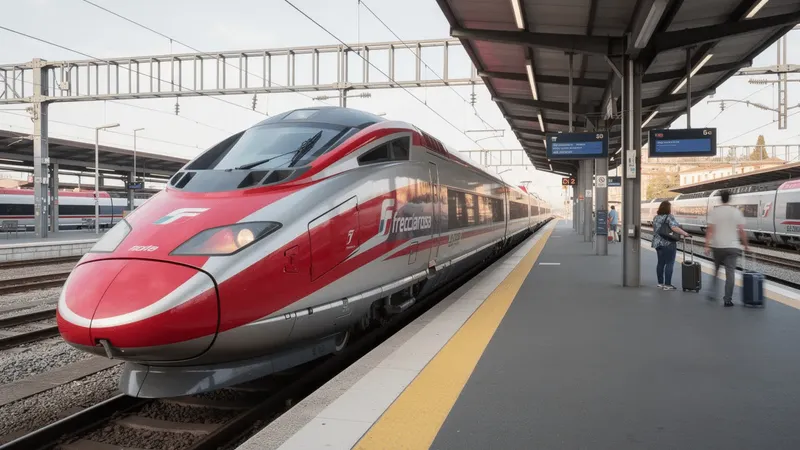
No. Italo (NTV) does not accept Eurail or Interrail passes. If your Italian itinerary includes a service operated by Italo, you need to buy a separate full-price Italo ticket for that leg. Trenitalia high-speed trains (Frecciarossa and Frecciargento) do accept Eurail passes, with a mandatory seat reservation fee.
What discounts are available for young and older travellers?
Travellers under 28 qualify for a youth discount of up to 25% off the adult Eurail Pass price. Travellers aged 60 and over receive around a 10% senior discount. Children aged 11 or younger can travel free with a paying adult pass holder, up to two children per adult.
How do I book Eurostar with a Eurail Pass?
Only Global Pass holders can use a Eurail Pass on Eurostar. You cannot use a one-country or regional pass. Book through eurail.com or Eurostar directly and expect a passholder supplement of €35 in Standard or €40 in Plus per direction from London to Paris, Brussels, or Lille (€43 in Plus to Amsterdam or Rotterdam), plus a small booking fee. Passholder quota places are limited and can sell out weeks ahead, so book as early as possible.