
Eurail Benelux Pass
The Eurail Benelux Pass covers participating train services only in Belgium, the Netherlands and Luxembourg, with 3, 4, 5, 6 or 8 travel days within one month.

- Countries
- 3
- Operators
- 3
The Eurail Benelux Pass covers train travel in Belgium, the Netherlands and Luxembourg, and only inside those three countries.
For a visitor flying into Amsterdam Schiphol or Brussels, that limit is the whole decision. The three countries sit close together, and a Benelux trip is usually a handful of short hops rather than a run of long-distance days. A pass earns its keep here only under fairly specific conditions.
If your trip continues to Paris, Cologne or London, this is the wrong product, and no amount of goodwill at the barrier will change that. Buy for the region you will actually travel in.
Coverage inside the Benelux, and where it stops
Inside Belgium, the Netherlands and Luxembourg the pass covers participating train services. Three countries, one pass. You can board most local and regional trains on the pass alone, and take as many trains as you like on each travel day.
The border rule is the part that catches visitors out. In practice the borders you can cross on this pass are the ones between the three Benelux countries. Amsterdam to Brussels is covered. Brussels to Paris is not, and neither is Amsterdam to Cologne or Brussels to London. The binding conditions do leave room for a few specific crossings, which are listed in the Rail Network Guide inside the Rail Planner app, so look there if one border hop is central to your plan instead of assuming it works.
There is no partial credit for the covered stretch of an onward international journey. If you intend to leave the region by train, buy that journey separately, or buy a Eurail Global Pass, which is the product built for crossing Europe. Before you pay, write out your intended journeys and confirm that every one of them starts and ends inside Belgium, the Netherlands or Luxembourg.
Deciding between single tickets, a Benelux Pass and a Global Pass
For a short Benelux trip, buy your journeys as single tickets. Journeys here are short, so the pass has to beat a handful of point-to-point tickets rather than a run of long-distance fares, and it has to do that on your itinerary rather than on an average one.
The pass moves ahead of single tickets when you are making several long or awkward journeys on the same days, when you want to change plans on the morning of travel without repricing anything, or when you are combining all three countries in one trip rather than basing yourself in one. Flexibility is the real product.
Choose a Global Pass instead the moment your itinerary leaves the region. A visitor doing Amsterdam, Brussels, Paris and Cologne in a fortnight is a Global Pass traveller, and a Benelux Pass would simply fail on half that trip. To settle it, price your real list of journeys as single tickets on the national railway site or app for each country, then price both passes in EUR on the official Eurail site, which can open in another currency depending on where it thinks you live.
Reservations inside the Benelux
Your pass is a travel right, not a seat. On most local and regional trains inside the three countries the pass is enough on its own.
High-speed, international and night trains are the exception, and they usually need a paid seat reservation on top of the pass. Reservation fees are not included in the pass price. This is the most common misunderstanding about any rail pass, and it is an expensive one to discover on the platform.
Read international here as a cross-border train inside the three countries. A reservation never widens the pass area. It buys a seat on a train the pass already covers, so nothing you pay at a booking desk turns Brussels to Paris into a covered journey. One night train is excluded outright rather than reservable: the Benelux Pass is not valid on European Sleeper, which runs Brussels to Amsterdam.
On a Benelux itinerary it matters most on the fast cross-border runs between the Dutch and Belgian cities, where the same city pair is often served both by a premium train that needs a reservation and by slower domestic trains that do not. Taking the slower train is frequently the better call on a pass, because you keep the flexibility you paid for and add no fee. Open the exact train in the Rail Planner app, or on the official Eurail reservation pages, which set out reservation requirements and costs by country and by train, and check both before you commit to a departure.
Choosing your number of travel days
The Benelux Pass is sold only as a flexi pass. You buy 3, 4, 5, 6 or 8 travel days and spend them on any dates within one month of your start date. There is no continuous version, so you cannot buy unlimited travel across a fortnight.
A travel day runs to 23:59 local time and covers as many trains as you want inside it. That rewards grouping. Two long journeys on one calendar day cost one travel day, while the same two journeys split across two days cost two.
Most visitors overbuy. Sketch the itinerary first, count only the days you will genuinely be on a train, and buy that number. For a week in the Benelux based in one or two cities, three or four travel days usually covers it. Reach for 6 or 8 days only if you are moving base most days or running day trips out of a single city.
Age bands, children and class rules
Age is assessed on the date you choose to start travelling, not the date you buy. The bands are Youth for 12 to 27, Adult for 28 to 59, and Senior for 60 or older, and the Youth and Senior passes cost less than the Adult pass.
Children under 4 travel free and need no pass, though they may be asked to sit on a lap when a train is busy. If you want an under-4 to have a seat of their own, they need their own Child Pass, which is still free. Children aged 4 to 11 travel free on a Child Pass as well, and this is the rule that costs families money: the Child Pass has to be added to the order before you pay, and it cannot be added afterwards. Up to two children may travel per accompanying pass holder, that person must be 18 or older, and they do not need to be a relative. A Child Pass can be combined with a Youth Pass only when the youth is 18 or older at the time of travel.
Class is simpler than it looks. A first class pass is valid in both first and second class carriages, while a second class pass is valid in second class only. Children under 12 travel in the same class as the adult with them, so splitting a family across two classes does not work.
Buying and activating the pass
Eligibility comes first. The Eurail version is for non-European residents, and residents of Europe, the UK, Turkey and Russia are not eligible for it. If you live in one of those places, the Interrail Benelux Pass is your product instead. Residency is judged on where you live, not on your nationality, so check which of the two products applies to you before you start an order.
You then have 11 months from buying the pass to start using it. A mobile pass becomes active once its validity period is set, which for most travellers means setting the first travel day in the Rail Planner app, and the one-month window runs from there. You can still deactivate a mobile pass before that start date if plans move, but not once the validity period has begun.
The start date is a decision rather than a formality, and the airport train is where it bites. Do not assume the pass alone gets you out of the airport. At Brussels Airport, entry to or exit from the station carries a separate charge known as the Diabolo supplement, which sits outside the pass and is payable however you buy that train. Eurail does not show it against any airport train in the app. In the Netherlands a plain Intercity from Schiphol into Amsterdam Centraal is an ordinary covered journey, but the Intercity Direct carries its own supplement on the stretch between Schiphol and Rotterdam. Check the official Eurail page on trains with additional supplements before you fix a start date.
The travel day is the separate question, and it has an answer. If you are travelling onward the same day, start the pass on your arrival day. A travel day runs to 23:59 and covers as many trains as you like, so the airport hop rides along on a day you were spending anyway. If that hop is the only journey you will make that day, buy it on its own and set your start date for your first real travel day. One short transfer is not worth a whole travel day out of the 3 to 8 you bought. Look the transfer up in the app before you fix your dates, because fixing them is what activates the pass.
Refunds, exchanges and changed plans
A pass you have not activated is refundable and exchangeable, which makes buying early low risk. The conditions tighten with time rather than disappearing: a return or exchange in the first week after purchase carries no fee, while later requests carry a refund fee or an exchange fee unless you bought Refund Protection with the pass.
The trap is what counts as activation. Setting the validity period is what activates a mobile pass, so once your dates are in the app the pass is not refundable in that state, even if you have not boarded a train. If the start date is still in the future, deactivate the pass in the app first and then ask for the refund or the exchange. Once the validity period has actually begun the pass can no longer be deactivated or refunded, and unused travel days are not refunded either.
Two further conditions catch people out. Promotional passes bought in a sale can be non-refundable and non-exchangeable, depending on that promotion's own terms. The official refund policy covers passes bought on the Eurail and Interrail websites, so a pass bought through a reseller is refunded by that seller under their own conditions. All of this describes a mobile pass. A paper pass runs on its own timeframes, has to be physically returned, and its shipping cost is never refunded, so read the paper pass section of the policy if you ordered one.
Before you buy
| Check | Why it matters |
|---|---|
| Every journey starts and ends inside Belgium, the Netherlands or Luxembourg | The pass is not built to cross the outer border and gives no partial credit |
| Your residency makes you eligible for Eurail rather than Interrail | European, UK, Turkish and Russian residents need the Interrail version |
| Travel days counted from a real itinerary | Most visitors buy more days than they use |
| Whether your airport train carries a supplement, and whether it will spend a travel day | Brussels Airport charges separately for station entry and exit, and your start date decides the travel day |
| Reservation status of each fast or international train | The fee sits on top of the pass and is not included |
| Child Pass added to the order | It cannot be added after payment |
| Current price in EUR on the official site | Prices change, and the site may open in another currency |
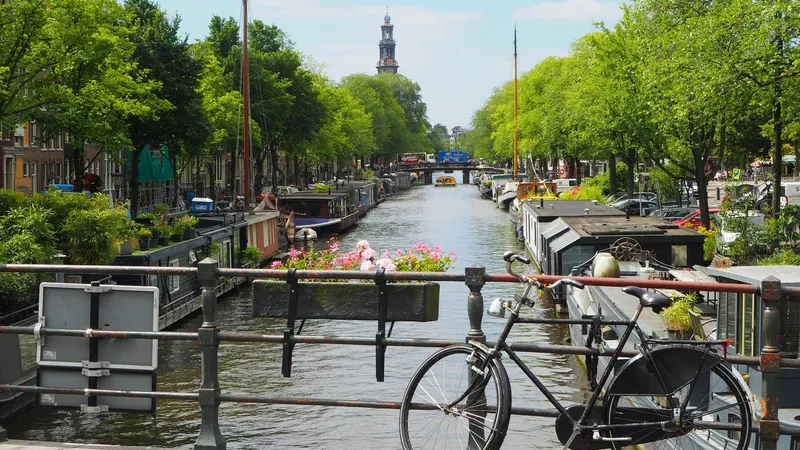
Covered countries


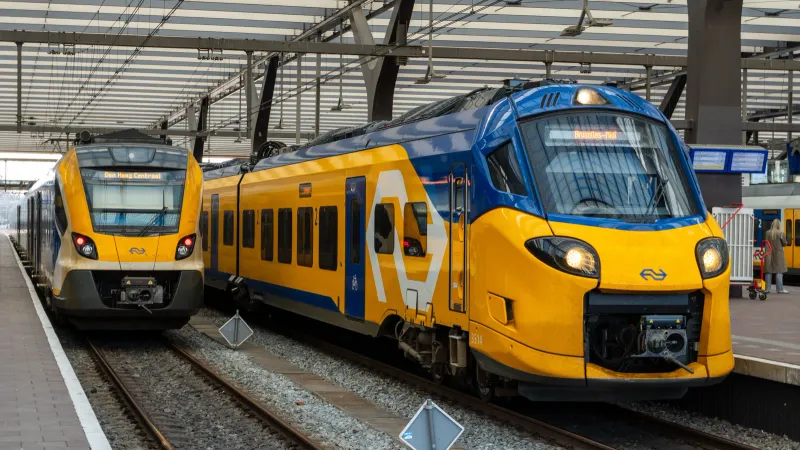
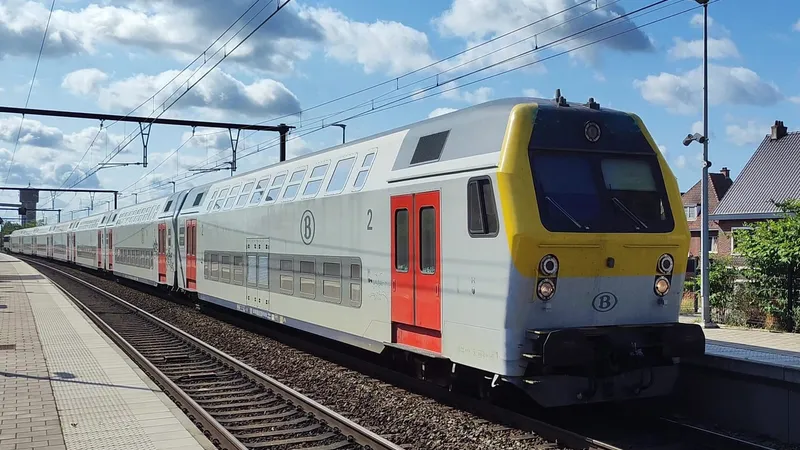
Train companies that accept Eurail Benelux Pass

Frequently asked questions
Can I use a Eurail Benelux Pass to travel from Amsterdam to Paris?
No. The borders this pass lets you cross are the ones between Belgium, the Netherlands and Luxembourg, so a journey to Paris sits outside it entirely and there is no partial credit for the Dutch and Belgian stretch. Buy that international journey as a separate ticket, or buy a Eurail Global Pass if several legs of your trip leave the region.
Who can buy a Eurail Benelux Pass?
The Eurail version is for non-European residents. Residents of Europe, the UK, Turkey and Russia are not eligible and need the Interrail Benelux Pass instead, which is the equivalent product for European residents. Eligibility follows where you live rather than your nationality, so check which of the two applies before you start an order.
How many travel days do I need for a Benelux trip?
The pass is sold as 3, 4, 5, 6 or 8 travel days to be used within one month, with no continuous version. Count only the days you will actually board a train. A week based in one or two cities usually needs three or four travel days, and because a travel day runs to 23:59 local time, grouping two long journeys into one calendar day spends only one of them.
Do I need seat reservations with a Eurail Benelux Pass?
On most local and regional trains inside the three countries the pass is enough on its own. High-speed, international and night trains usually require a paid seat reservation as well, and that fee is not included in the pass price. One service is excluded outright: the Benelux Pass is not valid on European Sleeper, the night train between Brussels and Amsterdam. Check the exact train you want before you commit, because the slower domestic alternative on the same city pair often needs no reservation at all.
Do children need their own pass in the Benelux?
Children under 4 need nothing, unless one wants a seat of their own rather than a lap, in which case ask for a Child Pass, which is still free. From 4 to 11 a child travels free but only on a Child Pass, and the sequencing is what costs families money: it has to be in the order before you pay, and there is no way to attach one to a pass you already hold. One accompanying pass holder can cover up to two children and has to be 18 or older, though not a relative.
Can I get a refund if my plans change?
A pass you have not activated can be refunded or exchanged, and a request in the first week after purchase carries no fee, while later requests carry a fee unless you bought Refund Protection with the pass. Setting your validity period counts as activating the pass, so if your dates are set but your start date has not arrived, deactivate the pass in the app before you request anything. Once the validity period has begun the pass cannot be deactivated or refunded, and unused travel days are not refunded either. A pass bought through a reseller is refunded by that seller under their own conditions.