
Train travel in Serbia
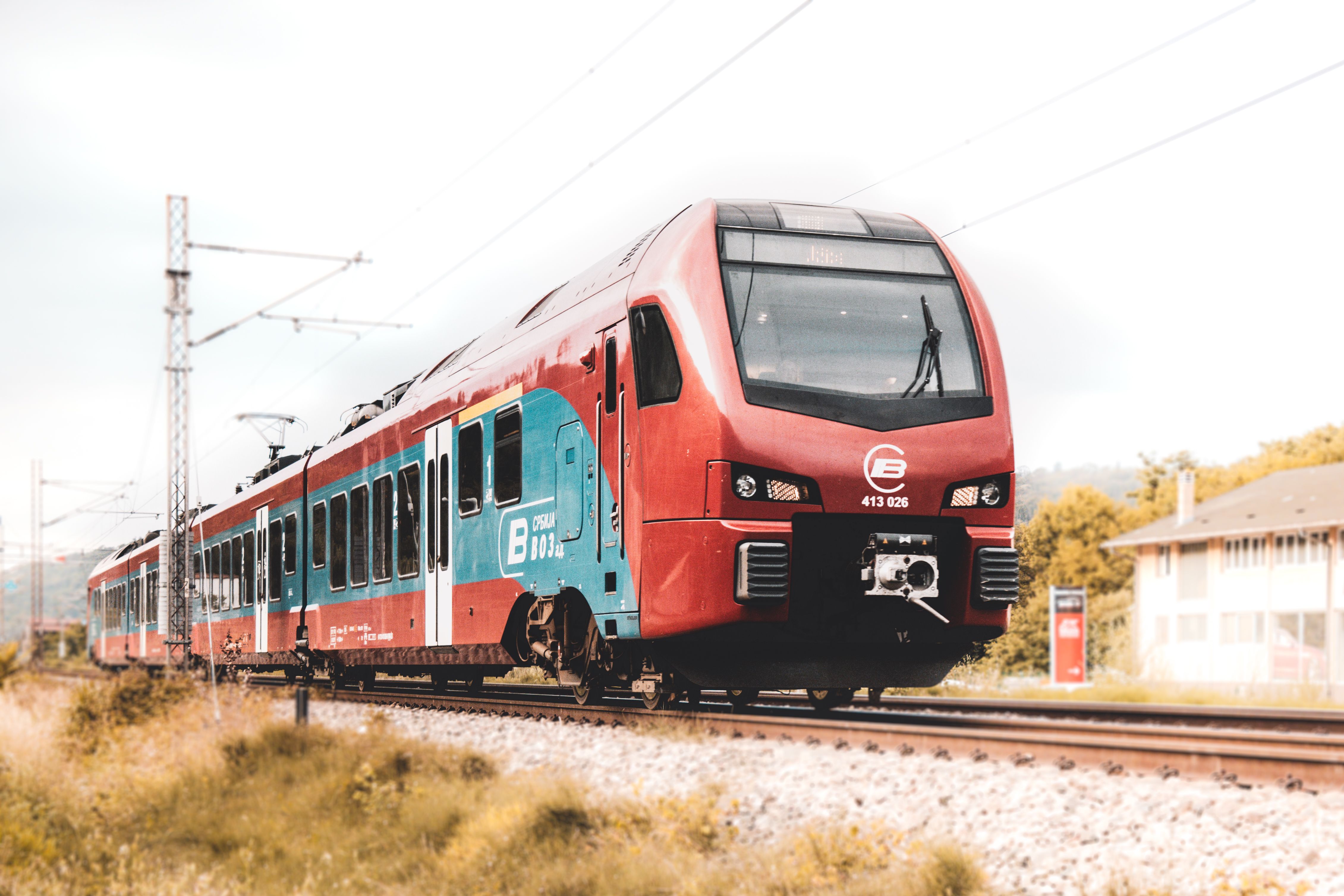
Serbia's Soko trains run from Belgrade to Subotica in around 1 hour 20 minutes; the scenic Belgrade to Bar route takes about 11 hours.
- Main operators
- 1
- Rail passes valid
- 2
Serbian trains centre on Belgrade, with a fast new line to Novi Sad and Subotica and a scenic, slow mountain route into Montenegro.
Serbia has no coastline, so every rail journey either starts or passes through the capital. Srbijavoz is Serbia's national passenger operator. It has run domestic and international passenger services since 2015, when the former state railway was split into separate passenger, freight and infrastructure companies. Track and stations are managed separately by Serbian Railways Infrastructure. Almost all long-distance trains use Beograd Centar, the modern station that replaced the old Belgrade Main station in the city centre.
The Serbian rail network
Serbia's busiest line runs north from Belgrade through Novi Sad to Subotica on the Hungarian border, rebuilt as a 200 km/h high-speed line and opened in stages between 2022 and October 2025. South of Belgrade, the older Corridor X main line runs to Niš, then splits toward North Macedonia and Bulgaria. A separate line west of Belgrade climbs into the mountains and crosses into Montenegro, ending at the Adriatic port of Bar.
Track quality varies a lot by line. The Belgrade-Subotica line is genuinely fast and modern. Older sections, including most of the route to Bar, still carry low speed limits from decades of underinvestment, so do not expect European high-speed standards outside the new line.
Belgrade to Novi Sad and Subotica
This is the one Serbian route that behaves like a modern European railway. The Soko service covers the 182 km from Belgrade to Subotica in around 1 hour 20 minutes at speeds up to 200 km/h, calling at Novi Sad on the way as the first major stop.
Book a seat reservation for the Soko trains. They run frequently, with multiple departures a day, but seats on a genuinely fast, modern service fill up, especially around weekends and Novi Sad's festival season. If you are continuing into Hungary, you currently still change trains at Subotica, and again at Szeged for the onward Hungarian service to Budapest, rather than riding one through train. Build a realistic connection time around both changes rather than assuming a same-platform transfer.
Belgrade to Niš and onward
Niš is the junction. Trains continue from here to North Macedonia and, via Dimitrovgrad, to Bulgaria. This line is older than the Belgrade-Subotica route and is only being modernised in sections, so treat any journey time you see as orientation rather than a promise, and check the exact departure when you book. Expect a slower, more old-fashioned ride than the Soko service, with basic rolling stock on some services.
If your onward plan involves Sofia or Skopje, check whether your specific train requires a change at the border rather than assuming a through service, since cross-border patterns on this corridor change more often than the domestic timetable.
Belgrade to Budapest
There is no single through train yet. The practical route uses the Soko service from Belgrade to Subotica, a local train across the border, then a Hungarian service on to Budapest, with a change at Szeged. Journey time on this combination runs to around 7 hours, well down from the roughly 8 hours the unmodernised route used to take, though still a full day's travel rather than a quick hop.
Book each leg with enough of a buffer at Subotica and Szeged to clear the border check and change trains comfortably. This corridor has been under construction for years. Schedules have shifted more than once as sections opened, so check the current timetable close to your travel date rather than trusting an old itinerary.
Belgrade to Bar, Montenegro
This is Serbia's classic scenic railway, and the reason some travellers plan a trip around it rather than despite it. The line climbs through the Dinaric mountains on hundreds of tunnels and bridges, including the Mala Rijeka viaduct, which stands around 200 metres above the valley floor and was the highest railway bridge in the world when it opened in 1973, a record it held until 2001. Budget a full day or a night for it: the journey now takes around 11 hours, well over the roughly 7 hours the line ran in when it opened in the 1970s, because decades of underinvestment have left long stretches under slow speed restrictions.
Choose a couchette or sleeper if you want to actually rest, not just a seat, since the ride is long and much of the most dramatic scenery happens in daylight on the Montenegrin side. If a day train fits your schedule better, ride it deliberately for the views around Kolašin and the high viaducts, and treat the length of the journey as part of the trip rather than a problem to solve. The train also stops for a border check at Bijelo Polje in Montenegro, which adds to the overall time, so do not plan a tight onward connection at Bar.
Buying tickets and reservations
Buy domestic tickets at Srbijavoz stations or through its online booking channels, priced in Serbian dinars (RSD). For the Soko service to Subotica, make a seat reservation rather than assuming you can simply board, since this is the one Serbian route where seats can genuinely sell out. Older regional and Corridor X services are more relaxed about reservations, but you should still confirm the rule for your specific train rather than assume every Serbian service works the same way.
For the Belgrade-Bar sleeper, book your couchette or compartment ahead if you want a bed rather than a seat, particularly in summer when the Montenegrin coast draws more travellers onto this line.
Interrail and Eurail in Serbia
Serbia is covered by both the Interrail Global Pass and the Eurail Global Pass, and both schemes also sell a Serbia One Country Pass for travellers focused only on Serbia. A pass covers the base fare but does not remove the need for a paid seat reservation on services that require one, including the Soko trains to Subotica. Carry your pass and a valid reservation together rather than assuming the pass alone is enough to board.
If Serbia is one stop on a longer Balkan or Central European trip, a Global Pass is usually the better fit than a country-only product, since it lets you cross into Hungary, North Macedonia, or onward without buying a separate ticket for each new country.
Practical tips for travelling by train in Serbia
Beograd Centar is the station to use for almost every long-distance journey, domestic or international. It replaced the old Belgrade Main station in the city centre, and the change trips up returning visitors who remember the previous building, so check which station your ticket names before you travel.
Serbia uses the Serbian dinar (RSD) for domestic fares. Carry some cash for station purchases, since not every ticket window or onboard service accepts cards reliably outside the newer Soko trains.
Away from the Belgrade-Subotica line, expect delays and older rolling stock to be part of normal Serbian rail travel rather than the exception. Build slack into any tight connection, especially around the Bar line and the Niš corridor, and treat a published journey time on these older routes as a starting estimate rather than a fixed number.
Where to book
Train tickets
- Check times & prices
Omio
Omio connects you with over 1,000 transport providers - trains, buses, flights, and more - to simplify your travel planning.

Train service
- Check times & prices
Srbija Voz is Serbia's national rail operator, running high-speed SOKO from Belgrade to Novi Sad and Subotica. SOKO and the Bar service require reservations.
Official website

Frequently asked questions
Does Serbia accept the Interrail Pass?
Yes. Serbia is covered by the Interrail Global Pass and the Eurail Global Pass, and both schemes also sell a Serbia One Country Pass for travellers focused only on Serbia. A pass covers the base fare but not a paid seat reservation, so on services that require one, including the Soko trains to Subotica, carry your pass and a valid reservation together. If Serbia is one stop on a wider trip, a Global Pass is usually the better fit than a country-only product.
What is the main train station in Belgrade?
Almost all long-distance trains, domestic and international, use Beograd Centar. It replaced the old Belgrade Main station in the city centre, and returning visitors sometimes still expect the previous building, so check which station your ticket names before you travel.
Is there a direct train from Belgrade to Budapest?
Not currently as a single through train. The practical route uses the Soko service from Belgrade to Subotica, a local train across the border, then a Hungarian service on to Budapest, changing again at Szeged. The full journey takes around 7 hours. Build in enough time at each change to clear the border check, and check the current timetable close to your travel date, since this corridor has changed more than once as sections of the modernisation opened.
How long does the train from Belgrade to Bar in Montenegro take?
Around 11 hours, on what is Serbia's classic scenic railway. The route climbs through the Dinaric mountains and crosses the Mala Rijeka viaduct, a 200-metre-high crossing that held the record for the world's tallest railway bridge from 1973 until 2001. The line ran the same journey in roughly 7 hours when it opened in the 1970s, but decades of underinvestment have since left long stretches under slow speed restrictions. Choose a couchette or sleeper if you want to rest properly, and budget a full day or night for the ride rather than treating it as a quick hop to the coast.
Do you need a seat reservation on Serbian trains?
It depends on the train. Reserve a seat for the Soko service between Belgrade, Novi Sad and Subotica. It is the one Serbian route where demand genuinely fills seats, especially at weekends and during Novi Sad's festival season. Older regional and Corridor X services toward Niš are more relaxed about reservations, but confirm the rule for your specific train rather than assuming every Serbian service works the same way. On the Belgrade-Bar sleeper, book your couchette or compartment ahead if you want a bed.
Are trains in Serbia modern and reliable?
It varies sharply by line. The Belgrade-Subotica route is a genuinely modern, fast railway running at up to 200 km/h. Away from it, expect older rolling stock, slower running, and occasional delays as part of normal Serbian rail travel, especially on the Corridor X line to Niš and the mountain route to Bar. Build slack into any tight connection on these older routes, and treat any published journey time as a rough guide rather than a guarantee.