
Train travel in Slovenia
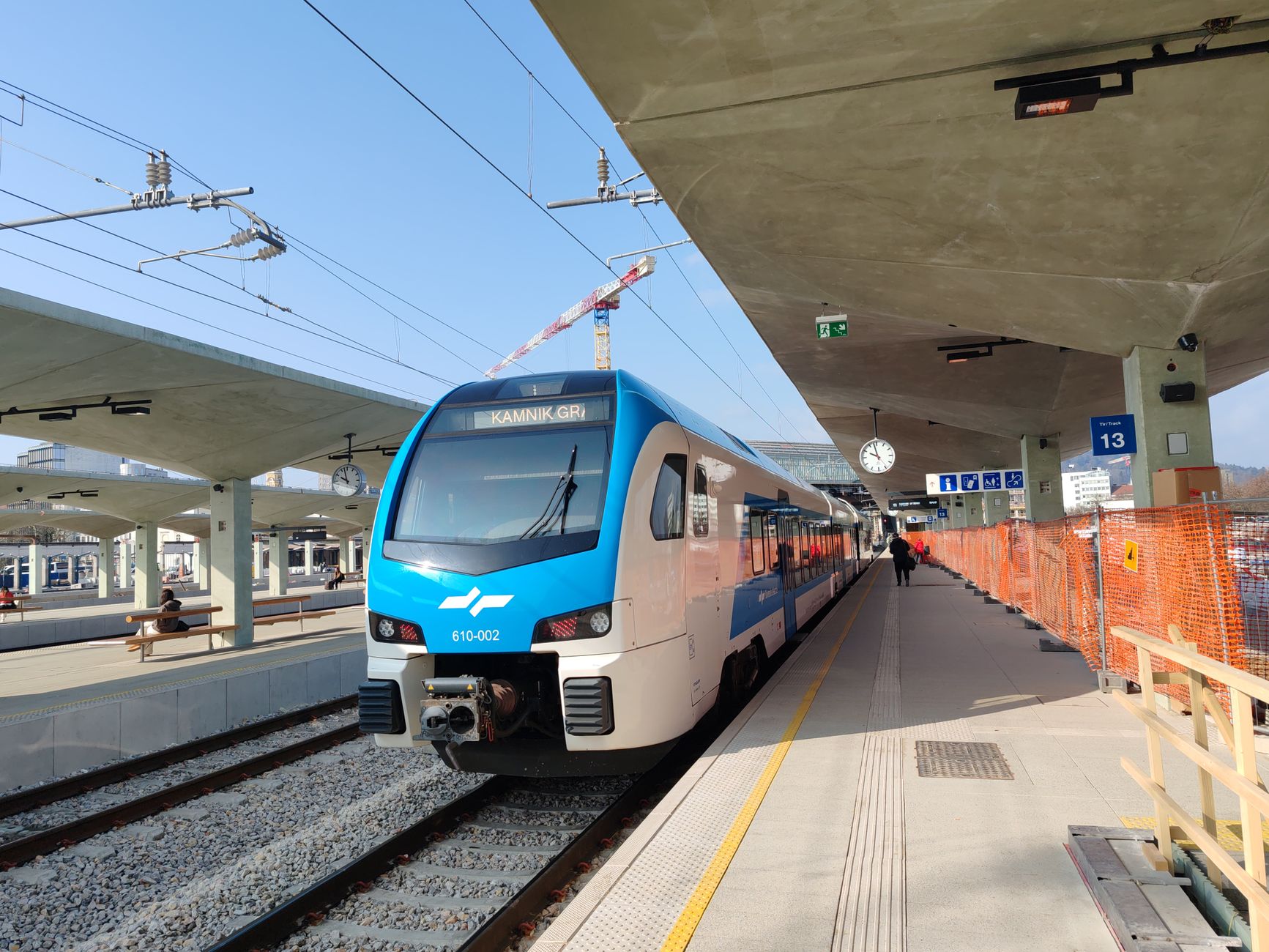
Slovenia's SŽ network centres on Ljubljana, with rail links to Maribor, Celje and Koper; Bled has two rail stops, so check the onward transfer.
- Stations
- 1
- Main operators
- 1
- Routes covered
- 3
- Rail passes valid
- 4
Slovenia is easy to use by train if you build the trip around the corridors that suit rail and plan the final transfer.
Do not expect every lake, mountain village and coastal stop to work as a simple station-to-station journey. Slovenske železnice, usually shown as SŽ, is the national passenger operator. Ljubljana is the natural hub, but the final transfer matters as much as the train itself.
For a short visit, begin with an ordinary SŽ ticket and a realistic arrival time. A rail pass makes more sense when Slovenia is one part of several longer travel days across Europe. The same applies at the borders: Austria, Croatia and Italy are connected to Slovenia by rail, but you need to check the train, station and reservation conditions for your date.
Train travel in Slovenia at a glance
Use trains for the main city-to-city journeys, then work out how you will reach the final hotel, lake or trailhead. This avoids an apparently easy rail trip becoming a long taxi ride or awkward bus connection.
SŽ runs the national passenger network. You may see regional and local services alongside InterCity trains and InterCitySlovenija, often shortened to ICS. The labels describe the service, but they should not decide the trip on their own. A slower train can be the better choice if it reaches the right station at a useful time or avoids a tight connection.
Use Ljubljana as the main planning hub. It is the key interchange for routes towards Maribor, Celje, Koper and the Alpine area. Use the Ljubljana station page for local station detail, but settle the national journey first. Check the departure station, arrival station and return before arranging accommodation or a same-day activity.
Rail does not cover every visitor destination equally well. Choose rail by default for the main corridors. Switch to a bus, transfer or car when the last leg would consume the day. This matters most for lake and mountain trips, where the map can make a station look closer than the real door-to-door journey.
Start with Ljubljana and choose the right domestic corridor
Choose a route by the day you want at the destination, not only by the shortest journey time. Ljubljana to Maribor is the main inland city corridor and a good example of a journey that works well by rail. Ljubljana to Celje is another useful city-to-city option. Ljubljana to Koper can suit a coast trip, but check the last return you would actually be happy to take.
For Lake Bled, the station name matters. Lesce-Bled is commonly the practical rail stop if you are happy to make the onward bus transfer to the lake. Bled Jezero reaches Bled by a different route via Jesenice. It is not automatically the best choice for every Bled hotel. Pick the station after looking at the final bus, taxi or walking segment.
Regional services can be the sensible choice for smaller towns, while IC and ICS are the labels to watch on the bigger corridors. A faster-looking train does not always give a better day out. A service that arrives at the right station with a comfortable return can be more useful than one that saves a small amount of time but leaves you between connections.
If you are carrying a bicycle, check that before buying the main ticket. Bike carriage is not a universal promise across every train or international segment. Look for the specific train's conditions and any required bike ticket, then choose another departure if the bicycle is important to the trip.
Buy SŽ tickets for the journey you actually need
For a straightforward domestic journey, start with SŽ's online or mobile ticket options. The operator also provides an online shop. Use the SŽ site alongside the purchase so you can check current notices and the conditions for that departure.
Before you pay, check the exact stations, the return journey, whether the train has any special reservation or bicycle condition, and whether the journey includes replacement transport. SŽ publishes departures, delays, rail-replacement buses and passenger notices. Its current information is more useful than a copied timetable when the journey is tied to a flight, ferry or non-refundable hotel.
Regional, local and InterCity trains generally do not require seat reservations. On ICS services, reservations are optional and available at a station. International services can have different rules. Treat the reservation as a separate item from the ticket and read the train details before assuming you can simply board. If you are travelling at a busy time with luggage, a child or a fixed connection, a little flexibility in the departure time can be worth more than the absolute cheapest ticket.
Choose a rail pass only for a wider itinerary
For a few Slovenian journeys, individual tickets are normally the cleanest default. You know exactly which train you are buying without bringing a wider pass plan into a short ride. Switch to an Interrail or Eurail pass when Slovenia is part of a wider route with several longer rail days, especially if you are continuing through neighbouring countries.
A pass is travel authority, not a guarantee of every practical detail. It does not remove the need to check the specific service, its reservation rule or its bike arrangements. Compare the pass plan with the actual journeys you intend to take, rather than comparing its headline price with one domestic ticket.
Ask whether a pass saves money and time across the full itinerary after you count trains that need extra arrangements. If your plan is Ljubljana, Bled and the coast over a few days, ordinary tickets are usually the simpler starting point. If Slovenia sits between several international rail legs, the pass can be more convenient, provided you check each reservation condition first.
Plan international trains as separate journeys
Slovenia has rail links towards Austria, Croatia and Italy, but each follows a different station pattern. Check the full itinerary before booking. A plausible route can fail because of a different station, a short connection or a condition set by the next operator.
For Austria, Ljubljana and Maribor are the useful starting points for routes towards Villach, Graz and Vienna. Check the whole itinerary rather than searching only for the border point. The best option depends on where you are heading next and whether a change gives enough time for luggage or a delayed inbound service.
For Croatia, use Zagreb for a capital-bound journey. Rijeka and Pula follow separate international route patterns, so do not assume a coastal trip uses the Zagreb route. Identify which operator runs each segment. If the journey planner offers a through itinerary, compare its conditions with any split-ticket alternative before paying. Leave more connection time than you would for two trains on the same domestic corridor.
For Italy, direct services from Nova Gorica through Gorizia to Venice use a different corridor from journeys starting in Ljubljana. Trieste and Villa Opicina are separate border-area planning points, so do not assume one universal direct Ljubljana to Italy train. Choose the itinerary that reaches the Italian city you need with a sensible change, then confirm the last segment before you commit to accommodation.
For an overnight trip, the EN 414 runs directly from Ljubljana to Zürich via Kranj, Lesce-Bled, Jesenice and Villach. Choose a couchette or sleeper when arriving rested matters, and make sure the ticket covers the accommodation you want. Discounted SparNight places are limited. For summer travel, book early and recheck the itinerary before departure.
Check disruption information before committing to tight plans
Check SŽ's current departure and travel-update information when you book, then again shortly before travel. This matters when a delayed train would cost you a flight, ferry, concert, hotel check-in or the only reasonable onward bus.
Rail-replacement buses are the detail most likely to change how the day feels. They can alter the station, luggage handling and connection margin even when the overall route remains possible. If the planner shows replacement transport, give yourself extra time and keep the journey plan available offline.
For an important connection, choose a departure with slack rather than trying to rescue the plan at the platform. The cheapest or fastest-looking option is not the best one if it leaves no recovery time. A later hotel arrival is usually easier to manage than a missed international train or a lost non-refundable booking.
A practical booking order
Start by choosing the destination and arrival time that makes the trip worthwhile. Next, confirm the stations, especially for Bled and international border areas. Then buy the right ticket or decide whether the wider itinerary justifies a pass. Finally, check reservations, bike conditions, the return and the current SŽ notices.
That order keeps the useful decisions together. It prevents the common mistake of buying a cheap-looking ticket first and discovering later that it reaches the wrong station, needs an extra arrangement or leaves too little time for the part of the journey that matters.
Where to book
Train tickets
- Check times & prices
Omio
Omio connects you with over 1,000 transport providers - trains, buses, flights, and more - to simplify your travel planning.

Train service
- Check times & prices
SŽ is Slovenia's national railway operator. ICS links Ljubljana and Maribor; domestic IC trains need no reservation, but the Budapest IC does.
Official website

Main routes in Slovenia
Major stations and cities in Slovenia
Frequently asked questions
Do children need a ticket on trains in Slovenia?
Yes, even when the child travels free. On domestic SŽ journeys, a child under 6 can travel free without taking a seat needed by a fare-paying passenger, and one adult can accompany up to two children on that basis. Collect the free ticket at a station ticket office. Children aged 6 to 15, and younger children who need their own seat, receive 50% off First or Standard Class tickets.
How do I arrange mobility assistance for an SŽ journey?
Contact SŽ at least 24 hours before departure and explain the journey and assistance you need. Assistance is free within the available facilities, but station access and suitable trains vary, especially when engineering work brings replacement buses. Confirm the complete itinerary before buying a tightly timed connection.
Can I take a pet on a Slovenian train?
Small pets in a cage or basket, and small dogs that can sit on your lap, travel free. A dog over 30 cm must wear a muzzle, stay on a short lead and has a half-price Second Class fare; larger dogs cannot use ICS trains except guide dogs. Replacement buses generally do not carry pets, so check for engineering work before travel.
How much luggage can I take on an SŽ train?
SŽ does not publish a fixed size limit for ordinary personal luggage. Bring bags you can place under the seat, on the overhead rack or on your lap without blocking other passengers. Bulky items that cannot travel in the passenger area go in a separate luggage compartment, where available, for a flat €5 charge.
Can I change or refund an unused SŽ ticket?
It depends on the sales channel. An unused eligible ticket can be changed before its validity begins, but tickets bought from a machine, the SŽ online shop or the mobile app cannot be exchanged. Online and app tickets are also non-refundable. Check the conditions before paying if your plans may change, especially for an international low-cost fare.