
Train travel in Turkey
Turkey has four YHT corridors and daily overnight trains east of Ankara; Interrail and Eurail cover TCDD trains but exclude Marmaray and Turistik Doğu Ekspresi.
- Main operators
- 2
- Rail passes valid
- 2
Turkey has a small, fast railway inside a very large country, so the trick is knowing which journeys the trains cover before you plan around them.
The trains worth taking in Turkey
The railway that exists is genuinely good. TCDD Taşımacılık, the state passenger operator, runs every long-distance train in the country. The high-speed YHT trains are the equal of anything in western Europe, and the overnight trains east of Ankara are cheap and air-conditioned, and far better than a long-distance coach. The catch is coverage.
Use the train for the long hauls it actually serves, which means Istanbul to Ankara, Konya or Sivas, and Ankara eastwards to Erzurum and Kars. There is no train to Antalya, Bodrum, Marmaris, Fethiye or Cappadocia, so those journeys finish by bus whatever you do. Plan the rail legs first and fill the gaps with buses and ferries.
Turkey's high-speed lines
Four YHT corridors are running: Istanbul to Ankara via Eskişehir, Istanbul to Konya and Karaman via Eskişehir, Ankara to Konya and Karaman, and Ankara to Sivas. The trains run at up to 250 km/h on purpose-built line, in two varieties, a six-car CAF design and a newer eight-car Siemens Velaro. Economy and business class are both comfortable. Business class includes tea or coffee and a sandwich box.
| Route | Typical journey time | Worth knowing |
|---|---|---|
| Istanbul to Ankara | about 4h 30m | Roughly hourly through the day |
| Istanbul to Konya | about 4h 45m | Arrives at Konya Selçuklu, not the old Konya station |
| Ankara to Konya | about 1h 45m | The line continues to Karaman |
| Ankara to Sivas | about 2h 30m | High-speed line opened in April 2023 |
Ankara to İzmir is the gap travellers most often assume has been closed. It has not been. There is no direct high-speed line to İzmir, so by day you take a YHT to Eskişehir and change to the Ege Ekspresi, and overnight the İzmir Mavi Tren runs through with sleeping cars. Check this one before you plan around it, because the high-speed network is still being extended.
Which Istanbul station you need
Four station names come up in Istanbul and only two of them will affect your booking. For almost every high-speed departure you want Söğütlüçeşme, on the Asian side, where YHT trains to Ankara and Konya start. Halkalı, 25 km west of the centre, is where the international train from Sofia arrives, and where a small number of YHT departures and the Ankara Ekspresi sleeper begin. If a booking page shows only "Istanbul", open the train details and confirm which of the two it means before you pay.
The other two names are historical. Sirkeci, the old Orient Express terminus in the heart of the European side, has had no mainline trains since March 2013 and is being restored, although TCDD keeps a ticket office there selling domestic and international tickets. Haydarpaşa, the grand terminus on the Asian shore, has had no trains at all since 2012. Visit them; do not try to catch a train from them.
Marmaray is the piece that ties the city together. These suburban trains run under the Bosphorus from Halkalı through Sirkeci to Söğütlüçeşme and on to Gebze, at least every 15 minutes, and they are how you move between the two stations that matter. Halkalı to Sirkeci takes about 35 minutes, Sirkeci to Söğütlüçeşme about 13. Buy an Istanbulkart from the station machines and use it for the whole stay.
Night trains and the eastern lines
Turkey's overnight trains are the reason many people come. East of Ankara, the daily Doğu Ekspresi runs 1,310 km to Kars in around 26 hours, following the Euphrates and climbing onto the eastern plateau, with four-berth couchettes, reclining pullman seats and a dining car. Berths sell out within minutes of booking opening. Cancellations are common though, so keep checking rather than giving up after one attempt.
Do not confuse it with the Turistik Doğu Ekspresi, a different train with a nearly identical name. That one runs only in winter, a few days a week in each direction, carries sleeping compartments instead of couchettes, and stops for three-hour sightseeing breaks that stretch the journey past 30 hours. It is sold at special fares with dynamic pricing. It is also not covered by a rail pass, which is the part that costs people money.
The rest of the night network is easier. The Ankara Ekspresi links Istanbul with Ankara overnight with sleeping cars and pullman seats, leaving Halkalı late in the evening and reaching Ankara early the next morning. The Vangölü Ekspresi runs to Tatvan on Lake Van, the Güney Ekspresi to Diyarbakır and Kurtalan, and the İzmir Mavi Tren connects Ankara with İzmir every night.
Buying tickets and reserving seats
Buy direct from TCDD Taşımacılık's own booking site rather than through a resale agent. It sells every high-speed and main line train, couchettes and sleepers included, though only a handful of regional Bölgesel services. There is an English version, switched with the TR and EN control at the top right, and it normally accepts non-Turkish cards.
Since February 2026 that same site also sells the international sleeper to Sofia and Bucharest, listed under International tickets. Book that one from home. It is the only scheduled train into the country, and its sleepers and couchettes often leave fully booked in summer and autumn, so waiting for a ticket window in Sofia can cost you the journey.
Booking windows are short by European standards, so do not assume you can book months ahead. High-speed trains go on sale 15 days before departure and main line trains 30 days. Booking for the international sleeper usually opens about eight weeks ahead, though that one varies. Check the opening date for your specific service.
Fares are low. Istanbul to Ankara on the YHT has run at around TRY 780 in economy and about half as much again in business class, and a couchette from Ankara to Kars on the Doğu Ekspresi at around TRY 1,240. Turkey has high inflation, so treat every lira figure you read, here included, as orientation and check the live fare on TCDD's booking site before you budget.
On high-speed and main line trains your ticket names one train, one carriage and one seat. A standard YHT ticket can be changed once, while the flexible version, which costs about 20 per cent more, can be changed three times. Changes close 75 minutes before departure, so do not leave one to the platform. Refunds are possible on main line tickets and on flexible high-speed tickets only, with a deduction that grows on the day of travel. Travellers aged 13 to 26 and those aged 60 to 64 get 15 per cent off the standard fare, and travellers aged 65 and over get 50 per cent, so ask for the genç or the yaşlı fare at the ticket window.
One rule catches visitors out. You declare your gender when buying, and TCDD's system will not seat different genders beside each other or in the same sleeping compartment unless the tickets were bought together. Declare it correctly. Getting it wrong can mean being moved, charged more, or asked to leave the train.
Interrail and Eurail in Turkey
Turkey is in the Interrail and Eurail network, and the coverage is broader than most travellers expect. Interrail's own railway companies table lists TCDD Taşımacılık regional trains (Bölgesel), main line trains (Anahat), high-speed trains (YHT) and night trains (EXP) as included, along with the international night trains (INT) that TCDD runs jointly with carriers outside Turkey. Two things are excluded, and both catch people out: the Turistik Doğu Ekspresi and Marmaray.
The Marmaray exclusion is the expensive one, because Marmaray is exactly the train you need to cross the Bosphorus between Halkalı, Sirkeci and Söğütlüçeşme. A pass does not cover it. Buy an Istanbulkart or a three-ride ticket from the station machines and pay for that leg yourself.
Reservations are the other trap. You cannot book Turkish seat reservations through Interrail's self-service system, and for domestic trains you cannot arrange them from home either. They have to be made at a ticket desk inside Turkey, which for most travellers means the domestic and international desks at Sirkeci, open 11:00 to 19:00 daily from a temporary office while the station is restored, or the TCDD office at Halkalı. Interrail treats reservations as compulsory on Anahat and YHT trains and on most Bölgesel services, so assume you need one and make it several days ahead.
Whether a Turkey-only pass is worth buying is a separate question. Point-to-point fares here are cheap, and most Turkish itineraries involve buses and ferries that no pass covers, so an Interrail One Country Pass for Turkey rarely beats simply buying tickets as you go. It earns its place more often at the tail end of a longer European trip, where a Global Pass day or two carries you over the Bulgarian border and on to Ankara. Pass prices depend on your age, the class and the number of travel days, so read the current figure off Interrail's own pass page rather than trusting a headline number quoted anywhere else.
Getting to Turkey from Europe by train
There is exactly one scheduled rail link between Turkey and the rest of Europe: the overnight Sofia to Istanbul train, which runs daily all year with sleeping cars and couchettes and no ordinary seated carriages. Reservations are compulsory. It terminates at Halkalı rather than anywhere central, so build the Marmaray ride into your arrival plan.
From roughly mid-June to mid-October a through couchette car also runs from Bucharest. Outside that window you travel from Bucharest to Dimitrovgrad in Bulgaria on connecting trains and join the sleeper there. There is no train between Turkey and Greece at all, which surprises people who assume the Balkan network runs straight through.
Pass holders can use this train by paying the couchette or sleeper supplement, and under the night-train rule it should consume only one travel day. The Rail Planner app has a known quirk here: it reads the leg after the Turkish border as a separate train and will take a second travel day if you add the journey straight from its timetable. Add the trip to your pass manually and you keep the day. Stock up on food before boarding, because there is no catering on board.
Practical tips for travelling by train in Turkey
Allow a few extra minutes at high-speed stations. Every YHT entrance has an X-ray machine and metal detector followed by a ticket check, and boarding usually opens 30 minutes before departure. Arrive ten minutes before and you will be running.
YHT trains apply a real luggage limit at the boarding gate: one bag up to 65x50x35 cm, or two up to 55x40x23 cm, with a small extra charge payable at the gate if you exceed it. Classic long-distance trains do not measure bags at all.
Two stations reward a little homework. Ankara Gar is effectively two buildings joined by a footbridge, with the 1937 station handling classic trains and the modern hall opposite handling YHT departures. In Konya, high-speed trains use Selçuklu, roughly 4 km across the city from the old Konya station, so check which one your accommodation sits near before you book a room.
Carry Turkish lira in cash. Station ticket offices increasingly take cards, but Istanbul taxis often do not, and there is an ATM just outside the entrance at Halkalı, where the Sofia train arrives. Many long-distance trains carry a restaurant car serving hot drinks, snacks and sometimes a proper hot meal, though no alcohol.
Where to book
Train service
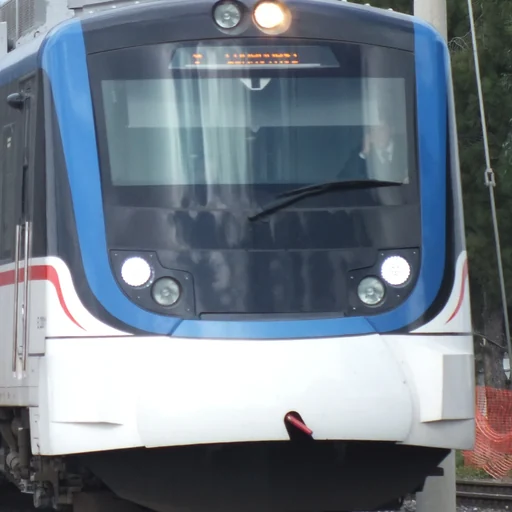
İZBAN runs 136 km from Aliağa to Selçuk via Adnan Menderes Airport; Interrail and Eurail passes do not cover it, and İzmirim Kart fares require an exit tap.
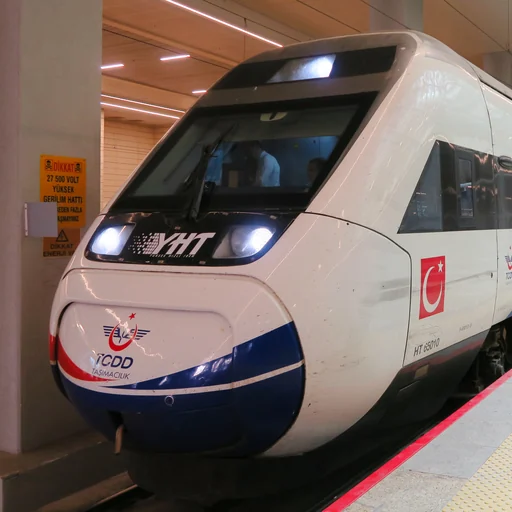
Official websiteTCDD Taşımacılık runs most of Turkey's passenger trains, including YHT and Marmaray, and sells tickets on ebilet. Interrail and Eurail passes exclude Marmaray.
Official website
Frequently asked questions
Is there a high-speed train service in Turkey?
Yes. TCDD Taşımacılık's YHT trains run at up to 250 km/h on four corridors: Istanbul to Ankara via Eskişehir, Istanbul to Konya and Karaman, Ankara to Konya and Karaman, and Ankara to Sivas. Istanbul to Ankara takes around 4 hours 30 minutes, with departures roughly hourly through the day. There is no direct high-speed line to İzmir yet, so that journey still means changing at Eskişehir or taking the overnight train.
Can I use an Interrail or Eurail Pass in Turkey?
Yes. Interrail's railway companies table lists TCDD Taşımacılık regional (Bölgesel), main line (Anahat), high-speed (YHT) and night (EXP) trains as covered, along with the international night trains it runs with partner carriers. Two are excluded: the Turistik Doğu Ekspresi, and Marmaray, the suburban service under the Bosphorus, which you pay for separately with an Istanbulkart. Whether a Turkey-only pass pays for itself is another matter, since point-to-point fares here are cheap and buses cover much of the country.
Which Istanbul station do I need, Halkalı, Sirkeci or Söğütlüçeşme?
Söğütlüçeşme on the Asian side for almost every high-speed train to Ankara and Konya. Halkalı, 25 km west of the centre, for the international train to and from Sofia, plus a few YHT departures and the Ankara Ekspresi sleeper. Sirkeci is central and historic but has had no mainline trains since 2013, although its ticket office still sells them. Haydarpaşa has been closed to trains since 2012. Marmaray suburban trains link Halkalı, Sirkeci and Söğütlüçeşme at least every 15 minutes, so getting between them is easy once you know which one your ticket names.
What is the difference between the Doğu Ekspresi and the Turistik Doğu Ekspresi?
They run the same 1,310 km line from Ankara to Kars and are otherwise different products. The Doğu Ekspresi is the daily service, around 26 hours, with four-berth couchettes and reclining seats, and it is covered by an Interrail or Eurail Pass. The Turistik Doğu Ekspresi is a winter-only tourist train running a few days a week, with sleeping compartments and three-hour sightseeing stops that push the journey past 30 hours. It is sold at special fares and is not covered by a pass. The scenery is the same on both.
Is there a train from Europe to Turkey?
One. The overnight Sofia to Istanbul train runs daily all year with sleeping cars and couchettes, and reservations are compulsory. It terminates at Halkalı, 25 km west of central Istanbul, so allow for the Marmaray ride into the city afterwards. From about mid-June to mid-October a through couchette car also runs from Bucharest; the rest of the year you connect at Dimitrovgrad in Bulgaria. There are no trains between Turkey and Greece.
Do I need a seat reservation on trains in Turkey?
On the trains most visitors use, yes. Interrail treats reservations as compulsory on high-speed YHT and main line Anahat services and on most regional trains, and your ticket names a specific train, carriage and seat. Pass holders cannot book Turkish reservations through Interrail's self-service system; they have to be made at a ticket desk inside Turkey, such as Sirkeci in Istanbul, whose temporary ticket office opens 11:00 to 19:00 daily, or the TCDD office at Halkalı. Book several days ahead, and much further ahead for couchettes and sleepers on the eastern night trains, which sell out within minutes of booking opening.