
Train stations in Alicante
Alacant Terminal is Alicante's main station for intercity trains; airport bus C6 stops there, while Luceros serves Costa Blanca TRAM connections.

- Stations
- 1
- Primary station
- Alacant-Terminal
- Passenger operators
- 3
- Routes covered
- 3
Alacant Terminal is Alicante's main railway station for intercity trains, with separate bus and TRAM links for the airport and coast.
Use Alacant Terminal for mainline trains
Choose Alacant Terminal for long-distance and regional rail journeys to and from Alicante. Booking sites may show the name as Alicante Terminal, Alacant Terminal, or simply Alicante, but they refer to the main station on Avenida Salamanca. Open the train details and confirm the station before you pay.
The name matters because Luceros is a different place. Luceros is part of Alicante's local TRAM network, not the mainline railway station. It is useful for trips along the Costa Blanca, but a traveller who waits there for a Madrid train will be at the wrong stop.
Keep the train number as well as the station name on your phone or ticket. Alicante has several transport stops with similar city labels, and the train number is the quickest way to match your booking to the departure board when you arrive.
The station's Avenida Salamanca address puts it in the built-up city rather than at the airport. Use that address when arranging a taxi or checking a walking route, since entering only "Alicante station" can surface local tram stops as well as the main terminal.
Match the train to the corridor
Start by deciding which corridor you are travelling on. Madrid high-speed trains, Mediterranean services towards Valencia and Barcelona, and regional trains towards Murcia do not all use the same operators or ticket conditions.
Madrid high-speed trains
For Madrid, compare Renfe, iryo, and OUIGO on the exact departure you want. All three sell high-speed journeys on the Alicante corridor, but their baggage allowances, ticket-change rules, and optional extras are different. A lower headline fare can cost more once the baggage or flexibility you need is added.
Check the Madrid station before booking. Current Alicante high-speed services commonly use Madrid Chamartín Clara Campoamor, so do not assume the train will arrive at Atocha because another Spanish high-speed journey does. The Madrid terminal affects your hotel transfer and any onward train.
When two departures look similar, compare the complete journey rather than only the time shown in the first search result. A later train with the baggage and flexibility already included may be the more useful choice, particularly when the trip begins with a flight or another connection.
Valencia and Barcelona services
For Valencia or Barcelona, look at the train category and calling pattern rather than applying the Madrid comparison. Euromed and Intercity services follow the Mediterranean corridor, and a departure with more intermediate stops may suit a coastal destination better than the quickest end-to-end train.
Confirm both the arrival station and the final departure time before making a fixed onward plan. Engineering work and seasonal timetable changes can alter the useful connection even when the route itself remains available.
Murcia and nearby regional journeys
Use the Murcia/Alicante Cercanías information for shorter regional journeys. These trains have their own line maps and stopping patterns, and not every local service is shown completely in an international journey planner.
Check Renfe's regional timetable for your exact date and station. A long-distance search may hide a local stop or suggest a more expensive train that does not improve the journey.
Regional tickets can also follow different sales and validation rules from high-speed tickets. Confirm where to buy or validate the ticket before boarding instead of assuming the process from a Madrid journey applies.
Plan the airport transfer as a bus connection
Treat Alicante-Elche Miguel Hernández Airport as a separate bus transfer. The airport does not have a mainline railway platform for an Alicante city train, so searching for an airport rail departure sends you down the wrong path.
Aena identifies C6 as the link between the airport and central Alicante. It stops at the railway station and also at Luceros, which means the correct stop depends on what you are doing next. Use the railway-station stop for a mainline departure, and use Luceros when your onward journey is on the TRAM network.
Check the live Aena or bus-operator timetable before relying on the connection, especially for an early train or late flight. Leave a buffer for road traffic and for finding the correct station entrance after you get off.
Change at Luceros for the Costa Blanca TRAM
For Benidorm or Dénia, plan a deliberate change from mainline rail to the TRAM network. Luceros is the central interchange named by Aena for these coastal connections, and it is separate from Alacant Terminal.
Do not expect one through platform or one operator to carry you from a Madrid train to Benidorm. Leave the railway station, reach Luceros, then use the current TRAM route and destination display for the second part. This is a change of transport system, not a normal cross-platform rail connection.
Check the last useful TRAM departure before buying a late-arriving mainline ticket. A cheap evening train to Alicante is poor value if it leaves you without a practical onward connection to the coast.
Compare ticket conditions before price
Compare what the ticket includes before choosing between similar high-speed departures. Renfe, iryo, and OUIGO use different fare families, baggage rules, and change conditions. The operator's own booking screen is the place to check the allowance attached to the fare you are about to buy.
If you have an Interrail or Eurail Pass, verify that the exact operator and train are covered and whether a seat reservation is compulsory. A pass is not a substitute for a required reservation, and the rules for one operator should not be carried over to another.
Keep full fares, optional extras, and reservation charges separate when comparing the total cost. Check the refund or change conditions too. Saving a small amount on a restrictive ticket makes little sense if your flight, ferry, or earlier train could delay you.
Leave time for the station process
Arrive early enough to follow the correct access route for your train. High-speed departures may involve a ticket check and luggage screening before the platform, while regional access can follow a different route through the station.
Use the live departure board rather than a platform number remembered from an earlier trip. Match the destination, train number, and departure time before joining a queue, because two trains can leave close together for different corridors.
If you need assistance, oversized-luggage guidance, or time to buy a ticket at the station, allow a larger margin and check the operator's current arrangements in advance. The useful rule is simple: arrive with enough time to solve a station problem before boarding closes, not just enough time to reach the concourse.
Where to book
Train tickets
- Check times & prices
Omio
Omio connects you with over 1,000 transport providers - trains, buses, flights, and more - to simplify your travel planning.
Rail Europe
Rail Europe is a leading travel tech company specializing in European train bookings for over 15,000 travel professionals worldwide.
Trainline
Trainline sells rail and coach tickets worldwide on behalf of major UK and European transport companies.



Passenger train operators
- Check times & prices
Ouigo is SNCF's low-cost high-speed brand, serving over 60 destinations in France and routes in Spain; basic fares include one hand bag and one cabin bag.
Official website - Check times & prices
Renfe serves Spain with AVE, Avlo, Alvia and regional trains. AVE tickets are named and reserved, while Interrail and Eurail passes need reservations.
Official website - Check times & prices
SNCF operates France's TGV and regional trains. SNCF Connect books domestic and many international journeys, with fares ranging from flexible to non-refundable.
Official website


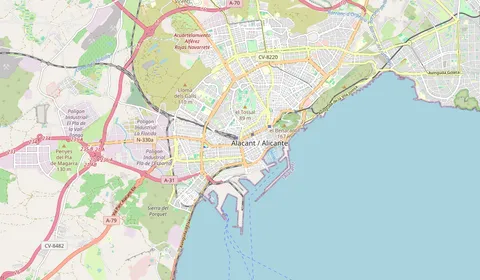
Train stations in Alicante
Train routes to and from Alicante
Find places to stay in Alicante

Frequently asked questions
How should I check the C6 airport-bus timetable?
Yes. Aena says route C6 runs between the airport and central Alicante every day of the year, with stops at the railway station and Luceros. Check the live timetable before travel, especially for an early train or late flight.
What luggage is included on an OUIGO train to Alicante?
OUIGO includes one item of hand baggage and one cabin bag with each ticket. Larger or additional luggage must be added under the operator's current rules, so check dimensions, weight limits, and the purchase cut-off before paying.
Can I take a pet on an OUIGO train to Alicante?
OUIGO's current Spanish transport terms allow specified pets weighing up to 15 kg in a closed, rigid, waterproof carrier. Check the eligible species, documents, carrier dimensions and booking rules before travel.
What local connection can be included with an Alicante-to-Madrid Renfe ticket?
Renfe's current Alicante-Madrid route guidance says the AVE or Larga Distancia ticket includes a Combinado Cercanías journey in Madrid. Check that the code or entitlement appears on your ticket and confirm the local train you need.
How do child tickets work on OUIGO trains to Alicante?
OUIGO says children aged 4 to 13 use a child ticket and babies aged 0 to 3 travel free, within the operator's adult-to-child limits. Check the current age rules and add every child or baby to the booking.