
Train stations in Brest
Brest station serves the city; Paris journeys take roughly three and a half to four hours, with some journeys changing at Rennes.

- Stations
- 1
- Primary station
- Brest
- Passenger operators
- 2
- Routes covered
- 1
Brest station is the rail arrival point for Brest, France. Paris trains can take three and a half to four hours, so check the exact journey before you buy.
Use Brest station for the city
Search for Brest, France, and check the country before paying. Brest is easily confused with the city in Belarus, so it is worth confirming the result before you get any further.
Brest station is the place to aim for when you are travelling into the city. Before you leave, look up your accommodation address and work out how you will get there from the station. The final leg matters, especially after a late arrival.
Start the Paris journey at Montparnasse
For the main Paris to Brest journey, start at Paris Montparnasse. A recent SNCF Connect timetable sample included TGV INOUI and OUIGO services, with useful trips taking broadly three and a half to four hours. Treat that as a guide, then check the trains running on your date.
Choose a direct train if its arrival time works for you. It avoids relying on a connection at Rennes, which is simpler after a flight or a long day in Paris. If you do change at Rennes, make sure both trains are on one ticket and give yourself enough time between them.
Before leaving Paris, open the full itinerary instead of relying on the first train result. Check that the arrival time includes every change and that the ticket covers every segment you expect. If you deliberately buy separate tickets, note the next train you could realistically take if the first leg runs late. It only takes a minute and makes a missed connection easier to handle.
TGV INOUI and OUIGO fares can have different conditions. Do not stop at the lowest headline fare: check the luggage allowance and the exchange and refund rules for the ticket you are buying. A small saving is no help if changing your plans later costs more.
Give a Rennes connection proper time
Some Paris to Brest itineraries change at Rennes. Pick one when it gives you the arrival time you need, not simply because the first leg looks quick. The total journey time and the connection margin are what matter.
Where possible, keep both trains on the same booking. If a delay affects the connection, this is easier to sort out than having two separate tickets that happen to match in the timetable. When you choose separate tickets on purpose, allow a margin you would be comfortable losing.
The same principle applies on the way back. A short change at Rennes can look fine on a screen and feel very different after a late-running train. Leave more time if you have luggage, children, a bike or an onward booking that cannot be refunded.
Sort out the local connection before departure
Bibus is Brest's local public transport network. Use its journey planner and traffic information for the trip from the station, especially if your accommodation is not an easy walk away. It covers buses and tramway services, which gives you a more useful answer than a quick look at the map.
Check that connection before boarding the long-distance train. Evening arrivals, road works and event services can change the practical choice. Save the stop name and your destination address, then decide whether public transport suits the trip or whether you need another way onward.
If accessibility affects your trip, check the onward journey before choosing the rail ticket. The quickest rail itinerary is not always the easiest arrival when the local connection is the difficult part.
Have one clear plan for arrival. Keep the accommodation address, the stop you need and the ticket details together on your phone before the journey starts. That is more useful than trying to piece the trip together from a map after getting off the train, particularly when a late arrival leaves little room for trial and error.
Book for the arrival you need
Work back from the time you need to be in Brest. A direct train from Paris is the sensible default when it fits; a Rennes change is worth choosing when it gives you a better arrival time or a useful stop on the way.
Timetable snapshots do not guarantee a later date. Before you buy, check the exact day, the fare conditions and the full connection, then look up Bibus for the final leg. Those checks prevent most avoidable stress.
Where to book
Train tickets
- Check times & prices
Omio
Omio connects you with over 1,000 transport providers - trains, buses, flights, and more - to simplify your travel planning.
Rail Europe
Rail Europe is a leading travel tech company specializing in European train bookings for over 15,000 travel professionals worldwide.
Trainline
Trainline sells rail and coach tickets worldwide on behalf of major UK and European transport companies.



Passenger train operators
- Check times & prices
Ouigo is SNCF's low-cost high-speed brand, serving over 60 destinations in France and routes in Spain; basic fares include one hand bag and one cabin bag.
Official website - Check times & prices
SNCF operates France's TGV and regional trains. SNCF Connect books domestic and many international journeys, with fares ranging from flexible to non-refundable.
Official website


Train stations in Brest
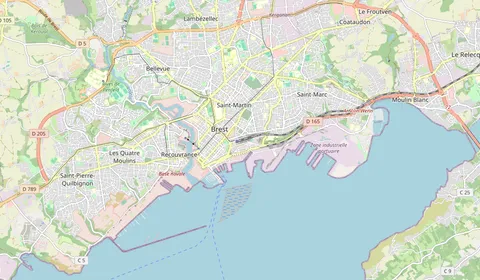
Train routes to and from Brest
Find places to stay in Brest

Frequently asked questions
What should I check before buying a train to Brest?
Choose the ticket after checking the exact departure, arrival time, fare conditions and final local connection. A ticket that looks cheap can be a poor choice if its rules do not fit a flight or another onward plan.
How should I deal with a connection on the way to Brest?
Choose a direct train when it fits your arrival time. If you deliberately choose a connection, keep it on one booking where possible and leave a margin that you could live with losing.
How should I plan the last part of the trip?
Plan the trip from the station to your accommodation before boarding. Save the exact address and stop, then compare local transport with other options for the arrival time you expect.
What can make a cheaper ticket a bad choice?
Choose the fare that lets you deal with the changes you might need. Read the baggage, exchange and refund rules as part of the price, not after you have paid.