
Train stations in Rennes
Rennes station has direct TGVs to Paris in about 1 hour 25 minutes, and the metro reaches Place Sainte-Anne in the old town in about 3 minutes.

- Stations
- 1
- Primary station
- Rennes
- Passenger operators
- 2
- Routes covered
- 1
Rennes station sits at the western end of the LGV Atlantique, so Paris arrives in under two hours by direct TGV.
Getting to Rennes from Paris
Rennes sits at the western end of the LGV Atlantique, and that shows in the timetable. The fastest TGV inOui services from Paris Montparnasse cover the route in around 1 hour 25 minutes. Most departures run closer to 1 hour 35 to 2 hours, depending on how many stops the train makes along the way, so check the specific departure rather than assuming the fastest time applies to your slot. SNCF runs roughly 20 trains a day in each direction between the two cities, which is dense enough that you rarely need to plan your day around a single option. OUIGO also serves the route with lower, fixed-price fares, though OUIGO trains carry no flexibility if your plans change and often use different platforms or, on some Paris departures, a different station entirely. If your schedule might shift, book TGV inOui and pay the difference. If it will not, OUIGO is the cheaper way to make the same journey.
Regional connections from Rennes
Rennes is the hub for western Brittany, and the TER network radiating out from the station is where the region actually gets used. Nantes is around 1 hour 15 minutes away on TER services, with roughly 20 or more trains a day covering the corridor, including through-services that continue past Nantes. Saint-Malo, the usual day-trip pick for travellers based in Rennes, takes about 55 minutes, with the first departure from Rennes around 06:35. Brest, at the far end of the peninsula, takes around 2 hours on the fastest TGV and OUIGO services that continue through from Paris, closer to 2 hours 20 minutes on slower trains, with roughly 14 trains a day. Quimper is served on the same western line as Brest, so check the specific train rather than assuming every departure toward Brest also stops there. None of these regional legs require a reservation the way the TGV to Paris does, but book ahead on the Nantes and Saint-Malo corridors in summer, when regional trains fill up with beach traffic.
Rennes station and the walk into town
Rennes station sits south of the historic centre, and the fastest way in is the metro, not walking. The Gares stop sits directly beneath the station and puts you on both metro lines, A and B, with a ride to Place Sainte-Anne in the old town taking about three minutes. Walking the same distance takes closer to 15 to 20 minutes and crosses a stretch of newer development before you reach anything resembling the medieval streets the city is known for. If you are carrying luggage, take the metro. It runs frequently through the day and the fare is cheap enough that saving 15 minutes of walking with a suitcase is worth it. Line B, which opened in 2022, runs from Saint-Jacques-de-la-Lande through the centre to Cesson-Sevigne, and connects to Line A at both Gares and Sainte-Anne, so a wrong platform choice costs you a short transfer rather than a wasted trip.
Which ticket and which train to book
Rennes has one main station, so the usual multi-station confusion that trips up travellers in Paris or Lyon does not apply here. The decision that matters is TGV inOui against OUIGO for the Paris leg. TGV inOui tickets are changeable and refundable depending on the fare class, run into central Paris Montparnasse, and generally cost more. OUIGO fares are non-changeable, often cheaper, and can depart from Montparnasse or, less conveniently, from Paris Massy in the suburbs, so check the departure station printed on the ticket before you travel, not just the departure city. For the regional legs to Nantes, Saint-Malo or Brest, book through SNCF Connect or the TER Bretagne site directly. Regional fares are simple, seat reservations are not required, and prices barely move with how far ahead you book, which is not true of the TGV.
Where to book
Train tickets
- Check times & prices
Omio
Omio connects you with over 1,000 transport providers - trains, buses, flights, and more - to simplify your travel planning.
Rail Europe
Rail Europe is a leading travel tech company specializing in European train bookings for over 15,000 travel professionals worldwide.
Trainline
Trainline sells rail and coach tickets worldwide on behalf of major UK and European transport companies.



Passenger train operators
- Check times & prices
Ouigo is SNCF's low-cost high-speed brand, serving over 60 destinations in France and routes in Spain; basic fares include one hand bag and one cabin bag.
Official website - Check times & prices
SNCF operates France's TGV and regional trains. SNCF Connect books domestic and many international journeys, with fares ranging from flexible to non-refundable.
Official website


Train stations in Rennes
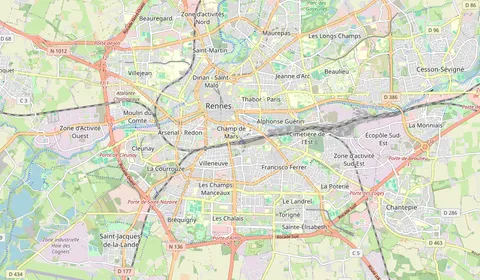
Train routes to and from Rennes
Find places to stay in Rennes

Frequently asked questions
Which station should I use in Rennes?
Use Rennes station unless your final address or onward journey gives you a clear reason to choose another stop. Check the station on the dated itinerary before you pay.
Should I choose the shortest connection in Rennes?
Only choose it when the margin suits the whole journey and the later ticket conditions give you a workable fallback. A slightly later train can be the better choice with separate tickets.
How should I plan the final transfer from Rennes station?
Check the STAR metro or bus route that fits your address and arrival time. Also check the stop, direction and time needed to reach it with luggage.
Do I need to check fare conditions for a train to Rennes?
Yes. Open the conditions for the specific departure and check whether it is tied to that train, what flexibility it includes and how a change works after a delay.
Can a rail pass replace checking the train details?
No. A rail pass can suit a wider trip, but you should still check the exact train, service-specific conditions and any reservation instruction before travel.