
Train stations in Hamburg
Hamburg Hbf suits most journeys; use Altona, Dammtor or Harburg for the right train or address, and take the S1 to the airport in about 25 minutes.
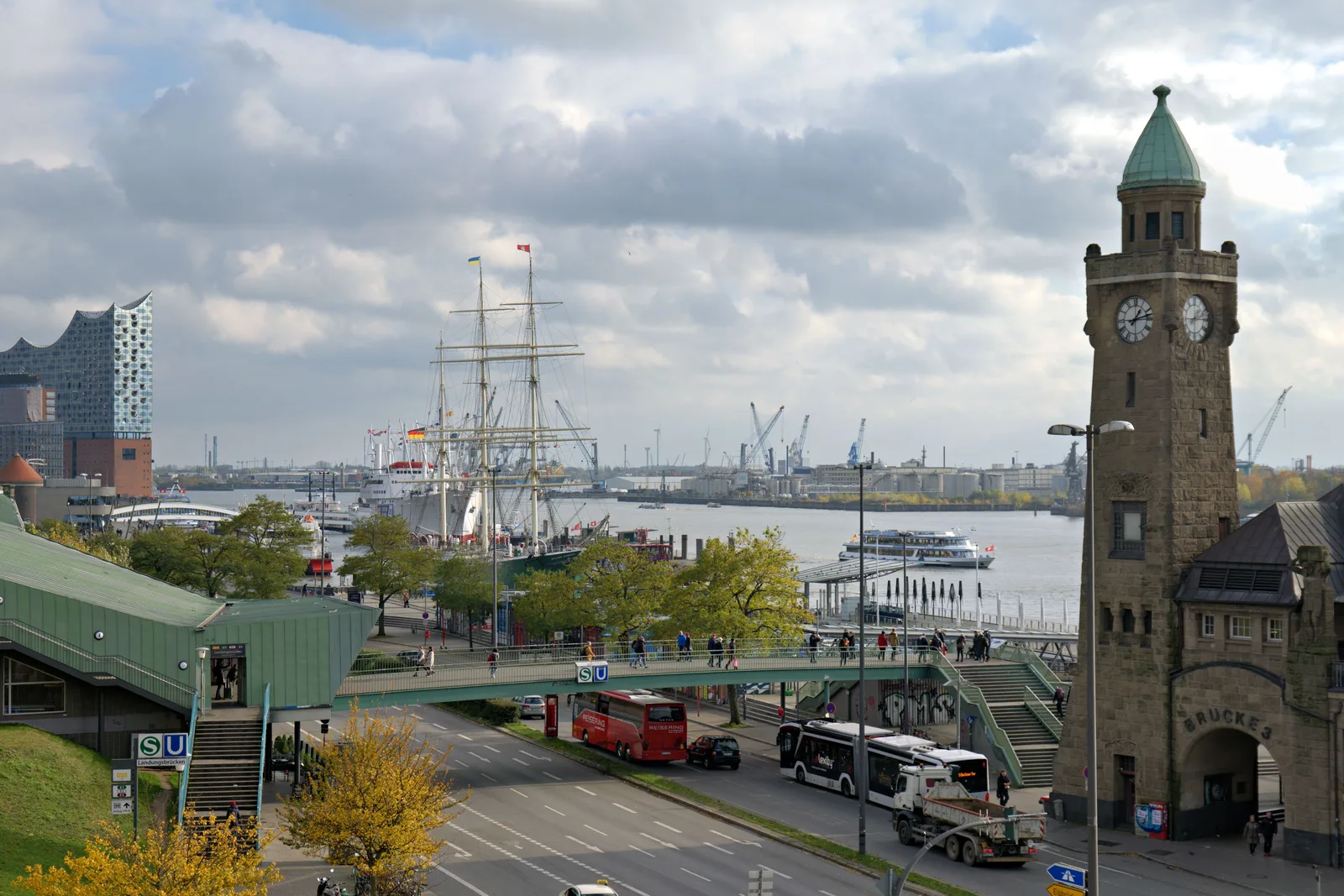
- Stations
- 5
- Primary station
- Hamburg Hbf
- Passenger operators
- 3
- Routes covered
- 5
Use Hamburg Hauptbahnhof for most journeys, and switch only when Altona, Dammtor or Harburg better fits your train and address.
Hamburg Hauptbahnhof is the default
For the city centre and most long-distance journeys, book Hamburg Hauptbahnhof, shown as Hamburg Hbf. ICE, IC, EC, regional, S-Bahn and U-Bahn services use the station, so it normally gives you the widest choice of trains and the simplest onward journey. If a booking result says only Hamburg, open the details and confirm the exact station before paying.
The station has a Nordsteg, Südsteg and lettered platform sections. Check the coach sequence and section before your train arrives, especially with luggage. Even a short connection can involve a long walk through a crowded station.
Step-free access needs an advance check. DB is rebuilding lifts at Hbf, and tracks 13 and 14 are not step-free during the work. If you need station assistance, book it in advance rather than relying on a tight connection.
Altona, Dammtor and Harburg suit specific trips
Altona makes sense for an address in Altona or Ottensen, or when your booked train starts there. Some long-distance and night trains use it as their Hamburg origin, which can make boarding calmer. There is no need to cross the city just because Altona appears first in a station list. See whether the same train also calls at Hbf.
Hamburg Dammtor is handy for the Congress Center Hamburg, the university area, Stephansplatz and Planten un Blomen. It has fewer facilities than Hbf. Choose it when your train stops there and it cuts the final walk.
Hamburg-Harburg is south of the Elbe. Use it for a Harburg address or a southbound train that calls there. Travelling out from central Hamburg can wipe out any apparent saving, so compare the whole local journey first.
Engineering work can move a train between Hbf, Altona, Harburg and nearby substitute stops. Recheck the Hamburg station shortly before departure.
The S1 is the direct airport train
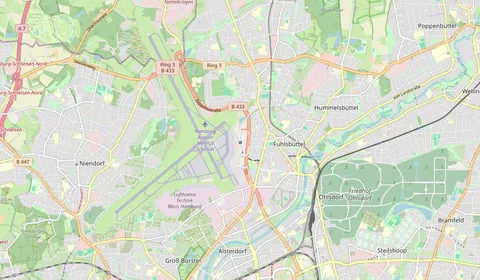
Take the S1 between Hamburg Hbf and Hamburg Airport. The ride takes about 25 minutes, and trains normally run every 10 minutes. The airport has its own S-Bahn station, so there is no airport bus for the final leg.
Pay attention at Ohlsdorf. From the city centre, the first three carriages continue to Hamburg Airport and the rear three go to Poppenbüttel. Board the front portion before the train divides, particularly if you use a wheelchair or cannot move quickly through the train.
The airport sits within the normal HVV fare system. Buy for the exact journey and fare area, and check whether your long-distance ticket already includes a local City-Ticket before paying again.
Representative routes show the main choices
Berlin is the simplest domestic example. The fastest direct ICE trains link Hamburg Hbf and Berlin Hbf in about 1 hour 47 minutes. Frankfurt and Cologne also have direct ICE Sprinter services that take under four hours at their fastest. Some trains continue to or from Altona, so read the Hamburg station as well as the journey time.
Copenhagen has up to ten daily connections from Hamburg, including direct ComfortJet services on the Prague to Copenhagen corridor. For travel from 26 June to 16 August 2026, a seat reservation is compulsory between Hamburg and Denmark. It is still a sensible addition on a busy departure outside that period. Confirm the train category and reservation status in the booking result.
Amsterdam normally needs at least one change, with the fastest options taking about five hours. Be wary of a result that promises a routine direct service from Hbf without showing the actual trains.
The fastest Prague connections take roughly six hours. Some ComfortJet services run through via Berlin and Dresden, but engineering work can turn them into one-change journeys. Look at your exact departure rather than relying on the route name.
Snälltåget runs a direct daytime train between Hamburg, Copenhagen and Stockholm, with a reserved seat included in the ticket. It also runs night services on selected dates. ÖBB Nightjet connects Hamburg overnight with Vienna, Innsbruck, Basel and Zurich. On any night train, book the required seat, couchette or sleeper instead of treating it like a domestic ICE.
Tickets and seat reservations are separate products
Choose a DB Super Sparpreis or Sparpreis only when the booked long-distance train is realistic. Both tie you to the selected long-distance service. Flexpreis lets you take another eligible train on the booked route and day, which can be useful after a flight or an uncertain meeting.
A seat reservation is optional on most domestic DB ICE, IC and EC trains. A standalone reservation costs €5.50 in second class and €6.90 in first class. Check the current charge when you add the seat. Reserve when the train is likely to be busy or your group needs to sit together, but remember that this does not replace the travel ticket.
International rules depend on the train. Some cross-border services require reservations, while Snälltåget and night trains have their own booking rules. Read the reservation line for the exact train rather than applying the domestic ICE rule to the whole journey.
Rail passes and the Deutschlandticket have limits
Interrail and Eurail cover eligible DB long-distance trains, but not every reservation or accommodation charge. Snälltåget accepts the passes only with a compulsory supplement that includes a reserved seat, berth or compartment. Night trains also need the relevant reservation.
The Deutschlandticket costs €63 per month and is sold as a subscription. Check the current monthly price and cancellation terms before subscribing. It covers participating local and regional transport, including S-Bahn, U-Bahn, buses and regional trains. It is not valid on ICE, IC, EC or FlixTrain. Use it for repeated local or regional journeys, not as the long-distance ticket from Berlin, Frankfurt or Cologne.
Before paying, match the train number, date, Hamburg station, class and passenger details across the ticket and any separate reservation.
HVV covers the final city journey
Hamburg's S-Bahn, U-Bahn, buses and harbour ferries share the HVV fare system. Buy for the journey and fare area shown in the planner. A long-distance ticket may already include local travel when City-Ticket appears on it, so check before buying another ticket.
For a short stay, compare single or day tickets with the Hamburg CARD against the journeys you will make. The Deutschlandticket is a monthly subscription, not a tourist day pass. The right choice depends on the length of the visit and the fare area.
Luggage, accessibility and disruption need a live check
Hamburg Hbf has luggage lockers and a staffed DB Reisezentrum. They are useful during a long connection, but check the station page before planning around a particular facility. Find your coach section early. Walking the whole platform after the train arrives is awkward with luggage.
If you need step-free access, check the lift for the exact platform and arrange assistance where required. Platform changes and lift work can turn a short interchange into a difficult one. Leave a workable margin.
Engineering work around Hamburg regularly changes platforms, stops and journey times. Check the selected train again shortly before travel, especially for an international or night service. Allow enough time before an important onward connection in case the first train is delayed.
Where to book
Train tickets
- Check times & prices
Omio
Omio connects you with over 1,000 transport providers - trains, buses, flights, and more - to simplify your travel planning.
Rail Europe
Rail Europe is a leading travel tech company specializing in European train bookings for over 15,000 travel professionals worldwide.
Trainline
Trainline sells rail and coach tickets worldwide on behalf of major UK and European transport companies.



Passenger train operators
- Check times & prices
Deutsche Bahn (DB) is Germany's national railway, running ICE, IC and regional trains with Flexpreis, Sparpreis and Super Sparpreis fares.
Official website - Check times & prices
FlixTrain runs affordable intercity trains mainly in Germany and, to a lesser extent, Sweden; fares vary by demand and booking time.
Official website - Check times & prices
ÖBB is Austria's national railway, with Railjet high-speed and Nightjet sleeper services plus regional trains across Austria and neighbouring countries.
Official website
Train stations in Hamburg
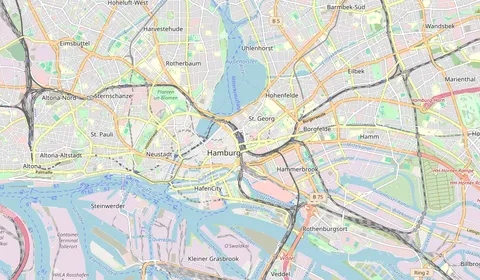



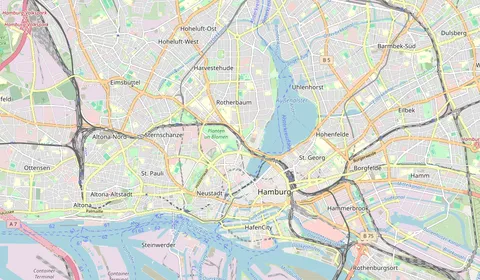
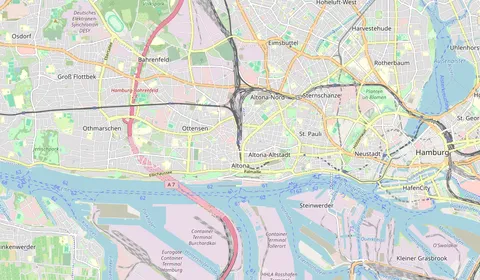
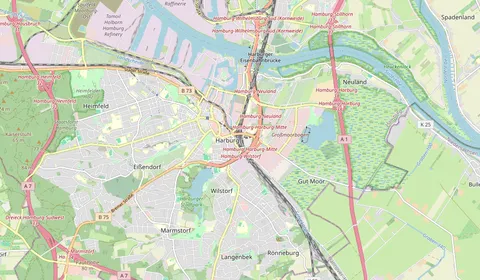
Train routes to and from Hamburg
Find places to stay in Hamburg

Frequently asked questions
What does Hbf mean on a Hamburg train ticket?
Hbf is short for Hauptbahnhof, the German term for a city's main station. On a ticket, Hamburg Hbf names the same place as Hamburg Hauptbahnhof. Do not confuse it with the separate stops at Dammtor, Harburg or Hamburg-Altona.
Which Hamburg station should I use for trains to Sylt?
Hamburg-Altona is the normal departure point for RE6 or RE6X Marschbahn trains to Westerland on Sylt. During major work, these trains may start farther north at Pinneberg or Elmshorn, so check the exact departure before travelling to Altona.
Do children travel free on DB trains to Hamburg?
Children aged 5 or younger travel free and do not need to be listed on a domestic DB booking. Up to four children aged 6 to 14 can travel free with someone aged 15 or older, but they must be added when the ticket is booked. International and local-fare rules can differ.
Can I take a bicycle on an ICE train to Hamburg?
Only selected ICE trains carry full-size bicycles. On a DB long-distance train, book both a long-distance bicycle ticket and a bicycle-space reservation before travel. Add the bicycle during the journey search so the results show trains with a space available.
Is the Hamburg CARD valid on the S1 to Hamburg Airport?
Yes, when you buy the Hamburg CARD that includes public transport. Its Hamburg AB validity covers the airport, so the S1 between the airport and central Hamburg needs no extra airport ticket. A Hamburg CARD sold without public transport does not include the journey.