
Train stations in Berlin
Berlin Hbf is the main long-distance interchange; Südkreuz suits southern Berlin and BER connections, while Ostbahnhof serves Friedrichshain.

- Stations
- 5
- Primary station
- Berlin Hbf
- Passenger operators
- 4
- Routes covered
- 24
Use Berlin Hauptbahnhof for most long-distance trips, but confirm the full station name on your ticket before you pay.
Berlin Hauptbahnhof is the default station
Start with Berlin Hauptbahnhof, usually shown as Berlin Hbf, when you search for a long-distance journey. It is Berlin's principal interchange and the most useful default when you have no reason to choose another station. Treat it as a starting assumption, because your booked train and full station name still decide where you should go.
Open the calling points before paying, then check them again shortly before travel. Engineering work can move a train between Berlin stations. This matters particularly for night trains, whose temporary station changes may not match a route description you read earlier.
Each Berlin station suits a different part of the city
Choose a secondary station only when your train actually calls there and it improves the complete journey to your accommodation. A station that looks closer on a map can still be slower once you add an S-Bahn ride, a change and the walk with luggage.
| Station shown in the journey | Choose it when | Check before booking |
|---|---|---|
| Berlin Hbf | You want a central long-distance interchange with broad onward connections | Whether your train uses the upper or lower long-distance platforms |
| Berlin Ostbahnhof | Your train calls there and you are staying in Friedrichshain or east of the centre | Whether the same train also calls at Hauptbahnhof |
| Berlin Südkreuz | You are staying in southern Berlin or connecting to BER Airport | The actual long-distance stop and the airport departure time |
| Berlin-Spandau | Your destination is in western Berlin and your train calls there | Whether getting off there really saves time compared with continuing to Hauptbahnhof |
| Berlin Gesundbrunnen | Your train uses this northern station or your accommodation is nearby | The operator's latest calling pattern, particularly for overnight trains |
| Flughafen BER | Your journey starts or ends at Berlin Brandenburg Airport | That you selected the airport station, not a central Berlin station |
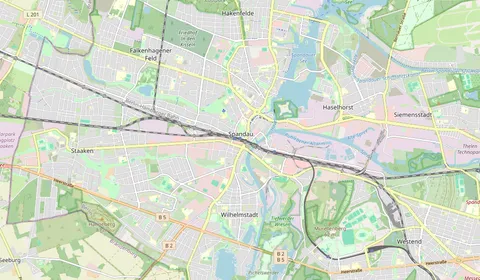
Ostbahnhof is in Friedrichshain, east of Alexanderplatz. Berlin-Spandau is on the western edge of the city, while Südkreuz is a southern long-distance station. Use those locations to narrow the options, then confirm the stop in the live itinerary.
Direct trains cover several useful routes
Berlin has direct daytime trains across Germany and to several European capitals. Use the times below for orientation, then check the exact departure because engineering work and timetable changes can alter both the route and journey time.
| Route from Berlin | Typical direct pattern | Useful journey time |
|---|---|---|
| Munich | Fast ICE trains run hourly in 2026, with 16 fast departures in each direction | Just under 4 hours on the faster trains |
| Amsterdam Centraal | DB normally runs six direct ICE trains in each direction | Around 6 hours |
| Paris Est | One direct DB and SNCF ICE runs each way daily | About 8 hours |
| Copenhagen | DB, DSB and ČD run two year-round direct ComfortJet trains each way, plus a seasonal overnight service | Around 7 hours |
For Prague, the direct Railjet and EuroCity pattern is the practical default, normally taking around 4 to 4.5 hours. Warsaw is also served by direct EuroCity trains. Reservations can be compulsory on international trains even when they are optional on a domestic ICE, so inspect the rule attached to the exact departure.
Connections at Hauptbahnhof need a realistic margin
Berlin Hauptbahnhof has five levels, with long-distance tracks on both the upper and lower levels. A connection between neighbouring platforms can be quick, but a change between levels adds walking and lift or escalator time. Allow more than the bare minimum when you have luggage, children or reduced mobility.
Check the platform display when you arrive instead of relying only on the platform printed in an old itinerary. Before a tight accessible connection, check the live lift status and station plan. If you need assistance, arrange it for the exact train and station rather than for "Berlin" in general.
BER Airport is a separate rail destination
Search for Flughafen BER when you are travelling to or from the airport. The station is directly below Terminal 1 on level U2, and Terminal 2 is reached by following the signed walking route from Terminal 1. Choosing Berlin Hbf by mistake leaves you with a separate airport journey.
The FEX and RE20 link Hauptbahnhof with BER in about 23 minutes and Südkreuz with BER in about 14 minutes. For travel before December 2026, you have four FEX or RE20 journeys an hour, while the S9 and S85 offer other direct local options. Check the live timetable for your flight time, especially early in the morning or late at night.
Berlin city centre to BER requires an ABC local-transport ticket. The current adult single fare is €5.00, with no airport surcharge. Do not buy an AB ticket for this trip because the airport lies in fare zone C.
Night trains require a fresh station check
Berlin has ÖBB Nightjet links towards Vienna, Graz and Zurich, while European Sleeper serves corridors towards Amsterdam, Brussels, Paris and Prague. The operator and accommodation category matter more than the general label "night train". A seat, couchette and sleeper are different products with different prices and availability.
Check the full station name on the operator's latest timetable on the day you travel. During engineering work, European Sleeper has moved Berlin calls from Hauptbahnhof and Ostbahnhof to Gesundbrunnen. A saved route summary is not reliable boarding information when this happens.
With an Interrail or Eurail Pass, reserve the required seat or sleeping accommodation separately. Night train reservations are not the same as a full ticket fare, and your pass alone does not secure a couchette or sleeper.
Ticket flexibility should match your plans
For a fixed domestic journey, compare DB's Saver fare with the Flexpreis before choosing the cheapest result. Domestic DB Saver fares start from €21.99 across the network, not on every Berlin route. The fare for your Berlin journey may be higher.
Choose Flexpreis when the departure time may change. It permits travel on other trains on the booked route on the day of travel, while Saver fares can bind you to the long-distance train shown on the ticket. Check cancellation terms as well as price before paying, particularly when you are connecting from a flight.
Second-class domestic DB tickets do not normally include a seat reservation. A separate second-class long-distance reservation costs €5.50. Reservations are optional on domestic ICE trains, but they can be useful on busy departures. International rules differ: France-bound high-speed trains and long-distance trains to Poland require reservations, and seasonal rules can also apply on other routes.
Local transport completes the station choice
Berlin AB covers journeys within the city limits, while ABC adds the surrounding zone that includes BER Airport. An adult AB single ticket costs €4.00 and is valid for one journey in one direction for up to 120 minutes, with changes allowed. A return or circular journey is not included.
Plan the local leg before selecting the long-distance station. Compare the complete arrival time at your hotel, not only the train's time into Berlin. Confirm the station, train number and local fare zone together. This prevents an avoidable cross-city journey with luggage.
Where to book
Train tickets
- Check times & prices
Omio
Omio connects you with over 1,000 transport providers - trains, buses, flights, and more - to simplify your travel planning.
Rail Europe
Rail Europe is a leading travel tech company specializing in European train bookings for over 15,000 travel professionals worldwide.
Trainline
Trainline sells rail and coach tickets worldwide on behalf of major UK and European transport companies.



Passenger train operators
- Check times & prices
Deutsche Bahn (DB) is Germany's national railway, running ICE, IC and regional trains with Flexpreis, Sparpreis and Super Sparpreis fares.
Official website - Check times & prices
FlixTrain runs affordable intercity trains mainly in Germany and, to a lesser extent, Sweden; fares vary by demand and booking time.
Official website - Check times & prices
ÖBB is Austria's national railway, with Railjet high-speed and Nightjet sleeper services plus regional trains across Austria and neighbouring countries.
Official website - Check times & prices
SNCF operates France's TGV and regional trains. SNCF Connect books domestic and many international journeys, with fares ranging from flexible to non-refundable.
Official website

Train stations in Berlin
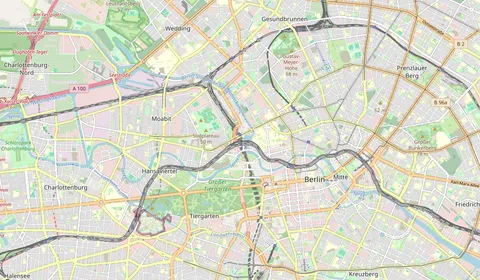



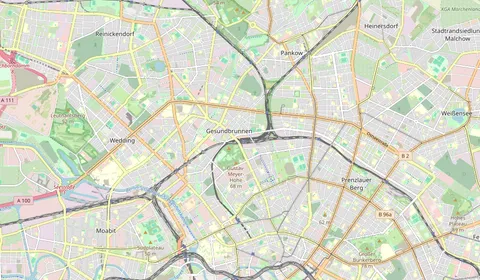
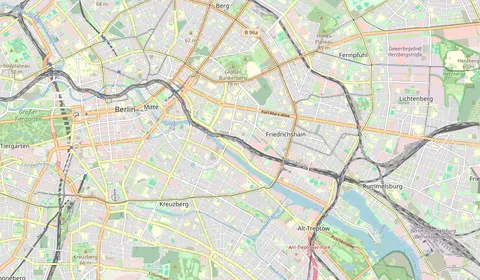
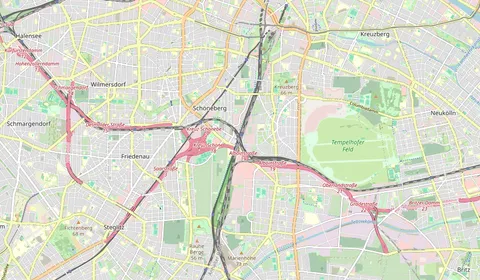
Train routes to and from Berlin
Find places to stay in Berlin

Before you travel
Berlin Hbf is the main station to check first for long-distance rail, but Berlin journeys often depend on which side of the city you are starting from or reaching. The safest habit is to match your ticket to the exact Berlin station name.
Do not treat every Berlin station as interchangeable. Some stations are more useful for cross-city access, some for specific directions, and some for local connections, so choose the station around the journey shown in your timetable.
Hbf is the German abbreviation for Hauptbahnhof, meaning main station. Berlin station names can also point to districts or compass positions, so keep the full station name visible when planning transfers.
Frequently asked questions
Is Berlin Ostbahnhof only a local station?
No. Berlin Ostbahnhof handles long-distance and regional trains as well as S-Bahn services, so it may appear on an intercity itinerary.
Can I continue by U-Bahn from Berlin-Spandau?
Yes. Berlin-Spandau has U-Bahn and S-Bahn connections, alongside regional and long-distance trains.
Which Berlin district is Südkreuz in?
Berlin Südkreuz is in Schöneberg, where it serves both regional and long-distance trains.
Can reservation rules on Berlin-Amsterdam ICE trains change by season?
Yes. Seasonal reservation rules may apply on this international route, so check the requirement for your travel date and exact train.