Barcelona to Bilbao by train
One direct Renfe Alvia a day links Barcelona and Bilbao in around 7 hours, with weekend engineering works and no full high-speed line.
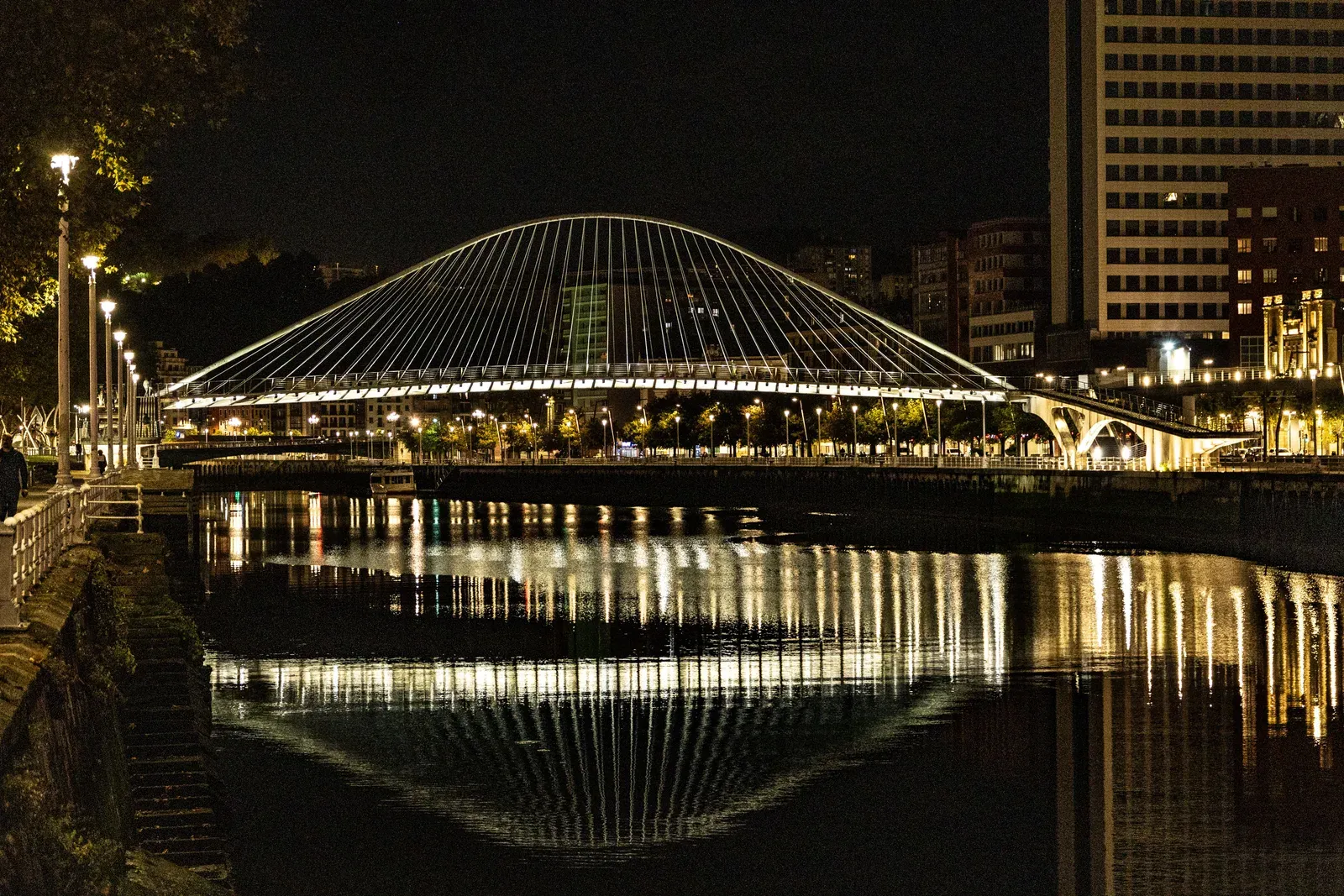
One direct train covers Barcelona to Bilbao each day, and it takes around 7 hours. No high-speed line runs the whole way, which is the plain reason the journey is long for the distance involved.
Barcelona to Bilbao by train at a glance
| Detail | What to expect |
|---|---|
| Direct service | One train each direction, daily |
| Journey time | Around 7 hours (about 6 hours 55 minutes on Renfe's own schedule) |
| Departure station | Barcelona Sants |
| Arrival station | Bilbao-Abando Indalecio Prieto |
| Operator | Renfe, Alvia service |
| Distance | 467 km |
| Seat reservation | Compulsory, included in the ticket price for a standard fare |
| Fares | Set by Renfe, no fixed anchor price; advance fares are typically cheaper than booking on the day |
| Late 2026 disruption | Several weekends between Logroño and Miranda de Ebro run by replacement bus, into December 2026 |
Treat the journey time as orientation rather than a promise for your exact date, and check the specific departure when you book.
The one direct train, and why it takes 7 hours
Renfe runs a single direct Alvia each way between Barcelona and Bilbao. The northbound train, Alvia 438, leaves Barcelona Sants at 08:50 and reaches Bilbao-Abando in the mid-afternoon. The southbound train, Alvia 437, leaves Bilbao-Abando at 15:18 and reaches Barcelona in the evening. Both call at Logroño partway through.
That is it for direct options. If this specific train does not suit your dates or times, your realistic choices are a different day's direct Alvia, a connection with a change, or a different mode of transport altogether, covered below.
The Alvia is Renfe's variable-gauge long-distance train, built to run on the newer high-speed track around Barcelona and then continue, without you having to change trains, onto Spain's older conventional network for the rest of the journey. That is the whole reason this route exists as a single-train, single-ticket journey at all. It is also why 467 km takes about 7 hours instead of half that: the Basque Country's own high-speed line, commonly called the Y vasca, is still under construction, so a meaningful stretch of this journey runs on conventional track at conventional speeds.
Engineering works are affecting this route into December 2026
Adif, the state infrastructure manager, is renewing the overhead power lines between Logroño and Miranda de Ebro, on the section this train uses. The work is compatible with normal running most of the week, but Renfe closes the line completely on a series of weekends running from late November 2025 through 13 December 2026, and replaces the affected stretch with a coach.
On the affected weekends, Alvia 438 runs by train from Barcelona to Logroño, then by road through Miranda de Ebro to Bilbao, and Alvia 437 does the same in reverse. Upcoming weekends include 12 and 13 September, 26 and 27 September, 10 and 11 October, 24 and 25 October, 21, 22, 28 and 29 November, and 12 and 13 December 2026. If your travel date falls on one of these, build in extra time for the road-and-rail combination, and check Renfe's engineering notices close to your date, since the exact list can shift.
Outside those specific weekends, the direct Alvia runs as a normal single train with no change.
Bilbao-Abando: the terminal and what is happening there
Trains arrive at Bilbao-Abando Indalecio Prieto, officially Bilbao Intermodal Abando-Indalecio Prieto, on Plaza Circular in the city centre. It doubles as an intermodal hub. Bilbao's Cercanías commuter lines, the Bilbao Metro, city buses and taxis all connect from the same building, so onward travel around the city is straightforward.
The station is also mid-transformation. Spain's Ministry of Transport, Adif and the Basque regional authorities agreed in May 2026 that the future Basque high-speed line will reach Abando provisionally at surface level, ahead of a later underground rebuild, to bring the connection forward without waiting for the whole project to finish. Neither stage has a completion date. In practical terms, construction around Abando is likely to continue for years, but it is not currently changing where or when the Barcelona Alvia arrives.
If you cannot take the direct train: the Madrid connection is not a shortcut
It is tempting to assume that routing through Madrid, Spain's busiest rail hub, would be quicker. It is not, and you are better off knowing that before you book than after.
Barcelona to Madrid is fast and frequent: high-speed trains run roughly every half hour or better and take around 3 hours, arriving at Madrid-Puerta de Atocha-Almudena Grandes. The problem is the second leg. Madrid to Bilbao also has no complete high-speed line, so the Alvia between Madrid and Bilbao still takes around 5 hours, and only a couple of direct departures run each day from Madrid Chamartín, a different station across the city from Atocha. Add the cross-Madrid transfer to the two journey times, and a Barcelona-Madrid-Bilbao routing comes out at 8 to 9 hours or more, longer than the direct Alvia and with an extra change and an unfamiliar station transfer in the middle.
Unless your schedule genuinely requires a different departure time than the one direct train offers, book the direct Alvia. If you do need the Madrid route, plan for a Metro or Cercanías transfer between Atocha and Chamartín, and give yourself a real buffer rather than a tight connection.
Seat reservations and rail passes
A seat reservation is compulsory on the Alvia, including for the Barcelona to Bilbao service. If you buy a standard Renfe ticket, the reservation is built into the price and you do not need to do anything extra.
If you are travelling on an Interrail or Eurail Pass, the pass covers the journey itself, but you still need to add a separate reservation before boarding. Renfe and Interrail both charge for it: pass-holder reservations cost €10 in second class and €13 in first class. You can book through the Interrail reservation service, at a long-distance ticket desk in Spain on the day of travel or up to three months ahead, or by phone with Renfe, though a phone booking only holds your seat for 72 hours and must be collected in person. Do not board with only your pass and no reservation. On a route with just one direct train a day, a missed or invalid reservation is a genuinely expensive mistake, not a minor one.
Tickets and fares
There is no fixed price for this journey, and no single fare holds for every date. Book directly through Renfe for the fare on your exact departure: advance fares are typically cheaper than booking on the day, and prices rise closer to travel and on busy dates. First class adds a wider seat and, depending on the fare, extra services.
Book as soon as your travel date opens if you want the lowest advance fare or a specific departure, since this route has only one direct train a day and it can sell out on busy dates such as weekends and holiday periods.
Train versus plane for Barcelona to Bilbao
A direct flight, mostly on Vueling, covers the same distance in around 1 hour 15 minutes and runs several times a day. On pure travel time, flying wins comfortably. There is no point pretending otherwise.
The train's case is different. Both stations sit close to their city centres, so you skip the airport transfer and security buffer at both ends. You get one ticket for a full day of Spanish and Basque landscape, from the plains around Zaragoza through La Rioja's vineyards and the Ebro valley into the Basque hills. And because there is only one direct departure a day, the train suits a traveller who has already decided to make the journey itself part of the trip, rather than someone who needs flexibility or a same-day return. If you are short on time, fly. If a full day on a single train through changing scenery appeals to you, and your dates work around the one daily departure, take the Alvia.
Where to book

Train service
- Check times & prices
Renfe serves Spain with AVE, Avlo, Alvia and regional trains. AVE tickets are named and reserved, while Interrail and Eurail passes need reservations.
Official website
Find places to stay in Bilbao

Frequently asked questions
Is there a direct train from Barcelona to Bilbao?
Yes, but only one a day in each direction. Renfe's Alvia 438 leaves Barcelona Sants at 08:50 and reaches Bilbao-Abando in the mid-afternoon, and Alvia 437 leaves Bilbao at 15:18 and reaches Barcelona in the evening.
How long does the Barcelona to Bilbao train take?
Around 7 hours for 467 km. There is no high-speed line for the whole route, so treat the exact figure as orientation and check your specific departure when you book.
Which station does the Barcelona train arrive at in Bilbao?
Bilbao-Abando Indalecio Prieto, officially Bilbao Intermodal Abando-Indalecio Prieto, on Plaza Circular in the city centre. Cercanías trains, the Bilbao Metro, buses and taxis all connect from the same building.
Is the Barcelona to Bilbao train affected by engineering works in 2026?
Yes. Renfe replaces part of this exact service with a coach between Logroño and Miranda de Ebro on a series of weekends running to 13 December 2026, including 12 to 13 September, 26 to 27 September, 10 to 11 October, 24 to 25 October, 21 to 22 and 28 to 29 November, and 12 to 13 December. Outside those weekends, the direct Alvia runs as normal.
Do I need a seat reservation on this train?
Yes, a reservation is compulsory on the Alvia. A standard Renfe ticket includes it. Interrail and Eurail Pass holders need to add a separate reservation, which costs 10 euros in second class and 13 euros in first class.
Is it faster to go via Madrid instead of taking the direct train?
No. Madrid to Bilbao has no high-speed line either, so that leg still takes around 5 hours, and you would also need to cross Madrid between two different stations, Atocha and Chamartín. A Barcelona-Madrid-Bilbao routing usually takes 8 to 9 hours or more, longer than the direct Alvia.
Is the train worth it compared to flying?
If you only care about travel time, no: a direct flight takes about 1 hour 15 minutes against roughly 7 hours by train. The train's case is a central-station start and finish with no airport transfer, and a full day of scenery through Aragón, La Rioja and the Basque hills on a single ticket.
More routes