
Train stations in Lisbon
Lisbon has several rail stations: Santa Apolónia usually suits Porto and northern Portugal, while Oriente often serves Faro, Alentejo and airport connections.

- Stations
- 2
- Primary station
- Lisboa Oriente
- Passenger operators
- 2
- Routes covered
- 18
Lisbon uses several rail stations, so confirm the station on your ticket before booking and plan your transfer around that name.
Start with the station, not the city name
Lisbon is easy to navigate once you stop treating it as one station. Long-distance booking results can show Lisbon as a single destination, while the train itself may use Santa Apolónia or Oriente. Those stations are on different sides of the city and suit different onward plans. Open the journey details before paying and note both the departure station and the arrival station. That is the detail that prevents a stressful cross-city dash on travel day.
For trains towards Porto and northern Portugal, Santa Apolónia is usually the useful Lisbon station to look for. For Faro, the Algarve, Évora or Beja, Oriente is often the relevant one. The precise stopping pattern can change by train, so the ticket is the final answer. Do not book accommodation, an airport transfer or a last-minute metro journey on the assumption that every long-distance service uses the same terminus.
Choose Santa Apolónia for the historic centre
Santa Apolónia is the sensible arrival or departure point when you are staying around Alfama, Baixa or the riverfront. It is a terminus and a CP station, with the Blue Line Metro nearby. For a Porto-bound trip, this is normally the station to search first. It also makes a calmer choice than Oriente when you want to start or finish close to the older centre rather than in the Parque das Nações area.
The mistake here is assuming that a ticket marked Lisbon gives you a choice of station. It does not. Confirm the station code or full station name in the itinerary, then allow time for the Metro or taxi journey from your hotel. If you are arriving late, check the last practical connection rather than relying on the map alone. A short distance in Lisbon can still mean hills, luggage and a change of line.
Use Oriente when the airport or the south matters
Oriente is the better default when you are travelling to or from the airport side of Lisbon, or when your long-distance train is on the southern and Alentejo corridors. The station is on the Metro Red Line, which makes it the straightforward rail-and-Metro interchange for Aeroporto. It is also beside the Oriente transport hub, so it can be more convenient than the historic centre if you are staying in Parque das Nações or continuing by coach.
Do not confuse a convenient airport connection with a direct train from central Lisbon to the terminal. Plan the final Metro leg and leave room for station wayfinding, especially if you have luggage. If your ticket starts at Santa Apolónia, do not change it to Oriente simply because it looks closer to the airport. Travel from the station printed on the ticket unless the operator has explicitly authorised another arrangement.
Keep local lines separate in your plan
Rossio and Cais do Sodré solve different day-trip problems. Rossio is the station to check for CP urban trains towards Sintra. Cais do Sodré is the station to check for the Cascais coast. Neither is a substitute for Santa Apolónia or Oriente when you have a long-distance booking. Put the station name in your phone before you leave the hotel, because Lisbon's Metro names and nearby districts can otherwise make a first visit more confusing than it needs to be.
For journeys south of the Tagus, check the operator as well as the station. Fertagus serves stations including Entrecampos and Sete Rios and continues across the river towards places such as Pragal, Pinhal Novo, Palmela and Setúbal. That is useful if your destination is on the Setúbal Peninsula, but it is a different decision from a CP long-distance journey. Look at the operator, ticket conditions and final destination together. A train that crosses the river is not automatically the right train for Faro, Évora or your particular hotel.
Buy the journey you are actually taking
CP's Alfa Pendular and Intercidades services are the principal long-distance train types you will see on Lisbon itineraries. Alfa Pendular is the faster service on the main north-south axis, while Intercidades also covers important longer-distance routes. Compare the departure station, journey time and change pattern before you compare the headline price. The cheapest ticket is poor value if it leaves from the wrong side of the city or turns an easy airport transfer into a rush.
Check the ticket conditions for the exact service you select. Long-distance tickets are normally tied to a particular departure, and rail-pass travellers may need an additional reservation on services where it is required. Those rules can differ by train and can change, so read the booking screen before you assume a pass alone is enough. If you are travelling at a popular time, buy the train you want rather than arriving at the station hoping another service will be interchangeable.
A simple arrival plan
Before travel, write down three things: the station name on your ticket, the Metro line or onward connection you will use, and a backup if that connection is disrupted. It takes two minutes. It can save an hour.
If you are staying near the historic centre, a Santa Apolónia arrival is usually the cleanest plan. If you need the airport, Parque das Nações or a southern corridor, Oriente may be the more useful hub. For Sintra, start with Rossio; for Cascais, start with Cais do Sodré; and for the Setúbal Peninsula, check Fertagus rather than assuming CP serves the same journey. Confirm the operator's live timetable and the station printed on your ticket before you leave. Lisbon's rail system rewards that small bit of preparation.
Where to book
Train tickets
- Check times & prices
Omio
Omio connects you with over 1,000 transport providers - trains, buses, flights, and more - to simplify your travel planning.
Rail Europe
Rail Europe is a leading travel tech company specializing in European train bookings for over 15,000 travel professionals worldwide.
Trainline
Trainline sells rail and coach tickets worldwide on behalf of major UK and European transport companies.



Passenger train operators
- Check times & prices
CP is Portugal's national rail operator, running Alfa Pendular and Intercidades between Lisbon, Porto and the Algarve; both include assigned seats.
Official website - Check times & prices
Renfe serves Spain with AVE, Avlo, Alvia and regional trains. AVE tickets are named and reserved, while Interrail and Eurail passes need reservations.
Official website
Train stations in Lisbon
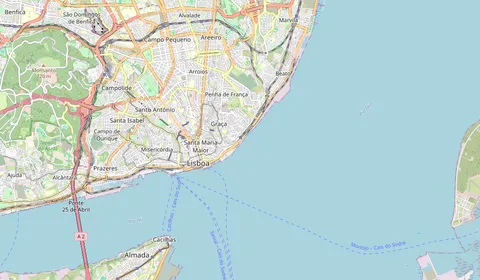


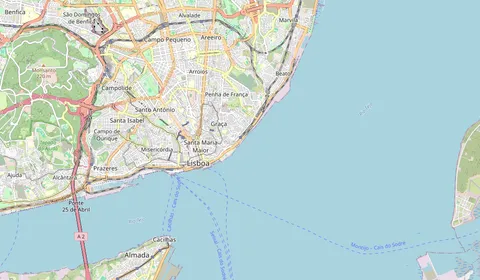
Train routes to and from Lisbon
Find places to stay in Lisbon

Frequently asked questions
What should I inspect before buying a long-distance ticket to Lisbon?
Open the full itinerary and confirm the station name, service and ticket conditions. Lisbon can mean Santa Apolónia or Oriente, so assuming the wrong station can put you on the opposite side of the city.
Which station should I check for a Sintra day trip?
Start with Rossio when the dated CP journey shows the Rossio to Sintra service. Check the actual departure before leaving, because works can change a normal plan.
Which station should I check for a Cascais day trip?
Check Cais do Sodré for the CP urban train to Cascais. Confirm the dated service before you go, particularly when engineering work affects the line.
When is a Fertagus train the useful choice?
Use Fertagus when your itinerary is for the south-bank corridor through stations such as Entrecampos or Sete Rios. Confirm the operator and final destination rather than assuming every train crossing the Tagus serves the same place.
What should rail-pass holders check on Alfa Pendular or Intercidades?
Check the exact service before travel. CP states that Alfa Pendular and Intercidades require a seat reservation, so a pass alone may not complete the boarding requirements.
How many stations does Lisbon have?
Lisbon has several long-distance and suburban stations serving different corridors; check which one your specific train uses before you plan your arrival, since Santa Apolonia and Oriente both serve long-distance trains but not the same routes.
Which station in Lisbon should I use for trains to Porto?
Long-distance trains to Porto use Santa Apolonia and Oriente stations; both are served by Alfa Pendular and Intercidades services.
Can I use an Interrail or Eurail pass in Portugal?
Yes. Interrail and Eurail Global Passes are valid on CP (Comboios de Portugal) national trains, including Alfa Pendular and Intercidades, but reservation rules still apply on those services.