
Train stations in Bruges
Brugge serves Bruges' historic centre; Brussels and Ghent have direct trains, while London and Paris journeys usually change at Brussels-Midi.
- Stations
- 3
- Primary station
- Brugge / Bruges
- Passenger operators
- 2
- Routes covered
- 3
Book Brugge for the historic centre, then check every ticketed leg and reservation before paying for an international journey.
Brugge is the station to choose for the historic centre
Book Brugge, at Stationsplein 5, for a hotel or day visit in the historic centre. The station has staffed ticket counters, machines, lifts, escalators, free Wi-Fi, buses and a taxi stand. It is the practical default.
If a journey planner shows more than one Bruges station, open the details before paying. The full station name matters. Choosing the first result can leave you at a secondary stop rather than the useful arrival for the centre.
Markt is about 20 minutes away on foot. The walk suits a small bag, but Bruges' cobbles and bridges make a large wheeled case less appealing. Check the route to your accommodation rather than using the walk to Markt as the distance to every hotel.
Brussels and Ghent have frequent direct trains
Take a direct SNCB/NMBS train from Brussels when the capital is your natural gateway. The average journey takes 1 hour 4 minutes, and the route has 65 trains per day. Engineering work can alter the pattern, so check the exact departure before travel.
Brussels-Midi, Brussels-Central and Brussels-North can all appear in a Bruges itinerary. Use the station that fits your arrival or accommodation. Crossing Brussels just to start from Midi adds work when the same train calls somewhere more convenient.
Gent-Sint-Pieters is the other important interchange. Direct trains average 28 minutes, with 93 trains per day. If the journey already passes through Ghent, there is no reason to force a change in Brussels.
Brugge also has direct trains towards the coast. Oostende is about 12 minutes away, while other direct services run towards Blankenberge and Knokke. Read the destination and stopping pattern on the departure board because coast-bound and Brussels-bound trains can leave close together.
International routes use different connections
For London and Paris, the normal pattern is Eurostar to Brussels-Midi followed by an SNCB/NMBS train to Brugge. Eurostar can sell the connection in one booking, but it still contains separate Eurostar and Belgian tickets. The Belgian ticket works on any suitable train over the same route that day, which gives you some flexibility after a delayed arrival.
Amsterdam needs a date-specific search. Eurostar can route you through Brussels, while Eurocity Direct may produce a change in Antwerp instead. Check the operator, interchange and number of changes rather than assuming every Amsterdam journey uses Brussels-Midi.
Germany has a limited direct exception in summer 2026. A weekend ICE runs from Cologne through Aachen, Brussels, Ghent and Bruges to Ostend from 6 to 27 June and from 8 to 30 August. Outside those dates, plan to change, usually in Brussels. This seasonal train is useful only when your travel date matches its short operating periods.
Leave a sensible margin whenever the international and Belgian legs are separate. London-bound Eurostar passengers use the Channel Terminal at Brussels-Midi, with security and passport controls before boarding. Check the arrival guidance for the exact train instead of treating the change like a quick walk between two domestic platforms.
Brussels Airport has direct and connecting trains
Compare the next direct train with the best connecting itinerary after your flight. A direct Brussels Airport-Zaventem to Brugge train takes about 1 hour 25 minutes, but the walk from arrivals and a late flight can make a fixed rail connection risky.
Search from Brussels Airport-Zaventem rather than a central Brussels station. This keeps the airport rail section inside the itinerary and makes the direct-versus-change comparison clear. Check the final ticket product before paying.
Walking, buses and the centre shuttle cover the last leg
Walk when your luggage is light. Markt is about 20 minutes from Brugge station, and signs for Centrum point towards the historic centre. A large suitcase changes the calculation. Cobblestones are tiring after a long journey.
De Lijn lines 1 and 2 serve central stops from the station, with a bus on the corridor about every five minutes. A standard ticket costs €3 and permits changes for 60 minutes. Pay contactless on board or buy from the Lijnwinkel or a machine at Stationsplein.
Check the stop nearest your accommodation. 't Zand, Sint-Salvatorskathedraal, O.L.V. Kerk and Dijver serve different parts of the centre, so the first bus into town is not automatically the right one.
The separate centre shuttle starts from De Lijn platform C1 and runs daily from 07:00 to 19:00. It serves each stop every 25 minutes and costs most visitors €3 per ride, paid on board by card or mobile payment. Before travel, confirm the current bus and shuttle prices as well as any event diversions.
Take a taxi when you arrive late, have heavy luggage or your accommodation is awkward from the central stops. Use the rank outside Brugge station, then confirm the destination and price before setting off. This avoids a bus ride followed by another long walk with bags.
Station facilities help before an early train
Use the station lockers for a day visit rather than taking luggage over the cobbles. Availability is not guaranteed, so have another plan if every suitable locker is occupied.
The main hall normally opens from 03:30 to 02:10 on business days and from 04:15 to 01:45 at weekends and on public holidays. Staffed ticket counters have shorter hours: 06:15 to 20:00 on business days and 07:15 to 20:00 at weekends and on public holidays. Check the current hours before relying on the hall or counter for an early or late train.
Brugge offers assistance for travellers with reduced mobility. Arrange it through SNCB/NMBS and confirm the meeting point in the booking. A lift is useful, but it does not replace the assistance process for a journey that needs staff support.
Belgian tickets are flexible by train, not by route or date
An adult second-class Standard fare between Brussels and Bruges is €17. Adults aged 26 to 64 receive 30% off on Saturdays, Sundays and public holidays. Travellers under 26 and those aged 65 or over receive 40% off the Standard fare. Enter the correct age when buying and carry proof where required. Check the current fare and discount conditions when you buy because ticket products can change.
Ordinary domestic tickets are valid for the stated date, time band, route and class. They do not reserve a particular seat, and individual seat reservations are not offered on normal domestic trains. That flexibility lets you choose a suitable train, but it does not let you change the route, date or fare conditions.
International tickets follow different rules. Check every leg for its operator, class and reservation requirement. A combined itinerary on one screen can still contain separate tickets underneath.
Rail passes cover Belgian trains but not every reservation
Interrail and Eurail cover participating SNCB/NMBS trains in Belgium, and normal domestic trains do not need a seat reservation. Add the Belgian journey to a mobile pass before travel and check the exact train in the pass planner.
Eurostar is different. Pass holders need a paid compulsory reservation, and the pass-holder allocation can sell out while ordinary tickets remain available. Secure the reservation before committing to a fixed hotel or a separate onward ticket.
For one Brussels to Bruges journey, compare the €17 adult Standard fare and any age or weekend discount with the cost of using a pass day. A pass usually makes sense as part of a wider itinerary. Include reservation fees and refund conditions in that comparison.
A day trip needs a planned return
Look up the final two useful trains before leaving Brugge station. Treat the earlier one as your practical target, especially when the return includes a fixed Eurostar, flight or separate-ticket connection.
Work backwards from the departure that cannot move. Include the walk, taxi or bus to Brugge, the domestic train, the change inside Brussels-Midi and any Eurostar arrival deadline. A cheap outbound ticket is poor value if the return leaves no recovery margin.
Where to book
Train tickets
- Check times & prices
Omio
Omio connects you with over 1,000 transport providers - trains, buses, flights, and more - to simplify your travel planning.
Rail Europe
Rail Europe is a leading travel tech company specializing in European train bookings for over 15,000 travel professionals worldwide.
Trainline
Trainline sells rail and coach tickets worldwide on behalf of major UK and European transport companies.



Passenger train operators
- Check times & prices
Deutsche Bahn (DB) is Germany's national railway, running ICE, IC and regional trains with Flexpreis, Sparpreis and Super Sparpreis fares.
Official website - Check times & prices
SNCB connects Belgium by domestic train. Go Pass 10 offers 10 journeys in Belgium for under-26s; Rail Pass offers 10 for travellers 26+, both valid for a year.
Official website
Train stations in Bruges
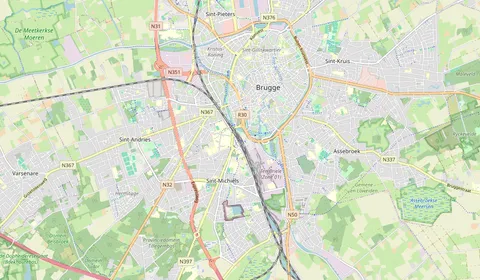


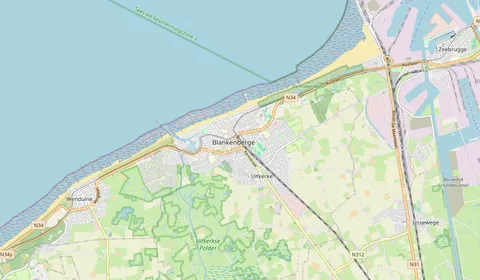
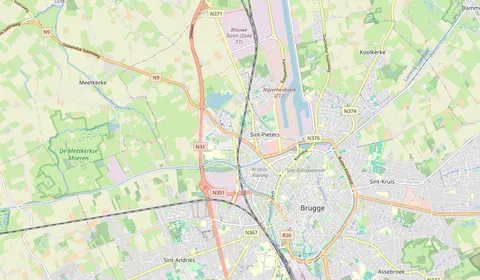
Train routes to and from Bruges
Find places to stay in Bruges

Frequently asked questions
Is Brugge-Sint-Pieters the same station as Brugge?
No. Brugge-Sint-Pieters is a separate secondary station north of the centre. For the historic centre, book Brugge at Stationsplein 5 and confirm the full station name before paying.
Can I buy an ordinary SNCB ticket on the train?
Usually not. Since 1 July 2026, ordinary domestic tickets must be bought before boarding. Limited exceptions apply to certain international services.
How much do Brugge station lockers cost?
Daily locker prices range from €5 for a small locker to €14.50 for an XXL locker. Opening the locker ends the rental, so collect everything at once. Confirm the current price before use.
How early should I book reduced-mobility assistance at Brugge?
For an eligible direct journey, request assistance at least three hours before departure. A journey involving a change normally requires at least 24 hours.
Is the Brussels Airport supplement included in the ticket?
It is included in most point-to-point airport tickets. If your ticket does not include it, the separate fee is €7.10 per journey. Confirm the ticket product and current supplement before paying.