
Train stations in Dover
Dover Priory serves central Dover; the ferry Passenger Terminal is just over one mile away, about a 25-minute walk, with bus and taxi options.

- Stations
- 2
- Primary station
- Dover Priory
- Passenger operators
- 1
- Routes covered
- 1
Use Dover Priory for most trips to central Dover, then plan a separate transfer if your destination is a ferry or cruise terminal.
Book Dover Priory for most central Dover trips
Dover Priory is the practical station for central Dover and the nearest railway station to the Port of Dover ferry terminals. Search for it first if you are visiting the town, catching a ferry, or joining a cruise.
Do not stop at the town name on the ticket. The Dover area also has Kearsney station, and an address north of the centre may be better reached from there. Put your accommodation, attraction, or terminal into a map before paying. It avoids arriving in the right town but on the wrong side of it with luggage.
For a central stay, choose Dover Priory and plan the final route from the entrance instead of assuming the station completes the journey. A taxi rank is near the entrance and there is information for onward buses. Check that route before departure, especially if you arrive late or have limited mobility. A station that looks close on a map can still be awkward with hills, luggage, or terminal access.
Compare the whole London journey
Southeastern runs trains between London and Dover Priory. Its high-speed service from St Pancras International can make the trip in around 1 hour 15 minutes. Other London departures may take longer, but can give you a better door-to-door journey if they are easier to reach.
Compare the exact train rather than choosing from the headline journey time. Look at your London starting point, any Underground or cross-London transfer, changes, arrival time, and the connection you need in Dover. Saving time on the rail leg can be a false economy if crossing London is long or stressful.
Check the departure station again on the day. London routes, engineering work, and stopping patterns can change, and journey planners may offer several valid options. If you have a sailing or cruise check-in, favour an itinerary with recovery time over the last possible connection.
Treat the port as a separate connection
Dover Priory is not inside the ferry or cruise terminals. The ferry Passenger Terminal is just over one mile from the station, with a walk of about 25 minutes. Bus and taxi options are also available. Use those figures for planning, not as a guaranteed connection.
First identify which part of the port you need. Ferry passengers and cruise passengers can have different terminals, entrances, and check-in instructions. Then check your operator's deadline and work backwards to a sensible train. A generic search for "Dover port" is not precise enough if a missed check-in means missing the departure.
Walking may suit a lightly packed traveller in good conditions. With large bags, children, limited mobility, or a tight schedule, a taxi or suitable bus can be more realistic. Recheck the current route and availability shortly before travel. Port procedures and local services can change independently of the railway timetable.
Build in time for both train disruption and terminal processing. A fast train does not create a protected connection to a separately booked ferry or cruise. If the departure is costly or difficult to replace, arriving earlier in Dover is usually the safer trade-off.
Choose the ticket around certainty
The cheapest ticket is not automatically the best ticket for a Dover journey. A train-specific fare can work well when your plans are firm, but may be poor value if a delayed flight, hotel checkout, or port transfer makes you miss the booked service.
Before buying, compare the saving with the flexibility you are giving up. Check the permitted train, London terminal, route, refund or change conditions, and whether a Railcard applies. If your outward journey connects to a fixed sailing, pay particular attention to the outward restrictions. For the return, consider how certain you are about disembarkation or cruise processing times.
Keep each operator's responsibility clear. A rail ticket and a separately booked sea journey normally form two parts of your plan, so do not assume one operator will protect the other connection. Leave enough time, understand the ticket, and have a backup for the final transfer.
Plan accessible travel beyond the platform
Plan the whole accessible route before you book, not only the train. Dover Priory has step-free access to all platforms, with lifts and stairs through the booking hall. Staff assistance and ramps for boarding are also available. If you need help, check the current booking notice, meeting point, and lift status before travel.
Station accessibility covers only part of the trip. The walk, bus, taxi, hotel entrance, and port terminal each need a separate check. Tell an assistance provider where you are actually going, not only that you are arriving at Dover Priory. That can stop a step-free rail journey ending with an unsuitable last mile.
Allow more time when assistance, luggage, or a fixed check-in is involved. If a lift fault or disruption would make the planned route unusable, identify a workable alternative before departure.
Build the return plan before leaving London
For a Dover day trip, check the last practical return train before you set out. The last listed service is not always the last sensible option once engineering work, a slow local transfer, or a missed connection is considered. Aim for at least one earlier train and know what you would do if you miss it.
If you are arriving by ferry or cruise and continuing by rail, do the same calculation in reverse. Border processing, disembarkation, and the transfer to Dover Priory can vary. Use live journey information on the day and avoid a tightly restricted train unless you are confident you can reach it.
Dover is straightforward by rail once the last mile is treated as part of the journey. Book the station that matches the address, compare the whole London route, and give a port connection more time than a simple timetable search suggests.
Where to book
Train tickets
- Check times & prices
Omio
Omio connects you with over 1,000 transport providers - trains, buses, flights, and more - to simplify your travel planning.

Passenger train operators
- Check times & prices
Southeastern runs across London, Kent and East Sussex, with High Speed services to St Pancras and 164 stations on its network.
Official website

Train stations in Dover
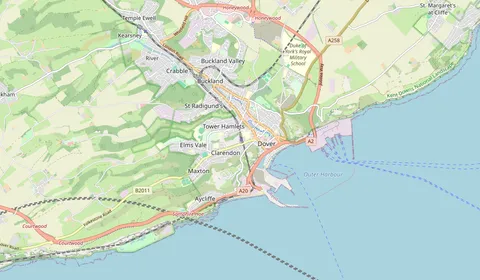
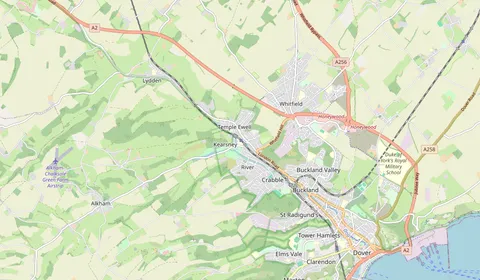
Train routes to and from Dover
Find places to stay in Dover

Frequently asked questions
Which Dover station should I choose?
For a central address, start with Dover Priory, then compare the exact address before paying. Choosing from the town name alone can leave you with an awkward final transfer.
How should I connect from the train to a ferry or cruise?
Plan the rail arrival and port transfer as separate legs. Confirm the exact terminal, check-in deadline, and suitable walk, bus, or taxi before choosing the train.
Is the fastest London train always the best option?
Not necessarily. Compare your London starting point, any cross-city transfer, the Dover arrival, and your onward margin before choosing the train.
What should I check for an accessible Dover journey?
Check both the rail journey and the final transfer. Confirm current assistance instructions, lift availability, and whether the route to your accommodation or terminal suits your needs.
How should I plan a return journey from Dover?
Choose a practical target train rather than relying on the final listed service. Recheck live running and leave time for a local transfer, ferry disembarkation, or cruise processing.