Updated
Europe by Rail Itinerary: Complete Guide to Train Travel Routes Across Europe
Five Europe by rail itineraries last 8 to 14 days; high-speed trains often need reservations, night trains always do, while regional trains generally do not.
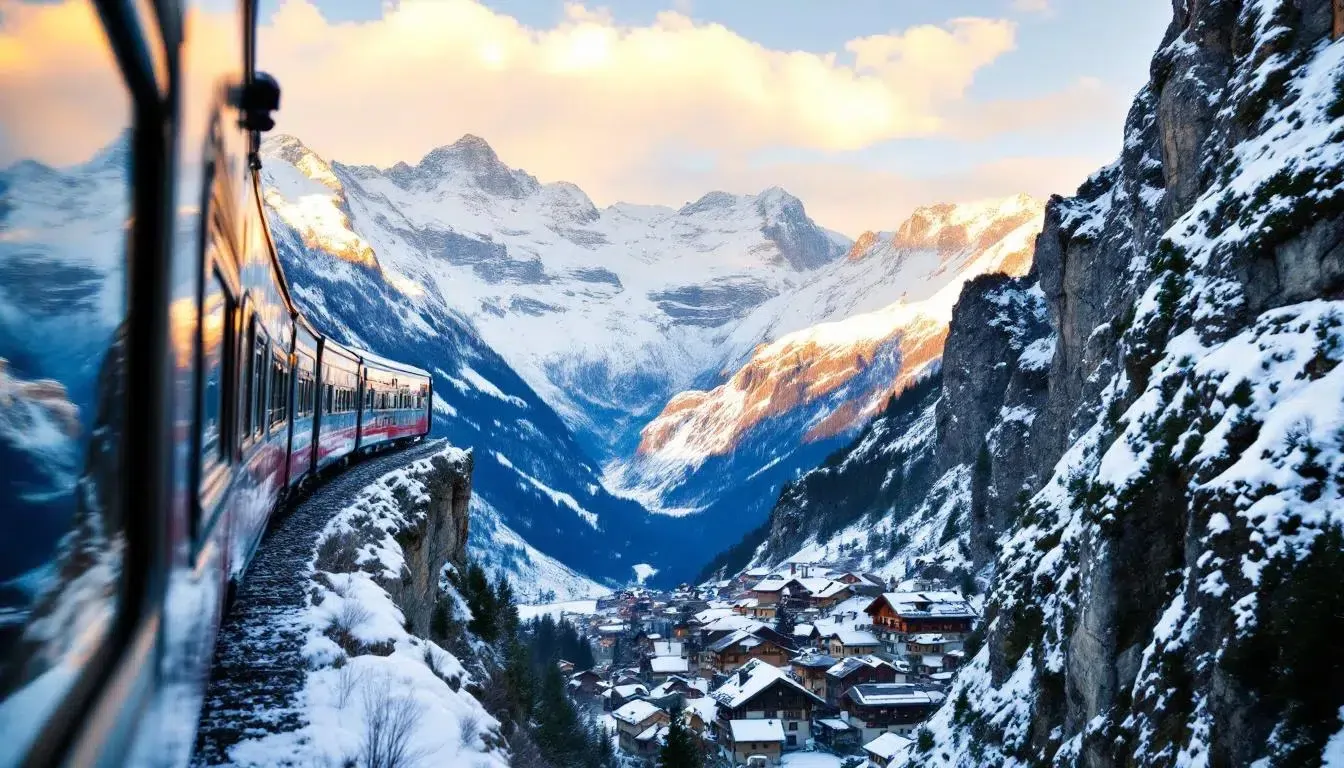
Europe’s railway network covers over 250,000 kilometres across 33 countries. Travelling by train puts you into city centres rather than distant airports, and the network is extensive enough that most popular destinations are directly connected. This guide covers five main itinerary routes with practical information on journey times, train companies, reservations, and pass planning.
Best Europe by rail itinerary routes
Five routes cover the most popular corridors for first-time and experienced European rail travellers.
Classic Western Europe circuit: London to Paris to Brussels to Amsterdam to Berlin (10 days)
This route connects four major capitals using frequent, well-established high-speed connections. Eurostar covers London to Paris and the Paris-Brussels-Amsterdam corridor. ICE trains connect Amsterdam to Berlin.
Mediterranean coastal route: Barcelona to Nice to Florence to Rome to Naples (14 days)
This route runs along the northern Mediterranean through Spain, southern France, and Italy. TGV services handle the French section; Trenitalia’s Frecciarossa and Frecciargento trains cover Italy.
Alpine adventure: Zurich to Interlaken to Zermatt to St. Moritz to Vienna (8 days)
Switzerland’s mountain rail network includes the Glacier Express from Zermatt to St. Moritz. Reservations are mandatory on this service and sell out quickly in summer. Book as early as you can.
Eastern European discovery: Prague to Vienna to Budapest to Krakow to Berlin (12 days)
EuroCity trains cover most of this corridor. Journey times are longer than Western Europe’s high-speed network, but routes are comfortable and fares are often lower.
Scandinavian explorer: Copenhagen to Stockholm to Oslo to Bergen (10 days)
The Bergen Railway from Oslo to Bergen is one of the most scenic train journeys in Europe. The route also benefits from a new daytime connection between Hamburg and Stockholm launched in May 2026.
Why train travel works across Europe
Train travel puts you into city centres. You arrive at Paris Gare du Nord, not Charles de Gaulle; at Rome Termini, not Fiumicino. There are no security queues and no baggage drop deadlines. On most European routes you can board a few minutes before departure.
Rail also produces significantly less CO2 per passenger than flying on equivalent routes. The exact difference depends on the route and the energy source powering the train, but European rail consistently comes out far lower.
Classic Western Europe rail circuit (10 days)
Days 1-3: London
The departure point for European rail is London St. Pancras International. All Eurostar services use this station. St. Pancras is on the Thameslink, Metropolitan, Hammersmith and City, Circle, and Victoria Lines, so it is well connected from most parts of London.
Day 3: Eurostar to Paris (around 2 hours 20 minutes)
Eurostar runs several services daily from London St. Pancras to Paris Gare du Nord. Journey time through the Channel Tunnel is around 2 hours 20 minutes depending on the service. The seat reservation is included in your Eurostar ticket.
If you hold an Interrail Pass or Eurail Pass, a reservation is still required and is not included in the pass. Pass-holder reservation fees on Eurostar are higher than on most domestic high-speed trains in Europe. The fee is set by Eurostar and changes; check the current amount on the Interrail Eurostar reservation page or directly at eurostar.com before you buy the pass. For many travellers on a short Western Europe circuit, point-to-point Eurostar tickets work out cheaper than a pass plus the reservation fees.
Days 3-5: Paris
Paris Gare du Nord is both your arrival station and the departure point for Eurostar services to Brussels. It sits on several Metro lines and is a short ride from most Paris accommodation. The Louvre, Musee d’Orsay, and central Paris are around 20 minutes by Metro.
Day 5: Eurostar to Brussels (around 1 hour 22 minutes)
The Paris to Brussels Eurostar runs many times daily. Journey time is around 1 hour 22 minutes to Brussels-Midi (also known as Brussels-Zuid). This is the only Brussels station for Eurostar arrivals. Brussels-Centrale, which is closer to the Grand Place, is a few Metro stops away.
Thalys no longer exists. Thalys was rebranded as Eurostar in October 2023. If you see older booking results or travel guides referring to a “Thalys” train on the Paris-Brussels or Brussels-Amsterdam corridor, those services now run under the Eurostar brand. When booking, search for Eurostar.
A useful alternative for this leg: the European Sleeper night train runs between Amsterdam, Brussels, and Paris. If you want to travel overnight and skip daytime Eurostar, check availability at the European Sleeper website. Places are limited, so book early.
Days 5-6: Brussels
Brussels-Midi is about 15 minutes by Metro from the city centre. The Grand Place is a 10-minute walk from Brussels-Centrale, one stop further into the city. Brussels is compact and walkable once you are past the station area.
Days 6-8: Amsterdam via Eurostar (around 1 hour 53 minutes)
The Brussels to Amsterdam train is operated by Eurostar on the high-speed corridor. Journey time from Brussels-Midi to Amsterdam Centraal is around 1 hour 53 minutes. Amsterdam Centraal opens directly onto the canal district. Most city accommodation is within walking distance or a short tram ride.
Days 8-10: Berlin via ICE (around 5 hours 50 minutes to 6 hours 20 minutes)
Amsterdam to Berlin by ICE takes around 5 hours 50 minutes to 6 hours 20 minutes depending on the routing. Some services go direct via Hannover; others may involve a transfer. Check the exact journey when booking, as departure times and connection patterns vary. Berlin Hauptbahnhof is the main arrival station, with U-Bahn and S-Bahn connections to the city.
Mediterranean coastal adventure (14 days)
Days 1-3: Barcelona
Barcelona’s main long-distance station is Barcelona Sants. High-speed AVE services to France and the rest of Spain depart from here. The city centre is about 10 minutes by Metro.
Days 3-5: Nice via TGV (around 8 to 9 hours, with transfer)
The train from Barcelona to Nice requires a change, typically at Montpellier or Marseille. TGV covers the French high-speed section; a regional train completes the journey to Nice-Ville. Total time is around 8 to 9 hours depending on your specific connection. Check transfer times carefully; some combinations have less than 30 minutes at the change point.
Nice-Ville is the main station, a 10-minute walk from the seafront. Regional trains from Nice to Monaco-Monte Carlo take around 20 minutes.
Days 5-7: Florence via the Ligurian coast (around 6 to 8 hours)
From Nice, the route crosses into Italy at Ventimiglia and continues along the Ligurian coast through Genoa to Florence. Regional trains handle most of this section. Journey time is around 6 to 8 hours with connections. You can break the journey in Genoa or the Cinque Terre villages if you have a flexible pass or cheap regional tickets.
Florence has two main stations. Use Firenze Santa Maria Novella (SMN) for the city centre. Firenze Campo di Marte handles some regional arrivals but is further out; avoid it unless your specific train stops there.
Days 7-10: Rome via Frecciarossa (around 1 hour 30 to 1 hour 45 minutes)
Trenitalia’s Frecciarossa trains run frequently between Florence SMN and Roma Termini. Journey time is around 1 hour 30 to 1 hour 45 minutes. Seat reservations are mandatory on all Frecciarossa services, and the reservation fee is included if you buy a standard ticket. Pass holders must add a reservation separately.
If you are using a regional or older ticket without a reservation on a Frecciarossa, you will not be allowed to board. Do not skip the reservation step.
Days 10-12: Naples via Frecciarossa (around 1 hour 10 minutes)
From Rome Termini, Frecciarossa trains reach Napoli Centrale in around 1 hour 10 minutes. From Naples, regional Circumvesuviana trains serve Pompeii Scavi (around 35 minutes) and Sorrento. These are separate from the high-speed network and do not require reservations.
Days 12-14: Return or extension
Return north by the same corridor, or check Trenitalia for overnight options to Sicily. Services to Palermo and Catania run via Villa San Giovanni and involve a rail ferry crossing of the Strait of Messina. Journey times vary; check live timetables directly with Trenitalia.
Alpine scenic route (8 days)
Days 1-2: Zurich
Zurich Hauptbahnhof is Switzerland’s main rail hub. Most Swiss intercity services and international trains from Germany, France, and Austria pass through here. If you are arriving from Munich by EuroCity, journey time is around 3 hours 30 minutes. From Frankfurt by ICE, around 3 hours 50 minutes.
Days 2-3: Interlaken via train (around 2 hours)
From Zurich, trains to Interlaken go via Bern and take around 2 hours. Interlaken has two stations: use Interlaken Ost for connections into the Jungfrau mountain region. Trains to Grindelwald, Lauterbrunnen, and the Jungfraujoch summit railway all depart from Ost.
Book Jungfraujoch tickets in advance. They are expensive and the summit trains run to a set timetable.
Days 3-4: Zermatt via Visp (around 2 hours 10 minutes)
Zermatt is car-free. The train from Interlaken typically goes via Visp with a connection; total journey time is around 2 hours 10 minutes. Zermatt station is in the village centre.
The Gornergrat Railway departs from next to Zermatt station and takes 33 minutes to the summit. No advance reservation is required, but trains fill in peak hours. Go early in the morning for the clearest views.
Days 4-6: St. Moritz via Glacier Express (around 7 to 8 hours)
The Glacier Express from Zermatt to St. Moritz takes around 7 to 8 hours. It is a scenic railway, not a fast connection, and crosses 291 bridges through the central Swiss Alps. Reservations are mandatory and places sell out weeks ahead in July and August. Book as early as possible. A dining car seat costs extra but the alternative is bringing your own food for an 8-hour journey.
From St. Moritz, the Bernina Express runs to Tirano in Italy across the UNESCO-listed Bernina line. This takes around 2 hours 30 minutes and is one of the most spectacular short rail journeys in Europe. Reservations are required here too.
Days 6-8: Vienna via Innsbruck or overnight Nightjet
From St. Moritz, reaching Vienna requires either a long daytime route via Innsbruck (around 9 to 10 hours total) or backtracking slightly to Zurich to pick up the overnight OBB Nightjet to Vienna.
The Nightjet covers Zurich to Wien Hauptbahnhof overnight. It offers seats, couchettes, and private sleeper cabins. Sleeper cabins cost significantly more than couchettes but give you a door you can close. Book early; sleeper places sell out first. Pass holders need a reservation for any accommodation category on Nightjet.
Eastern European discovery (12 days)
Days 1-3: Prague
Prague’s main station, Praha hlavni nadrazi, is a 15-minute Metro ride from the Old Town. Most long-distance trains to Vienna, Berlin, and Budapest depart from here.
Days 3-5: Vienna via EuroCity (around 4 hours)
EuroCity trains run between Prague and Vienna several times daily. Journey time is around 4 hours. Wien Hauptbahnhof (Vienna Main Station) handles most long-distance arrivals. The U1 Metro line connects it to the city centre.
Days 5-7: Budapest via train (around 2 hours 40 minutes)
Several trains run daily from Vienna to Budapest. Journey time is around 2 hours 40 minutes. Budapest Keleti (East Station) handles most international arrivals, including from Vienna. Both Keleti and Nyugati (West) are on the Metro. For most arrivals from Vienna, plan for Keleti.
Days 7-9: Krakow via overnight train (around 10 hours)
Direct overnight trains between Budapest and Krakow run on some schedules, but direct service can be limited or seasonal. Check the current timetable before committing to this connection; on some dates a transfer via Katowice or Warsaw may be needed. Total travel time is around 10 hours. Krakow Glowny is the main station, connected to the Old Town by an underpass.
From Krakow, trains to Oswiecim (for the Auschwitz-Birkenau memorial) run several times daily; journey time is around 1 hour 30 minutes.
Days 9-12: Berlin via train (around 6 to 7 hours)
Direct trains from Krakow to Berlin run via Warsaw or Poznan. Journey time is around 6 to 7 hours. Berlin Hauptbahnhof is the main arrival station.
Scandinavian explorer (10 days)
Days 1-3: Copenhagen
Copenhagen Central (Kobenhavn H) is the main station. It is a short walk from Tivoli Gardens and around 15 minutes on foot from Nyhavn.
The Oresund Bridge train to Malmoe takes about 35 minutes. It is a quick cross-border trip within the same Schengen zone, useful if you want a half-day in southern Sweden.
Days 3-5: Stockholm via train (around 5 hours 15 minutes)
The train from Copenhagen to Stockholm crosses the Oresund Bridge into Sweden and continues north through Malmo and southern Sweden. Journey time is around 5 hours 15 minutes. Stockholm Centralstationen is well connected to the Tunnelbana (Metro) and Pendeltag (commuter rail).
New from May 2026: Hamburg to Stockholm daytime service. Snalltaget launched a direct daytime service from Hamburg Hauptbahnhof to Stockholm Centralstationen from 4 May 2026. It departs Hamburg at 09:51 and arrives Stockholm at 21:17, taking around 11 hours 26 minutes. This is a practical option for travellers connecting from northern Germany or Berlin who want to reach Stockholm without an overnight train or a flight.
Days 5-7: Oslo via train (around 5 hours 40 minutes)
SJ and Vy both run Stockholm to Oslo services. Journey time is around 5 hours 40 minutes to 6 hours. Oslo Sentralstasjon (Oslo S) is the main station, next to the Opera House and a short walk from the waterfront. The city centre is walkable from the station.
Days 7-10: Bergen via the Bergen Railway (around 6 hours 30 minutes)
The Bergen Railway from Oslo to Bergen is consistently rated among the most scenic rail journeys in Europe. It climbs to 1,301 metres on the Hardangervidda plateau before descending into Bergen. Journey time is around 6 hours 30 minutes. Bergen station is in the city centre; Bryggen Wharf is a 10-minute walk.
If you want to include the Flam Railway, get off at Myrdal on the Oslo-Bergen line. From Myrdal, the Flam Railway descends 863 metres through waterfalls and mountain scenery to Flam at the Sognefjord. The journey takes around 55 minutes. Book Flam Railway tickets in advance, particularly in summer when the service fills quickly.
Planning your Europe rail pass
Two pass types cover European train travel. The difference matters.
Eurail Pass is for non-European residents. Interrail Pass is for European residents. If you buy the wrong one, it will not be valid on trains. Check your eligibility before purchasing.
Both passes give you a set number of travel days or a consecutive travel period, usable across up to 33 countries. But a pass does not mean unlimited free travel. Most high-speed and all international trains require a separate seat reservation on top of the pass.
Reservation requirements with a pass
This is where many first-time pass users get caught out. The pass covers the base fare; the reservation is extra and priced separately.
- Regional trains: usually no reservation needed; board with the pass
- Domestic high-speed trains (Frecciarossa, ICE, TGV, AVE): small reservation fee, typically €4 to €10 per journey
- Eurostar international services: reservation fees are higher than domestic high-speed trains; check the current amount before buying a pass, as the fees can significantly affect whether a pass saves money on a Western Europe circuit
- Nightjet and other night trains: reservations are mandatory for every accommodation category (seat, couchette, sleeper); fees vary by operator and cabin type; budget separately
Decision rule: If your itinerary is mostly high-speed domestic trains and your journey days are 7 or more within a month, a pass often saves money. If your itinerary is heavy on Eurostar and long-haul night trains with sleepers, compare the total pass cost plus all reservation fees against the point-to-point ticket price for each journey before buying.
Pass durations
Pass prices vary by duration, age, and class. Approximate categories (check live pricing at eurail.com or interrail.eu):
- Flexible passes: 4 to 10 travel days within a 1- or 2-month window
- Consecutive passes: 15 days, 22 days, or 1 month of continuous travel
Youth passes (under 28) are significantly cheaper. Senior passes (60 and over) offer a smaller discount. Pass prices change; do not base a decision on prices from older articles.
When point-to-point tickets work better
- Short trip within one or two countries: a single country pass or advance tickets are often cheaper
- Fixed itinerary with early booking: advance point-to-point fares on Eurostar and Frecciarossa routes can undercut pass costs when reservation fees are included
- Route with limited reservation availability: if the trains you need are almost fully booked for reservations, the pass holds little advantage
Essential travel tips
Where to book
Use operator websites for the best availability on domestic routes: db.de for German trains, sj.se for Swedish trains, trenitalia.com for Italian trains. For Eurostar, use eurostar.com. For multi-country itineraries using a pass, use the Interrail or Eurail reservation system directly.
The Rail Planner app provides offline European timetables. Download it before you travel; it works without a data connection.
Station and boarding rules
Arrive 15 to 20 minutes before departure. Most European intercity trains announce the platform 10 to 20 minutes ahead. In large stations like Paris Gare du Nord or Milano Centrale, platforms can be a long walk from the main concourse.
In Italy, validate regional train tickets in the yellow machines on the platform before boarding. High-speed tickets (Frecciarossa, Italo) are time-stamped and do not need validating. If you board a regional train in Italy without validating, you risk a fine even if you have a valid ticket.
Night trains
Night trains are a practical alternative to short-haul flights for long distances. The main operators for itineraries in this guide:
- OBB Nightjet: covers Austria, Germany, Switzerland, Italy, Belgium, Netherlands, and France. Seat, couchette, and private sleeper options available.
- European Sleeper: Amsterdam to Brussels to Paris. A newer, smaller operator. Book early.
- Snalltaget: Scandinavian night train options, plus the new Hamburg-Stockholm daytime service.
For any night train, book the accommodation level you actually want. Couchettes are cheaper but not private. A private sleeper cabin costs more but you can lock the door. On popular routes in summer, sleeper cabins sell out weeks ahead.
Luggage
Trains do not have the size restrictions of low-cost airlines, but overhead racks on high-speed trains are limited. A rolling bag up to about 70 cm in length fits most overhead racks. Larger bags go in vestibule spaces at the end of the carriage. No check-in or registration is required.
Best times to travel by rail across Europe
Spring (April to May)
Fewer passengers than summer, lower advance fares, and mild weather across most of the itinerary regions. Most mountain services, including the Glacier Express, start full summer schedules from late April. A practical time for anyone wanting to avoid peak crowds.
Summer (June to August)
The longest daylight and best weather for outdoor activities, but high demand on most routes. The Glacier Express, Flam Railway, and Jungfraujoch summit trains sell out weeks in advance. Book these as early as possible if your trip falls in July or August.
Autumn (September to October)
Good weather, lower prices, and significantly reduced crowds compared to summer. Scenic routes through mountain regions are particularly worthwhile in autumn. Most services hold their summer frequency through September.
Winter (December to February)
Lower accommodation prices and quieter trains on most leisure routes. Christmas markets are accessible by train across Germany, Austria, and the Czech Republic. Alpine routes can be very scenic under snow, but check that the specific services you want are running in the winter timetable.
Budget planning for European rail travel
Daily cost guide
These are approximate ranges including accommodation, meals, and local transport:
- Budget: around €50 to €80 per day (hostel, self-catering for some meals, free attractions)
- Mid-range: around €80 to €120 per day (modest hotels, restaurant meals, paid attractions)
- Comfortable: around €150 to €200 per day (better hotels, most meals out)
Norway and Switzerland cost more than average; Poland and the Czech Republic cost less. Budget accordingly depending on which parts of the itinerary you spend the most time in.
Rail pass cost guide
Check current prices at eurail.com or interrail.eu. Prices change and older articles may show outdated figures. Approximate planning categories:
| Pass type | Duration | Suits |
|---|---|---|
| Flexible | 5 to 7 travel days in 1 month | A focused circuit of 3 to 5 countries |
| Flexible | 10 travel days in 2 months | A relaxed multi-country trip |
| Consecutive | 22 days | Intensive coverage |
| Consecutive | 1 month | Extended travel across the full network |
Budget additionally for reservation fees. On a 10-day Western Europe circuit using Eurostar, Frecciarossa, and one night train, total reservation fees can add €100 to €200 on top of the pass price.
What else to include
- City transport day passes: typically €5 to €15 per day in major cities
- Scenic railway extras: Glacier Express, Flam Railway, and Jungfraujoch tickets are separate purchases on top of any pass
- Nightjet sleeper reservations: budget more than for standard seat or couchette reservations
New and updated services in 2026
Snalltaget Hamburg-Stockholm daytime service
Snalltaget launched a new direct daytime service from Hamburg to Stockholm from 4 May 2026. It departs Hamburg Hauptbahnhof at 09:51 and arrives Stockholm Centralstationen at 21:17. Journey time is around 11 hours 26 minutes. This is a useful new option for travellers coming from northern Germany who want to reach Stockholm without flying or taking a night train.
European Sleeper Amsterdam-Brussels-Paris
The European Sleeper operates an overnight train between Amsterdam, Brussels, and Paris. It is aimed at travellers who want to avoid flying on the Western Europe corridor. The service has limited capacity compared to Eurostar daytime trains. Check current timetables and availability at the European Sleeper website and book early.
Fehmarnbelt Tunnel
The Fehmarnbelt fixed link between Denmark and Germany is still under construction as of 2026. When it opens, it will significantly reduce journey times between Copenhagen and Hamburg. It is not open now and no completion date should be relied upon for current itinerary planning.
For specific routes and operators covered in this guide, see also: trains to Paris, Eurostar tickets and booking, high-speed rail in Europe, and night trains in Europe.
Frequently asked questions
Do I need a rail pass to travel by train across Europe?
No. A rail pass is one option, but point-to-point tickets can be cheaper depending on your itinerary. A pass works well if you are visiting several countries and making 7 or more journeys within a month. If your route is fixed and you can book in advance, individual tickets often cost less when you add up pass-holder reservation fees on high-speed trains.
What is the difference between Interrail and Eurail?
Interrail is for people who are residents of a European country. Eurail is for non-European residents. The two passes are not interchangeable. If you buy the wrong one, it will not be valid on trains. Check your eligibility before purchasing at interrail.eu or eurail.com.
Do I need a reservation with a rail pass?
Yes, on many trains. Regional trains across most of Europe do not require a reservation with a pass. High-speed trains like Frecciarossa, TGV, ICE, and AVE usually require a small reservation fee. Eurostar international services require a reservation and the fee is higher than on domestic high-speed trains. All night trains including Nightjet and European Sleeper require a mandatory reservation for every accommodation category.
Is Thalys still running?
No. Thalys was rebranded as Eurostar in October 2023. The high-speed trains that used to run under the Thalys brand on the Paris-Brussels-Amsterdam corridor now operate as Eurostar. When booking, search for Eurostar on those routes.
Is the Fehmarnbelt Tunnel open?
No. The Fehmarnbelt fixed link between Denmark and Germany is still under construction as of 2026. When complete, it will reduce journey times between Copenhagen and Hamburg significantly. Do not plan your itinerary around the tunnel being open; check the project's current status before booking travel.
What is the most scenic train journey in Europe?
Several routes are consistently rated among the most scenic. The Bergen Railway from Oslo to Bergen crosses the Hardangervidda plateau at over 1,300 metres. The Glacier Express from Zermatt to St. Moritz crosses 291 bridges through the Swiss Alps. The Flam Railway descends 863 metres from Myrdal to Sognefjord. The Bernina Express between St. Moritz and Tirano crosses a UNESCO World Heritage line. Each requires advance booking, especially in summer.
Can I get from Hamburg to Stockholm by train without an overnight train?
Yes, from May 2026. Snalltaget launched a new daytime service that departs Hamburg at 09:51 and arrives in Stockholm at 21:17. The journey takes around 11 hours 26 minutes. Before this service launched, the most practical option was an overnight train or a connection via Copenhagen.
What is the European Sleeper?
European Sleeper is a night train operator running between Amsterdam, Brussels, and Paris. It offers couchette and sleeper accommodation. The service has a smaller capacity than Eurostar daytime trains, so places sell out. Book early at the European Sleeper website.
How far in advance should I book Eurostar tickets?
For summer travel, 2 to 3 months ahead is sensible, especially if you want a specific service or a lower advance fare. In quieter periods, you may find seats a few weeks out, but advance booking is always cheaper than flexible tickets on Eurostar. If you hold an Interrail or Eurail Pass, book the pass-holder reservation as early as the booking window opens, as reserved pass places are limited.
What is the cheapest way to travel by train across Europe?
The cheapest approach is usually a mix of advance point-to-point tickets booked early, travelling on regional trains where possible, and using a rail pass only when the maths support it. Advance fares on high-speed routes (Eurostar, Frecciarossa, TGV) can be very low when booked 6 to 8 weeks ahead. For flexibility without high fees, travelling on routes with no mandatory reservation saves money over high-speed-only itineraries.