
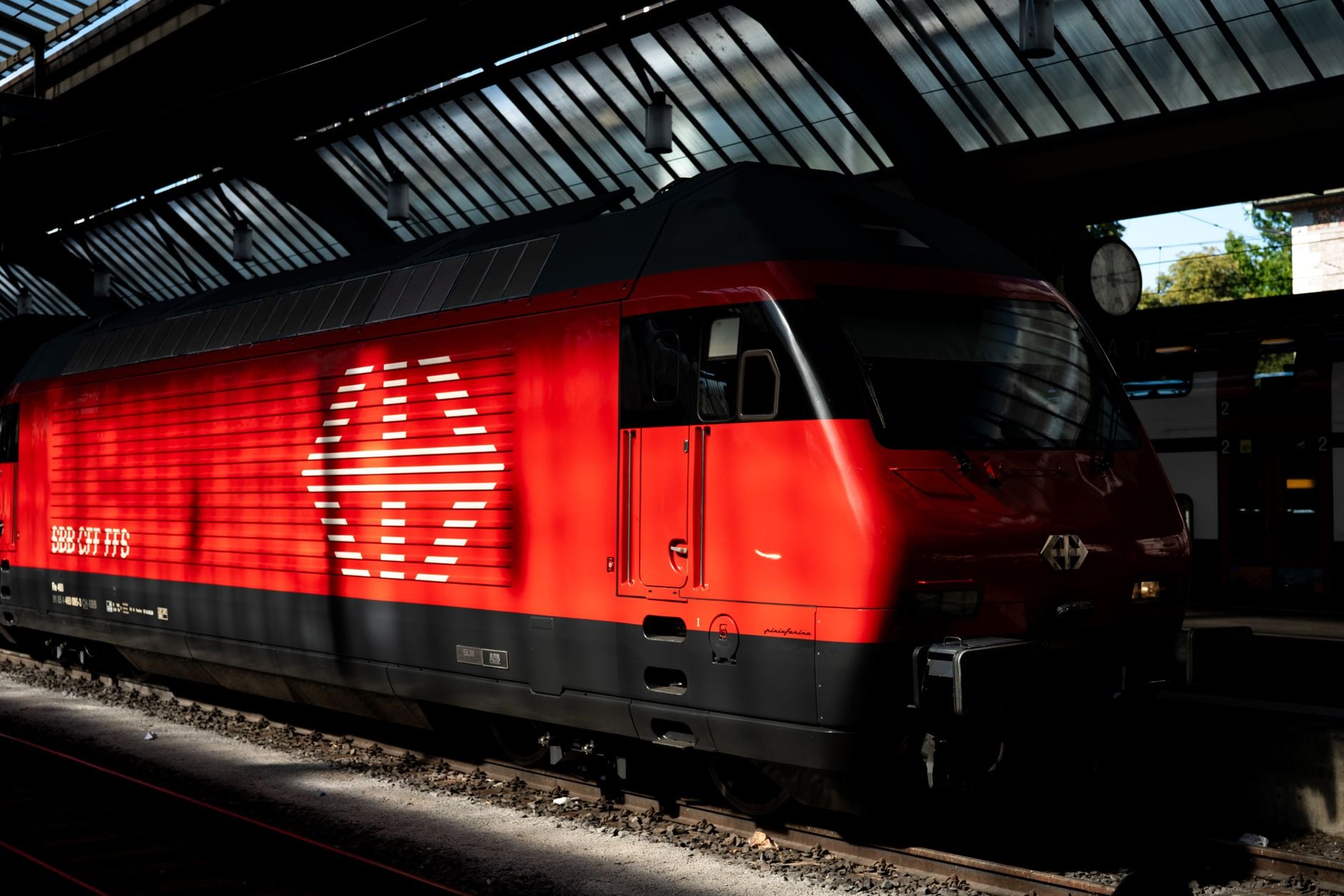
Zurich has one station that handles almost every long-distance and international journey. Zürich Hauptbahnhof, known as Zürich HB, is the central hub, the largest station in Switzerland, and one of the busiest railway stations in Europe. Most visitors will start, end, or change trains here.
Switzerland’s national rail operator is SBB, also written CFF in French and FFS in Italian. Same company, three languages. You will see all three names on tickets, timetables, and signs.
Three other stations are worth knowing: Zürich Flughafen (the airport), Zürich Stadelhofen, and Zürich Oerlikon. Each has a specific role. None replaces HB for long-distance or international travel.
Before you travel, open your ticket and confirm the exact station name and code. Most trains stop at Zürich HB, but some call at the airport or at Oerlikon in transit.
Zürich HB: the station almost every traveller needs
For any long-distance, international, or intercity journey, Zürich HB is the station to plan around. Book there. Aim for there. TGV Lyria services to Paris, ICE trains to Germany, overnight Nightjet trains to Berlin, EuroCity trains to Milan, and domestic services to Bern, Basel, Geneva, Lucerne, and St Gallen all depart from here.
The station building dates from 1871. The Haupthalle (main hall) was the original trainshed. Today it is a circulating hall. The Querhalle (cross-hall) just beyond it is where the main departure board hangs, showing “Fernverkehr” (long-distance) and “S-Bahn” (suburban) trains.
There are no ticket barriers or gates at ground level. Easy access for luggage and pushchairs.
Check the “Gleis” (platform number) on the departure board shortly before your train. Platforms start at 3. There has not been a platform 1 or 2 at Zürich HB for some years, so do not waste time looking for them.
Understanding the platform levels at Zürich HB
Zürich HB has four sets of platforms across multiple levels. Get the level wrong and you may miss your train.
| Platforms | Location | Trains served |
|---|---|---|
| 3-18 | Ground level, under 1933 trainshed | Almost all international trains: TGV Lyria (Paris), ICE (Germany), Railjet (Vienna, Budapest), Nightjet sleepers, EuroCity to Milan; most domestic IC and IR services |
| 21-22 | Underground level 1 | SZU (Sihltal Zürich Uetliberg Bahn) local trains only |
| 31-34 | Underground level 2 | EuroCity Zürich-Munich; some mainline domestic services to St Gallen, Bern, Lausanne, Geneva |
| 41-44 | Underground level 2 | S-Bahn suburban trains (through platforms) |
Escalators and lifts connect all levels. If your train is on platforms 31-34, allow a few extra minutes from the main hall, especially with bags.
You can look up which platform your specific train is likely to use in advance at int.bahn.de. Enter “Zurich HB” and your departure time. The departure screens at the station confirm the actual Gleis on the day.
The typical mistake is going to the wrong level. A train to Munich or a domestic service to Lausanne may well be on platform 31 or 34 underground, not on the ground-level platforms where most trains depart.
International trains from Zürich HB
Zürich HB is Switzerland’s main international rail gateway. Reservation rules vary by train type, and the differences matter.
TGV Lyria to Paris. Journey time is approximately 4 hours. Reservation is compulsory on every departure. As of June 2026, pass-holder reservation fees were €25 for second class and €35 for first class. Check current fees at eurail.com or interrail.eu, as these can change by year and booking window.
ICE to Germany. Deutsche Bahn ICE trains run to Frankfurt, Cologne, Hamburg, Berlin, and other German cities. A seat reservation is strongly recommended. Pass-holder fees were around €5.20 for second class and €6.50 for first class as of June 2026.
EuroCity to Milan. Direct EuroCity trains run through the Gotthard Base Tunnel to Milano Centrale in around 3 hours 12 minutes. Most use ground-level platforms. The Zürich to Munich EuroCity service typically uses platform 34 underground, so check the departure board rather than assuming it departs at street level.
Railjet to Vienna and Budapest. ÖBB Railjet connects Zürich HB to Innsbruck, Salzburg, Vienna, and Budapest. Reservation is recommended. Pass-holder fees were around €3 for both classes as of June 2026.
Nightjet overnight trains. Nightjet sleepers run from Zürich HB to Berlin, Vienna, Prague, Budapest, and Zagreb. Reservation is compulsory for all accommodation types: seat, couchette, and sleeper. Do not board a Nightjet with only your Interrail or Eurail pass. The pass covers the travel day, but a separate reservation for your accommodation is required. Book early if you want a bed. Sleeper and couchette places sell out weeks ahead on popular departures.
Zürich Flughafen: the airport station
Zürich Airport has its own underground rail station, Zürich Flughafen, directly beneath Terminal B. It is one of the simplest airport-to-city rail connections in Europe.
S-Bahn lines S2, S16, and S24 run to Zürich HB in 10 to 12 minutes. Trains run every 5 to 10 minutes throughout the day. The single-zone fare is approximately CHF 7.00 one-way; confirm the current price at SBB.ch before you travel, as fares are subject to change.
Some long-distance IC and ICE trains also call at Zürich Flughafen before or after stopping at Zürich HB. If your booking shows “Zürich Flughafen” as a stop, that is the airport station, not the city centre. A traveller heading to the city who boards or alights there will still need the S-Bahn for the final leg.
SBB offers an airport check-in and baggage drop service at Zürich HB, but only for a limited number of airlines. Swiss International Air Lines and a small number of partner carriers are included. Confirm at the SBB counter whether your airline qualifies, and drop your bags well before your train departs, not just before your flight.
Zürich Stadelhofen and Zürich Oerlikon
These two stations serve specific city-level roles. Neither handles long-distance or international trains.
Zürich Stadelhofen sits east of the city centre. It is the main hub for S-Bahn and regional services heading east: towards Rapperswil, Winterthur, and the Lake Zurich towns. The S16 line runs from Stadelhofen to Zürich Flughafen approximately every 30 minutes, with a journey time of around 18 minutes. If your hotel is east of HB, Stadelhofen is a useful alternative route to and from the airport.
Zürich Oerlikon is the northern station. Multiple S-Bahn lines pass through, and some IC and ICE trains call here in transit. If you are staying in the north of the city or connecting to a northbound train, Oerlikon can save a trip to HB. But check your specific train. Most international services that call at Oerlikon continue to or from HB as well.
For Paris, Vienna, Berlin, or Milan, you need Zürich HB. Full stop.
Tickets, passes, and reservations
The right ticket or pass depends on how many journeys you are making and whether they cross an international border.
Point-to-point SBB tickets are often the most cost-effective choice for one or two journeys. Advance fares booked at SBB.ch can be significantly cheaper than walk-up prices. Prices vary by date, train category, and how early you book.
Swiss Travel Pass gives unlimited travel on SBB trains, S-Bahn, many private mountain railways, buses, and lake boats. No domestic reservation fees apply. It suits visitors making multiple journeys across Switzerland over several days. Buy in advance at swisstravelsystem.ch.
Half-Fare Card costs CHF 150 per month from 1 January 2026 (confirm the current price at SBB.ch before buying). It gives 50% off all SBB public transport, including S-Bahn. If you are making two or more longer domestic journeys, compare the card cost against full-price fares to see whether it pays for itself.
Interrail and Eurail passes are valid on SBB domestic trains. But reservation fees on TGV Lyria, ICE, and Nightjet are real additional costs on top of the pass price. On a single Zurich to Paris journey, a point-to-point advance fare may work out cheaper than a pass plus a €25 reservation fee. Compare before you commit to a pass.
The SBB Travel Centre is on the south side of the Haupthalle, having moved from the north side in early 2024. Take a numbered ticket from the touch-screen machine at the entrance and wait for your number to be called.
Facilities at Zürich HB
Luggage lockers are one level down from the main hall, reached by the escalators in the centre of the concourse. Five locker sizes are available. Contactless card payment is accepted.
Wi-Fi is available on the SBB-FREE network. The first 60 minutes are free, and registration requires a mobile number (foreign numbers work). Check current terms at the station.
There is no first class lounge at Zürich HB. It closed in 2016. Pass holders and first class ticket holders will not find a dedicated lounge.
ShopVille, the station shopping mall, has around 190 shops, restaurants, and services across three underground levels. A Migrolino mini-market in the corner of the Haupthalle is good for snacks before a journey. A Coop and a larger Migros are two levels down. Note that Migros does not sell alcohol.
Trams and buses depart from Bahnhofplatz outside the main exit. Old Town is roughly 10 to 15 minutes on foot from HB, depending on your destination. Taxis are available outside but are not cheap by European standards.
Frequently asked questions
How many train stations does Zurich have?
Zurich has several railway stations, but four matter for most travellers: Zürich HB (the main hub for all long-distance and international trains), Zürich Flughafen (the airport station), Zürich Stadelhofen (eastern S-Bahn hub), and Zürich Oerlikon (northern transit station). Almost all visitors need only Zürich HB and possibly Zürich Flughafen.
What is the main train station in Zurich?
The main train station is Zürich Hauptbahnhof, always abbreviated to Zürich HB. It is the largest station in Switzerland and handles all long-distance domestic trains and the major international services, including TGV Lyria to Paris, ICE to Germany, EuroCity to Milan, Railjet to Vienna, and Nightjet overnight trains.
What does HB mean in Zürich HB?
HB stands for Hauptbahnhof, the German word for main railway station. Zürich HB is the central terminal station for the city. In German-speaking Switzerland, most main stations are called Hauptbahnhof or abbreviated as Hbf or HB.
How do I get from Zürich Airport to Zürich HB by train?
Take the S-Bahn from Zürich Flughafen station, located directly beneath Terminal B at the airport. Lines S2, S16, and S24 run to Zürich HB in 10 to 12 minutes, with trains every 5 to 10 minutes throughout the day. The single-zone fare is approximately CHF 7.00 one-way; check the current price at SBB.ch before you travel.
Do I need a reservation on Swiss trains?
On standard SBB domestic IC, IR, and S-Bahn services, no reservation is required. However, reservation is compulsory on TGV Lyria trains to Paris and on Nightjet overnight trains. A reservation is strongly recommended on ICE trains to Germany and on Railjet trains to Vienna or Budapest. If you are using an Interrail or Eurail pass, note that reservation fees on international trains are paid separately and are not included in the pass.
Is the Swiss Travel Pass worth it for a visit to Zurich?
The Swiss Travel Pass makes sense if you are making multiple train, bus, and boat journeys across Switzerland over several days. If you are spending most of your time in Zurich itself and making only one or two longer journeys, the Half-Fare Card (CHF 150 per month as of January 2026) or an advance point-to-point SBB ticket may work out cheaper. Compare your planned journeys at SBB.ch before buying a pass.
What is the difference between SBB, CFF, and FFS?
They are the same company. SBB is the German abbreviation (Schweizerische Bundesbahnen), CFF is French (Chemins de fer fédéraux suisses), and FFS is Italian (Ferrovie federali svizzere). Switzerland has four national languages, so the national railway uses all three abbreviated names. You will see them on tickets, apps, and station signs.
Are there luggage lockers at Zürich HB?
Yes. Luggage lockers are one level down from the main hall (Haupthalle), reached by the escalators in the centre of the concourse. Five locker sizes are available. Contactless card payment is accepted.