
Train service
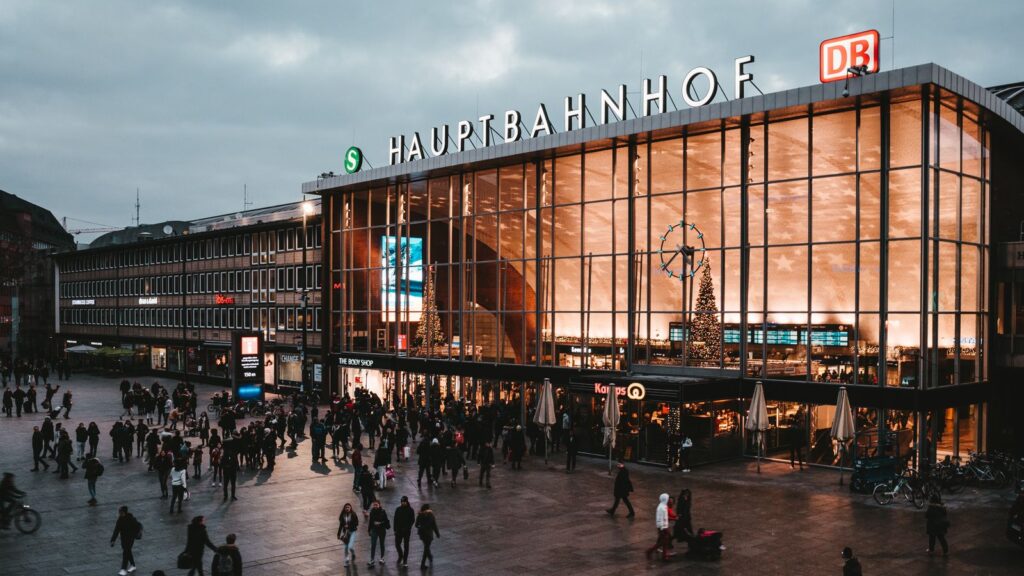
Deutsche Bahn
Deutsche Bahn (DB) is Germany’s national railway company, operating long-distance, regional, and international train services across Europe.
Check times & pricesOfficial website Check times & prices
SJ
SJ is Sweden’s state-owned train operator, running high-speed, regional, and long-distance services across the country and into neighboring nations.
Check times & pricesOfficial websiteTrain tickets

Raileurope
Rail Europe is a leading travel tech company specializing in European train bookings for over 15,000 travel professionals worldwide.

Trainline
Trainline sells rail and coach tickets worldwide on behalf of major UK and European transport companies.

Omio
Omio connects you with over 1,000 transport providers - trains, buses, flights, and more - to simplify your travel planning.
Copenhagen is one of the better-connected capitals in northern Europe. Hamburg, Stockholm, Malmö, and the rest of Denmark are all reachable by train. From the UK or western Europe the picture is different: there is no direct service and the journey requires planning. Almost every international train arrives at Copenhagen Central Station (København H), and that is the station to book.
Copenhagen Central Station (København H)
Book København H for all international trains and most long-distance domestic services. It is Denmark’s largest station, handling over 100,000 passengers a day, and it sits between the Indre By and Vesterbro districts. Tivoli Gardens is directly across the street, which makes the area easy to locate.
Metro lines M3 and M4 connect from the station. S-trains for greater Copenhagen depart from here too. The station has a supermarket, pharmacy, left-luggage facilities, and around 30 shops and restaurants.
Luggage storage:
- Small locker: DKK 70
- Large locker: DKK 80
- Staffed office: DKK 75 (small bags), DKK 85 (large bags)
Which Copenhagen station to use
Nørreport handles the most passengers in Denmark but is a Metro and S-train hub only. No international trains stop here.
Copenhagen Airport Station (CPH Lufthavn) is for arrivals by air. Øresundståg trains run from directly below the arrivals hall to København H in approximately 12 to 14 minutes. A 3-zone ticket costs around DKK 36. The taxi to the city centre runs around DKK 300. Take the train.
Hamburg to Copenhagen
The Hamburg-Copenhagen route is the main rail connection between Germany and Denmark. Trains run several times a day; the journey takes around 4 hours 40 minutes.
The route no longer uses a train ferry. Trains stopped crossing the Puttgarden-Rødby strait by ferry in December 2019, so the service now takes the overland route via Padborg, Kolding, and Odense, crossing the Little Belt to Funen and then the Great Belt Fixed Link to Zealand. It is the longer way round on the map, but it removed the ferry wait and the old limit on train length. The Fehmarnbelt Tunnel, which will eventually restore a much shorter direct line and cut the journey to roughly 2.5 to 3 hours, is still under construction and not yet open. Fast trains are not expected to use it before about 2029. Until then, the overland route is the journey you book.
Most departures are operated by DSB using new Talgo trains, shown in timetables as ECE (EuroCity Express). Two departures a day are run by Czech Railways ComfortJet trains (shown as RJ), which continue through to and from Berlin and Prague and carry a restaurant car.
Fares: Advance tickets in 2nd class can start from around €29, with 1st class from around €60. These are dynamic fares, so prices rise with demand and as departure nears. The fully flexible 2nd-class fare is around €110. Book at int.bahn.de or dsb.dk.
Seat reservations: Reservation is compulsory on these cross-border trains during the peak summer window, roughly late June to mid-August, when it is included in the fare. Outside that window it is optional but strongly recommended, especially on Fridays, Sunday afternoons, and around holidays. If you are using an Interrail or Eurail Pass, the pass covers the journey but not the seat, so add a reservation separately. Do not board a compulsory-reservation departure without one.
Berlin to Copenhagen can be done with a change in Hamburg, or on the direct ComfortJet service that runs through from Berlin. Allow around 6 to 7 hours from Berlin Hauptbahnhof.
Sweden to Copenhagen
Malmö to Copenhagen
The quickest and most frequent cross-border train. Øresundståg trains cross the Øresund Bridge from Malmö Central to København H in around 35 minutes on the fastest services. They run four times an hour for most of the day, with extra departures at peak times, also calling at Copenhagen Airport station.
No reservation needed. A single ticket costs around DKK 99 from the Danish side, or around SEK 125 from the Swedish side. There are no routine passport checks going south into Denmark, but ID checks do occur on the northbound crossing into Sweden. Carry valid ID regardless of direction.
Stockholm to Copenhagen
SJ normally runs direct X2000 trains between Stockholm Central and København H via Gothenburg, Malmö, and the Øresund Bridge, with a journey time of roughly 5.5 hours. That direct service is temporarily suspended because of a shortage of X2000 trainsets, with SJ aiming to restore it in autumn 2026.
Until the direct trains return, travel in two legs: an X2000 from Stockholm Central to Malmö Central, then an Øresundståg across the bridge to København H. SJ advance fares from Stockholm can start from around SEK 299, but prices rise sharply close to departure and on peak dates. Book at sj.se. Seat reservations are compulsory on SJ high-speed trains and are included in the fare; pass holders add an SJ reservation separately.
Snälltåget also runs a daytime train linking Stockholm, Malmö, Copenhagen (calling at Copenhagen Syd rather than København H), and Hamburg, plus a night train between Stockholm, Copenhagen, and Berlin. These are worth checking as an alternative, especially if a direct SJ departure does not suit your dates.
Gothenburg to Copenhagen
Direct trains run roughly once an hour. Journey time is around 3 hours.
From the UK and London
No direct train connects the UK to Copenhagen. The route requires at least two changes and takes a full travel day.
The practical route: Eurostar from London St Pancras to Brussels or Amsterdam, then an intercity train through to Hamburg (or Amsterdam to Hamburg direct), and finally Hamburg to Copenhagen. Total journey time is typically 12 to 16 hours with good connections. You will need separate tickets for each leg, and combining them into a single booking is not always possible.
Most people who do this journey plan a night in Amsterdam or Hamburg to break it up.
Sleeper trains: There is no direct overnight service from the UK, France, or the Netherlands to Copenhagen. Night train options to Scandinavia remain limited, though Snälltåget’s Berlin-Copenhagen-Stockholm night train is one option once you reach Germany. The usual workaround from western Europe is an evening train to Hamburg, an overnight stay, and a morning departure to Copenhagen.
Amsterdam, Paris, and western Europe
Amsterdam to Copenhagen: Change at Hamburg. Total journey around 10 to 12 hours. Book the Amsterdam-Hamburg and Hamburg-Copenhagen legs separately if a through-ticket is not available.
Paris to Copenhagen: At least two changes, typically via Brussels or Cologne and Hamburg. Allow 14 to 16 hours. Break the journey if you can.
Oslo to Copenhagen
Trains from Oslo run via Gothenburg and take around 8 hours. Change in Gothenburg. Norwegian legs operate with Vy; the Swedish-Danish leg with SJ or Øresundståg. Book each segment where relevant.
Domestic trains from Copenhagen
DSB connects Copenhagen to the rest of Denmark using InterCityLyn (fastest, limited stops) and InterCity services.
| Route | Typical journey time | Starting fare | Daily departures |
|---|---|---|---|
| Copenhagen to Odense | From around 1 hour 20 minutes (InterCityLyn) | From DKK 69 | 50+ |
| Copenhagen to Aarhus | Around 3 hours 20 minutes | From DKK 99 | 30+ |
| Copenhagen to Aalborg | Around 4 hours 45 minutes | Check dsb.dk | Multiple |
InterCity trains take longer than InterCityLyn. If time matters, check which service you are booking before you pay.
DSB ticket types
| Ticket | What it offers | Best for |
|---|---|---|
| Standard | Flexible, refundable, valid on a specific date | Travellers who may need to change |
| Orange | Up to 61% off, non-refundable, tied to a specific departure | Fixed plans, budget travel |
| Orange Fri | Refundable up to 30 minutes before departure | Some flexibility with lower fares |
| DSB 1′ | First class: free refreshments, more space, quieter. Upgrade from DKK 40 (regional) to DKK 180 (most trains) | Long journeys or business travel |
Children under 12 travel free alongside a paying adult, up to two children per adult. Youth aged 12 to 16 pay half the standard fare. A seat reservation costs DKK 30 on most domestic routes and is optional, unless you have an Orange ticket, which includes one automatically.
Book at dsb.dk, through the DSB app, at station machines, DSB ticket offices, or 7-Eleven kiosks.
Rail passes
Interrail and Eurail passes are valid on the main international routes to Copenhagen. What the pass does not include is the seat reservation.
- Hamburg-Copenhagen (DB/DSB EuroCity Express): Reservation required; fee applies separately to the pass. Compulsory in peak summer.
- Stockholm-Copenhagen (SJ): Reservation required, in SEK, booked through SJ.
- Malmö-Copenhagen (Øresundståg): Pass valid; check reservation requirements before you travel as these can vary.
Always confirm reservation requirements for your specific train. Boarding a EuroCity service without a required reservation in the peak summer window means paying the full ticket price on board.
Getting around Copenhagen
The Metro runs 24 hours a day across four lines (M1-M4). Lines M3 and M4 serve København H directly. S-trains operate from around 05:00 to 00:30 on most days, with hourly services through the night on Fridays and Saturdays.
Zone-based fares:
- 2 zones (within central Copenhagen): DKK 24
- 3 zones (airport to city centre): DKK 36
- 8 zones (to Roskilde or Helsingør): DKK 84
City passes for visitors:
| Pass | Coverage | Starting price |
|---|---|---|
| City Pass Small | Zones 1-4 (central Copenhagen, including the airport) | DKK 100 for 24 hours |
| City Pass Large | Wider Zealand zones | Higher, check on publictransport.dk |
| Copenhagen Card | Zones 1-99 plus free entry to 80+ attractions | From around DKK 569 for 24 hours |
The Copenhagen Card is worth the price if you plan to visit several paid attractions. If you mainly want to move around the city, the City Pass Small is enough.
The Rejsekort card has a DKK 80 deposit plus a minimum top-up of DKK 70 when you load it. It gives cheaper per-journey fares across all trains, Metro, and buses, but only pays off over several days of use.
Uber does not operate in Copenhagen. Taxis are available outside all major stations. Airport to city centre costs around DKK 300; a 5 km city ride is approximately DKK 115. Wheelchair-accessible taxis: Taxa 4X35 or Dantaxi.
Frequently asked questions
What is the main train station in Copenhagen?
København H (Copenhagen Central Station) is where all international trains arrive and where you should book. It is the only station for long-distance services. Nørreport is the busiest station in Denmark by total passenger numbers, but it is a Metro and S-train hub only, with no international or long-distance trains stopping there.
How long does the Hamburg to Copenhagen train take?
Around 4 hours 40 minutes. The trains no longer use a ferry: the Puttgarden-Rødby ferry crossing was abolished in December 2019, and the route now runs overland via Padborg, Kolding, Odense, and the Great Belt Fixed Link. The Fehmarnbelt Tunnel, which will eventually cut this journey to roughly 2.5 to 3 hours, is still under construction and not expected to be open for fast trains before about 2029.
Can you get a train from London to Copenhagen?
Not directly. You need at least two changes. The practical route is Eurostar from London St Pancras to Brussels or Amsterdam, then an intercity train through to Hamburg, then Hamburg to Copenhagen. Total journey time is typically 12 to 16 hours. Most travellers break the trip with an overnight stop in Amsterdam or Hamburg.
Is there a sleeper train to Copenhagen?
There is no direct overnight train from the UK, France, or the Netherlands to Copenhagen. Once you reach Germany, Snälltåget runs a night train between Berlin, Copenhagen, and Stockholm - but that train calls at Copenhagen Syd, not at København H, so check the station before booking. The usual workaround from western Europe is an evening train to Hamburg, an overnight stay, and a morning departure to Copenhagen.
Do I need a seat reservation for the train to Copenhagen?
It depends on the route. On Hamburg-Copenhagen EuroCity trains, a reservation is compulsory during the peak summer window (roughly late June to mid-August) and is included in the fare; outside that window it is optional but strongly recommended. On SJ trains from Stockholm, a seat reservation is compulsory and included in the fare. On Malmö-Copenhagen Øresundståg services, a reservation is usually not required. If you are using an Interrail or Eurail Pass, the pass covers the journey but not the seat - add a reservation separately for cross-border services.
How do I get from Copenhagen Airport to the city centre?
Take the train from the station directly below the arrivals hall. Øresundståg trains run to København H in around 12 to 14 minutes and cost around DKK 36 for a 3-zone single ticket. A taxi to the city centre costs around DKK 300. The train is the faster and cheaper option for almost every arrival.