
Venice has two train stations. For almost every traveller, the right one is Venezia Santa Lucia, the island terminus that opens straight onto the Grand Canal. The other, Venezia Mestre, sits on the mainland. Booking sites often show only “Venice” in search results, so open the train details and confirm the station name before you pay. Arriving at Mestre when you meant the island means getting back on a bus, taxi, or train to finish the journey.
Venezia Santa Lucia and Venezia Mestre: which station to book
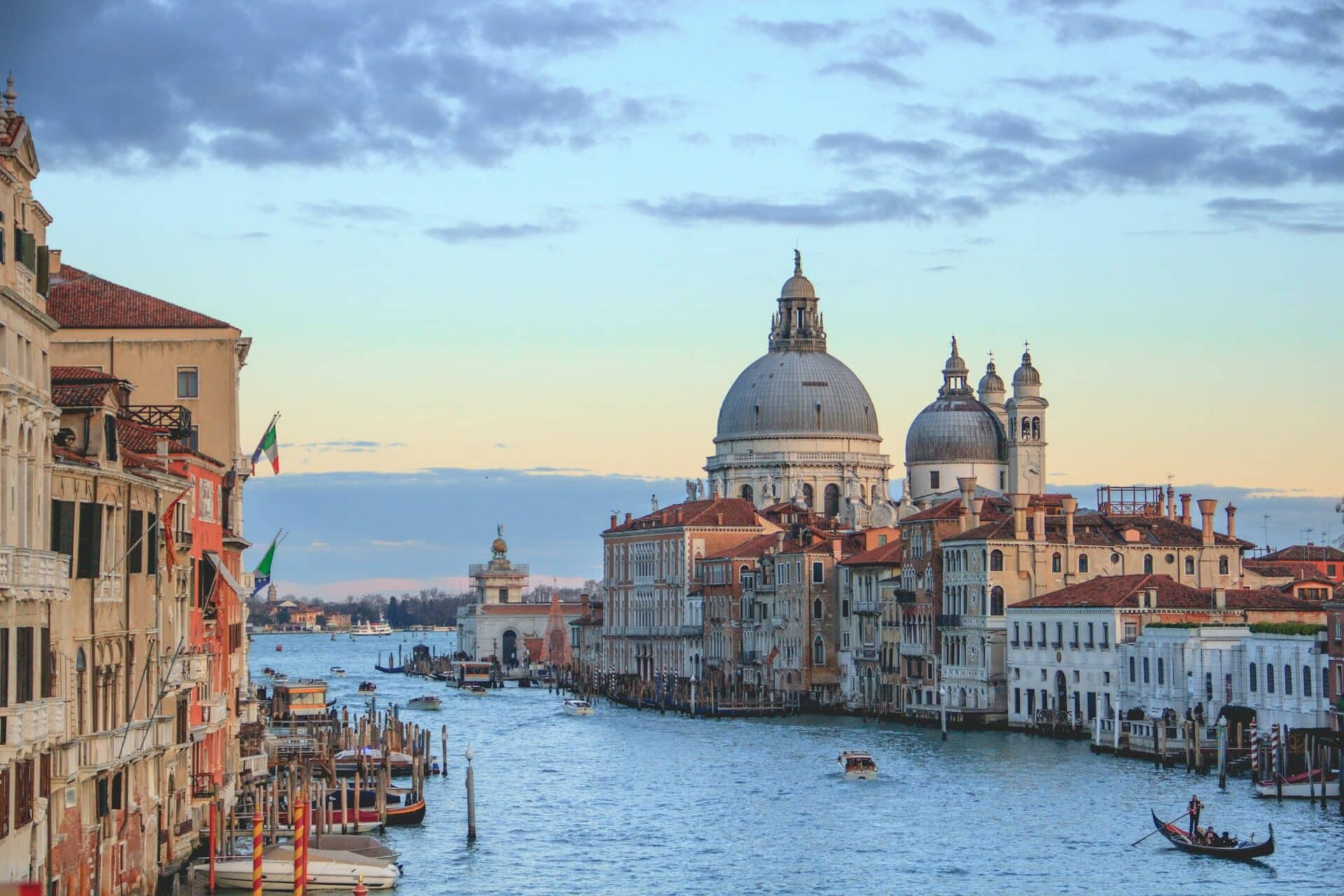
Book Venezia Santa Lucia for the historic city. It is a terminus on the island, right on the Grand Canal in the Cannaregio district. You step off the platform and the water is in front of you. Venezia Mestre is a junction on the mainland, roughly 6 km away, connected to the island by the Ponte della Libertà, the long causeway that carries both the road and the railway across the lagoon. There is no pedestrian route across it.
Every train to Santa Lucia passes through Mestre first. If you accidentally book Mestre, your train stops there and carries on to Santa Lucia without you. Use Mestre only if your hotel is on the mainland, you are catching a ferry or cruise from a mainland terminal, or you are changing trains there.
| Venezia Santa Lucia | Venezia Mestre | |
|---|---|---|
| Location | Island, historic Venice, on the Grand Canal | Mainland, about 6 km from the island |
| Platforms | 23 | 14 |
| Choose when | Visiting or staying in Venice | Hotel on mainland; ferry/cruise connection; changing trains |
| Onward to city | Walk or vaporetto from Ferrovia stop | Further regional train, bus, or taxi to island |
| High-speed trains | Frecciarossa, Italo stop here | Also stop here, then continue to Santa Lucia |
| Station code | VCE | VME |
Check the station name, not just the city, before confirming a booking.
Trains that serve Venice
Two operators run trains into Venice: Trenitalia and Italo.
Trenitalia is the main operator. Its Frecciarossa high-speed trains connect Santa Lucia with Milan, Rome, Naples, and Lecce, among other cities. The broader Frecce family, which also includes Frecciargento and Frecciabianca services, covers longer-distance and some cross-country routes. Trenitalia also runs Regionale and Regionale Veloce services, the slower regional trains linking Venice with nearby cities such as Padua, Verona, and Trieste. An InterCity Notte overnight service runs between Trieste and Rome via Venice.
Italo is the private high-speed alternative. It runs on the Milan-Bologna-Florence-Rome corridor and extends to Naples and Salerno, with services calling at Venice Santa Lucia. On some routes, Italo and Trenitalia compete directly, which is worth checking when you compare prices.
For planning, Frecciarossa trains from Milan to Venice take around two hours; from Rome to Venice it is roughly three hours and forty-five minutes to four hours. Those are orientation figures. Check the exact time for your departure when you book. Around 450 trains a day stop at Santa Lucia in total.
The Venice Simplon Orient Express departs from Santa Lucia, if that is the kind of trip you are planning.
Booking, reservations, and ticket rules
The rules differ by train type. Getting them wrong is one of the more common Italian rail mistakes.
On Frecciarossa and Italo, a seat reservation is mandatory and is included in the ticket price when you book a standard fare. Your ticket is tied to a specific train and departure time. Miss it or board the wrong service and the ticket is not valid. Interrail and Eurail pass holders can travel on these trains, but the pass does not cover the reservation. You need to book a separate seat reservation on top of the pass, and the fee varies by train and booking channel. Check trenitalia.com or italotreno.it for current pass-holder reservation details.
Regional trains work differently. No reservation is required. But with a paper ticket, you must validate it by stamping it at the yellow or green machines on the platform before you board. Not stamping is a fineable offence, even with a perfectly valid ticket. Trenitalia’s Tap & Tap system offers a contactless alternative on many regional routes, including between Mestre and Santa Lucia: touch in once with a contactless bank card on the validator at the platform. One card per person, and no need to touch out.
Worth knowing at Santa Lucia: when you walk into the station, you will see a prominently branded travel agency called Agenzie 365 on the outer concourse. It uses Trenitalia’s red Frecce branding. It is not the official Trenitalia ticket office, and it adds a booking fee to every transaction. The official Trenitalia and Italo offices are in the southwest corner of the concourse. Self-service machines from both operators are also available throughout the station with English-language menus.
Getting from Santa Lucia into Venice
The vaporetto is the water bus that runs along the Grand Canal, and it leaves from directly outside the station. The stop is called Ferrovia, not “Venice station” or “Santa Lucia.” Keep that name in mind for the return trip too: follow signs reading “Alla Ferrovia” to find your way back.
ACTV Line 1 runs the full length of the Grand Canal, stopping at Piazzale Roma, Ferrovia, Rialto, San Marco, and eventually Venice Lido. It runs early morning until late evening, roughly every 12 minutes. A single ride costs around €9.50; fares were last reviewed in 2024 to 2025, so check actv.avmspa.it for the current rate before you travel. You can pay by contactless bank card directly on the reader at the boarding point, touching in once. No need to touch out. If you buy a paper ticket at the vaporetto office, validate it before boarding.
Walking is a real option if your accommodation is in the Cannaregio, San Polo, or Santa Croce neighbourhoods. Turn left out of the station, cross the Ponte degli Scalzi, the stone bridge over the Grand Canal, then follow the street signs. The Rialto Bridge is about 22 minutes on foot, 1.6 km; Piazza San Marco is about 32 minutes, 2.2 km. You will get lost at least once. The signs throughout the city are reliable enough that it does not matter much.
Water taxis are available from outside the station too, to the right of the main exit. They cost considerably more than the vaporetto, but they are useful if speed matters or you have a lot of luggage.
Piazzale Roma is a five-minute walk from Santa Lucia across the Ponte della Costituzione, also called the Calatrava bridge. Long-distance coaches and regional buses leave from there.
Venezia Mestre: when it is the right station
Mestre makes sense in three cases: your hotel is on the mainland, you are boarding a ferry or joining a cruise from a mainland terminal, or you need to change trains. Otherwise it is not a shortcut to Venice; it is an extra leg of the journey.
The station has 14 platforms (numbered 1, 1G, and 2 to 13) and full facilities, including a Trenitalia ticket office, self-service machines, and left luggage run by KiPoint/KiBag on platform 1. There are no ticket barriers, so access from the street to the platforms is open.
If you arrive at Mestre and need to continue to the island, take a regional train across the causeway. The ride is short; regional trains cross the causeway frequently. Tap & Tap contactless works on this hop. Buses also run from Mestre to Piazzale Roma on the island edge, though the train is quicker.
There is no pedestrian crossing over the Ponte della Libertà. Do not try to walk it.
Practicalities at Santa Lucia
Santa Lucia has 23 platforms and is a terminus; trains arrive and turn around. None pass through. Platform announcements typically appear around 20 minutes before departure.
Left luggage is run by KiPoint/KiBag along platform 1, past the toilets. The toilets on platform 1 charge a small fee, around €1, payable by card or coins. The station has free WiFi. There is a Sala Freccia Club lounge for Trenitalia Executive class passengers and CARTAFRECCIA Gold and Platinum cardholders.
There is no train between Venice Marco Polo Airport and the city. The ATVO Airport Express bus runs between the airport and Piazzale Roma, next to Santa Lucia. A water bus also connects the airport pier to Venice; check timetables before you travel.
Since 16 January 2023, Venice has charged an entrance fee for day visitors on certain dates. Overnight hotel guests are exempt. If you are arriving for the day, check whether your visit date falls on a fee day and pay in advance at cda.veneziaunica.it. The fee amount and the list of active dates change, so check the site before you arrive.
Frequently asked questions
How many train stations does Venice have?
Venice has two: Venezia Santa Lucia on the island and Venezia Mestre on the mainland. For almost all visitors, Venezia Santa Lucia is the one to book.
Should I book Venice Santa Lucia or Venice Mestre?
Book Venezia Santa Lucia for the historic city. Choose Mestre only if your hotel is on the mainland, you are connecting to a ferry or cruise terminal there, or you are changing trains. Confirm the exact station name before paying, because booking sites often show only "Venice."
Do I need to validate my train ticket in Venice?
It depends on the train type. Frecciarossa and Italo tickets are tied to a specific train and do not need stamping, but boarding the wrong train is not allowed. Regional and InterCity paper tickets must be validated at the platform machines before boarding. Tap & Tap contactless removes the need for a paper ticket on regional services.
Do Interrail and Eurail passes work on trains to Venice?
Both passes are valid on trains to Venice. On Frecciarossa and Italo high-speed services, a separate seat reservation is still required on top of the pass. The fee varies by train and booking channel; check trenitalia.com or italotreno.it for current pass-holder rates.
Is there a train from Venice to Marco Polo Airport?
No. There is no rail link between Venice Marco Polo Airport and the city. The ATVO Airport Express bus runs between the airport and Piazzale Roma, next to Santa Lucia. A water bus also connects the airport pier to Venice.
How do I get from Venice Santa Lucia station to the city centre?
Take vaporetto Line 1 from the Ferrovia stop directly outside the station. It runs along the Grand Canal to Rialto and San Marco. Walking is also straightforward: turn left out of the station, cross the Ponte degli Scalzi, and follow the signs.
What is the vaporetto stop outside Santa Lucia station called?
The stop is called Ferrovia. When returning to the station from anywhere in Venice, follow signs that read "Alla Ferrovia."