
Vienna to Budapest by train
Direct Railjet and EuroCity trains run roughly hourly from Vienna to Budapest in about 2h40, with ÖBB advance fares from around €9.
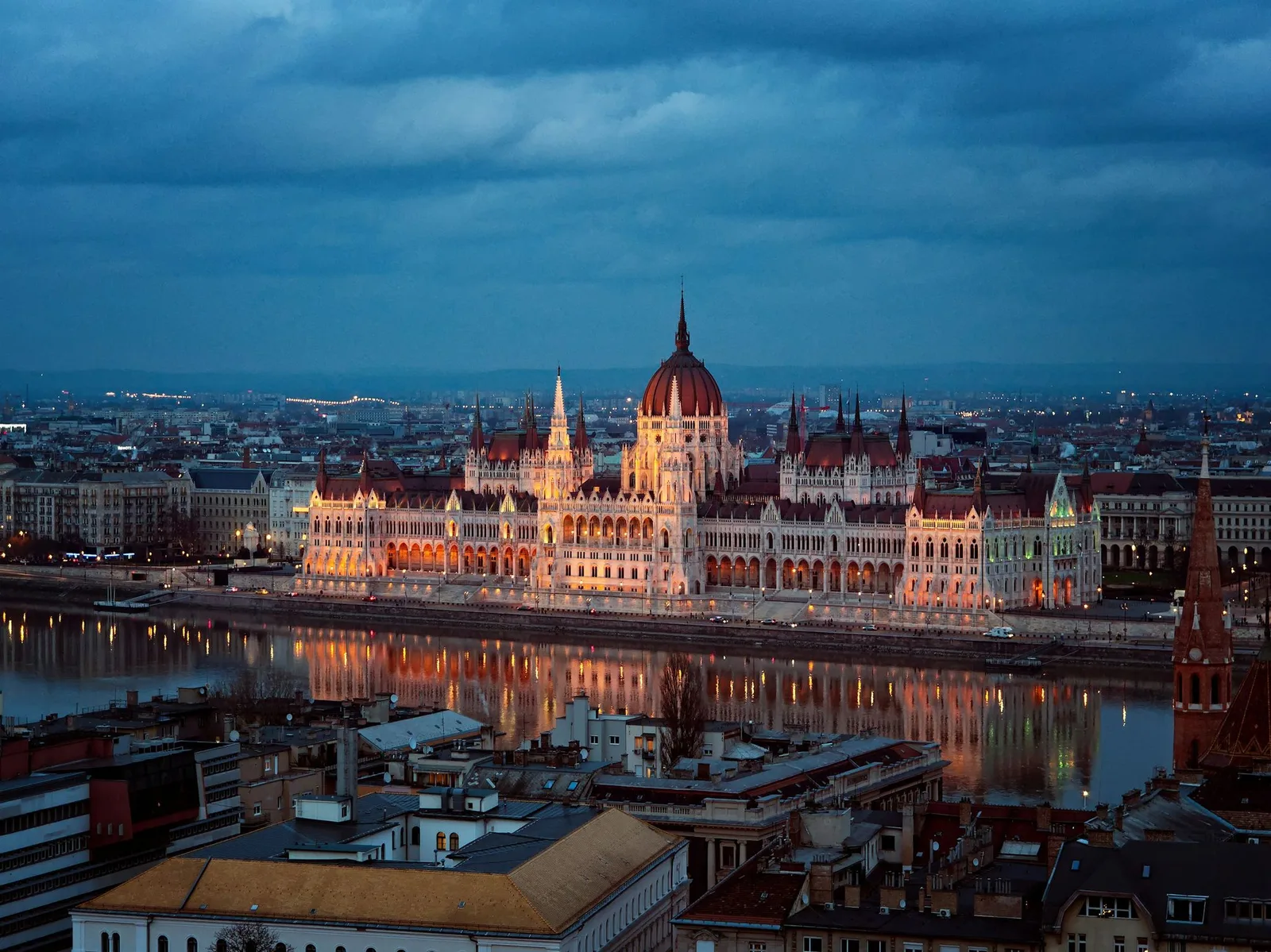
The Railjet connects Vienna Hauptbahnhof (Wien Hbf) and Budapest Keleti in approximately 2 hours 37 minutes to 2 hours 40 minutes, with direct trains running roughly every hour throughout the day. Advance fares on ÖBB start from around €9 on Sparschiene pricing; flexible walk-up tickets run from approximately €52 in second class. The route covers 244 km and is operated by ÖBB and MÁV on Railjet and EuroCity services, with RegioJet providing a privately operated alternative.
Direct trains require no connection. ÖBB Railjet services operate at up to 230 km/h on upgraded conventional track. Tickets are sold on oebb.at, jegy.mav.hu, and regiojet.com.
Key Takeaways
- Distance: 244 km
- Typical direct journey time: approximately 2 hours 37 minutes to 2 hours 40 minutes
- Direct services per day: approximately hourly throughout the operating day; schedules vary by date
- Departure window: first departure from Vienna approximately 07:42; last approximately 21:40; times vary by date
- Lowest advance fare: from approximately €9 on ÖBB Sparschiene; RegioJet from approximately €7.90; prices vary by date
- Flexible walk-up fare: approximately €52 second class, €86 first class, €106 Business class on ÖBB; published fares can change
- Eurail and Interrail passes: valid on ÖBB, MÁV, and the RegioJet service on this corridor. Reservations are optional on ÖBB and MÁV Railjet and EuroCity trains but compulsory on RegioJet
- RegioJet: accepts Eurail and Interrail passes on its Prague to Brno to Vienna to Gyor to Budapest service; reservations are compulsory and first-class Business requires a first-class pass
- Vienna departure: Wien Hauptbahnhof (Wien Hbf)
- Budapest arrival: Budapest Keleti (ÖBB and MÁV services); Budapest-Kelenfold and Budapest-Deli (RegioJet services)
Route Overview
The Vienna to Budapest corridor is one of Central Europe’s busiest international rail links. ÖBB and MÁV jointly operate the primary Railjet and EuroCity services, while RegioJet runs a direct budget-positioned alternative on the same corridor.
Route Summary
| Field | Detail |
|---|---|
| Route | Vienna Hauptbahnhof to Budapest Keleti |
| Distance | 244 km |
| Typical direct time | Approximately 2h37 to 2h40 |
| Direct services per day | Approximately hourly (ÖBB/MÁV); additional RegioJet departures |
| First departure from Vienna | Approximately 07:42; times vary by date |
| Last departure from Vienna | Approximately 21:40; times vary by date |
| Primary operators | ÖBB (Railjet / EuroCity), MÁV (co-operator), RegioJet |
| Lowest advance fare | From approximately €9 (ÖBB Sparschiene); prices vary by date |
| Eurail / Interrail valid | Yes on ÖBB / MÁV and the listed RegioJet corridor service; pass class rules apply |
| Seat reservation | Optional on ÖBB / MÁV Railjet and EuroCity; compulsory on RegioJet |
Operators on This Route
ÖBB (Österreichische Bundesbahnen) is the Austrian national operator and the primary carrier on this route. ÖBB runs both Railjet (RJ) and EuroCity (EC) services between Wien Hbf and Budapest Keleti. Tickets are sold on oebb.at in euros.
MÁV-START is the Hungarian national rail operator and co-operates services with ÖBB on this corridor. MÁV sells tickets in Hungarian forints (HUF) via jegy.mav.hu and is the primary booking source for travelers originating in Budapest. The HUF amount reflects the native pricing structure, while its euro equivalent fluctuates with exchange rates.
RegioJet is a Czech private operator running direct services on this route. RegioJet fares are separate from ÖBB and MÁV ticketing systems. Eurail and Interrail passes are accepted on its Prague to Brno to Vienna to Gyor to Budapest service, with a compulsory reservation. First-class Business requires a first-class pass. RegioJet services terminate at Budapest-Kelenfold and Budapest-Deli rather than Budapest Keleti. Travelers expecting to arrive at Keleti on a RegioJet ticket will need onward metro or tram transport from those stations.
Train Types and On-Board Experience
Railjet (ÖBB / MÁV)
The Railjet is the flagship service on this route. It operates at up to 230 km/h and runs on upgraded conventional track rather than a dedicated high-speed corridor. Journey times reflect track conditions and intermediate stops.
Railjet offers three classes: Economy (second class), First, and Business. Business class includes a complimentary meal or snack service and a drink, subject to the current onboard offer. Free Wi-Fi is available on board. Power sockets are provided at seats. Luggage travels in overhead racks and end-of-car storage without an additional booking requirement. Bicycles can be carried with a reservation; fees and availability depend on ÖBB’s international bike policy.
EuroCity (ÖBB / MÁV)
EuroCity services, branded EC on timetables, are the standard international intercity offering on this corridor. Journey times are broadly comparable to Railjet for equivalent stopping patterns, although individual departures vary. EC services operate in first and second class. Some EC trains carry a bistro or restaurant car, so onboard dining depends on the departure. Eurail and Interrail passes are valid on EC services. Seat reservations on these ÖBB and MÁV international trains are optional, although useful if you want a specific seat.
RegioJet
RegioJet runs direct services between Wien Hbf and Budapest-Kelenfold / Budapest-Deli. The service typically includes seat-to-seat amenities such as snacks and drinks, although the onboard offer can vary by route. Book RegioJet services through regiojet.com; they are separate from ÖBB and MÁV tickets. Eurail and Interrail passes are accepted on this RegioJet corridor service, but a seat reservation is compulsory. First-class Business requires a first-class pass.
Journey Time
Direct Railjet and EuroCity services complete the Vienna to Budapest journey in approximately 2 hours 37 minutes to 2 hours 40 minutes. Individual journey times vary by departure.
Railjet’s operating speed of 230 km/h does not translate into a dramatically shorter journey compared to EuroCity services, because both trains are subject to the same track conditions and station stops along the corridor. The route does not use a dedicated high-speed line.
Indirect connections exist but typically add over 50 minutes to the journey time and provide no pricing advantage when direct services are available.
Journey Time by Service Type
| Service | Operator | Typical Journey Time | Budapest Arrival Station |
|---|---|---|---|
| Railjet (RJ) | ÖBB / MÁV | Approximately 2h37 to 2h40 | Budapest Keleti |
| EuroCity (EC) | ÖBB / MÁV | Approximately 2h37 to 2h40 | Budapest Keleti |
| RegioJet | RegioJet | Varies by departure | Budapest-Kelenfold / Budapest-Deli |
| Indirect connecting | Various | Typically 3h30 or more | Varies |
Schedule and Frequency
Direct trains depart Wien Hbf for Budapest roughly every hour throughout the operating day. The first departure is approximately 07:42 and the last is approximately 21:40, giving a broad operating window suitable for both day trips and flexible itineraries. Seasonal timetable changes can alter these times.
The high frequency means you are not locked into a single departure if your plans change, but advance booking is still recommended for price rather than seat availability. Walk-up fares can reach more than five times the lowest advance fare on the same departure.
RegioJet departures run on a separate schedule from ÖBB and MÁV. RegioJet-specific departure times are listed on regiojet.com.
Fares and Tickets
ÖBB Fare Classes
ÖBB sells tickets at several price points. The Sparschiene (saver) fare is the lowest available and starts from approximately €9 in second class on the Vienna to Budapest route, subject to availability. Sparschiene tickets are tied to a specific train and are non-refundable or carry a change fee, depending on the fare conditions.
Flexible walk-up fares are approximately €52 in second class, €86 in first class, and €106 in Business class; fare structures are subject to revision.
Sparschiene fares are released in advance and sell from the cheapest allocation upward. Booking 30 to 60 days ahead gives the best chance of securing the lowest tiers, though availability depends on the specific departure and season.
MÁV Pricing in HUF
MÁV sells tickets in Hungarian forints via jegy.mav.hu. Exchange rates fluctuate, so the euro equivalent changes over time. MÁV is the preferred booking channel for travelers originating in Budapest and for those who prefer to pay in the local currency.
RegioJet Pricing
RegioJet advertises fares from approximately €7.90 on this route; prices vary by date. Book the rail service through regiojet.com and select the train rather than a bus when comparing prices.
Advance Booking Summary
| Fare type | Approximate EUR fare | Flexibility |
|---|---|---|
| ÖBB Sparschiene (advance saver) | From approximately €9; prices vary by date | Fixed train; limited changes |
| RegioJet low fare | From approximately €7.90; prices vary by date | Conditions vary by fare |
| ÖBB walk-up 2nd class | Approximately €52; prices can change | Flexible |
| ÖBB walk-up 1st class | Approximately €86; prices can change | Flexible |
| ÖBB Business class | Approximately €106; prices can change | Flexible |
Rail Pass Validity and Reservation Requirements
Eurail Global Pass and Interrail Global Pass are valid on ÖBB Railjet and EuroCity services between Vienna and Budapest. Seat reservations are optional on these international ÖBB and MÁV trains, although they are useful if you want a specific seat; the applicable reservation fee is shown with the fare.
The RegioJet service on the Prague to Brno to Vienna to Gyor to Budapest corridor also accepts Eurail and Interrail passes. A seat reservation is compulsory, and first-class Business requires a first-class pass. A separate ticket is needed only if your pass does not cover the service or class you want.
When ÖBB Sparschiene advance fares are available from approximately €9, compare the fare with the cost of using a pass and its reservation before choosing. For last-minute travel where the walk-up fare reaches €52 or more, a pass can offer savings over buying a point-to-point ticket on the day.
Stations
Vienna Hauptbahnhof (Wien Hbf)
Wien Hbf is Vienna’s main rail terminal and the departure point for all direct ÖBB, MÁV, and RegioJet services to Budapest. The station is served by U-Bahn line U1, tram routes, and S-Bahn connections. International ticket counters and self-service machines are available on site. Some Railjet services also call at Wien Meidling, a secondary stop south of the city center, before continuing to Budapest; your ticket shows the boarding point.
Budapest Keleti
Budapest Keleti is Hungary’s principal international rail terminal and the arrival point for all ÖBB and MÁV services from Vienna. Keleti is served by metro lines M2 and M4, tram routes, and a broad range of bus connections into central Budapest.
Budapest-Kelenfold and Budapest-Deli (RegioJet)
RegioJet services terminate at Budapest-Kelenfold and Budapest-Deli, not Budapest Keleti. Both stations are within Budapest and have metro and tram connections. Travelers arriving on RegioJet who plan to continue to central Pest or the Keleti area should factor in the additional transit leg.
Day Trip Feasibility
A day trip from Vienna to Budapest by train is practical. With the first direct departure from Wien Hbf at approximately 07:42 and the last direct return from Budapest Keleti at approximately 21:40, a round trip gives roughly 10 to 12 hours in Budapest depending on which services you choose. These times vary by travel date.
The round-trip advance fare can be as low as approximately €18 if both legs are booked on Sparschiene pricing; availability varies and the total depends on the fares available for each leg. Walk-up round-trip costs are approximately €104 in second class.
Budapest Keleti is connected to the city center by metro. A day is sufficient for a compact itinerary; an overnight stay allows more comfortable pacing.
How to Book
Tickets for ÖBB and MÁV services are sold on oebb.at (in euros) and jegy.mav.hu (in Hungarian forints). Both sites show the same trains; the choice of platform depends on preferred currency and payment method. Book RegioJet services through regiojet.com.
Search the operator site for your exact date, train, fare and reservation conditions. EveryRail does not sell tickets directly.
Sparschiene and equivalent saver fares are released on a rolling basis and sell from the cheapest allocation upward. Searching 30 to 60 days in advance maximizes the chance of finding the lowest tiers. For flexible or last-minute travel, both ÖBB and MÁV sell standard and flexible fares up to and including departure day.
Where to book
Train tickets
- Check times & prices
Omio
Omio connects you with over 1,000 transport providers - trains, buses, flights, and more - to simplify your travel planning.
Rail Europe
Rail Europe is a leading travel tech company specializing in European train bookings for over 15,000 travel professionals worldwide.
Trainline
Trainline sells rail and coach tickets worldwide on behalf of major UK and European transport companies.



Train service
- Check times & prices
ÖBB is Austria's national railway, with Railjet high-speed and Nightjet sleeper services plus regional trains across Austria and neighbouring countries.
Official website

Where to book
Train service
- Check times & prices
ÖBB is Austria's national railway, with Railjet high-speed and Nightjet sleeper services plus regional trains across Austria and neighbouring countries.
Official website
Find places to stay in Budapest

Frequently asked questions
Is there a direct train from Vienna to Budapest?
Yes. Direct Railjet and EuroCity trains run approximately every hour from Vienna Hauptbahnhof (Wien Hbf) to Budapest Keleti. ÖBB and MÁV operate those services jointly. RegioJet operates a separate direct service that terminates at Budapest-Kelenfold and Budapest-Deli rather than Keleti.
How long does the train from Vienna to Budapest take?
Direct Railjet and EuroCity services take approximately 2 hours 37 minutes to 2 hours 40 minutes. Individual journey times vary by service.
How much does a train ticket from Vienna to Budapest cost?
ÖBB advance saver fares (Sparschiene) start from approximately €9 in second class. Flexible walk-up fares are approximately €52 in second class, €86 in first class, and €106 in Business class. RegioJet offers fares from approximately €7.90, with prices varying by date. MÁV sells tickets in Hungarian forints via jegy.mav.hu for travelers booking from the Budapest end.
Is there a high-speed train from Vienna to Budapest?
The ÖBB Railjet can operate at up to 230 km/h but runs on upgraded conventional track rather than a dedicated high-speed corridor. Journey times are approximately 2 hours 37 minutes to 2 hours 40 minutes for direct services.
Are Eurail and Interrail passes valid on the Vienna to Budapest train?
Eurail and Interrail passes are valid on ÖBB and MÁV Railjet and EuroCity services, where seat reservations are optional but can be useful for a specific seat. They are also accepted on RegioJet’s Prague to Brno to Vienna to Gyor to Budapest service, where reservations are compulsory. First-class Business requires a first-class pass; a second-class pass cannot be used in that section.
Which station in Budapest do trains from Vienna arrive at?
ÖBB and MÁV services arrive at Budapest Keleti, the city's principal international rail terminal. RegioJet services terminate at Budapest-Kelenfold and Budapest-Deli. Travelers arriving on RegioJet who need to reach central Pest or the Keleti area should factor in an onward metro or tram journey.
Can I do a day trip from Vienna to Budapest by train?
Yes. With the first direct departure from Wien Hbf at approximately 07:42 and the last direct departure from Budapest Keleti at approximately 21:40, a round trip gives roughly 10 to 12 hours in Budapest depending on which services you choose. These times vary by travel date.