Updated
1st Class vs 2nd Class on European Trains: What’s Actually Different
European 1st class offers wider seats and quieter carriages; 2nd class suits trips under two hours, while overnight 1st class usually means a private sleeper.
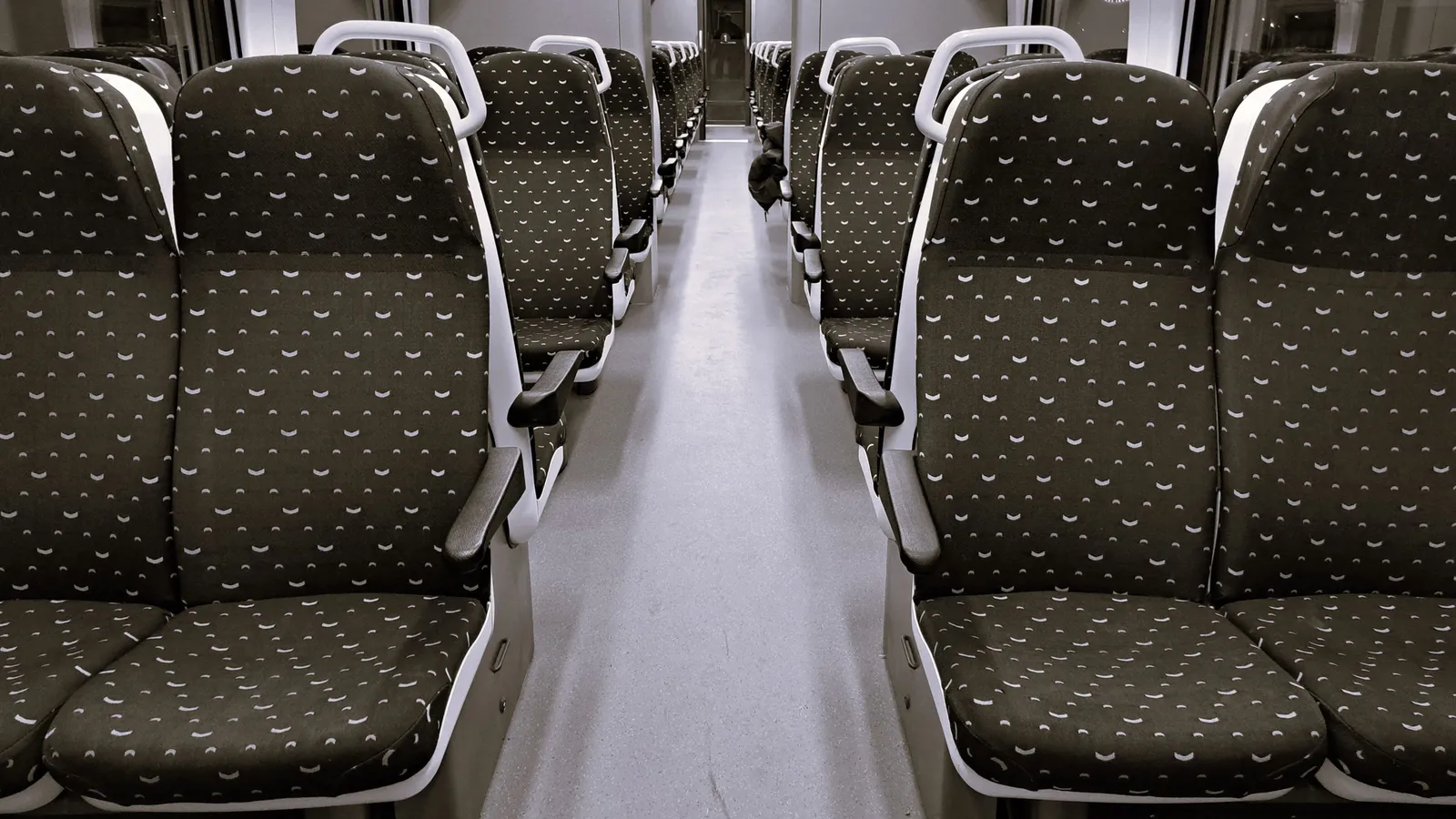
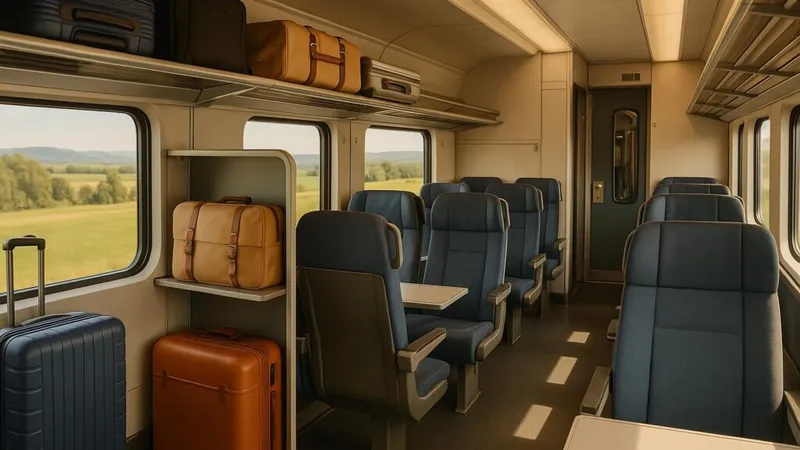
On most European high-speed trains, first class means a wider seat in a quieter carriage, usually with better Wi-Fi and sometimes at-seat service. Second class is where most passengers travel, and on many routes it is entirely comfortable.
Whether upgrading is worth it depends on three things: how long the journey is, which operator you are travelling with, and whether you are using an Interrail or Eurail pass.
Quick comparison
| Feature | First class | Second class |
|---|---|---|
| Seating layout | 2+1 on most high-speed trains | 2+2 on most trains |
| Seat width and pitch | Wider, more legroom (typically 97-127 cm pitch) | Narrower, less legroom (typically 76-86 cm pitch) |
| Meal service | At-seat on some operators (Eurostar, TGV); not on others (DB ICE) | Self-service dining car or no service |
| Wi-Fi | Generally faster and more reliable | Available on most modern trains; quality varies |
| Power outlets | Individual at each seat on most trains | Often shared or row-level |
| Lounge access | On Eurostar Premier; rare elsewhere | Not included |
| Quiet environment | Often the whole carriage; quieter by default | Designated quiet zones on some operators (e.g. DB ICE) |
| Cost | Roughly 30-75% more than second class | Standard fare |
Does first class make sense for your journey?
For journeys under two hours, second class is the sensible choice. The extra cost rarely justifies itself when you are on the train for less time than it takes to watch a film. Modern high-speed trains have adequate seats in 2nd class, and the difference in ride quality is minor.
Longer journeys are different. Three or more hours in a wider seat, with fewer passengers around you and a higher chance of an empty seat beside you, makes a real difference to comfort. First class starts to earn its premium.
On overnight trains, the class distinction matters most of all. First class typically means a private sleeper compartment. Second class means a shared couchette berth. That is a more significant difference than any daytime seat upgrade.
The short rule: second class for anything under two hours. First class for long-distance journeys when the price gap is manageable. A private sleeper for overnight trips if rest and privacy matter.
Seating and space
Most European high-speed trains use a 2+1 layout in first class (two seats on one side, one on the other) and a 2+2 layout in second class. That single extra seat width makes the aisle wider and the carriage feel less crowded.
First class seat pitch on high-speed trains typically runs 97 to 127 cm. Second class runs 76 to 86 cm. The gap is noticeable when you are sitting for more than two hours, particularly if you are tall.
First class carriages also fill more slowly. On a busy Friday afternoon train from Paris to Lyon, the 2nd class carriages are often full; the 1st class carriage is frequently half-empty. That means a realistic chance of having a neighbouring seat free for the whole journey.
Onboard services: what varies by operator
This is where the biggest misunderstanding happens. Many travellers expect consistent first class amenities across Europe. They do not exist. What first class includes depends entirely on the operator and the route.
What is usually true in first class:
- Wider seats with more legroom
- Fewer passengers per carriage
- Individual or row-level power outlets
- A generally quieter environment
What varies significantly:
- Whether meals are included (Eurostar Premier: yes on selected routes; DB ICE 1st class: no)
- Whether drinks are complimentary (TGV Premire: on some services; SBB 1st class: no)
- Whether there is lounge access (Eurostar Premier: yes; most others: no)
- Wi-Fi reliability (improving across operators but still inconsistent on some routes)
Do not assume that what one operator includes in first class applies to another. Check the specific train.
The main operators: what first class actually looks like
Eurostar (London to Paris, Brussels, and Amsterdam)
Eurostar runs three classes. Eurostar Standard is the baseline with standard seating. Eurostar Plus has extra-spacious seats and, on London routes, a choice of two dishes and drinks served at your seat. Eurostar Premier includes lounge access in London, Paris, and Brussels, a menu from European chefs served at your seat (selected routes only), same-day boarding guarantee, and fully flexible ticketing.
For most travellers on the 2 hours 20 minute London to Paris journey, Eurostar Plus is worth considering. It costs more than Eurostar Standard, but you get a meal on London routes and more space. Eurostar Standard is the right choice for budget-conscious travellers or short off-peak trips. Eurostar Premier suits those who need the lounge time, full flexibility, and want the most comfortable experience.
Fares vary considerably by date, demand, and booking window. Treat any fare figures as orientation only.
SNCF TGV (France, including international routes)
On domestic TGV services, the classes are Premire (1st) and Seconde (2nd). Premire has a 2+1 layout, wider seats, and a quieter carriage. On some services, a complimentary drink is included; on others, you buy from the bar. Seconde has 2+2 seating and is the standard choice for most travellers.
TGV Premire advance fares can be close to Seconde advance fares when booked several weeks out. The gap narrows significantly with early booking. At full flexible fares, the difference is larger.
On TGV Lyria (France to Switzerland) and Eurostar services between France, Belgium, the Netherlands, and Germany, class naming and inclusions may differ. Check the specific service when booking.
For more on TGV services, see Travelling with TGV: The Complete Guide to France’s High-Speed Trains.
DB ICE (Germany and international routes)
Deutsche Bahn ICE trains run 1. Klasse and 2. Klasse. First class has a 2+1 layout and a quieter carriage. There is no complimentary meal in standard first class fares; food comes from the BordBistro, which first class passengers can reach without walking through the full length of the train on longer sets.
DB ICE first class is primarily about space and quiet. Advance (Sparpreis) first class fares can be close to second class when booked early. A Frankfurt to Berlin Sparpreis in second class can start from around 25-30; first class from around 35-45. These vary by date and demand. Always check live fares on bahn.de.
One important point: DB ICE has designated Ruhebereich (quiet zone) carriages in both first and second class. If quiet is your main reason to upgrade, check whether a 2nd class quiet zone carriage is available on your train before paying more for first class.
Trenitalia Frecciarossa (Italy)
Frecciarossa runs four classes: Standard, Premium, Business, and Executive. Standard has 2+2 seating and is the entry-level option. Premium offers better seats in a 2+2 layout. Business has a 2+1 layout with at-seat service. Executive is a small premium cabin with club-style seating and full at-seat dining.
For most travellers on the Rome to Milan corridor (around 3 hours), Business class gives a noticeable upgrade at a meaningful price premium. Standard is adequate for most daytime journeys. Executive is primarily for those who want a near-private experience.
Advance fares in Standard can start from around 20-30. Business from around 40-60. These vary by departure and booking window. All Frecciarossa passengers, including Interrail and Eurail pass holders, need a seat reservation. Reservation fees vary by class.
For more detail, see Frecciarossa: Practical Guide to Italy’s High-Speed Trains.
Italo (NTV, Italy)
Italo is the competitor to Trenitalia on Italian high-speed routes and uses different class names: Smart (economy), Prima, and Club Executive. Smart is comparable to standard class elsewhere. Prima offers more space with a 2+1 layout. Club Executive is a premium small-group cabin with catering.
When comparing options on a Rome to Milan or Rome to Naples journey, check both Trenitalia and Italo on price and timing. The two operators run independent reservation systems and Interrail or Eurail reservation fees may differ between them.
SBB (Swiss Federal Railways)
SBB 1st and 2nd class are both clean and well-maintained by European standards. On Swiss intercity routes (Zurich to Geneva, Zurich to Bern), 2nd class is comfortable for most travellers. SBB 2nd class seat pitch is often comparable to 1st class on older stock from other operators.
SBB 1st class adds a wider seat, a quieter carriage, and on some trains access to a panoramic upper level. Supersaver fares in 2nd class start from around CHF 48 on popular intercity routes; 1st class Supersaver from around CHF 78. Check current Supersaver fares on sbb.ch as prices vary by departure and availability. The SBB half-fare card (Halbtax) halves both for regular Swiss travellers.
For most visitors on short to medium journeys, 2nd class on SBB is the right call. First class is worth considering on longer routes or during peak commuting hours when 2nd class fills.
Night trains: when class determines your sleeping arrangement
On overnight trains, the class you book determines what you sleep in, not just where you sit.
In second class on European night trains, the options are typically a reclining seat or a couchette. A couchette is a fold-down berth in a shared compartment, usually with four or six berths per room. You get a pillow, sheet, and blanket. It is functional and budget-friendly. Privacy is limited.
In first class on most night trains, you typically get access to a private sleeper compartment: an enclosed room with one to three berths, a washbasin, and sometimes a shower. The difference is not just comfort. It is whether you arrive rested.
On Nightjet services (run by BB, covering routes across Austria, Germany, Switzerland, and neighbouring countries), the pass rules are worth knowing. Both 1st class and 2nd class Interrail or Eurail pass holders can book any accommodation type, including private sleeper compartments, as long as places are available. What changes is the reservation fee, which varies by accommodation type and is higher for sleeper compartments than for couchettes. Always verify the rules for the specific Nightjet route before booking.
For detailed booking guidance, see Night Trains: Your Complete Guide to Overnight Rail Travel in Europe and Night trains in Europe: booking rules by country.
Interrail and Eurail: choosing your pass class
Interrail and Eurail passes come in 1st class and 2nd class versions. A 1st class pass costs roughly 30-35% more than the equivalent 2nd class pass. That is a significant premium, and for many itineraries it is not necessary.
For most travellers on a mixed European itinerary of day trains, a 2nd class pass is adequate. The pass class you buy does not restrict which trains you can board; it determines which class you sit in. You can travel in 2nd class with a 1st class pass if you prefer.
When a 1st class pass adds clear value:
- You are on a busy itinerary of long-distance routes where 2nd class fills up and more space matters
- You need to work during long journeys and value the consistently quieter first class environment
- You are regularly travelling on routes where 1st class seat availability at quieter periods is a practical advantage
When a 2nd class pass is the right call:
- You are under 28 (youth pass fares for 2nd class are considerably lower on both Interrail and Eurail)
- Your itinerary is mainly short to medium day trips
- You are travelling in Switzerland, where SBB 2nd class is genuinely excellent
- You would rather spend the difference on more travel days
For a full comparison of costs and scenarios, see Eurail 1st Class vs 2nd Class: Is the Upgrade Really Worth It?
When first class is not available
Not every European train has a first class option. Assuming it does is a common planning error.
In Germany, Regionalbahn and Regional-Express services either have a small first class section or none at all. Availability varies by region and train.
In France, TER regional trains are primarily second class. Some have a first class carriage; many do not.
In Italy, Trenitalia Regionale trains run in Standard only. There is no Business or Executive class on regional services.
If you are planning a journey that combines high-speed and regional legs, check each segment separately. A 1st class pass covers you in 2nd class when 1st class is not available on a particular train.
Reservations: separate from your class choice
On high-speed trains across Europe, a seat reservation is required or strongly recommended regardless of which class you book. This is a separate decision from your class choice.
On Eurostar, TGV, DB ICE, Frecciarossa, and Italo, you cannot board with a ticket or pass and sit wherever you like. You book a specific seat.
Reservation fees vary by operator and, on some trains, by class. On DB ICE, a reservation costs a few euros and is optional but sensible on busy routes. On Frecciarossa, the reservation structure is built into the class product. On Eurostar, the class determines everything including the seat.
If you are travelling with an Interrail or Eurail pass, you book seat reservations separately through the operator or via the Interrail and Eurail booking tools. For guidance, see How to Book Rail Pass Seat Reservations.
Price differences by operator
First class fares typically cost 30 to 75% more than second class on the same departure. The gap varies by operator, route, and how far in advance you book. Early booking can narrow the difference considerably.
The following are advance fare orientation figures. Actual prices depend on the date, demand, train, and booking window. Always check live fares on the operator’s website before making your decision.
| Operator / Route | 2nd class (advance) | 1st class (advance) | Typical gap |
|---|---|---|---|
| DB ICE, Frankfurt to Berlin | From around 25 | From around 35 | Around 10-15 |
| SNCF TGV, Paris to Lyon | From around 25 | From around 35 | Around 10-15 |
| SBB, Zurich to Geneva | From CHF 48 | From CHF 78 | CHF 30 |
| Trenitalia Frecciarossa, Rome to Milan (Standard vs Business) | From around 20 | From around 45 | Around 25 |
| Eurostar, London to Paris (Standard vs Eurostar Plus) | From around 40 | From around 100 | Around 60 |
On DB and SNCF in particular, the gap at advance prices can be small enough that first class becomes worth considering even on medium-length journeys. At flexible fares, the difference is much larger.
When first class is worth the extra cost
For most travellers on routes under two hours, second class is the practical choice. The seat width and quieter carriage do not pay off on a short journey.
First class earns its premium when:
- The journey is three or more hours and you want the wider seat and less crowded carriage for the whole trip
- You are on a route where the advance price gap is small (under 15 on some DB and SNCF services when booked early)
- You are travelling overnight and a private sleeper compartment is significantly better for you than a shared couchette
- You need to work during a long journey and the quieter, lower-occupancy environment makes that easier
- You are travelling at peak times on a busy route where 2nd class routinely fills to capacity
Second class is the better choice for short trips, regional routes where 1st class often does not exist, and routes where modern 2nd class carriages are genuinely comfortable, including most of Switzerland.
Frequently asked questions
Is first class worth it on European trains?
For most travellers on journeys under two hours, second class is perfectly adequate and saves money. First class becomes worth considering on long-distance trips of three or more hours, where the wider seat and quieter carriage make a real difference. It is also worth paying for overnight trains where first class typically means a private sleeper compartment rather than a shared couchette. On short regional routes, first class often is not available at all.
What is the difference between first class and second class on European trains?
On most European high-speed trains, first class offers wider seats with more legroom, fewer passengers per carriage, and a quieter environment. Second class has narrower seats in a 2+2 layout and carries more passengers, but on modern trains it is comfortable. What first class includes beyond seating varies by operator: Eurostar Premier and TGV Première include a meal service; DB ICE 1st class does not. Always check what the specific train includes before paying a premium.
Should I buy a first class or second class Interrail or Eurail pass?
For most travellers, a second class pass is the better starting point. It is significantly cheaper and covers all the same trains. Second class is perfectly comfortable on Swiss SBB trains, DB ICE, and most other modern European services. A first class pass is worth considering if you are regularly travelling on very busy long-distance routes where more space matters, or if you need to work during long journeys and the quieter environment is important to you. Youth pass fares for under-28 travellers are considerably lower in second class.
Do I need a first class pass to book a sleeper compartment on a night train?
Not necessarily. On Nightjet, both first class and second class Interrail and Eurail pass holders can book any accommodation type, including private sleeper compartments. What changes is the reservation fee, which is higher for sleeper compartments than for couchettes or seats. Rules can vary by night train operator and route, so check the specific train before assuming.
Is first class available on all European trains?
No. Many regional and shorter-distance trains in Europe have no first class option at all. In Germany, many Regionalbahn and Regional-Express services run second class only. In France, TER regional trains are often second class. In Italy, Trenitalia Regionale services have no Business or Executive class. If you are planning a journey that includes both high-speed and regional legs, check each segment separately.