
Train service

Trenitalia
Trenitalia is Italy’s state-owned rail operator, running high-speed, intercity, and regional trains across the country and beyond.
Check times & pricesOfficial website Check times & prices
NTV
Italo (NTV) is Italy’s first private high-speed rail operator, offering a competitive alternative to Trenitalia since 2012.
Check times & pricesOfficial websiteTrain tickets

Omio
Omio connects you with over 1,000 transport providers - trains, buses, flights, and more - to simplify your travel planning.

Trainline
Trainline sells rail and coach tickets worldwide on behalf of major UK and European transport companies.

Raileurope
Rail Europe is a leading travel tech company specializing in European train bookings for over 15,000 travel professionals worldwide.
Florence is one of Italy’s busiest train hubs, offering fast and convenient connections to cities like Rome, Milan, Venice, and even international destinations such as Paris and Munich. Its main station, Santa Maria Novella (SMN), is centrally located and handles over 160,000 travelers daily. Firenze Santa Maria Novella, also known as Florence Santa Maria Novella or Santa Maria Novella station, is a major railway hub in Central Italy, known for its central location, importance in the Italian rail network, and excellent accessibility. Here’s what you need to know:
- Florence has three key train stations – Santa Maria Novella (SMN), Campo di Marte, and Rifredi
- Operators: Trenitalia and Italo provide high-speed and regional services, with ticket prices starting at €28.
- Key Routes: Travel to Rome in as little as 1h 26m, Milan in 2h 15m, and Venice in 2h 5m. International routes include Paris, Zurich, and Vienna. In 2026, new direct routes from Munich to Florence will be launched, including Nightjet sleeper trains for overnight travel.
- Facilities at SMN: Ticket offices, luggage storage, premium lounges, restaurants, and step-free access. The Santa Maria Novella station is architecturally notable, designed by architect Michelucci, featuring a large glass portal and a distinctive suspended roof structure. Managed by Rete Ferroviaria Italiana, the station also offers facilities for people with disabilities to ensure accessibility.
- Local Transport: Seamless connections to Florence’s buses and trams, including the T1 and T2 tram lines.
Whether you’re exploring Tuscany or planning a European rail trip, Florence’s train network makes travel easy, fast, and accessible. Use Florence as your base to explore Italy efficiently and comfortably by train.
Introduction to Florence Trains
Florence, renowned for its art, architecture, and vibrant culture, is one of Italy’s most accessible cities thanks to its well-developed rail network. The city is served by several train stations, with Santa Maria Novella standing out as the main train station located right in the city centre. Whether you’re arriving from Rome, Milan, or other parts of Italy, high speed trains like Frecciarossa and Frecciargento make the journey quick and comfortable, connecting Florence to major cities in just a few hours. Regional trains also play a crucial role, linking Florence to charming Tuscan towns and nearby cities, making it easy to explore the region at your own pace. Booking train tickets in advance is simple and often offers the lowest prices, with options ranging from low cost standard seats to executive class, which features amenities such as air conditioning, power sockets, and complimentary meals. With frequent departures and modern facilities, traveling by train to Florence is a convenient and enjoyable way to experience Italy.
Florence Train Stations
Florence has three main train stations, each serving different travel routes and needs.
Florence also has secondary stations like Rifredi and Campo di Marte, where some trains stop instead of Santa Maria Novella (SMN). Trains frequently run between Santa Maria Novella Station and the other two stations, Campo di Marte and Rifredi, and transfers take just a few minutes, making it easy to navigate between them.
Santa Maria Novella (SMN) Station
Santa Maria Novella is the main train station in Florence, located right in the historic center. Built between 1932 and 1934, this iconic station has 19 platforms and offers step-free access throughout. Modern amenities, including moving walkways, make it convenient and accessible for all travelers.
Here’s what you’ll find at SMN:
| Service Category | Facilities |
|---|---|
| Ticketing | Trenitalia and Italo ticket offices, Self-service machines |
| Luggage | Luggage office (near Platform 16) |
| Premium Services | Sala Freccia Club (for Executive/Business class), Casa Italo |
| Assistance | Sala Blu (accessibility support), Currency exchange, Post office |
| Amenities | Restrooms (near Platform 5), Passenger lounge, Restaurants, Cafes, ATMs |
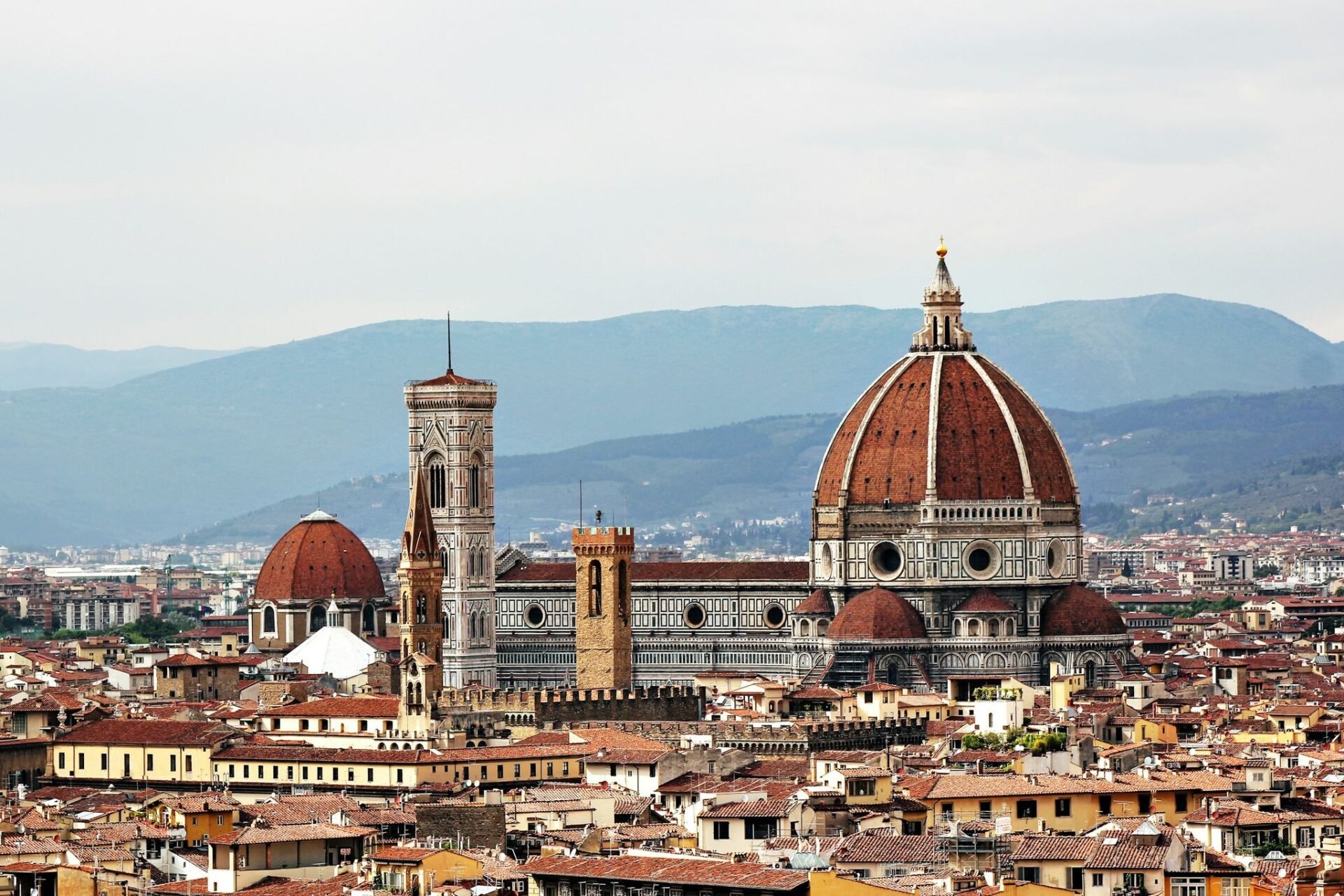
Just a short walk from the station is the Basilica of Santa Maria Novella. Florence’s historic center is compact and easily explored on foot from Santa Maria Novella station. Piazza del Duomo, featuring the Cathedral of Santa Maria del Fiore and Giotto’s Bell Tower, is about a 10-minute walk away. Piazza della Signoria, the city’s social and political hub, is only about 7 minutes on foot and is close to the Uffizi Gallery. From there, you can easily reach the Ponte Vecchio, Florence’s famous bridge, and continue on to the Boboli Gardens after crossing. The Santa Maria Novella Station is easily accessible from any point in the city and is located just 15 minutes’ walk from the Florence Cathedral.
SMN is the go-to station for most travelers, but Florence has two other stations for regional and northern routes.
Campo di Marte Station
Campo di Marte is located east of the city, about a 39-minute walk or a short train ride from SMN. While smaller, it provides all the essential services travelers might need.
Rifredi Station
Rifredi Station is another key point, connecting northern routes to Bologna and beyond. It offers basic facilities to meet travelers’ needs.
All three stations are accessible, with features like step-free access and support services such as the Sala Blu at SMN.
Florence’s rail network offers both domestic and international connections through several operators.
Trenitalia trains
Trenitalia, Italy’s national rail provider, operates an extensive network serving Florence. Their services include:
| Description | Key Routes | |
|---|---|---|
| Frecciarossa | Trenitalia’s high-speed trains, reaching up to 300 km/h with free Wi-Fi, power outlets, air conditioning in all classes, and a restaurant car with full meals and bar service in Executive class | Rome (≈1h 40m), Milan, Naples |
| Frecciargento | Frecciargento trains: high-speed on mixed lines, offering comfortable, reliable travel with distinct class options and onboard amenities | Venice, Trieste |
| Intercity | Trenitalia Intercity: connects major cities with reliable, comfortable, and well-facilitated routes, always including a seat reservation | Coastal cities, regional capitals |
| Regionale | Local stopping services | Destinations across Tuscany |
Trenitalia offers high-speed trains such as Frecciarossa and Frecciargento that connect major cities to Florence. Frecciarossa trains can reach speeds of up to 300 km/h, making them among the fastest options for traveling to Florence.
Tickets for Trenitalia’s high-speed and intercity trains always come with a seat reservation included, and can sell out if not booked in advance. You can purchase e-tickets for Trenitalia trains online and show them on your phone without printing.
On busy routes like Rome–Florence, Trenitalia offers 4–6 departures per hour, with select trains featuring complimentary WiFi.
For those seeking additional high-speed options, premium services are also available.
Italo Train Network
Italo, a private high-speed rail operator, provides a modern and premium travel experience on major Italian routes. Highlights of their service include:
- A state-of-the-art fleet
- Free onboard WiFi
- Fewer disruptions during strikes
- Direct connections to cities like Rome, Milan, and Naples
Italo typically operates 2–3 trains per hour between Florence and key destinations.
Other Train Services
Florence is also a gateway for international rail travel, with routes extending into Europe:
| Destination | Journey Highlights | |
|---|---|---|
| Paris | €59.90 | Via Milan and Lyon |
| Munich | – | Overnight Nightjet service |
| Zurich | €53.90 | Scenic Alpine route |
| Vienna | €64.90 | Multiple daily connections |
For international trips, travelers often change trains at hubs like Milan, Munich, or Zurich. Booking tickets several months in advance can help secure better fares, especially for overnight and high-speed services.
Regional trains also connect Florence to numerous towns across Tuscany and nearby regions. These services run frequently and are budget-friendly. Children under 4 travel free without a seat on national trains, while kids aged 4–15 enjoy a 50% discount on base fares.
This diverse range of services makes Florence an excellent starting point for exploring Italy and beyond.
Tickets and Booking
Ticket Purchase Options
You can buy Florence train tickets through the official channels of Trenitalia and Italo. These platforms provide real-time updates on availability and pricing. Booking early is often cheaper, especially during busy travel seasons.
| Purchase Method | Payment Options | Ticket Format |
|---|---|---|
| Official websites | Credit/debit cards, PayPal | Digital or print-at-home |
| Mobile apps | Digital wallets, cards | Mobile ticket |
| Station kiosks | Cards | Paper ticket |
| Ticket offices | Cash, cards | Paper ticket |
Now, let’s take a look at the service classes these trains offer.
Service Classes
Both Trenitalia and Italo provide a range of service classes to cater to different budgets and preferences.
Trenitalia’s Frecciarossa trains offer four service levels:
| Class | Amenities |
|---|---|
| Standard (standard class) | Free Wi-Fi, luggage storage, easy food service, quiet carriage |
| Premium | Complimentary drinks and snacks, morning newspaper |
| Business | Larger seats, drinks and snacks, morning newspaper |
| Executive | Fast-track service, FrecciaClub lounge access, gourmet meals, access to the restaurant car |
| Italo trains also have several options: | |
| Class | Amenities |
| —————- | ——————————————————————————————— |
| Smart | Most affordable option |
| Comfort | Wider seats and extra legroom |
| Prima | Welcome food and drink selection, fast-track boarding, more space |
| Executive Club | Includes Prima services, extra-wide seats, Italo Club Lounge access, personal entertainment |
Onboard Facilities and Services
When you board a train to Florence, you’ll find a range of onboard facilities designed to make your journey as comfortable as possible. High speed trains, such as Frecciarossa and Frecciargento, offer spacious seating, generous legroom, and modern amenities like restaurant cars, power outlets at every seat, and free Wi-Fi throughout the journey. If you’re traveling in executive class, you’ll benefit from priority boarding, a dedicated welcome service, and seat reservation included in your ticket, ensuring a seamless and relaxing experience. Trenitalia trains, including both intercity and high-speed services, provide light meals, snacks, and beverages, so you can enjoy refreshments on the go. Even on regional trains, you’ll find air conditioning, ample luggage storage, and the chance to take in the scenic Tuscan countryside as you travel between towns. No matter which class or train type you choose, onboard facilities are designed to enhance your trip and provide a pleasant travel environment.
Train Routes from Florence
Italian Destinations
Florence plays a key role in Italy’s high-speed train network. The Rome–Florence route, covering 231 km (144 mi), can be completed in as little as 1 hour and 26 minutes on Italo’s fastest service. The first train departs at 7:10 AM, and the last service leaves at 7:25 PM.
Traveling between Florence and Milan is also quick, with high-speed trains completing the journey in 2 hours and 15 minutes.
| Destination | Travel Time | Distance | Daily Departures |
|---|---|---|---|
| Rome | 1h 26m–1h 30m | 231 km (144 mi) | First: 7:10 AM; Last: 7:25 PM |
| Milan | 2h 15m | – | Multiple daily services |
Trenitalia and Italo operate high-speed trains that reach speeds of up to 155 mph. These trains come with perks like Wi-Fi, power outlets, and onboard dining. In addition to domestic routes, Florence serves as a connection point for international travel.
Cross-border Routes
Florence isn’t just a hub for Italian travel – it also links to major European cities. Destinations like Lyon, Brussels, Amsterdam, and Prague can be reached via routes that often involve transfers at key hubs such as Milan, Munich, Zurich, or Vienna. These journeys may combine high-speed trains with overnight sleeper services.
| Destination | Route Details | |
|---|---|---|
| Lyon | Via Milan; total journey ≈6h 25m | €59.90 |
| Brussels | Via Munich with an overnight and day service | €62.80 |
| Amsterdam | Via Milan and Zurich with an overnight service | €69 |
| Prague | Via Vienna with an overnight service | €73 |
For longer trips, trains are an eco-friendly alternative, producing 96% less carbon dioxide compared to air travel. This makes rail an excellent option for exploring Europe while reducing your environmental impact.
Local Transport Guide
Florence offers a variety of local transport options to ensure easy travel between the train stations and the city. For short journeys, local transport includes ‘low speed’ regional trains that connect nearby towns and suburbs to Florence. These services complement the city’s well-connected rail network.
Station Transfer Options
Getting from Florence’s train stations to your accommodation is straightforward, thanks to the city’s trams and buses. From Santa Maria Novella (SMN) station, the T1 Leonardo line runs between Scandicci and Careggi, while the T2 Vespucci line connects SMN to Florence Airport and Piazza San Marco.
| Transfer Option | Cost | Validity | Notes |
|---|---|---|---|
| Bus/Tram Ticket | €1.85 | 90 minutes | Validate the ticket when boarding |
| Direct Purchase | €3.25 | 90 minutes | Exact change is required |
| SMS Ticket* | €2.17 | 90 minutes | Available only for Italian SIM users |
These options easily integrate with Florence’s public transport system, which is covered in the next section.
City Transport System
Public transportation in Florence revolves around buses and trams, operated by Autolinee Toscane. The AT-Bus mobile app is a handy tool for planning routes and purchasing tickets. Tickets are valid on both buses and trams, but remember to validate them – fines start at €43 if you don’t.
The tram network includes two primary lines:
- T1 Leonardo: Villa Costanza – SMN – Careggi
- T2 Vespucci: SMN – Florence Airport – Piazza San Marco
Florence’s central location makes it an ideal base for exploring Tuscany and beyond. Short train rides can take you to some of the region’s most famous destinations.
| Destination | Travel Time | Key Attractions |
|---|---|---|
| Bologna | 35–40 min | University of Bologna, Two Towers |
| Pisa | 1 hour | Leaning Tower, Piazza dei Miracoli |
| Siena | 1 hour | Piazza del Campo, Siena Cathedral |
| Lucca | 1 hour | Medieval walls, Duomo di San Martino |
| Arezzo | 1 hour | Piazza Grande, Basilica of San Francesco |
For nearby spots, buses offer convenient alternatives. For example:
- Bus 7 connects SMN station or Piazza San Marco to Fiesole.
- Bus 13 serves Piazzale Michelangelo.
- Bus 25A reaches Villa Demidoff in Pratolino.
Travel Timing and Schedules
Timetable Changes
Train schedules are updated twice a year, with tickets typically available up to four months in advance. However, as updates approach, the booking window may become shorter. It’s a good idea to check official schedules a few weeks before your trip to stay informed. Keep in mind that seasonal weather can also impact train punctuality and travel conditions.
Seasonal Travel Notes
Florence experiences a Mediterranean climate with distinct seasonal variations that can influence travel plans. Here’s an overview of key weather patterns and what to expect:
| Season | Temperature & Climate | Travel Tips |
|---|---|---|
| Spring (Mar–May) | Around 16°C–27°C | Moderate crowds, except for Easter week, making it a good time to visit. |
| Summer (Jun–Aug) | Warm to hot; July averages 30°C (86°F) | Busy travel period; many locals vacation in August, leading to reduced activity. |
| Fall (Sep–Oct) | Around 16°C–27°C | Comfortable weather with fewer tourists, ideal for sightseeing. |
| Winter (Nov–Feb) | Cooler; January averages 5°C (41°F) | Rain is more frequent, especially in November, which sees about 102 mm of rainfall. |
Plan ahead to avoid surprises, especially during peak seasons or when weather conditions might affect your journey.
Santa Maria Novella (SMN) is Florence’s main train station, serving around 59 million passengers every year. Located in the heart of the city, it connects travelers to local, regional, and international destinations while offering convenient amenities and accessibility.
| Aspect | Details |
|---|---|
| Main Station | Santa Maria Novella (SMN) – a 10-minute walk from Florence’s Duomo |
| Airport Access | T2 tram connects to the airport in about 23 minutes |
| Luggage Storage | Secure storage available – around €6.50 for the first 5 hours |
| Public Transit | Excellent connections to buses, trams, and other transport options |
SMN is the perfect hub for exploring Florence. Its central location makes it easy to visit major landmarks, while its connections to Trenitalia, Italo, and international night trains (like routes to Munich and Vienna) ensure seamless travel beyond the city.
Florence’s travel patterns shift with the seasons. Summers (June–August) are especially busy, and the Mediterranean climate can affect travel conditions. Planning ahead is key for a hassle-free trip.
Train Travel Tips
To make the most of your train journey to Florence, a little planning goes a long way. Booking train tickets in advance is the best way to secure the cheapest price, especially for high speed trains connecting main cities like Rome and Milan. Use official websites or trusted platforms to compare schedules, journey times, and ticket options, and consider upgrading to business class or executive class for a more comfortable journey with added amenities. Check the departure and arrival stations carefully—most trains to Florence arrive at Santa Maria Novella, the main station in the city center, but some regional or intercity trains may use other stations. High speed trains can reach impressive speeds, allowing you to save time and maximize your sightseeing in Florence and beyond. By planning your itinerary and choosing the right class for your needs, you’ll enjoy a smooth and enjoyable train trip across Italy.
Key Takeaways
Florence is a city that welcomes travelers from across Italy and Europe with its extensive and efficient train network. Whether you prefer the speed and comfort of high speed trains or the affordability of regional trains, there’s a train option to suit every budget and travel style. By booking your train tickets in advance and considering the onboard facilities that matter most to you, you can enjoy a low cost or luxurious journey to the heart of Florence. With its rich history, breathtaking architecture, and world-class art, Florence is a must-visit city in Italy—and traveling by train is one of the best ways to experience all it has to offer. From the moment you arrive at the main station, you’ll find yourself perfectly positioned to explore the city and the beautiful Tuscan region beyond.
Frequently asked questions
How long does it take to reach Florence by train from major Italian cities?
From Rome the fastest service takes as little as 1 hour and 26 minutes. From Milan the journey is 2 hours and 15 minutes, and from Venice approximately 2 hours and 5 minutes.
Which is the main train station in Florence?
The main station is Firenze Santa Maria Novella (SMN), which handles over 160,000 travellers daily and is centrally located. Florence also has two other stations: Campo di Marte and Rifredi.
Which operators run trains to Florence, and what do tickets cost?
Trenitalia and Italo both operate high-speed and regional services to Florence, with ticket prices starting at €28.
Are there international train routes to Florence?
Yes. International routes from Florence include Paris, Zurich, and Vienna. In 2026, new direct routes from Munich to Florence are also planned to launch.
Are there discounts for children travelling by train to Florence?
Yes. Children under 4 travel free without a seat on national trains, while children aged 4 to 15 enjoy a 50% discount on base fares.