
Train service

Trenitalia
Trenitalia is Italy’s state-owned rail operator, running high-speed, intercity, and regional trains across the country and beyond.
Check times & pricesOfficial website Check times & prices
NTV
Italo (NTV) is Italy’s first private high-speed rail operator, offering a competitive alternative to Trenitalia since 2012.
Check times & pricesOfficial websiteTrain tickets

Omio
Omio connects you with over 1,000 transport providers - trains, buses, flights, and more - to simplify your travel planning.

Trainline
Trainline sells rail and coach tickets worldwide on behalf of major UK and European transport companies.

Raileurope
Rail Europe is a leading travel tech company specializing in European train bookings for over 15,000 travel professionals worldwide.
The high-speed journey from Rome to Florence takes around 1 hour 25 minutes to 1 hour 30 minutes. Two operators run it: Trenitalia and Italo, with frequent departures from early morning to late evening.
For most travellers, the high-speed train is the right choice. Regional trains take 3 hours 40 minutes to 4 hours 30 minutes and cost considerably less, but they make sense mainly if you want a stop at Orvieto or Arezzo along the way.
Quick facts
| High-speed (Frecciarossa / Italo) | Regional (Regionale Veloce) | |
|---|---|---|
| Journey time | 1h 25m to 1h 30m (some up to 1h 45m) | 3h 40m to 4h 30m |
| Fare (approximate) | From around €14.90 advance; typically from €50 to €55 near-term | Around €25 |
| Reservation required | Yes, mandatory | No |
| Departure station | Rome Termini (most); Roma Tiburtina (some Italo) | Roma Tiburtina (most) |
| Arrival station | Firenze Santa Maria Novella (most); Firenze Campo di Marte (some Frecciargento) | Firenze Santa Maria Novella |
| Interrail/Eurail pass | Valid on Trenitalia (Frecciarossa, Frecciargento); not accepted on Italo | Valid; no reservation needed |
Types of trains from Rome to Florence
Trenitalia and Italo both run high-speed trains on this route. They are separate companies with different fares, ticket classes, and pass rules. If you have an Interrail or Eurail pass, that difference matters a great deal.
Frecciarossa and Frecciargento (Trenitalia)
Trenitalia runs the Frecciarossa and Frecciargento, both part of the Le Frecce family. The Frecciarossa is the faster of the two, reaching up to 300 km/h, and runs more often than Italo on this corridor. It has a food carriage and Wi-Fi, though signal drops in the tunnels.
Frecciarossa has four classes: Standard, Premium, Business, and Executive. Standard gives you a seat and Wi-Fi. Executive adds lounge access, fast-track boarding, and gourmet catering. Premium and Business sit in between.
A handful of Frecciargento services arrive at Firenze Campo di Marte rather than Firenze Santa Maria Novella. Check your ticket before you travel.
Interrail and Eurail passes are valid on Trenitalia services on this route. You still need a mandatory seat reservation, which costs €13 per journey.
Italo
Italo is a private operator, entirely separate from Trenitalia. Its fastest journeys take around 1 hour 25 minutes. Wi-Fi is free in all classes, including Smart. Most Italo departures from Rome use Rome Termini, but some use Roma Tiburtina. Check your ticket for the departure station.
Italo’s three classes are Smart, Prima Business, and Club Executive. Smart is the standard fare. Prima Business adds business-class seating and a welcome service. Club Executive includes lounge access and enhanced catering.
Italo does not accept Interrail or Eurail passes. If you hold a pass, buy a separate Italo ticket or travel with Trenitalia.
Regional trains
Regionale Veloce services, operated by Trenitalia, take 3 hours 40 minutes to 4 hours 30 minutes. Fares are fixed at around €25 and no reservation is needed. Booking early changes nothing on price.
Most regional trains depart from Roma Tiburtina, not Rome Termini. They stop at Orvieto and Arezzo. If you want to visit either town, a regional service is your only option on this route. High-speed trains skip both.
Departure and arrival stations
Rome: Most Frecciarossa services leave from Rome Termini. Some Italo trains also use Termini; others use Roma Tiburtina. Regional trains mostly go from Tiburtina. Check the station on your ticket before you travel. Termini and Tiburtina are several kilometres apart.
Rome Termini is central, with direct Metro connections on both Line A and Line B.
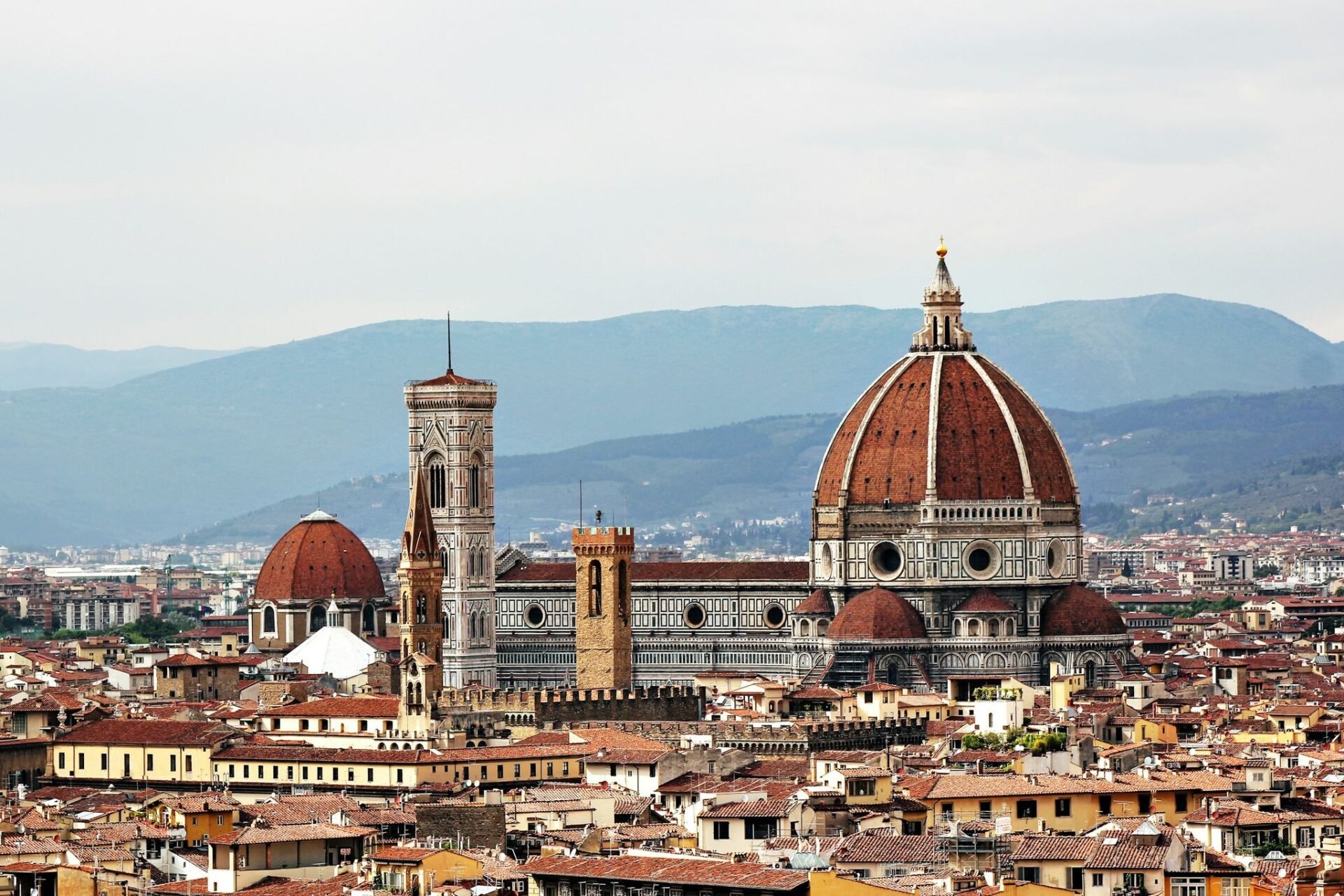
Florence: The main arrival station is Firenze Santa Maria Novella (SMN), right in the city centre. It opens onto Piazza della Stazione, about a 10-minute walk from the Duomo. Some Frecciargento services use Firenze Campo di Marte instead. Campo di Marte is on the south-east edge of the city and less convenient if you are heading to the centre.
Booking pages sometimes show only the city name. Open the train details and confirm your specific station before you pay.
Fares and ticket types
High-speed fares move with demand, booking window, and class. The cheapest fares appear when the booking window opens and sell out well before the travel date.
Italo fares: Advance fares can start from around €14.90 on promotional departures. Near-term fares are typically around €50. The cheapest tickets are non-refundable and non-exchangeable, so they suit you only if your plans are definite.
Frecciarossa fares: Advance fares vary by demand and how far out you book. Near-term fares are typically around €55. Book on trenitalia.com for the clearest pricing.
Regional train fares: Fixed at around €25. Booking early makes no difference.
Fare flexibility
Both operators sell flexible tickets that allow changes and refunds, at a higher price. Book a fixed advance fare if your plans are firm; pay more for flexibility if they are not.
Trenitalia opens bookings around 90 days before departure. The cheapest promotional fares are limited in number and tend to go first.
Pass-holder reservations (Trenitalia only)
If you have an Interrail or Eurail pass, you still need a separate seat reservation for Frecciarossa. It costs €13 per journey, regardless of class. Book it through Interrail, Eurail, or at a Trenitalia ticket office before you board. Your pass alone does not get you a seat.
Italo does not accept passes. You need a full-price Italo ticket to travel with that operator.
Seat reservations
On all high-speed trains, Frecciarossa, Frecciargento, and Italo, a seat reservation is mandatory. If you buy a regular ticket, the reservation is included in the price. On an Interrail or Eurail pass, you book it separately (€13 per Frecciarossa journey).
Regional trains do not require reservations. Board and choose any free seat.
When to book
Book high-speed tickets as early as your plans allow. Both operators use dynamic pricing: the cheapest fares are released when the booking window opens and gone long before the train departs. On this route, the gap between an early fare and a near-term one can be the difference between €15 and €55.
Public holidays and summer weekends push fares higher and can sell out popular departures entirely.
Regional fares are fixed. When you book makes no difference to what you pay.
Travelling off-peak
Mid-morning and early afternoon trains tend to be cheaper than peak-hour services (08:00 to 10:00 in the morning, 17:00 to 19:00 in the evening). Late-evening trains can be cheaper too. But this is a pattern, not a guarantee.
On a busy travel day, all trains cost more. On a quiet mid-week day, even peak departures may be reasonable. Compare prices across departure times when you book rather than assuming off-peak always wins.
Children’s fares (Trenitalia)
Children under 4 travel free on Trenitalia national trains without a seat. Children aged 4 to 14 typically get a 50% discount on the base fare. Regional trains use similar rules: under 4 free, ages 4 to 12 at 50% off. Check Trenitalia’s current family offers before booking, as promotional programmes can change.
Italo has its own family pricing. Check italotreno.com for the current terms.
Onboard facilities
Frecciarossa and Italo trains are air-conditioned and have luggage racks, power sockets, and a café car. Fine for a 90-minute journey.
Frecciarossa carries a food carriage and has Wi-Fi, though signal drops in the tunnels on this route. The Trenitalia app lets you stream entertainment when the connection is unreliable.
Italo has free Wi-Fi across all classes, including Smart. Power outlets are at every seat.
Most high-speed trains on this route have step-free boarding and accessible toilet facilities. Priority seating is available in most classes.
Day trip from Rome
A day trip is practical. The first Frecciarossa from Rome Termini leaves before 06:00 and arrives in Florence around 07:30, which is early enough for a full day. Trains run until late evening, so the return is flexible.
Firenze Santa Maria Novella drops you close to the main sights. The Duomo is a 10-minute walk. The Uffizi is about 15 minutes on foot. The Accademia, where Michelangelo’s David is, is around 20 minutes. You do not need city transport from the station.
Book an early departure and plan your return for early to mid-evening. The last few high-speed trains fill up on popular days, so do not leave the return open-ended.
Regional stops: Orvieto and Arezzo
Regional trains on this route stop at Orvieto and Arezzo. Orvieto has a clifftop cathedral; Arezzo has a medieval centre and a well-known antiques market. To stop at either town, take a regional service. High-speed trains do not call at either.
Frequently asked questions
How long does the Rome to Florence train journey take?
High-speed trains take around 1 hour 25 minutes to 1 hour 30 minutes. Some services run slightly longer, depending on the number of stops. Regional trains take 3 hours 40 minutes to 4 hours 30 minutes and may require a change.
How much does a Rome to Florence train ticket cost?
It depends on the operator, class, and how far in advance you book. Italo advance fares can start from around €14.90 on promotional departures; near-term fares are typically around €50. Frecciarossa near-term fares are typically around €55, though early booking can bring this down considerably. Regional train fares are fixed at around €25.
How many trains run daily between Rome and Florence?
Trenitalia and Italo both run high-speed services throughout the day, with departures several times per hour. The first trains leave Rome before 06:00, and services run until late evening. The exact number varies by day and season, so check the timetables for your specific travel date.
Which stations do Rome to Florence trains use?
Most high-speed trains depart from Rome Termini. Some Italo services use Roma Tiburtina instead. Regional trains mostly go from Roma Tiburtina. In Florence, most trains arrive at Firenze Santa Maria Novella. A small number of Frecciargento services use Firenze Campo di Marte. Always confirm the station on your booking before you travel.
Can I use an Interrail or Eurail pass on the Rome to Florence route?
Yes, on Trenitalia. Passes are valid on Frecciarossa and Frecciargento services, but you still need a mandatory seat reservation, which costs €13 per journey. Book it through Interrail, Eurail, or at a Trenitalia ticket office. Passes are not valid on Italo. If you want to travel with Italo, you need a separate full-price ticket. Regional trains are also covered by Interrail and Eurail passes, with no reservation needed.