Introduction
Are you planning a train journey through Switzerland or across Europe and wondering whether the Interrail Pass or the Swiss Travel Pass is the better choice? This comprehensive guide is designed for travelers who want to make the most of their European rail adventure—whether you’re focusing on Switzerland’s scenic routes or embarking on a multi-country tour. We’ll directly compare the Interrail Pass and Swiss Travel Pass, explaining their key differences, coverage, pricing, and ideal use cases. Understanding these distinctions is crucial for choosing the best value and coverage for your itinerary, ensuring you get the most out of your travel budget and experience.
In this article, you’ll find clear definitions of both the Interrail Pass and Swiss Travel Pass, detailed breakdowns of what each covers, and a side-by-side comparison to help you decide which pass fits your travel style. Whether you’re a first-time visitor to Switzerland, a seasoned European explorer, or someone planning a grand rail tour, this guide will help you confidently select the right pass for your needs.
What Are Regional Rail Passes?
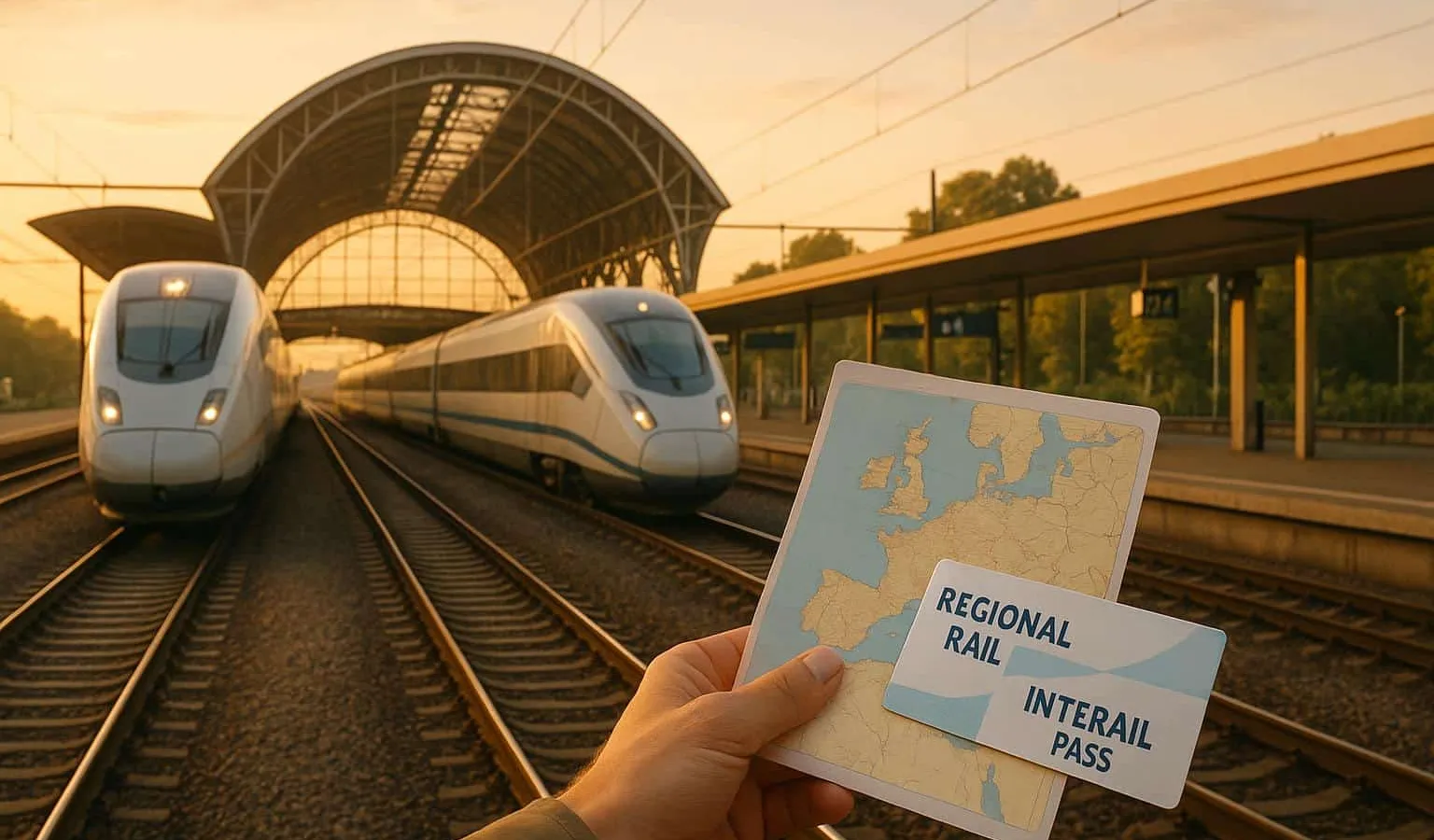
Regional rail passes offer unlimited train travel within a specific country or region for a set period. Unlike broader continent-wide passes, these are perfect for diving deep into a particular area, including destinations that high-speed trains might skip.
Coverage and Scope
These passes typically cover a wide range of domestic train services, from major intercity routes to slower regional lines. With no advance reservations needed for most trains, you can hop on and off as you please, adding a layer of spontaneity to your journey.
The scope of these passes varies. Some grant access to an entire country, while others focus on specific areas like Bavaria in Germany or Tuscany in Italy. For example, a regional train ride from Munich to Füssen takes about two hours – perfect for visiting Neuschwanstein Castle.
While the coverage is convenient, it does come with its own set of pros and cons.
Pros and Cons
Pros:
-
Affordable for single-country travel
-
Great for reaching small towns and rural areas
-
No need for advance reservations on most trains
-
Flexible travel options
Cons:
-
Limited to one country or region
-
Slower than high-speed trains
-
Usually excludes premium services or airport connections
-
Not suitable for multi-country trips
For focused travel, regional rail passes can save you money and offer flexibility. For instance, short trips like Vienna to Bratislava or Florence to Pisa cost around $12 and $10, respectively, when tickets are purchased on the day. However, if your travel plans include multiple countries, you may need a broader pass or separate tickets for cross-border journeys.
Transition: Now that you understand the basics of regional rail passes, let’s explore the different types available—especially the Swiss Travel Pass, which is a standout option for those focusing on Switzerland.
Popular Regional Rail Pass Options
Before diving into the list, it’s important to note that the Swiss Travel Pass is a type of regional pass specifically for Switzerland. The term ‘Swiss Pass’ is often used to refer to the Swiss Travel Pass and its variants, which provide flexible, comprehensive coverage for multiple transport modes across Switzerland. It offers unique benefits compared to Interrail/Eurail, such as covering nearly all forms of transportation in Switzerland—including trains, buses, boats, and many high-mountain lifts. If your itinerary is focused solely or primarily on Switzerland, the Swiss Travel Pass is the most convenient and comprehensive choice, providing a frictionless experience for three or more days.
Swiss Travel Pass
Definition:The Swiss Travel Pass provides unlimited travel on the Swiss Travel System network, which includes trains, buses, boats, and lake boats. It covers nearly all forms of transportation in Switzerland, including many high-mountain lifts, and is ideal for travelers who want to explore Switzerland in depth. The pass is designed for ease of use and includes local transport, making it the best option for those focusing solely or primarily on Switzerland for three or more days. The Swiss Travel Pass is often referred to as a Switzerland Pass and is considered a cost-effective option for train travel throughout the country.
Key Features:
-
Unlimited travel on Swiss trains, buses, boats, and lake boats
-
Includes many high-mountain lifts and scenic routes
-
Covers local public transport in most Swiss cities and towns
-
Ideal for travelers who want a frictionless experience in Switzerland
-
Children under 16 travel for free with a parent using the Swiss Family Card when using the Swiss Travel Pass
The Swiss Travel Pass (and other passes) cover most routes on the Swiss rail network. However, on the official Swiss rail network map, dotted lines (shown in red, yellow, or black) indicate routes where the passes cover only a 50% discount, not full free travel. This distinction helps travelers understand exactly which routes are fully included and where only partial coverage applies.
Other Regional Rail Passes:
-
German Rail Pass: Covers Deutsche Bahn’s regional and intercity trains.
-
BritRail Pass: Offers unlimited rail travel in England, Scotland, and Wales.
-
France Rail Pass: Available via SNCF Connect, it provides access to France’s regional networks beyond the high-speed TGV lines.
Most of these passes come with flexible validity periods, making them an excellent choice for both short trips and extended stays focused on a single country or region.
Transition: While regional passes like the Swiss Travel Pass are perfect for in-depth exploration of one country, travelers looking to visit multiple countries across Europe should consider the Interrail Pass. Let’s take a closer look at what the Interrail Pass offers and how it compares.
What Is the Interrail Pass?
Definition:The Interrail Pass is a rail travel pass designed exclusively for European residents, offering unlimited travel on scheduled train services across 33 European countries. It is ideal for multi-country European trips, providing broad coverage but with some limitations in Switzerland—where it only offers 25%–50% discounts on certain routes and does not cover all services that the Swiss Travel Pass does, such as some mountain railways and buses in the Jungfrau region. Since 2017, Interrail and Eurail passes have expanded their coverage to include many more private operators in Switzerland. Travelers should also be aware that for certain routes, they may need to consider other trains and make reservations for alternative train options not fully covered by the pass. The Interrail Pass generally provides better value for travelers who need only major hub-to-hub trains between major cities.
Interrail Pass Basics
The Interrail Pass covers train travel across 33 European countries, making it a comprehensive option for exploring the continent. However, it’s important to note that eligibility is restricted to European citizens or residents. The pass is divided into four age categories:
-
Child (4–11 years old): Travels free when accompanied by an adult passholder (up to two children per adult).
-
Youth (under 28): Discounted rates for younger travelers.
-
Adult (28–59): Standard pricing with no age restrictions.
-
Senior (60+): Reduced fares for older travelers.
Since September 2020, the pass has primarily been offered in a mobile format, now used by 97% of travelers. This digital version can be downloaded instantly and activated anytime within 11 months of purchase, eliminating the need for physical tickets. Additionally, since January 1, 2016, the pass includes one outbound and one inbound journey to and from your home country.
With these basics in mind, let’s take a closer look at the types of passes available.
Interrail Pass Types
There are two main types of Interrail Passes: the Global Pass and the One Country Pass.
-
Interrail Global Pass: This pass grants access to all 33 participating countries and comes in two formats:
-
Flexi Pass: Allows a set number of travel days within a longer period.
-
Continuous Pass: Offers unlimited travel for a specified continuous duration.
-
For 2025, pricing for second-class Global Passes for adults (28–59 years old) ranges from $307 for 4 travel days within a month to $1,038 for 3 months of continuous travel. Flexi options include 4, 5, 7, 10, or 15 travel days.
-
Interrail One Country Pass: This pass is designed for unlimited train travel within a single European country. Prices vary depending on the chosen country.
Pros and Cons
Pros:
-
Covers 33 countries with a single pass
-
Mobile pass available instantly
-
Free travel for children under 12 with an adult pass
-
Offers flexibility with both flexi and continuous formats
-
Includes one outbound and one inbound journey to/from your home country
Cons:
-
Only available to European residents
-
High-speed and night trains often require additional seat reservations
-
Limited availability for Eurostar trains
-
Not valid in Albania, Belarus, Moldova, Russia, or Ukraine
-
In Switzerland, only offers 25%–50% discounts and does not cover all local services
The Interrail Pass is a great choice for anyone planning a multi-country European adventure. However, in Switzerland, it only provides partial discounts and does not include the full range of local transport and mountain excursions that the Swiss Travel Pass covers.
Transition: Now that you know what each pass offers, let’s directly compare the Interrail Pass and Swiss Travel Pass to help you decide which is best for your trip.
Interrail vs Swiss Travel Pass: Key Differences
Here’s a dedicated comparison table summarizing the main differences, coverage, pricing, and ideal use cases for the Interrail Pass and Swiss Travel Pass:
|
Factor |
Swiss Travel Pass |
Interrail Pass |
|---|---|---|
|
Coverage |
Unlimited travel on Swiss trains, buses, boats, and many high-mountain lifts; nearly all Swiss transport |
Unlimited train travel in 33 European countries; only 25%–50% discounts on most Swiss routes |
|
Ideal Use Case |
Travelers focusing solely or primarily on Switzerland for 3+ days; those wanting frictionless local travel |
Multi-country European trips; travelers needing only major hub-to-hub trains between major cities |
|
Pricing |
Varies by duration (e.g., 3, 4, 8, 15 days); generally higher for full Swiss coverage, but can be cheaper than buying individual tickets, especially if booked early or for longer stays |
$307–$1,038 for Global Pass (4 days to 3 months); One Country Pass prices differ; booking early or choosing specific pass options can be much cheaper than flexible tickets |
|
Local Transport |
Includes local buses, trams, boats, and many mountain lifts |
Does not include local Swiss buses, trams, or most mountain lifts; only partial discounts |
|
Ease of Use |
Simple, all-in-one ticket for Switzerland; no need to calculate discounts or reservations for most routes; pass is pre-validated with a specific start date, which determines when it becomes valid for travel |
Requires reservations for high-speed/night trains; discounts only in Switzerland |
|
Best For |
In-depth Swiss exploration, scenic routes, and mountain excursions |
Pan-European adventures, cross-border travel, and flexible itineraries |
Summary:
-
Rail passes are often a smart buy for Switzerland due to high pay-as-you-go ticket costs.
-
The cost of a rail pass should be compared to the total cost of point-to-point tickets for your planned itinerary to determine which option is cheaper.
-
Choose the Swiss Travel Pass if your trip is focused on Switzerland and you want seamless access to nearly all forms of transportation, including scenic trains and mountain lifts. The Swiss Travel Pass is pre-validated with a specific start date, so your travel period is fixed from that day.
-
Choose the Interrail Pass if you plan to visit multiple countries and only need basic train coverage within Switzerland (with discounts), or if your travel is primarily between major European cities.
Transition: With this comparison in mind, let’s look at how regional rail passes and the Interrail Pass stack up more broadly, before diving into practical tips for seat reservations and choosing the right pass for your itinerary.
Regional Rail Pass vs. Interrail Pass Comparison
Now that we’ve covered the basics of both passes, let’s dive into a direct comparison. Deciding between a regional rail pass and an Interrail Pass comes down to your travel goals, budget, and how much flexibility you need.
If you’re looking to save money, consider advance purchase options like Supersaver fares, which require booking online several days to months in advance. You can save money with Supersaver fares if you book online in advance, but these discounted tickets are train-specific and often non-refundable. On the other hand, standard fares for Swiss trains are fixed, with unlimited availability, so you can buy tickets at the station on the day of travel without worrying about sold-out trains.
When purchasing certain passes or e-tickets, you may be required to enter your passport number for verification and compliance with border regulations.
Comparison Chart
|
Factor |
Regional Rail Pass |
Interrail Pass |
|---|---|---|
|
Geographic Coverage |
Covers a single country or specific region (e.g., Scandinavia, Benelux) |
Includes 33 European countries with the Global Pass; One Country Pass focuses on individual nations |
|
Pricing Range |
Varies by region; often more affordable for localized travel |
$307–$1,038 for Global Pass (from 4 days to 3 months); One Country Pass prices differ |
|
Flexibility |
Limited to specific routes and regions |
Highly flexible, with options for both flexible and continuous travel days |
|
Eligibility |
Open to all travelers |
Available only to European residents and citizens |
|
Reservation Requirements |
Depends on the region and train type |
Required for high-speed and night trains, with additional fees |
|
Best For |
Travelers with a fixed itinerary in a specific area |
Multi-country trips and adaptable travel plans |
|
Value Proposition |
Better cost efficiency for localized travel |
More economical for extensive, cross-border journeys |
The geographic coverage is one of the most noticeable differences. Regional rail passes are designed for specific areas like Scandinavia or the Benelux countries, making them ideal for those who want to explore one region in depth. On the other hand, the Interrail Global Pass spans 33 European countries, catering to those dreaming of a wider European adventure.
When it comes to flexibility, regional passes are more restrictive, as they limit you to predefined routes and areas. However, they shine in cost efficiency for focused trips. The Interrail Pass, while more expensive, offers unmatched adaptability, allowing you to tweak your itinerary and visit multiple countries. Keep in mind, though, that with the Interrail Pass, reservations are often required for high-speed and night trains, which can add to your costs.
Eligibility is another key factor. Regional passes are generally available to all travelers, regardless of where they live. In contrast, Interrail Passes are exclusive to European residents and citizens, which might limit their availability depending on your situation.
For those who want to thoroughly explore specific regions, such as Scandinavia or the Benelux area, regional passes often provide a better deal. They’re particularly useful for trips concentrated in neighboring countries with frequent and convenient cross-border train connections.
Ultimately, the choice between these two passes depends on your travel style. If you’re looking for a cost-effective way to explore a single region, a regional rail pass is the better fit. But if your dream is to hop across borders and experience the diversity of Europe, the Interrail Pass offers the flexibility to make that happen.
Transition: Once you’ve chosen your pass, understanding seat reservation requirements is essential for a smooth journey. Let’s break down what you need to know for different types of trains.
Seat Reservation Tips
Navigating seat reservations is a key part of making the most of your Swiss train adventure, whether you’re using a Swiss Travel Pass, Swiss Travel Pass Flex, Interrail Pass, or Eurail Global Pass. Understanding when and how to reserve seats can help you save money, avoid stress, and enjoy a seamless journey across Switzerland and beyond.
For scenic trains like the Golden Pass, note that this route follows the same route as mainline connections between Montreux, Interlaken, and Lucerne, but offers a more scenic, tourist-focused experience.
Tip: When booking reservations online, using debit cards—especially with services like Curve—can help you avoid foreign transaction fees and get better exchange rates.
Scenic Trains
-
Popular scenic trains like the Glacier Express, Bernina Express, and Golden Pass Line are famous for their panoramic views—and their popularity means seats can fill up quickly, especially during peak travel dates.
-
For these trains, seat reservations are mandatory and should be booked well in advance, either online via Swiss railways (SBB), at Swiss stations, or through your travel pass provider.
-
The cost of reservations varies by route and class, but booking early ensures you won’t miss out on these iconic journeys.
International Trains
-
When traveling on international trains—such as the TGV Lyria to France or EuroCity services to Italy and Germany—seat reservations are usually compulsory.
-
These can be arranged through the SBB website, at ticket counters, or via the Eurail and Interrail reservation platforms.
-
If you’re using a Eurail Global Pass or Interrail Pass, remember that seat reservations are not included in the pass price and must be purchased separately.
-
Planning your itinerary and booking these seats in advance is especially important during busy travel seasons.
Private Railways
-
For those exploring Switzerland’s private railways—like the Gornergrat Railway or Jungfrau Railway—your Swiss Travel Pass often provides free or discounted travel, but seat reservations may still be required or recommended, particularly for mountain excursions.
-
Always check the specific conditions for each railway, as policies can differ from the main Swiss rail network.
Swiss Travel Pass Flex
-
If you’re using a Swiss Travel Pass Flex, you have the added benefit of choosing your travel dates, but keep in mind that seat reservations for popular trains should still be made as soon as your plans are set.
-
For shorter journeys or less crowded routes, you can usually travel free seating, which helps save money and keeps your itinerary flexible.
Summary of Key Reservation Requirements:
-
Scenic trains: Mandatory reservations
-
International trains: Usually compulsory reservations
-
Private railways: Check individual policies; reservations may be required
-
Swiss Travel Pass Flex: Reserve seats for popular trains as soon as possible
Transition: With seat reservation logistics in mind, let’s move on to how you can pick the right pass for your trip, based on your travel style and priorities.
Budgeting and Cost-Effectiveness
When planning your Swiss adventure, keeping an eye on your budget is essential. The Swiss Travel Pass is often the most cost-effective choice for travelers who want to experience the full breadth of Switzerland’s public transportation system. With this pass, you enjoy unlimited travel on the Swiss Travel System network—covering trains, buses, and boats—plus free or discounted entry to many museums across the country. This can add up to significant savings, especially if your itinerary includes multiple destinations and attractions.
However, if your travel plans are limited to just a few cities or you prefer a slower pace, purchasing individual Swiss train tickets or point-to-point tickets may be more economical. Swiss railways offer a transparent pricing system, so you can easily compare the total cost of single tickets with the price of a travel pass. For those planning to visit several European countries, the Eurail Global Pass or Interrail Pass might offer better value, as they provide unlimited travel across a vast network, including discounted travel within Switzerland.
To determine the most cost-effective option, calculate the total cost of your planned journeys, including any museum visits or boat trips. If the sum of individual tickets and entry fees exceeds the price of a Swiss Travel Pass or global pass, opting for the pass will help you save money and simplify your trip. Remember, the right choice depends on your specific travel plans, how many train journeys you’ll take, and which perks you want to enjoy during your trip through Switzerland and beyond.
Swiss Train Tickets
Swiss train tickets are designed to offer flexibility and convenience for every type of traveler. You can purchase Swiss train tickets online, through the SBB mobile app, or directly at Swiss stations. For those seeking the ultimate in flexibility, the Swiss Travel Pass is a top pick, granting unlimited access to trains, buses, and boats throughout Switzerland. If you prefer more control over your travel days, the Swiss Travel Pass Flex allows you to choose non-consecutive days of unlimited travel within a set period.
Travelers who don’t need unlimited travel can opt for individual train tickets, which are available at full price or at a discount with a Half Fare Card. Saver Day Passes are another great way to save money, especially if you book in advance—these passes offer unlimited travel for a single day at a reduced rate. For iconic scenic journeys like the Glacier Express or for international trains, seat reservations are recommended or sometimes required, and can be made online or at the station.
No matter which option you choose, it’s wise to compare prices and book tickets early, particularly during peak travel seasons when demand is high. Whether you’re hopping between Swiss cities, exploring mountain villages, or embarking on a round trip across the country, Swiss railways offer a range of ticketing solutions to fit your itinerary and budget.
How to Pick the Right Pass
Choosing between a regional rail pass and an Interrail Pass becomes much easier when you match your travel style and priorities with what each pass offers. Here’s how you can decide which one fits your plans.
Trip Length
-
Consider the duration of your trip. If you’re planning a week-long adventure focused on countries like Germany and Austria, a regional pass might be your best bet. These passes often cost less, starting at around $150, compared to the Interrail Global Pass, which begins at $307 for adults.
Number of Countries
-
Think about the number of countries you want to visit. If you’re sticking to one country or a neighboring region with strong rail connections, a regional pass makes sense. But if your journey involves crossing multiple borders, the Interrail Global Pass is ideal.
Travel Frequency
-
Consider how often you’ll be moving between destinations. If you plan to travel almost daily and cover long distances, a continuous pass is a smart choice. On the other hand, if you’re staying longer in each location, a flexipass can save you money.
Included Extras
-
Many passes include perks like discounts on museum tickets, public transportation, and even hotels. The Swiss Travel Pass, for example, covers nearly all forms of public transport in Switzerland, including trains, buses, boats, and many high-mountain lifts.
Main Factors to Consider:
-
Length of your trip
-
Number of countries you plan to visit
-
Frequency of travel between destinations
-
Included extras and discounts
-
Whether your focus is on Switzerland or broader Europe
Transition: Once you’ve weighed these factors, you’ll be ready to make an informed decision. Let’s wrap up with some final thoughts and a summary of how to get the most value from your chosen pass.
Additional Tips
To make your Swiss travel experience as smooth and rewarding as possible, keep these practical tips in mind. Start by familiarizing yourself with the Swiss Travel System network, which includes an extensive array of trains, buses, and boats connecting even the most remote corners of Switzerland. Careful itinerary planning will help you maximize your travel pass and ensure you don’t miss out on must-see destinations.
Take full advantage of the Swiss Travel Pass’s perks, such as free or discounted entry to many museums and mountain excursions. If your plans are more flexible or you’re traveling on select days, consider a Half Fare Card or Saver Day Pass to enjoy discounted fares on specific routes. Always check whether your chosen trains—especially international trains or scenic routes—require seat reservations, and book these in advance to secure your spot.
Don’t forget to validate your tickets before boarding, and keep an eye on the latest prices and schedules, especially if you’re considering a Eurail Global Pass or planning to travel on international trains. Finally, consider purchasing travel insurance to protect your trip against unexpected changes or interruptions. By following these tips, you’ll be well-prepared to enjoy Switzerland’s breathtaking landscapes, efficient public transport, and world-class museums—making your journey both memorable and cost-effective.
Conclusion
When deciding on a rail pass, think about your travel goals, budget, and how much flexibility you need. If you’re sticking to one country or a small group of neighboring ones, regional passes are a great option. They tend to cost less and provide extensive coverage within their specific areas. On the other hand, the Interrail Global Pass offers access to 33 European countries, making it ideal for those planning multi-country trips and seeking maximum flexibility.
For travelers from the U.S., the Eurail Pass is the way to go, as the Interrail Pass is reserved for European residents.
To make sure a rail pass is worth it, compare the total cost of individual tickets – including reservation fees – against the price of the pass. As Mark Smith from Seat 61 explains:
Rail passes are all about money. A Eurail pass is only worth getting if it saves you money. That means you have to do a lot of math to figure out if a pass is right or not. It can be a time‐consuming process but is certainly worth it in the end.
This step is key to finding the pass that fits your travel plans and budget.
Regional passes work best for those focused on specific areas and looking to save money, while global passes are perfect for broader, multi-country journeys. If you value the freedom to change plans spontaneously and don’t mind paying a bit extra for that flexibility, a global pass could be worth the investment. But if your trip is more focused and you’re trying to stretch your budget, a regional pass might be the smarter choice.
Ultimately, careful planning and selecting the right pass can make train travel across Europe both economical and unforgettable.
FAQs
Who is eligible for a Regional Rail Pass versus an Interrail Pass?
The main difference in eligibility comes down to residency. The Interrail Pass is meant for citizens or legal residents of European countries. On the other hand, Regional Rail Passes are generally offered to travelers from outside Europe, like those living in the United States. This setup allows travelers to pick the pass that aligns with their residency and travel plans.
Which is a better option for my trip: a Regional Rail Pass or an Interrail Pass?
Choosing between a Regional Rail Pass and an Interrail Pass comes down to the specifics of your travel plans. If your itinerary spans several countries across Europe, the Interrail Pass is a great choice. It covers a wide network and gives you the freedom to explore multiple destinations, making it a budget-friendly option for extended, multi-country trips.
However, if your journey is centered on a particular region or country, a Regional Rail Pass might be the smarter pick. It’s usually more economical and designed to suit local train routes, ensuring you get the most out of your targeted travel area.
To decide, think about factors like how many travel days you’ll need, whether you’ll be using high-speed or regional trains, and if you’ll require transportation not included in the pass. These considerations will help you figure out which pass aligns best with your plans and budget.
When using an Interrail Pass, keep in mind that extra fees and reservations are often necessary for high-speed and night trains. These reservation costs typically fall between $5 and $35, depending on the train and route. For certain trains, such as the Eurostar, fees can go beyond $15.
For night trains, reservations are always required, no matter if you’re traveling with a 1st or 2nd class pass. If you’d like the comfort of a sleeping compartment, you’ll need to pay an additional charge. It’s a good idea to plan ahead, especially during busy travel periods, as these trains tend to fill up quickly.