Updated
Common European Train Travel Mistakes to Avoid
European rail mistakes: wrong stations, tight connections and unvalidated Italian paper regional tickets; Interrail does not include seat reservations.
If you’re planning a train trip in Europe, avoiding common European train travel mistakes is essential for a smooth journey. This guide is designed for both first-time visitors and seasoned travelers, covering the most common mistakes and how to avoid them. Understanding these pitfalls matters because it can help you save money, avoid stress, and enjoy your European train journey to the fullest. Compared to air travel, train journeys in Europe often come with fewer luggage restrictions and offer a more relaxing experience, making them a preferred choice for many travelers.
Common European train travel mistakes refer to frequent errors travelers make when navigating the continent’s rail network. European rail travel has unique features and cultural aspects that set it apart, so understanding these can greatly enhance your trip. These include overpacking, forgetting to validate paper tickets, booking tight connections, and not realizing that local stations often have multiple stops. Since each of the European countries may have different rules and practices for train booking, ticket validation, and train operations, it’s important to be aware of these differences to ensure smooth travel. By being aware of these issues, you can plan better and have a more enjoyable experience.
Summary: Most Common European Train Travel Mistakes
- Overpacking, which makes it difficult to manage luggage and slows down boarding and disembarking.
- Forgetting to validate paper tickets, especially in countries like Italy, which can result in hefty fines.
- Booking tight connections that don’t allow enough time to change trains, especially in large or unfamiliar stations.
- Not realizing that many cities have multiple train stations, leading to confusion and missed trains.
- Failing to reserve seats on high-speed or popular routes, resulting in standing-room-only situations or being unable to board.
- Not keeping valuables secure and within sight, particularly in busy train stations where theft can occur.
Rail travel is one of the most popular and enjoyable ways to explore Europe, offering passengers a unique perspective on the continent’s diverse landscapes and cultures. With a vast network of European trains connecting major cities and charming towns, travelers can experience everything from high-speed trains whisking them between capitals to scenic routes winding through mountains and countryside. Overnight trains provide a comfortable way to cover long distances while saving on hotel costs, making them a favorite for those looking to maximize their travel experience. Whether you’re a first-time visitor or a seasoned explorer, rail travel in Europe offers flexibility, efficiency, and the chance to see more than just the inside of an airport. However, to make the most of your journey and avoid common mistakes, it’s important to be aware of the different types of trains, routes, and travel options available. With a little planning, you can enjoy a smooth and memorable ride across Europe’s rails.
Planning and Preparation
Successful rail travel in Europe starts long before you board the train. Careful planning and preparation can help you avoid some of the most common mistakes, such as arriving at the wrong station or missing out on the best ticket prices.
Key Points:
- Many large cities in Europe have multiple major train stations, so always double-check your departure and arrival stations on your tickets. Most European cities have multiple railway stations, so it’s essential to check which station is closest to your hotel or sightseeing destinations. To avoid last-minute issues, always arrive early at the train station, ideally 15-20 minutes before departure.
- Research your route and train schedule in advance, paying attention to the type of train, journey duration, and whether seat reservations are required.
- During peak travel seasons, trains can fill up quickly and ticket prices may rise, so booking your seat and planning your trip ahead of time is essential.
European railway stations can be bewildering places, so it’s important to confirm your train’s destination before boarding to ensure a smooth journey.
Once you have your route and tickets sorted, it’s important to consider how you’ll pack and manage your luggage for the journey.
Luggage and Packing
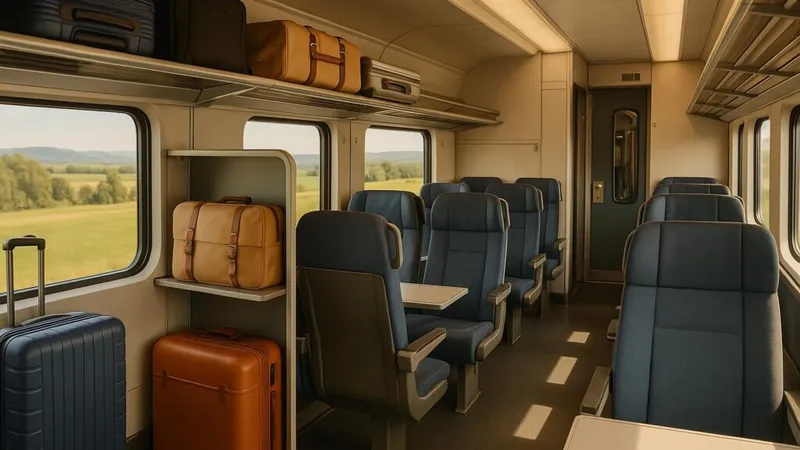
When it comes to packing for European trains, less is definitely more. Many travelers make the mistake of bringing too much luggage, only to find limited storage space on board and inconvenience for themselves and their fellow passengers.
Important Notes:
- European trains have limited luggage space, making overpacking difficult to manage, especially when navigating stairs in stations.
- Travelers are responsible for lifting their luggage onto racks or into the train, making it essential to pack light.
- Bringing too much luggage can slow down the boarding process, as trains do not linger at each station.
- Travelers should aim to pack light to facilitate quick boarding and disembarking.
Tips:
- Pack only what you need in a compact suitcase or backpack that fits easily in the luggage racks or overhead compartments.
- If you’re taking an overnight train, prepare a small overnight bag with essentials like toiletries, a change of clothes, and any medication you might need.
- Clearly label your bags and keep valuables secure and within sight at all times to avoid loss or theft, especially in busy train stations where theft can occur.
With your bags packed and ready, the next step is to ensure you have the right seat and accommodations for your trip.
Accommodations and Reservations
Choosing the right accommodations and making seat reservations are key steps to a successful rail journey in Europe. European trains offer a range of options, from standard seats to sleeper cabins and luxury suites, especially on overnight trains and long-distance routes. Night trains are a popular and efficient way to travel overnight across Europe, and booking a sleeping berth instead of a regular seat can greatly enhance comfort and even save money.
Key Points:
- Seat reservations are highly recommended, sometimes even mandatory, on popular routes and high-speed services, ensuring you have a guaranteed seat that suits your preferences.
- Booking your accommodations and reservations in advance not only secures your spot but also often gives you access to better prices and more choices.
Definition:
- Seat reservation: A seat reservation is a separate booking that guarantees you a specific seat on a train. High-speed and intercity trains often require seat reservations, and booking tickets in advance can provide significant savings.
Whether you’re looking for a quiet seat, a private cabin, or a spot in the dining car, planning ahead will help you enjoy a comfortable and stress-free journey across Europe. Remember to sit back and enjoy the ride, knowing where to sit can make all the difference for the best travel experience.
Common Ticket Mistakes
Let’s take a closer look at the most frequent ticket purchasing errors, following the ticket validation warnings mentioned earlier. Another common mistake is accidentally boarding the wrong train, which often happens due to confusion at busy European rail stations.
Ticket Types and Return Policies
European train tickets vary widely, from flexible Standard fares (which can be changed for a fee) to non-refundable Super Economy options. Rail passes are often a better fit for travelers visiting multiple destinations, especially for long distance trips across multiple countries. Timing the activation of your rail pass can help maximize your travel days and avoid wasted expenses.
Definition:
- Rail pass: A rail pass, such as a Eurail pass, allows unlimited travel within a set period across multiple countries or regions. However, Eurail passes are not always the cheapest option, especially for those taking only a few trips.
Common Ticket Selection Errors
| Ticket Type | Flexibility | Price Level | Common Pitfall |
|---|---|---|---|
| Standard/Base | Changes allowed with a fee | Highest | Paying extra for flexibility you don’t actually need |
| Economy | Limited changes | Medium | Booking without fully understanding restrictions |
| Super Economy | No changes or refunds | Lowest | Choosing non-refundable tickets for uncertain plans |
| Rail Pass | High flexibility | Fixed rate | Buying one when single tickets would cost less |
Ticket Validation Requirements
In countries like Italy, France, Belgium, and many parts of Eastern Europe, regional train tickets often require validation before boarding.
Definition:
- Ticket validation: Ticket validation is the process of stamping your paper ticket at a machine before boarding the train. In Italy, paper tickets must be validated at small machines before boarding to avoid fines.
Look for small yellow or orange machines at the station to validate your ticket.
Discount Cards and Special Fares
Many travelers miss out on savings by overlooking rail discount cards or special fare options.
National Rail Cards to Consider:
- Germany: BahnCard
- France: Carte Avantage
- Italy: Cartafreccia
Age-Based Discounts:
- Youth tickets (typically for travelers under 26)
- Senior fares (usually for those 60+ or 65+)
When using discount cards, always carry valid identification. Be cautious when booking discounted fares online, some sites display these fares even if you don’t qualify, which could result in invalid tickets.
For international trips, rail passes like Eurail (for non-European residents) or Interrail (for European residents) may offer better value if you’re planning multiple journeys.
One common mistake is assuming child discounts automatically apply to advance tickets. If no youth fare is available, book children as adults and keep proof of age handy.
Understanding these fare options is especially useful when factoring in seat reservations…
Seat Reservations and Train Capacity
When Seat Reservations Are Needed
Understanding when seat reservations are required can help you make the most of your ticket. Different countries have varying rules. High-speed trains like France’s TGV, Spain’s AVE, and Italy’s Frecciarossa require reservations in addition to your ticket. Tickets for high-speed and international trains like Eurostar or TGV are typically released 3 to 6 months in advance, so booking early can secure better prices and availability. Meanwhile, in countries like Germany, Austria, and Switzerland, reservations are usually optional and available for a small fee. Many countries have train routes that split, allowing for efficient travel to different destinations within or across borders, so understanding the reservation policies for each segment is important.
Definition:
- Seat reservation: A seat reservation is a separate booking that guarantees you a specific seat on a train. High-speed and intercity trains often require seat reservations, and booking tickets in advance can provide significant savings.
Reservation Policies Table
| Train Type | Reservation Needed? | Cost | Advance Booking |
|---|---|---|---|
| French TGV | Mandatory | Included in ticket | 3 months ahead |
| German ICE | Optional | €5.20 | 6 months ahead |
| Eurostar | Mandatory | Included in ticket | 6 months ahead |
| Italian Frecciarossa | Mandatory | Included in ticket | Included in ticket |
If you’re traveling with a Eurail pass, keep in mind that it covers the fare but not seat reservations. For example, TGV reservations in France cost around €10 for pass holders. Not all trains are included in rail passes or covered by standard reservations, so always check if your route requires separate tickets or reservations. Purchasing individual tickets can also result in a rigid and inflexible travel schedule, making it harder to modify plans compared to using a rail pass.
Peak Travel Times and Busy Periods
Traveling during busy times can be tricky if you’re not prepared. Peak periods often mean crowded trains, higher prices, and limited availability. In many European countries, trains on popular routes tend to fill up quickly, making early booking essential.
Key Points:
- Summer Season (June-August): Book high-speed trains 2-3 months in advance. Prices are higher, and discounts are rare. Popular routes can sell out weeks before departure.
- Daily Rush Hours: Early morning (6:30-9:30) and late afternoon (16:00-19:00). Friday afternoons and Sunday evenings are especially busy.
Tips to Avoid the Chaos:
- Travel Midday: Trains are often less crowded. For instance, a 14:00 train from Munich to Vienna is likely to have more seats than the 08:00 option.
- Pick Your Spot: On German regional trains, the front and rear carriages tend to have more space than the middle ones.
- Upgrade to First Class: During peak times, a first-class ticket can guarantee you a seat and a more comfortable experience.
“If a train is overbooked, passengers can take the next service, request a refund, or claim compensation for delays over 60 minutes.”
Even with a reservation, make sure to find your seat quickly. Many European trains stop at intermediate stations for just 2-3 minutes, so being ready and in the right spot on the platform is essential.
Travelers often miss transfers because they are not aware they need to change trains during their journey, especially during busy periods.
Planning reservations and timing wisely can also help you manage your luggage without stress.
Luggage Rules and Station Navigation
Luggage Size and Storage
European trains have different luggage allowances depending on the train type and operator. High-speed trains like France’s TGV and Germany’s ICE generally permit 2-3 pieces per passenger, while regional services often have more relaxed rules but offer less storage space. Always check the specific guidelines of your train operator:
| Train Service | Large Bags | Hand Luggage | Size Limits |
|---|---|---|---|
| TGV (France) | 2 pieces | 1 piece | 70x90x30cm |
| Trenitalia (Italy) | 1 piece | 1 piece | 80x110x40cm |
| ICE (Germany) | 2 pieces | 1 piece | 70x90x30cm |
Tips for Managing Luggage:
- Use overhead racks for smaller bags and store larger cases at the carriage ends.
- On regional trains, boarding early helps secure limited storage space.
- Keep essentials and valuables in a small bag that stays with you.
Many major stations also provide lockers or luggage transfer services. Organizing your luggage properly ensures a smoother experience when navigating stations.
Finding Your Platform and Train
Once your luggage is sorted, the next priority is locating your train. Large stations like Paris Gare du Nord can be overwhelming, so preparation is key. European train stations are major hubs connecting towns and cities across the world, and many are located in the heart of the town, offering easy access to local attractions.
Tips:
- Arrive at least 30 minutes before your departure.
- Use electronic displays to find your train on yellow-background departure boards.
- Double-check train numbers and final destinations to avoid confusion.
- Refer to posted yellow departure sheets for additional confirmation.
- Most operators offer apps with real-time platform updates and detailed station maps.
- The 24-hour clock is used exclusively in European rail travel, so familiarize yourself with it to avoid confusion about when your train departs. Not paying attention to the 24-hour clock can lead to confusion about train departure times.
“Stay alert during station stops, prime times for theft.”
Security Note:Keep valuables secure and within sight, especially in busy train stations where theft can occur. Travelers should keep their bags secure and within sight to prevent theft, even though it is rare on trains. Be mindful of your surroundings and the safety of your belongings while at train stations and on trains.
Accessibility can vary. Western European stations often have elevators and escalators, but these conveniences might be scarce in Eastern Europe. Researching station layouts ahead of time can save you from unnecessary stress.
With your luggage and navigation sorted, you’re ready to tackle international routes and connections.
International Routes and Connections
Booking Multi-Country Trips
Planning international train travel can be tricky, especially with different national booking systems. For example, high-speed services like TGV and Eurostar often release tickets just 2-3 months in advance during busy summer months. Missing this window can lead to higher costs or limited options.
Recommended Booking Platforms:
- Rail Europe: Access to multiple operators in one booking
- Trainline: Real-time updates and mobile tickets
- Omio: Includes other transport modes for flexibility
When planning, leave 30-60 minutes between connections, especially near border crossings. Even with careful scheduling, delays can occur, so it’s important to understand your rights.
Delay and Cancellation Rights
Did you know that EU Regulation 1371/2007 protects passengers on international train trips? This regulation ensures compensation for delays, a lifesaver for travelers caught in unexpected disruptions:
| Delay Duration | Compensation | Additional Benefits |
|---|---|---|
| 60-119 minutes | 25% of ticket price | Meals and refreshments |
| 120+ minutes | 50% of ticket price | Accommodation if necessary |
To claim compensation, follow these steps:
- Keep your tickets and receipts: These are essential for filing a claim.
- Document the delay: Take note of the duration and reason for the delay.
- Submit your claim quickly: Don’t wait too long; act promptly to ensure your rights.
These EU-wide protections are a great starting point, but individual countries may have additional rules, which we’ll explore later.
With international travel covered, it’s important to understand local rules and customs for a seamless journey.
Local Rules and Customs
Train Car Rules and Quiet Zones
Knowing the rules for train travel can save you from unnecessary trouble, including fines or awkward situations. For example, Germany’s Deutsche Bahn trains have designated quiet cars (Ruhebereich) where silence is strictly enforced, no phone calls, no chatting. Breaking these rules can lead to fines or even being asked to leave.
| Country | Quiet Zone Rules | Special Areas |
|---|---|---|
| France | , | Family areas in TGV trains |
| Switzerland | Strict Ruhewagen (quiet cars) | , |
| Netherlands | “Silent” areas where even whispering is discouraged | , |
In addition to official policies, cultural norms play a big role. In Scandinavian countries, it’s common for sleeper train passengers to remove their shoes. In Spain, travelers often exchange greetings when sharing compartments. Meanwhile, in Germany, sharing a table with strangers in dining cars is perfectly normal.
These customs, both written and unwritten, are worth keeping in mind to ensure a smoother journey.
Dealing with Ticket Checks
It’s not just about having a valid ticket, it’s also about how you present it during checks. Knowing a few key phrases can help:
| Country | Useful Phrase |
|---|---|
| Germany | “Ich habe eine Bahncard” |
| France | “Voici mon billet” |
| Italy | “Ecco il mio biglietto” |
Quick tips for documentation:
- Keep your passport handy for border checks.
- Store your tickets in an easily accessible pocket, like the outer one of your jacket, to avoid delays during inspections.
Being prepared can make these interactions quicker and less stressful.
With local rules and customs in mind, let’s review some quick tips and a comparison table to help you avoid the most common mistakes.
Quick Tips
- Arrive at least 20 to 60 minutes early at large stations to navigate the process smoothly.
- Always confirm the time your train departs to avoid missing it or causing travel disruptions.
- Double-check your ticket to ensure you have selected the correct city and station, booking the wrong city or station is a common mistake that can derail your travel plans.
- Research if your train will split at certain stations; not doing so can result in ending up in the wrong city.
- Use apps like Trainline or Rail Europe for real-time updates and bookings.
- Validate tickets where required (look for yellow or green machines). In Italy, paper tickets must be validated at small machines before boarding.
- Travel midday or upgrade to first class during peak times for a more comfortable experience.
- Plan ahead and avoid waiting until the last minute to book tickets or make reservations, this helps save money and ensures better travel plans for long journeys.
- Be considerate of what you eat on board to avoid strong odors and maintain comfort for fellow passengers.
Quick Comparison Table
| Mistake Type | Key Example | Solution |
|---|---|---|
| Ticket Validation | Italy fines (€200) | Validate at station machines |
| Seat Reservations | Mandatory on TGV, Eurostar | Book in advance |
| Luggage Rules | Limited space on regional trains | Board early, pack light |
| Station Navigation | Multiple stations in cities, some outside city center | Double-check departure/arrival, confirm final destination |
| Quiet Zones | Germany’s Ruhebereich | Follow local train etiquette |
| Cancellation Policies | Non-refundable tickets or strict rules | Understand cancellation policies to save money and avoid unexpected costs |
Dining and Food Options
Dining is an important part of the rail travel experience in Europe, with many trains offering a variety of food options to suit every taste and budget. From full-service dining cars serving local and international cuisine to snack bars and vending machines, passengers can enjoy meals and refreshments as they travel.
Bringing Your Own Food
On longer journeys, especially on overnight trains, it’s a good idea to check with the train crew about available dining options and any restrictions on eating in certain areas of the train. For added convenience, consider bringing your own snacks or meals, particularly if you have dietary preferences or are traveling on routes with limited onboard services. By being aware of your options and planning ahead, you can make your journey not just efficient, but also delicious and memorable.
By understanding and avoiding these common European train travel mistakes, you’ll be well on your way to a stress-free, enjoyable, and memorable journey across Europe’s rails.
Frequently asked questions
How do I avoid departing from the wrong station?
Check the exact departure and arrival station on your ticket, not just the city name. Large cities can have several stations. In Paris, for example, Gare du Nord, Gare de Lyon, Gare de l'Est, Montparnasse, Austerlitz, and Bercy are separate stations. Confirm the station before heading to the platform, especially when changing trains.
Do I need a seat reservation for European trains?
Sometimes. Many high-speed and night trains require a reservation, while other services may make it optional. If you travel with an Interrail Pass, the Pass does not include seat reservations. Check the exact train in the timetable before boarding because reservation rules are train specific.
Do I need to validate a paper train ticket in Italy?
Yes, for a single paper regional ticket in Italy, validate it before departure using the machine at the station where your journey begins. Trenitalia distinguishes this from online electronic regional tickets, which do not need the same validation, and digital regional tickets, which are automatically validated at the scheduled departure time. Do not assume that a paper ticket and an online ticket follow the same rule.
Which rail pass should I choose for a European trip?
European residents generally use Interrail, while non-European residents use Eurail. A Global Pass is designed for travel across multiple countries, while a One Country Pass is for travel within one country. Before buying, compare the Pass coverage and travel days with your fixed itinerary and any separate seat reservations.
Should I buy European train tickets in advance?
Book high-speed, international, sleeper and other reservation-required trains ahead when your itinerary is fixed, because cheaper fares and reserved places can be limited. Regional trains are often more flexible, but rules vary by operator and service. Check the operator's sales window and reservation rules for the exact train.