
Interrail in Hungary
Interrail is usually poor value for Hungary-only trips. The Hungary One Country Pass offers 3, 4, 5, 6, or 8 travel days within one month.
- Country
- Hungary
- Coverage
- Covered
Hungary sits at the crossroads of central europe, making Budapest a natural hub for train travel across the continent.
But does an interrail pass actually save you money here, or are you better off buying regular tickets? This guide breaks down the real costs, reservation requirements, and practical realities of using Interrail in this central european country.
Getting to know Hungary
Hungary, nestled in the heart of Central Europe, is a captivating destination that blends centuries of history, vibrant culture, and stunning natural landscapes. This central European country is perfectly positioned for travelers, sharing borders with Austria, Slovakia, Romania, Croatia, Serbia, Slovenia, and Ukraine, making it a key crossroads for international trains and interrail adventures.
One of Hungary’s crown jewels is Lake Balaton, the largest lake in Central Europe. Its sparkling shores are a magnet for tourists in summer, offering everything from swimming and fishing to lively festivals and tranquil vineyard walks. But Hungary’s appeal goes far beyond its lakeside retreats.
The capital city, Budapest, is a showstopper in its own right. Divided by the majestic Danube River, Budapest dazzles visitors with its grand baroque architecture, the iconic Chain Bridge, and the historic heights of Castle Hill. No trip is complete without a soak in the world-famous Széchenyi Baths, where you can relax in steaming thermal waters surrounded by ornate 19th-century buildings.
Hungary’s rich culture is reflected in its hearty food, bustling markets, and lively festivals. Whether you’re sampling traditional dishes in a Budapest restaurant, exploring charming towns, or casting a line for fishing in peaceful countryside lakes, there’s something here for every traveler.
For those eager to explore by rail, the Interrail Hungary Pass and Interrail Global Pass open up a world of possibilities. With extensive train routes crisscrossing the country and seamless connections to neighboring countries like Austria, Slovakia, and Croatia, you can hop aboard everything from regional trains to night trains and international services. The passes offer flexibility and convenience, making it easy to visit Hungary’s top destinations and hidden gems alike.
Whether you’re drawn by the allure of Budapest’s baths, the scenic beauty of Lake Balaton, or the thrill of discovering new cultures and cuisines, Hungary is a destination that rewards every kind of traveler. Pack your bags, grab your Interrail pass, and get ready to experience the best of Hungary by train.
Quick verdict on value and cost
Let’s cut to the chase: for purely domestic travel within Hungary, an interrail pass is usually poor value. Hungarian train fares are among the cheapest in europe, and the savings from a pass rarely outweigh what you’d spend on point-to-point tickets.
The Interrail Pass is only available to residents of Europe and is not valid for residents of Hungary. If you live in Hungary, you are not eligible to use the Interrail Pass for domestic travel. Additionally, EU, Swiss, and Norwegian citizens over 65 can travel for free on all local Hungarian trains with ID required. Children under the age of 12 can travel for free with an adult on an Interrail Pass in Hungary.
Consider the numbers. A Budapest-Debrecen InterCity ticket costs roughly €15 to €20 each way. A round trip to lake balaton runs €10 to €15. Meanwhile, the Interrail Hungary Pass starts at €105 for 3 travel days (€79 for youth aged 12-27), and the Global Pass begins at €212. Unless you’re cramming multiple long journeys into each travel day, regular tickets win on price.
Where Interrail can make sense is for international trips through Budapest. The city connects directly to vienna (3h15), bratislava (2h30), prague (overnight), zagreb (6h35), and bucharest (15+ hours). If Hungary is one stop on a broader central europe loop, a global pass spreads its cost across multiple countries. But for a week circling Hungary alone? Standard tickets from MAV-START will almost certainly be cheaper.
The good news: Hungarian trains are straightforward to use. The network is dense, timetables are clear, and most regional services let you board without reservations. The catch is that InterCity and night trains require compulsory seat bookings, adding €1.70 to €2.60 per journey in second class, or up to €5 in first class, on top of your pass.
The key trade-off:
| Factor | Interrail Pass | Point-to-Point Tickets |
|---|---|---|
| Flexibility | High, change plans freely | Low, tied to specific trains |
| Cost for 2-3 trips | Poor value | Usually cheaper |
| Cost for 5+ trips/day | Can break even | Adds up quickly |
| Reservation fees | Still apply (€1.70 to €2.60/journey, 2nd class) | Included in ticket |
| International trips | Good value via Global Pass | Cheap with advance booking |
Quick pros:
- Unlimited travel on pass days
- No need to queue for tickets
- VIP lounge access at Budapest Keleti (1st class)
- Good for spontaneous multi-stop days
Quick cons:
- Hungarian fares are already very cheap
- IC/EN reservations still cost extra
- Hungary Pass rarely pays off unless you’re constantly moving
- Global Pass overkill for Hungary-only trips
Global Pass versus Hungary One Country Pass
Interrail is valid on MAV-START, the Hungarian national railway, covering virtually all domestic routes plus cross-border services to austria, slovakia, croatia, romania, slovenia, serbia, and beyond. Both major Budapest stations, Keleti and Nyugati, serve as hubs for international and domestic connections.
The Interrail Global Pass works across 33 countries including Hungary. You choose flexible travel days (4, 5, or 7 days within one month, or continuous passes for longer trips). It covers international trains like Railjet to vienna, EuroCity services, and EuroNight sleepers departing from Budapest. This is the pass for multi-country itineraries where Hungary is one piece of a larger trip.
The Interrail Hungary One Country Pass is valid only within Hungary’s borders. It comes in 3, 4, 5, 6, or 8 travel day options within one month. You can use it to visit budapest, Debrecen, Eger, Pécs, lake balaton, and anywhere else MAV-START runs, but cross the border and you’ll need separate tickets or a Global Pass.
Both passes are available in 1st and 2nd class. They cover regional trains, intercity services, EuroCity, Railjet, and EuroNight, though some of these require paid reservations on top of the pass.
Key features at a glance:
| Feature | Global Pass | Hungary One Country Pass |
|---|---|---|
| Countries covered | 33 (including hungary) | Hungary only |
| Starting price | €212 | €105 |
| Travel day options | 4 to 7 days/month or continuous | 3 to 8 days/month |
| Best for | Multi-country trips | Intensive Hungary exploration |
| VIP lounge access | Yes (1st class) | Yes (1st class) |
| Heritage Railway Park discount | 50% off | 50% off |
Pass holders get free access to the MAV-START Business lounge at Budapest Keleti (1st class pass plus 1st class reservation required) and 50% off entry to the Hungarian Heritage Railway Park near Esztergom.
Reservations on Hungarian trains
Interrail isn’t a “hop on any train” product in Hungary. Many services require compulsory reservations, and these fees apply whether you hold a pass or a regular ticket.
Here’s the breakdown by train type:
InterCity (IC) domestic trains:
- Reservation compulsory
- Fee: €1.70 to €2.60 per journey (2nd class); €3 to €5 in 1st class
- Routes include Budapest-Debrecen (2h15), Budapest-Pécs (2h40), Budapest-Szeged (2h10)
- IC+ premium coaches available on some routes
EuroCity (EC) and Railjet (RJ):
- Reservation usually optional in 2nd class but recommended during summer
- 1st class passengers should always reserve
- Key routes: Budapest-vienna, Budapest-bratislava, Budapest-zagreb
EuroNight (EN) night trains:
- Reservation compulsory
- Couchette and sleeper supplements vary by comfort level
- Routes: Budapest-prague, Budapest-berlin, Budapest-Zurich, seasonal Adria service to Split via zagreb
Regional trains (RE, IR, ER):
- No reservation needed
- Just board with your pass and find a seat
- Covers most shorter distances and rural routes
Fast regional trains (FT):
- Reservations optional
- Advisable during peak travel periods
How to make reservations:
- In person at MAV-START ticket offices at Budapest Keleti, Nyugati, or Déli stations
- Online via the MAV booking system (availability varies)
- Through international booking partners before you arrive
Typical extra costs:
| Service | Approximate Cost |
|---|---|
| IC seat reservation Budapest-Debrecen | €1.70 to €2.60 |
| IC seat reservation Budapest-Pécs | €1.70 to €2.60 |
| EuroNight couchette Budapest-prague | €20 to €40 (depending on comfort) |
| Railjet reservation Budapest-vienna | €3 to €5 |
Peak period warning: During summer months (June-august), seats fill fast on trains to lake balaton and resort areas. Festivals like Sziget in budapest (august) and Balaton Sound at Zamárdi create surge demand. Book reservations early, what’s technically optional becomes practically essential.
Using the Global Pass in Hungary
The Global Pass shines when hungary is part of a multi-country trip rather than the sole destination. Most travelers use it to connect capital cities and cross borders efficiently.
Budapest functions as the central hub. Keleti station handles most international departures, Railjet to vienna, EuroCity to bratislava and zagreb, EuroNight sleepers to prague, berlin, and beyond. Nyugati station covers domestic routes toward Debrecen, Nyíregyháza, and Esztergom.
Common international routes for Global Pass holders:
- Budapest-Vienna: 3h15 by Railjet, multiple daily departures. The fastest connection to western europe.
- Budapest-Bratislava: Around 2h30 by direct train. Easy day trip or onward connection to poland or germany.
- Budapest-Zagreb: Regular day trains (6h35) with connections toward croatia’s Adriatic coast and slovenia.
- Budapest-Prague: Night train option (8 to 10 hours) or day EuroCity combinations. Popular for the classic central europe loop.
- Budapest-Bucharest: 15+ hours on overnight IC. Long but doable for those heading to romania.
A single Global Pass travel day can combine domestic and international legs. For example, you could travel Pécs-Budapest-vienna as one continuous journey, using just one pass day instead of buying three separate tickets. This is where the pass recovers some value.
Important note: Global Pass holders pay the same reservation and sleeper supplements as everyone else. A night train to prague still requires couchette fees on top of your pass. Factor these costs into your budget, they can add €30 to €50+ per overnight journey depending on comfort level.
Using the Hungary One Country Pass
The interrail hungary pass targets travelers who want to cover multiple Hungarian destinations in a compressed timeframe without leaving the country.
Major destinations accessible with the pass:
- Budapest: Keleti, Nyugati, and Déli stations connect to everything. The largest city and your starting point for most journeys.
- Lake Balaton: The largest lake in Central Europe and a popular summer destination. Trains circle the lake, reaching resort towns like Siófok, Balatonfüred, and Keszthely. Perfect for summer beach trips and the Balaton Sound festival.
- Hévíz: Home to Europe’s largest thermal lake, Hévíz is renowned for its medicinal qualities and relaxing thermal waters, making it a major wellness and leisure destination.
- Eger: Famous for its baroque architecture, the castle, and the Valley of the Beautiful Lady (Szépasszony-völgy) wine cellars just outside town. Eger is also known for its wine-making tradition, especially the dark red wine ‘Bull’s Blood’, and hosts various events such as concerts and festivals throughout the year.
- Pécs: A charming university city in southern Hungary, Pécs is known for its rich heritage from various historical ages, including the Ottoman occupation, Middle Ages, Baroque, and Rococo periods. Highlights include Ottoman heritage such as a mosque, museums, and a vibrant university atmosphere.
- Debrecen: Hungary’s second largest city, Debrecen is known for its impressive architecture and green spaces, and serves as a gateway to Hortobágy National Park with its traditional horsemen and vast plains.
- Sopron and Győr: Western towns with easy access toward Austria. Sopron is a charming medieval city featuring a mix of Gothic and Baroque architecture and sits near the vineyards of the Sopron wine region.
How travel days work:
On each activated pass day, you can hop between multiple towns without buying tickets. A day trip like Budapest-Eger-Miskolc-Budapest counts as a single travel day regardless of how many trains you take. You only pay the compulsory IC reservations (€1.70 to €2.60 per leg in second class).
The value problem:
Hungary has very low fares. A Budapest-Pécs IC ticket costs roughly €15 to €20. Budapest-Debrecen runs similar. Even an ambitious day of three long-distance trains might total €45 to €60 in regular tickets, less than the per-day cost of a Hungary Pass when you include mandatory reservations.
Who benefits most:
- Travelers who hate planning ahead and want total flexibility
- Those doing extreme itineraries (e.g., Debrecen-lake balaton-Pécs in 48 hours)
- Visitors during festivals when regular tickets sell out
- Anyone who values convenience over absolute budget optimization
For most tourists visiting budapest plus one or two other cities, point-to-point tickets remain the better choice.
Interrail versus point-to-point tickets in Hungary
In Hungary, standard tickets are among the cheapest in europe. Point-to-point is almost always better value for purely domestic trips, especially if you only travel every few days.
Sample fare comparisons:
| Route | Regular Ticket (approx.) | Pass Cost/Day + Reservation |
|---|---|---|
| Budapest-Lake Balaton | €5 to €10 | €30+ (Hungary Pass) |
| Budapest-Debrecen | €15 to €20 | €30+ (Hungary Pass) |
| Budapest-Pécs | €15 to €20 | €30+ (Hungary Pass) |
| Budapest-Vienna | €20 to €40 (advance) | €40 to €60 (Global Pass day) |
MAV-START frequently offers discounted “Spar” tickets on international routes like Budapest-vienna or Budapest-prague, particularly when booked weeks ahead. These can cost less than a single Global Pass travel day.
When Interrail may still win:
- Doing several medium/long trips on the same day (Budapest-Eger, then Eger-Debrecen, then Debrecen-Budapest)
- Booking late in peak season when cheap advance fares are gone but pass prices remain fixed
- Wanting maximum flexibility to change routes without penalty fees
- Combining Hungary with 3+ other countries on a Global Pass
When point-to-point tickets are clearly better:
- Short hops to nearby towns or day trips to lake balaton
- Trips on specific dates booked 2 to 4 weeks ahead
- Travelers on tight budgets who don’t mind fixed plans
- Anyone visiting just budapest plus one or two other destinations
- Summer trips where advance-purchase specials are available
The math is simple: If you’re taking fewer than 4 to 5 substantial train journeys across your entire Hungary trip, skip the pass. Regular tickets will cost less, and you avoid the hassle of IC reservations on top of your pass.
Reservations and lounges in Budapest
Budapest is where you’ll handle most Interrail logistics, making reservations, accessing lounges, and getting travel information.
Budapest Keleti station:
Keleti is Hungary’s main international hub. Railjet, EuroCity, and EuroNight trains depart here for vienna, bratislava, prague, zagreb, and beyond.
The MAV-START Business lounge is located here, offering:
- Comfortable seating away from platform crowds
- Wi-Fi and charging points
- Refreshments (hot drinks, light snacks)
- Free access for 1st class Interrail pass holders with a valid 1st class reservation
After a night train from prague or before a long journey to zagreb, the lounge makes a genuine difference to your comfort.
Budapest Nyugati station:
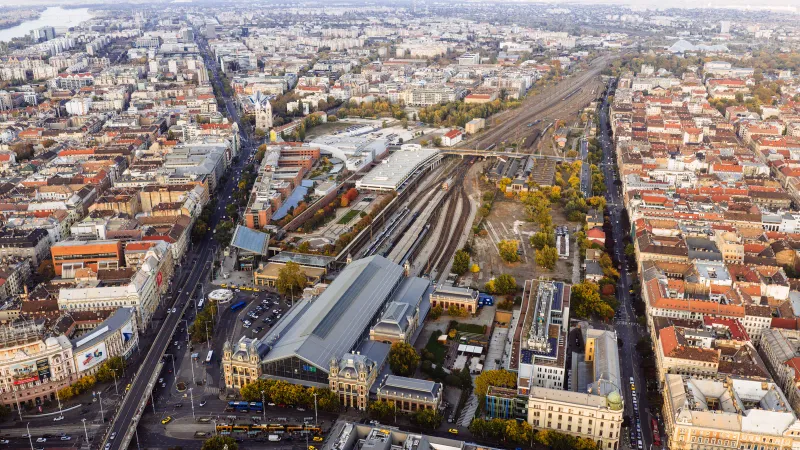
Nyugati handles regional services and domestic routes toward Debrecen, Esztergom, and parts of lake balaton. The striking 19th-century station building is worth admiring even if you’re not catching a train.
Pass holder perk: Show your Interrail pass at the ticket desk for 50% off entry to the Hungarian Heritage Railway Park, accessible via the motor train toward Esztergom. A fun detour for rail enthusiasts.
Practical tips:
- Allow extra time at Keleti or Nyugati ticket offices in summer, queues can stretch during peak season
- Bring your Interrail pass and passport when making reservations; staff will verify your details
- Keep reservation slips separate from your pass; conductors check both
- Download the MAV mobile app for real-time departure information
Sample itineraries that include Hungary
Here are three practical itineraries showing how Hungary fits different travel styles.
Example 1: Central Europe loop (Global Pass)
Route: Vienna-Budapest-Bratislava-Prague Duration: 10 to 12 days Pass days used: 4 to 5
- Day 1: Vienna to Budapest by Railjet (3h15). Settle into Budapest.
- Days 2 to 4: Explore budapest, walk across the chain bridge to castle hill, swim at the széchenyi baths, stroll along the river danube.
- Day 5: Day trip to lake balaton or Eger using one pass day. Visit the shores of europe’s largest thermal lake or relax in Eger’s wine cellars and baroque architecture.
- Day 6: Budapest to Bratislava (2h30).
- Days 7 to 8: Explore bratislava, then onward to prague.
- Days 9 to 10: prague exploration.
- Day 11: Return to vienna or continue to germany/berlin.
Notes: Use pass days for the cross-border legs. On days you stay put in one city, don’t activate a travel day, walk, take local transit, or simply relax. Reservation recommended on Railjet; compulsory on any night train option.
Example 2: Hungary deep-dive (Hungary One Country Pass)
Route: Budapest-Eger-Debrecen-Lake Balaton-Pécs-Budapest Duration: 7 to 10 days Pass days used: 5
- Days 1 to 2: Budapest, visit Buda’s castle hill, the danube river promenade, museums, and food markets. Sample Hungarian culture in restaurants around the Jewish Quarter.
- Day 3 (Pass Day 1): Train to Eger. Explore the town’s baroque architecture, castle, and walk to Szépasszony-völgy wine cellars.
- Day 4 (Pass Day 2): Eger to Debrecen. Visit the Great Church and plan a side trip to Hortobágy for fishing, birdwatching, or traditional horsemanship demonstrations.
- Day 5: Rest day in Debrecen. No pass day needed.
- Day 6 (Pass Day 3): Debrecen to lake balaton (long journey via Budapest, perfect for maximizing a pass day).
- Day 7 to 8: Swim, relax, and explore Balaton’s shores. In august, catch Balaton Sound if the timing aligns.
- Day 9 (Pass Day 4): Lake balaton to Pécs. See the mosque, explore the town, taste local wines.
- Day 10 (Pass Day 5): Pécs to Budapest. Return for final night or departure.
Notes: IC reservations needed on most long legs. Local buses handle short transfers like Eger town center to wine valley. This itinerary pushes the 5-day pass to its limits, evaluate whether point-to-point might still be cheaper for your specific dates.
Example 3: Balkans and the Adriatic (Global Pass)
Route: Budapest-Zagreb-Ljubljana or Split Duration: 10 to 14 days Pass days used: 5 to 6
- Days 1 to 3: Budapest exploration. Day trip option to Esztergom or Szentendre.
- Day 4 (Pass Day 1): Budapest to zagreb by InterCity (6h35). Reservation required.
- Days 5 to 6: zagreb, explore croatia’s capital.
- Day 7 (Pass Day 2): zagreb to Ljubljana (2h30) or continue south toward Split (seasonal trains, or bus).
- Days 8 to 10: Slovenian lakes or Croatian coast.
- Day 11 (Pass Day 3): Return north via zagreb or budapest.
Notes: Train coverage is strong to zagreb but patchy beyond. For the Croatian coast, long-distance buses often beat trains on speed and directness. Night train options exist seasonally (the Adria service to Split via zagreb), but book couchettes early in summer. Connections toward serbia (e.g., Szeged-Subotica) exist but schedules are limited.
Practical tips for travelling in Hungary
Planning your trip:
- Use MAV-START’s online timetable or pan-European journey planners to identify which trains require reservations
- Book night train couchettes and sleepers at least 2 to 3 weeks ahead during summer, these sell out
- Download offline timetables for areas with spotty mobile signal (rural routes toward Debrecen or south toward serbia)
Ticketing essentials:
- Always carry a passport or ID matching the name on your Interrail pass; Hungarian conductors verify this
- For paper passes: fill in your travel diary before boarding each train
- For mobile passes: log your journey in the Rail Planner app before the conductor reaches you
- Keep reservation slips handy, conductors inspect these alongside your pass
On-board and station tips:
- Regional trains are functional but basic; bring snacks and water for longer journeys to destinations like Pécs, Sopron, or Debrecen
- First-class upgrades are affordable in Hungary and offer noticeably more space on intercity services
- Budapest Keleti has food stalls and shops; smaller stations may have nothing beyond a ticket window
Seasonal considerations:
- Summer crowds pack trains to lake balaton, especially weekends in July and august
- Balaton Sound (Zamárdi) and Sziget Festival (budapest, august) create major demand spikes. Book any reservations early
- Winter travel is quieter but thermal baths like széchenyi in budapest are popular year-round; trains to nearby towns run normally
- Youth travelers flood certain routes during school holidays; expect busier regional services
Our honest verdict on Interrail in Hungary
For travel exclusively within hungary, Interrail: especially the Hungary One Country Pass, is often poor value. Domestic fares are simply too cheap for a pass to compete. When you add mandatory IC and EN reservations on top, the supposed savings evaporate quickly. A person visiting budapest, lake balaton, and Debrecen will almost always spend less buying regular tickets from MAV-START.
Interrail can still be worthwhile if:
- Hungary is one piece of a multi-country itinerary using a Global Pass (e.g., vienna-budapest-prague-zagreb)
- You prioritize flexibility over strict budgeting and want to change plans without rebooking fees
- You’re cramming many long cross-border journeys into a short timeframe
- Festival season has made advance tickets scarce and you need guaranteed rail access
Skip the pass and buy regular tickets if:
- You’re only visiting budapest plus 1 to 2 nearby destinations
- You can book 2+ weeks ahead and snag discounted fares
- Your trip involves more city exploration than train hopping
- Budget is your primary concern
Our recommendation: For Central Europe itineraries passing through Hungary en route to neighbouring countries like austria, slovakia, croatia, or slovenia, a Global Pass offers genuine value and flexibility. For Hungary-focused trips, resist the urge to buy a dedicated pass. The country’s rail network is excellent, the destinations are rewarding, from the shores of lake balaton to the vineyards near Eger to the Ottoman mosque in Pécs, but the fares are low enough that you don’t need a pass to travel affordably.
Visit hungary by train. Just buy your tickets as you go.
Find the right rail pass for Hungary
Train companies in Hungary that accept Interrail Global Pass
Frequently asked questions
Which railway operator is covered by Interrail in Hungary?
Interrail is valid on MAV-START, the Hungarian national railway, covering virtually all domestic routes plus cross-border services to Austria, Slovakia, Croatia, Romania, Slovenia, Serbia, and beyond.
Which Budapest stations serve as hubs for train connections?
Both major Budapest stations, Keleti and Nyugati, serve as hubs for international and domestic train connections.
What international trains are covered by an Interrail pass from Budapest?
The Interrail Global Pass covers international trains such as the Railjet to Vienna, EuroCity services, and EuroNight sleepers departing from Budapest.
What options are available on the Hungary One Country Pass?
The Hungary One Country Pass comes in 3, 4, 5, 6, or 8 travel day options within one month, valid only within Hungary's borders.
Is an Interrail pass good value for Hungary-only trips?
An Interrail pass is generally considered overkill for Hungary-only trips. It offers better value when Hungary is part of a wider multi-country itinerary.