
Interrail in Czech Republic
Interrail covers most ČD trains in Czechia; regular fares are often cheaper, the 3-day One Country Pass starts at €105, and reservations are usually optional.
- Country
- Czechia
- Coverage
- Covered
An Interrail pass for a Czech Republic trip is technically ideal, but it is not always the best value for money.
Czechia has the densest railway network in the world, with relatively frequent service on most lines.
Prague is the country’s railway hub, with the main station being Praha Hlavní nádrazí. Major cities like Brno, the second largest city, offering a vibrant cultural scene, Plzeň, famous for its Pilsner beer and brewing history, and Karlovy Vary, known for its hot springs and beautiful spa architecture, are all easily accessible by train. Český Krumlov is a UNESCO World Heritage site and a must-visit destination. The Czech Republic offers a mix of historical sites, natural beauty, and vibrant cities. The country is also home to numerous castles and chateaus, many of which are accessible by train.
International connections are excellent, with direct trains to cities like Dresden and Hamburg, which serve as key stops and hubs on routes across Germany. Night trains connect Prague to Zurich in Switzerland, with Dresden as a significant stop along the way.
For airport stations or city centers, a combination of different modes of transport, such as buses, metro, and trams, can be used, making travel more convenient and improving connectivity.
When purchasing tickets, making reservations, or paying supplements for upgrades like first class, payment can be made at ticket offices or directly to conductors using cash or card.
The Interrail Czech Republic Pass is available, with prices starting from €105.
Rail travel in the Czech Republic
The Czech Republic is a top choice for travelers eager to experience a blend of rich history, vibrant culture, and stunning landscapes, all easily accessible by train. Thanks to its extensive and efficient rail network, getting around the country is both convenient and enjoyable. Whether you’re hopping between major cities like Prague, Brno, and Ostrava, or venturing into the countryside, you’ll find a wide variety of intercity trains, high speed trains, regional trains, and even night trains operating daily.
For those planning to explore beyond Czech borders, the Interrail Global Pass offers unlimited travel across 33 European countries, including seamless connections to Austria, Germany, Poland, Slovakia, and beyond. If your trip is focused solely on the Czech Republic, the Interrail Czech Republic One Country Pass is a flexible option that covers most trains within the country. Both passes allow you to travel without the hassle of buying individual tickets for each journey, making spontaneous trips and last-minute changes easy.
Most trains in the Czech Republic do not require seat reservations, so you can simply board and find a seat. However, some intercity and high speed trains: especially on popular routes or during peak travel times, may require reservations or supplements. These can be arranged in advance at ticket offices, selected stations, or online. The Rail Planner app is an essential tool for planning your routes, checking train times, and managing your pass. It also helps you find the best connections between major cities like Prague, Vienna, and Berlin, ensuring a smooth travel experience.
The country’s central location in Europe makes it an ideal base for rail adventures. With direct international trains to Vienna, Berlin, Budapest, Warsaw, and other capitals, you can easily combine your Czech itinerary with trips across the continent. Whether you’re interested in exploring historic towns, enjoying the scenic countryside, or embarking on a multi-country rail journey, the Czech Republic’s rail system offers flexibility and peace of mind.
Tickets for individual trains and routes can also be purchased at ticket offices or online, and it’s wise to check train schedules and reserve seats in advance for popular routes. With so many options, Interrail Passes, country passes, and point-to-point tickets, you can tailor your travel to fit your style and budget.
In short, the Czech Republic is a fantastic destination for rail travel. Its well-developed network, frequent connections, and easy access to neighboring countries make it perfect for both first-time visitors and seasoned travelers. With an Interrail Pass, you can explore at your own pace, enjoy the freedom to change plans, and discover the best of Czechia and Europe by train. Start planning your trip today and experience the charm of the Czech Republic from the comfort of the rails.
Quick verdict on cost, value, and ease of use
Let me be direct. If you’re planning to travel mostly within Czech Republic, an Interrail pass will likely cost you more than buying regular tickets. The math simply doesn’t work in the pass’s favor.
Consider typical Czech domestic fares: a Prague-Brno trip (about 2.5 to 3 hours) costs roughly €8 to €15 when bought in advance online. Prague-Ostrava runs €10 to €25 depending on the operator and timing. Prague-České Budějovice? Often €7 to €15. Even buying flexible same-day tickets rarely pushes these prices above €25 for a single leg. Now compare that to the per-day cost of passes: the Interrail Global Pass works out to roughly €33 to €48 per travel day depending on your configuration, while the Czech One Country Pass (adult) costs about €27 to €35 per day.
The country itself is a dream for rail travel. Dense network, frequent trains, minimal mandatory reservations, and solid apps for planning. You can hop between major cities with almost no admin overhead. But that ease of use doesn’t translate to financial sense unless you’re combining Czech trains with expensive international journeys or cramming multiple long legs into each travel day.
One more factor tilts the scales further: seniors 65+ and students with valid ISIC cards get 50% off regular České dráhy (ČD) fares regardless of nationality. If you fall into either category, point-to-point tickets become so cheap that an Interrail pass is almost impossible to justify for domestic travel.
How Interrail works in the Czech Republic
Both the Interrail Global Pass and the Interrail Czech Republic One Country Pass are valid on most trains operated by České dráhy (ČD), the national rail operator. From 5 January 2026 onwards, this includes intercity trains like R (rychlík), Ex (express), IC, and EC services, plus most regional trains across the network. Reservations are mandatory for some international trains to and from the Czech Republic.
Before boarding any train, you must activate your Mobile Pass in the Rail Planner app and add each journey to your active travel day. Conductors will scan your QR code and may ask for ID, so keep your passport or national ID card handy.
The Czech rail network offers excellent coverage:
- Prague-Brno: About 2.5 to 3 hours on fast trains, frequent departures
- Prague-Ostrava: Around 3 to 3.5 hours, heavily served by both ČD and private operators
- Prague-Plzeň: Roughly 1.5 hours with upgraded tracks
- Prague-Olomouc: About 2 to 2.5 hours via express services
- Regional connections: Reach secondary cities like Liberec, Karlovy Vary, Hradec Králové, and tourist areas in Šumava or Jeseníky
Note: Station names such as Praha hl.n. may differ from their common English equivalents or official city names.
One important caveat: Interrail is not valid on all operators. Certain routes operated by Arriva, GW Train Regio, or Die Länderbahn fall outside the pass coverage. For example, the scenic local line from České Budějovice to Český Krumlov is operated by GWTR and requires a separate ticket (under €2 each way).
A typical day for an Interrail pass holder in Czechia looks like this: wake up, check IDOS or the ČD Můj vlak app for train times, add your chosen journey to Rail Planner, walk to the station, board, show your pass to the conductor, and go. Most trains require no advance booking and no reservation fees. It’s genuinely hassle-free travel. Just not necessarily cheap travel.
The Czech Republic One Country Pass
The Czech One Country Pass suits travelers who want to stay entirely within the country for 3 to 8 flexible travel days within a one-month validity period. If your trip involves bouncing between Prague, Brno, Olomouc, Ostrava, Plzeň, and České Budějovice, this pass covers most of those routes.
Current indicative pricing for 2nd class:
- 3 days in 1 month: €105 adult / €79 youth / €94 senior: about €35/day (adult)
- 4 days in 1 month: €129 adult / €97 youth / €117 senior: about €32.25/day (adult)
- 5 days in 1 month: €152 adult / €114 youth / €137 senior: about €30.40/day (adult)
- 8 days in 1 month: €216 adult / €162 youth / €194 senior: about €27/day (adult)
Now let’s find the break-even point with concrete examples:
| Route example | Advance ticket (approx.) | One Country Pass per day |
|---|---|---|
| Prague-Brno return | €16 to €30 total | €30 to €35 |
| Prague-Ostrava return | €20 to €40 total | €30 to €35 |
| Prague-ČB return + ČB-Krumlov | €18 to €35 total | €30 to €35 + €4 (separate) |
To make the pass pay off, you need travel days where you’re taking multiple long journeys: think Prague-Brno-Olomouc-Prague in a single day, or Prague-Ostrava-Olomouc-Brno. A single out-and-back trip per day rarely justifies the pass cost.
When the One Country Pass works:
- You want complete flexibility to decide your destination each morning
- You’re cramming several long legs into each travel day
- Advance fares have sold out and last-minute prices are high
When the One Country Pass fails:
- Your trip involves Prague plus 1 to 2 secondary cities over a week
- You’re a senior 65+ or ISIC student eligible for 50% discounts
- You’re comfortable booking specific trains in advance for cheaper fares
Using the Global Pass in the Czech Republic
The Global Pass becomes attractive when Czechia is one stop on a longer European rail trip. If you’re entering from Germany, Austria, Slovakia, Poland, or Hungary by train, and then doing some domestic hops before continuing onward, the numbers can start to work.
Key international connections through Czechia:
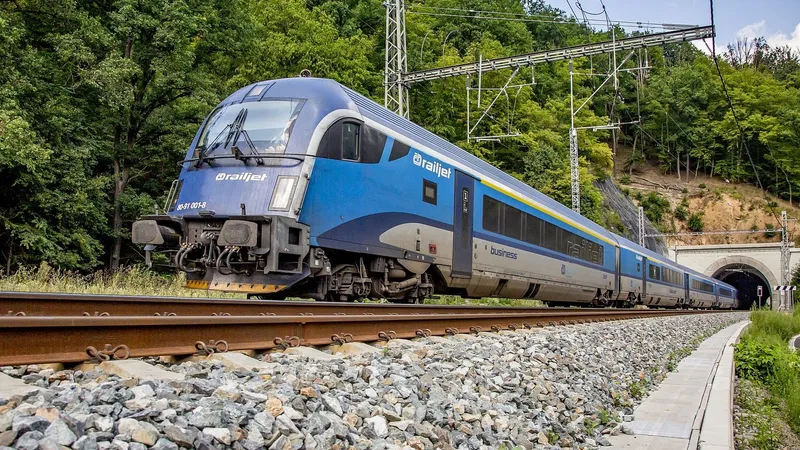
- Berlin-Prague: EC/Railjet trains, about 4 to 4.5 hours. Advance fares typically €20 to €40; Interrail reservation optional at €5.50 to €6.90
- Vienna-Prague: Railjet, about 4 hours. Advance fares €15 to €30; optional reservation around €3
- Budapest-Prague: EC trains, roughly 7 hours. Advance fares €25 to €45; reservations usually optional or low-cost
- Prague-Zürich night train: Nightjet service, supplements €10 to €40+ depending on seat/couchette/sleeper
- European Sleeper (Brussels-Amsterdam-Berlin-Prague): Passholder supplements range from €21 (seat) to €179 (single sleeper)
For a 5-day Global Pass at €239 (about €48/day), here’s how sample itineraries compare:
Example 1: Berlin-Prague-Brno-Vienna (5 days)
- Day 1: Berlin-Prague (€30 regular): 1 pass day
- Day 2: Prague sightseeing: no pass day used
- Day 3: Prague-Brno (€15 to €20 regular): 1 pass day
- Day 4: Brno-Vienna (€15 to €25 regular): 1 pass day
- Day 5: Vienna onward
Without Interrail: roughly €60 to €75 for major trains plus €20 for local trips = €80 to €95 total. The €239 pass costs more.
Example 2: Amsterdam-Berlin-Prague-Vienna-Budapest (10 days) With longer distances and multiple cross-border segments, regular tickets can easily exceed €300 to €400 total. A 10-day Global Pass at €335 (€33.50/day) becomes competitive, especially if you value spontaneity and don’t want to commit to specific departure times weeks ahead.
Remember the outbound/inbound rule: in your country of residence, the Global Pass only covers two journeys total (one out, one back). Once you’re in Czechia, you can ride freely on participating trains during any activated travel day.
Reservations on Czech trains
Good news: Czechia is one of the easiest countries in Europe for reservation-free rail travel. Most regional trains and many intercity services let you simply board and find any unreserved seat.
Domestic ČD trains (R, Ex, IC, EC categories)
- Seat reservations usually optional, around 40 CZK (~€1.5)
- Some busy routes like Prague-Ostrava now require mandatory reservations on selected trains to manage overcrowding, but the fee remains minimal
- You can book reservations through the ČD Můj vlak app or at ticket offices
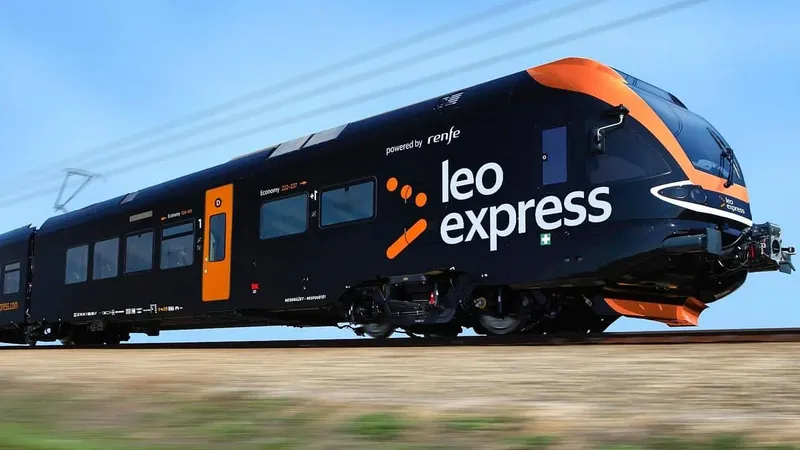
Private operators (RegioJet, Leo Express)
- Interrail is valid but reservations are compulsory
- RegioJet fees for passholders: €1.30 (Low Cost) to €2.80 (Relax class)
- Leo Express/SuperCity: around €3 reservation fee
- Book through the operators’ websites or the Rail Planner app
Night trains
- Prague-Košice, Prague-Budapest, Prague-Zürich: Interrail covers base travel, but you pay supplements for comfort
- Typical supplement ranges: €10 to €20 for seats, €20 to €40 for couchettes, €40 to €60+ for sleeper compartments
- European Sleeper Brussels/Amsterdam-Berlin-Prague: €21 (seat) to €179 (single sleeper) for passholders
International Railjet and EC trains
- Vienna-Prague, Berlin-Prague, Budapest-Prague: optional reservations around €3 in 2nd class
- Summer peak (26 June-31 August): some routes make reservations compulsory, same low fee applies
For advance planning, check the Rail Planner app and IDOS timetable for “reservation required” icons. The ČD Můj vlak app shows real-time seat availability and lets you purchase “seat only” reservations when using a pass.
Interrail vs point-to-point tickets in the Czech Republic
This is where the decision gets concrete. Czech domestic fares are remarkably cheap by Western European standards, and that fundamentally shapes whether a pass makes sense.
Typical single fares (2nd class, purchased online or via apps):
| Route | Advance/promo fare | Flexible same-day fare |
|---|---|---|
| Prague-Brno | €8 to €15 | €15 to €25 |
| Prague-Ostrava | €10 to €20 | €15 to €30 |
| Prague-České Budějovice | €7 to €12 | €12 to €20 |
| Prague-Plzeň | €5 to €10 | €10 to €15 |
A full day of domestic travel, say Prague-Brno in the morning and Brno-Prague in the evening with a side trip to Olomouc, might cost €25 to €40 total with regular tickets. That’s close to or below the per-day cost of any Interrail pass.
Special discounts that change everything:
- Seniors 65+ get 50% off standard ČD fares (any nationality, just show ID)
- Students with ISIC get roughly 50% off many domestic fares
- These discounts can cut a €20 day trip to €10, making Interrail mathematically impossible to justify
Point-to-point wins when:
- Your trip covers Prague plus 1 to 3 other cities over several days
- You’re happy to commit to specific trains for advance discounts
- You want to use non-Interrail operators (some Arriva routes, GWTR local lines)
- You’re a senior or student with discount eligibility
- You prefer paying for exactly what you use
Interrail wins when:
- You’re on a multi-country itinerary (Amsterdam-Berlin-Prague-Vienna-Budapest style)
- You want maximum flexibility to change plans daily
- It’s peak summer and last-minute international fares are expensive
- You’re packing several long cross-border journeys into each travel day
- Peace of mind matters more than optimizing every euro
Practical tips for Interrail in the Czech Republic
Before you travel:
- Activate your Mobile Pass in the Rail Planner app and set your start date
- Always carry valid ID (passport or national ID card) matching your pass name
- Download IDOS and ČD Můj vlak apps for local timetables, live delays, and platform info
At the station:
- Main hubs use standard naming: Praha hl.n. (Prague main), Brno hl.n., Ostrava hl.n.
- Add your train to the pass in Rail Planner before boarding
- Optional seat reservations can be purchased at ticket offices, machines, or via the Můj vlak app (choose “seat only,” not full ticket)
On the train:
- Show your pass QR code and any separate reservation to conductors
- Sit in the correct class, some coaches are 1st class only
- Reserved seats display labels on digital screens or paper tags; unreserved seats are fair game
Prague Airport connection:
- Václav Havel Airport has no rail station
- The Airport Express (AE) bus runs directly to Praha hl.n. but is not covered by Interrail
- Alternatively, take city bus 119 to Nádraží Veleslavín, then metro to the center, also not covered by your pass
- Once at Praha hl.n., your Interrail journey can begin
Popular day trips on a pass:
- Prague-Kutná Hora: About 1 hour, UNESCO-listed town. Cheap on regular tickets too (a few euros each way)
- Prague-Karlovy Vary: Around 3 hours via Karlovy Vary dolní nádraží, famous spa town
- Prague-Český Krumlov: Take ČD to České Budějovice (2 to 2.5 hours), then GWTR local (not covered by Interrail, under €2) to Krumlov
These trips work smoothly on a pass but are also inexpensive with regular tickets, further evidence that the pass is about convenience, not savings.
The honest verdict on Interrail for the Czech Republic
For travel purely inside Czechia, an Interrail pass: especially the One Country Pass, is usually poor value. Regular domestic fares are simply too cheap, and the generous discounts for seniors and students make the gap even wider. A busy travel day with multiple long journeys might break even with a pass, but most realistic itineraries will cost less with point-to-point tickets.
The Interrail Global Pass tells a different story. When Czechia is one chapter in a longer European rail adventure, Berlin to Prague to Vienna to Budapest, for example: the pass can compete with or beat regular fares while offering valuable flexibility. If your trip includes several expensive international segments and you want the freedom to adjust plans on the fly, the Global Pass makes sense.
The operational experience in Czech Republic is excellent. The network is dense, trains run frequently, reservations are cheap and mostly optional, and the apps work well. You won’t worry about missing connections or navigating complex booking systems. Czechia is genuinely one of the easiest countries in Europe to explore by rail.
Budget-focused travelers staying mainly within the country should generally buy point-to-point tickets and pocket the difference. But if flexibility and spontaneity matter more than optimizing every euro, and you’re combining Czech travel with other European destinations, an Interrail pass remains a legitimate option. Just don’t mistake it for the cheap choice. In Czechia, regular tickets almost always win that competition.
Find the right rail pass for Czechia
Train companies in Czechia that accept Interrail Global Pass
Frequently asked questions
How does the Czech Republic's rail network rank globally?
Czechia has the densest railway network in the world.
Which operator runs most trains covered by an Interrail pass in Czech Republic?
The Interrail pass is valid on most trains operated by České dráhy (ČD), the national rail operator, including intercity trains like R (rychlík), Ex (express), IC, and EC services from 5 January 2026 onwards.
Are reservations required on Czech trains with an Interrail pass?
Reservations are mandatory for some international trains to and from the Czech Republic. Before boarding any train, you must activate your Mobile Pass in the Rail Planner app and add each journey to your active travel day.
How long do train journeys between major Czech cities take?
Prague to Brno takes about 2.5 to 3 hours; Prague to Ostrava around 3 to 3.5 hours; Prague to Plzeň roughly 1.5 hours; and Prague to Olomouc about 2 to 2.5 hours.
Is Interrail good value for domestic travel within Czech Republic?
While Czechia is technically ideal for Interrail with its dense network, the pass is often poor value for domestic travel because local ticket prices are very low.