
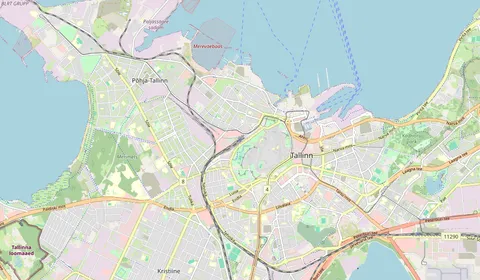
Train stations in Tallinn
Plan Tallinn trips around the station on your ticket and final local leg. Elron's dated journey search may show Rīga as Riia.

- Stations
- 1
- Primary station
- Tallinn Baltic Station (Balti jaam)
- Passenger operators
- 1
Tallinn is easiest to reach when you plan the station and final local leg together. Check the dated itinerary before choosing the quickest-looking train.
Start with the station named on the ticket
Use the station printed on the ticket to plan the final part of the journey. A search result may show Tallinn as the destination, but it does not tell you where the train stops, which exit to use, or how long the trip to your hotel, ferry terminal, meeting or airport connection will take. Keep the arrival time, station name and final address together before you travel.
The useful default is simple: plan the station-to-address journey before buying a tight itinerary. A few extra minutes on the train can be the better option if they give you a calmer local transfer. Comparing rail journeys only by headline arrival time can leave the final local leg as the difficult part.
Save the train number with the station name. It is more useful than a city label if a platform changes, the service is delayed, or you need to ask staff about the exact train. Keep a screenshot of the ticket too. Mobile coverage, battery level and a booking app that has logged you out are poor things to rely on just after arrival.
Check the domestic train plan on the day
For travel within Estonia, use Elron's current journey search for the dated trip instead of a timetable copied into a note weeks earlier. The operator publishes service notices alongside journey searches, so check both when the trip has a fixed consequence such as a flight, ferry or booked accommodation. This matters most when engineering work or a replacement bus could change the usual stopping pattern.
Choose an earlier departure when the next step is expensive to miss. You do not need to arrive at every station far too early. Identify the point where a delay stops being an inconvenience and becomes a missed connection, then leave a realistic margin before it. A same-day hotel check-in can usually absorb a small delay, while a last departure or non-refundable onward ticket may not.
Before boarding, compare the train number, destination display and departure time with the ticket. Check again at the platform. This prevents the common error of following a familiar destination name instead of the booked service, particularly when several trains appear close together on a departure board.
Make the final local leg part of the rail journey
Plan the route from the arrival station to the exact address, rather than only to the city centre. Check the walking distance with your luggage in mind, then compare local public transport with a taxi or short walk. The sensible choice depends on the weather, arrival time and number of bags. A route that works with a small backpack can be a poor choice after a long international journey.
Use a live local planner to confirm the stop, direction and boarding point. Do not assume every service leaves from the same side of the station, or that a similarly named stop is the right one. If you arrive late, look up a second option before setting off. It gives you a workable choice if the first local connection has gone or the stop is hard to find.
Keep the final address available offline. Also save the accommodation phone number or another contact method when the arrival time matters. This is practical insurance: a short delay is easier to handle when you can tell the next person in the chain where you are and when you expect to arrive.
Treat Baltic international trips as a chain
Read every leg of an international itinerary before paying, even if a booking site presents it as one journey. The route can use more than one carrier, and ticket conditions can differ by section. Check who operates each leg, where any change happens and whether the booking is a through ticket or separate tickets. One confirmation does not guarantee identical flexibility across the whole journey.
Through tickets can give the traveller a clearer position when a major rail disruption affects a multi-carrier journey. Separate tickets can still make sense when they are cheaper or offer better times, but more of the connection risk sits with you. If you choose them, leave a longer margin and check each carrier's change and refund conditions before booking.
International schedules can change because of railway works. Check the current timetable at the point of purchase, then recheck the exact trip shortly before travel. A route that existed when you first planned the journey may have a different connection, ticket availability or station instruction on the date you travel.
One small detail can prevent confusion: Rīga can appear as Riia on Elron's site. Search by date and use the exact place shown by the operator if a familiar city spelling does not return the expected journey. Do not move to an unverified itinerary simply because a third-party search looks easier.
Leave a recovery margin for fixed plans
The best itinerary is one that still works when a normal delay occurs. If the next step is a ferry, flight, event or late check-in, choose a train that leaves room for an alternative local connection and a platform change. A nominally faster journey is not a good saving if one late arrival removes every useful backup.
Before leaving, download or screenshot the final itinerary, check live service information and confirm the last local connection that would still work. Then travel with a clear fallback: an earlier train, a different local route or a taxi from the arrival station. That preparation makes Tallinn arrival plans less fragile.
Where to book
Train tickets
- Check times & prices
Omio
Omio connects you with over 1,000 transport providers - trains, buses, flights, and more - to simplify your travel planning.

Passenger train operators
- Check times & prices
Elron runs Estonia's domestic trains from Tallinn. Second class needs no reservation; first class on longer diesel routes requires one.
Official website

Train stations in Tallinn
Find places to stay in Tallinn

Frequently asked questions
Which station should I use in Tallinn?
Use the station on the ticket, then check the station exit and the local boarding point for your exact address before travel day.
When should I choose a through ticket?
Choose a through ticket when disruption protection across a multi-carrier journey matters more than a small saving. Check the included route and class, because availability and conditions can differ.
What should I check when a Baltic train search fails?
Search again with the operator's own place spelling and the travel date. On Elron, Rīga can appear as Riia, so a spelling difference can hide the journey you expect.
How much time should I allow after arrival?
Allow enough time to leave the platform, find the local stop and use one backup option. Add more margin when the next booking has a fixed deadline.
What is the best backup for a late arrival?
Decide before departure which earlier train, later local service or taxi would keep the trip workable. A defined backup is more useful than trying to solve the plan after a delay.