
Switzerland’s rail network is legendary—punctual trains threading through Alpine valleys, lake shores, and historic cities. But when it comes to using an interrail pass here, the picture gets complicated. This guide breaks down exactly how Interrail works in Switzerland, what extra costs to expect, and whether it genuinely offers good value compared to alternatives.
Quick answer: Is Interrail worth it for Switzerland?
The honest verdict: Interrail usually offers only moderate value in Switzerland compared with point-to-point tickets and Swiss-specific passes, but can make sense for intensive multi-day rail itineraries or as part of a wider European trip.
Scenarios where Interrail Switzerland Pass or Global Pass is good value:
Travelling 5–7 long travel days within one month, covering routes like Zurich–Zermatt–St. Moritz–Interlaken–Lugano
Peak July–August travel when advance ticket discounts are scarce and flexibility matters
Travellers under 28 benefiting from the youth pass discount (roughly 25% cheaper)
Multi-country European rail adventures where Switzerland is just one leg of a Paris–Milan–Vienna style trip
Spontaneous travellers who value changing plans around weather, especially for mountain excursions
Scenarios where buying normal tickets or Swiss Travel Pass / Half Fare Card is usually better:
Only 2–3 rail days during your visit, especially with short hops like Zurich–Lucerne–Bern
Itineraries focused heavily on mountain cable cars, funiculars, and rack railways (limited interrail coverage)
Family trips wanting inclusive museum entry and boat trips (Swiss Travel Pass bundles these)
Visitors booking 2–4 weeks ahead who can grab SBB Supersaver fares at 50%+ discounts
Longer stays of 2–3 weeks with a mix of long and short journeys (Half Fare Card often wins)
If your trip is mainly Switzerland and you’re doing lots of mountain railways and cable cars, a Swiss Travel Pass or Half Fare Card usually beats Interrail on value.
How Interrail works in Switzerland (Global Pass vs One Country)
Switzerland is fully covered by Interrail, with dense timetables running from roughly 05:00 to 23:00 and frequent connections between major swiss cities like Zurich, Geneva, Basel, Bern and Lucerne. The network covers approximately 99% of trains operated within the country, making it exceptionally comprehensive for domestic rail travel.
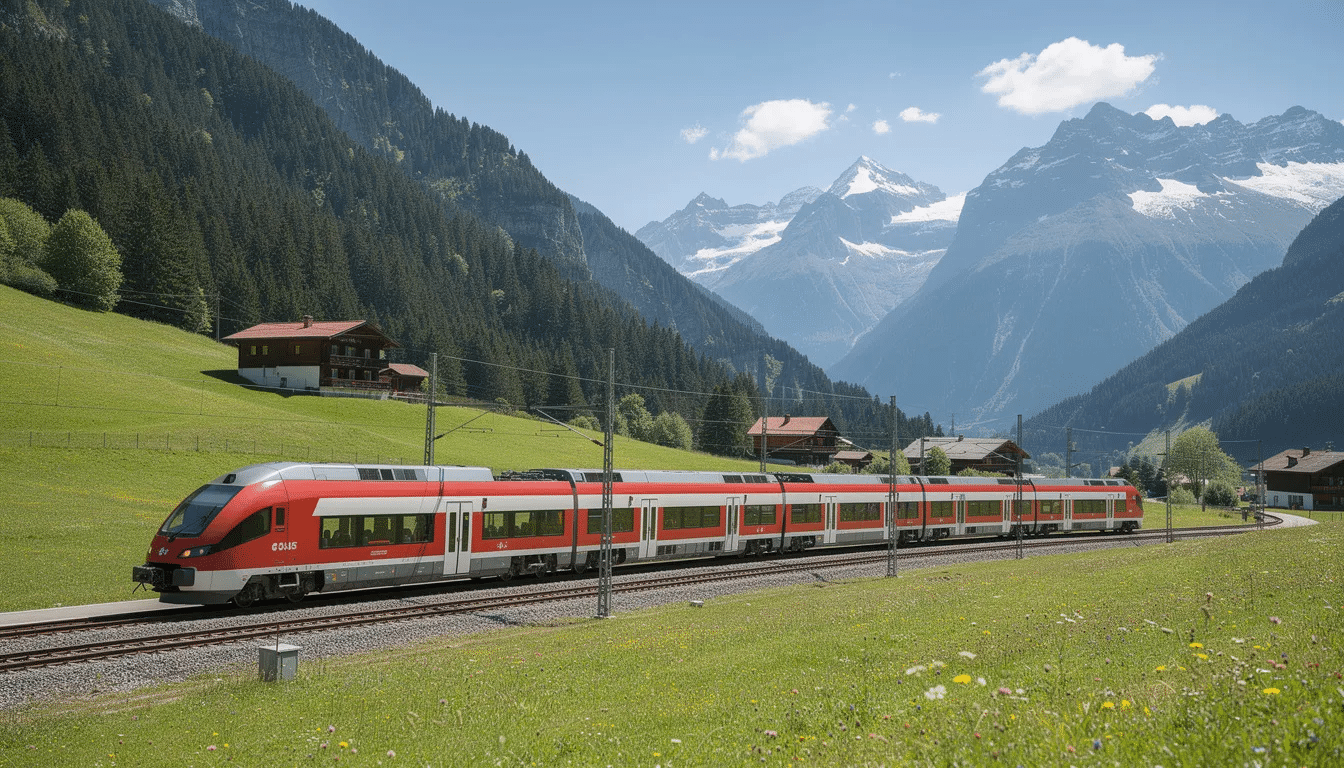
Interrail Global Pass in Switzerland:
Covers Switzerland plus 32 other countries across europe; typical pricing around €283 for 7 travel days in 1 month (youth, 2nd class—prices change annually)
Valid on SBB/CFF/FFS national railways, BLS regional lines, and most private railway companies
Works on cross-border EC, ICE and Railjet international trains into Germany, Italy, France and Austria
Best suited to itineraries like “Paris – Geneva – Zermatt – Milan – Venice” rather than Switzerland-only holidays
Ideal for interrail pass holders exploring multiple countries who want seamless border crossings
Interrail One Country Pass for Switzerland:
Flexible options: 3, 4, 5, 6 or 8 travel days within 1 month validity period
Available in both 1st and 2nd class versions
Starting price band around €150–€190 for 3 days in 1 month for adults in 2nd class (exact prices change annually)
Senior pass and child pass options available at reduced rates
Valid on most regular trains but not on many mountain railways and some private tourist lines
Always cross-check specific connections in the rail planner app before relying on them
Both pass types function as a mobile pass activated through the Rail Planner app. You must record each train as a journey before boarding and show your QR code plus passport or ID to conductors.
One important note: Interrail is point-to-point rail travel, not a city transport pass. Zurich trams, Bern buses, and local urban transport are generally not covered unless explicitly listed as a benefit. Budget separately for getting around within each city.
Where your Interrail Pass is valid (and where it isn’t)
Switzerland has a patchwork of public and private operators. Most regular trains are included in Interrail coverage, but many cable cars and tourist railways are not—a crucial distinction for trip planning.
Key train operators and routes included:
SBB/CFF/FFS mainline network covering routes like Zurich HB – Geneva, Basel – Lugano via Gotthard tunnel, and Zurich – Chur
BLS lines including Bern – Spiez – Interlaken Ost and Zweisimmen (important for the entire golden pass journey)
Most InterRegio (IR), intercity trains (IC), RegioExpress (RE) and local S-Bahn services in major cities
Matterhorn Gotthard Bahn (added 2017) covering the Zermatt line
Berner Oberland Bahn (added December 2023) covering Interlaken to Grindelwald, Lauterbrunnen and Wengen
Typical exclusions or partial coverage:
Jungfrau Railway above Kleine Scheidegg: generally only 25% discount, not free travel
Gornergratbahn above Zermatt: limited discount, not fully covered
Pilatus rack railway: partial discount at best
Premium panoramic coaches on the glacier express, bernina express and GoldenPass Panorama: route covered but require compulsory seat reservations and sometimes supplements
Ferries and boat trips:
Lake boats are a mix of fully included, discounted travel and not covered at all. BLS lake cruises on Lake Thun and lake brienz often offer discounts for interrail switzerland pass holders, but coverage varies by specific service. Boats on lake geneva and lake zurich have different arrangements—always verify current policy before planning a boat day.
Always confirm validity for specific operators (MGB, RhB, Zentralbahn) in the Interrail Rail Planner app or on the Interrail website before boarding. The app shows which services require reservations and which accept free travel.
Reservations and supplements in Switzerland
Unlike France, Italy or Spain, seat reservations inside Switzerland are rarely required. The issue only arises for a handful of panoramic and international trains.
Standard Swiss trains (no reservation needed):
IC, IR, RE and most S-Bahn services operate on a “turn up and go” basis
No reservation required even on popular routes like Zurich – Bern or Geneva – Lausanne
Optional reservations available on some IC/EC routes but usually not worth paying for except during busy times like peak summer weekends or major events
Simply board any train with available seats and show your pass when the conductor arrives
Scenic and tourist trains with compulsory or strongly recommended reservations:
|
Scenic Train |
Route |
Reservation Status |
Typical Fee |
|---|---|---|---|
|
Glacier Express |
Zermatt – St. Moritz |
Mandatory |
CHF 39–49 (summer) |
|
Bernina Express |
Chur/St. Moritz – Tirano |
Required for panoramic cars |
CHF 16–22 |
|
GoldenPass Express |
Interlaken – Montreux |
Strongly recommended |
CHF 15–25 |
For the Bernina line, a cheaper option exists: regular RhB regional trains run the same breathtaking scenery route without supplements or reservations. You get the same views, just without the panoramic car experience.
International high-speed and long-distance trains:
EC and ICE services to/from Germany via Basel and Zurich: Interrail valid, reservations optional but recommended on busy Fridays
EC trains to italy via Gotthard or Simplon: usually reservation-optional on the Swiss side, may require booking for the Italian leg
TGV Lyria between Switzerland and Paris: mandatory reservation with limited quota for Interrail, with a high reservation fee that can reach €30–50 per journey
Practical ways to book reservations:
Via Interrail.eu reservation self-service (with possible booking fee per seat)
Directly on SBB website or app for services they sell
At any ticket office in major hubs like Zurich HB, Geneva, Bern, basel sbb and lucerne
Most Swiss travel days will have zero extra reservation costs. But scenic train reservations and France connections can add €50–100+ to your trip if you’re not careful.
Typical Switzerland Interrail itineraries (and how a pass fits)
The value of Interrail depends heavily on how intensively you travel within a short period. Here’s how different trip styles stack up.
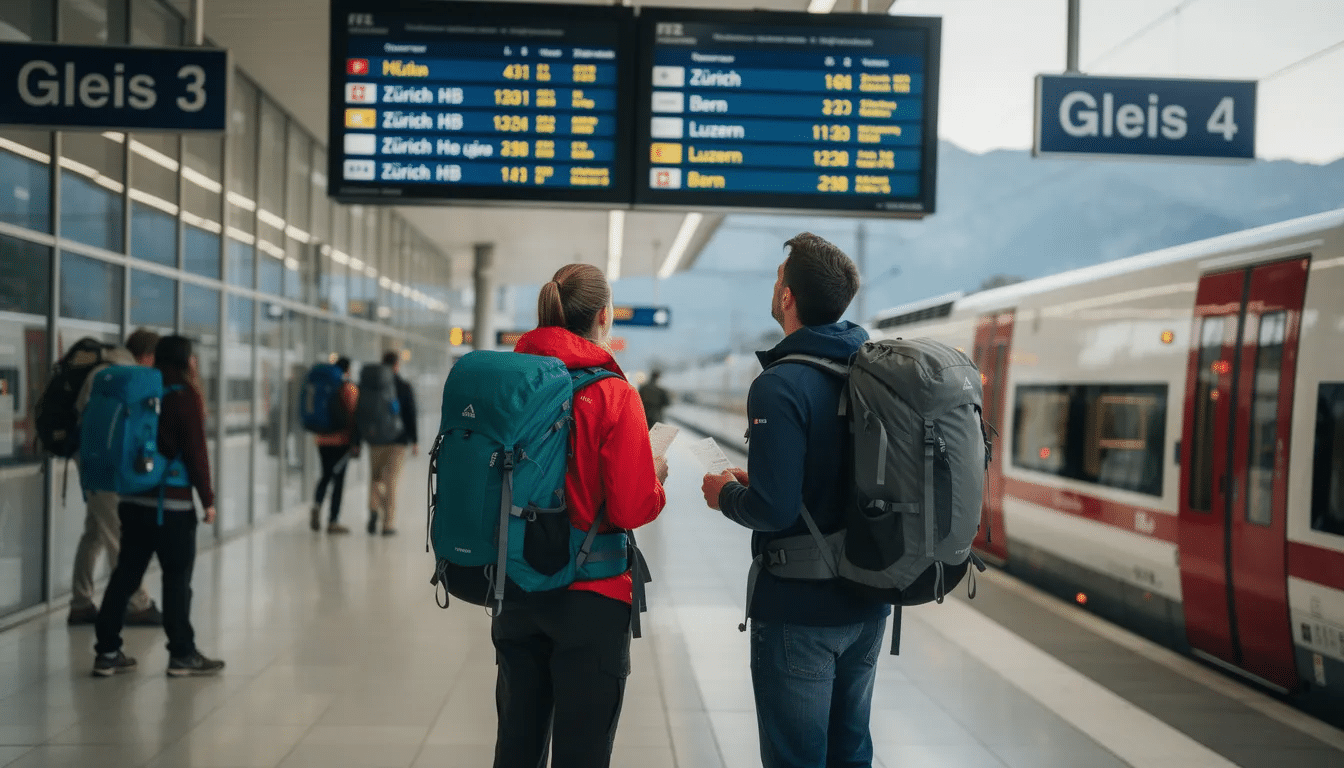
Itineraries where Interrail One Country Pass works well:
5 travel days in 1 month: Zurich – Lucerne – Interlaken – Lauterbrunnen – Zermatt – Montreux – Geneva
Approximate point-to-point ticket cost: CHF 280–350
Interrail Switzerland Pass (5 days): approximately €200–240
Scenic train reservations (GoldenPass, optional): CHF 25–40
Verdict: Interrail saves roughly 15–25% while offering flexibility to change plans
7–8 days of rail: Adding Chur / St. Moritz and Bernina region
Multiple 4–5 hour train days crossing between language regions
Point-to-point would exceed CHF 450
Interrail 8-day pass plus Bernina Express reservation: approximately €280–320
Verdict: Clear interrail advantage, especially if you skip the premium panoramic cars
Itineraries where a Global Pass makes more sense:
Paris – Geneva – Interlaken – Lauterbrunnen – Milan – Venice over 10–15 days
Switzerland becomes 3–4 travel days within a larger European trip
Global Pass covers TGV Lyria (with reservation supplement), all Swiss routes, and onward Italian connections
Much simpler than buying separate national tickets for each country
Munich – Zurich – Lucerne – Lugano – Florence
Mix of German ICE, Swiss IC, and Italian EC trains
Global Pass handles border crossings seamlessly
Individual international tickets would cost significantly more
Trips where single tickets or Swiss Travel Pass / Half Fare Card win:
Long weekend: Zurich – Lucerne – Mount Pilatus – Zurich
Only 2 main train journey legs
Mount Pilatus rack railway not covered by Interrail
Swiss Travel Pass or Half Fare Card provides mountain discounts Interrail cannot match
Point-to-point trains plus mountain ticket often cheaper than any pass
One-week hiking base in Interlaken
Limited long-distance train travel after initial arrival
Intensive use of mountain railways to Mürren, Grindelwald, Jungfraujoch
Swiss Travel Pass gives 50% off Jungfraujoch; Interrail gives minimal discount
Verdict: Swiss Travel Pass clearly superior for this trip style
Interrail vs point-to-point tickets vs Swiss Travel Pass / Half Fare Card
Switzerland has excellent but expensive rail, and there are three main strategies for managing costs: Interrail, Swiss-specific passes, or buying individual tickets.
Interrail strengths in Switzerland:
Best if you’re already using Interrail for a multi-country trip and will spend several intensive travel days inside Switzerland
Good for flexibility when you don’t want to lock into specific trains weeks ahead—crucial for mountain regions where weather changes plans
Works well for younger european residents who want simple “hop on and go” rules across all of europe
The youth pass offers genuine savings for under-28 travellers
Interrail downsides in Switzerland:
Limited or no coverage on many high-priced mountain lines and cable cars, which represent a big chunk of typical Swiss holiday spending
Reservation fees for Glacier Express, Bernina Express, GoldenPass and TGV Lyria can add €10–50 per leg, eroding savings
For short hops and a few long journeys, full-fare or advance-purchase Supersaver tickets from SBB can be cheaper than a pass
Doesn’t include city transport or buses within towns
Swiss Travel Pass explained:
Switzerland-only pass covering trains, boats and many mountain excursions more extensively than Interrail
Includes museum entry (Swiss Museum Pass benefits) and city transport in most towns
Usually better for itineraries focused on Switzerland alone, especially with lots of boat trips and mountain transport
Available for 3, 4, 6, 8 or 15 consecutive days
Swiss Half Fare Card explained:
Gives 50% off almost all public transport inside Switzerland (trains, most boats, many mountain railways)
Fixed price for one month validity (approximately CHF 120)
Combining Half Fare Card plus point-to-point tickets often beats Interrail for travellers doing a mix of long and short trips spread over two or three weeks
Particularly strong for mountain railway discounts
|
Product |
Best For |
|---|---|
|
Interrail Global Pass |
Multi-country European trips including 3–7 Switzerland travel days |
|
Interrail Switzerland Pass |
Intensive Switzerland rail-focused trips with 5+ long-distance travel days |
|
Swiss Travel Pass |
Switzerland-only holidays with mountains, boats, museums combined |
|
Swiss Half Fare Card |
Stays of 2+ weeks mixing long journeys with local exploration |
|
Advance SBB tickets |
Fixed itineraries booked 2–4 weeks ahead with flexibility not needed |
Reservations: how and where to book for Interrail in Switzerland
Many readers worry about the reservation process, but it’s straightforward and often optional for Swiss travel.
Online booking options:
Using Interrail’s reservation portal:
Covers Glacier Express, Bernina Express, GoldenPass and many international trains
Possible €2 booking fee per seat
Select your train, choose “seat reservation for pass holders,” pay and download PDF
Using the SBB app or website:
Search for your train on sbb.ch or the SBB Mobile app
Select the specific service
Choose “seat reservation only” (not full ticket)
Pay with card and save PDF or QR code
Show reservation alongside your Interrail pass on board
Offline booking at train stations:
Ticket counters and travel centres at major stations (Zurich HB, Geneva, basel sbb, Bern, lausanne, Lucerne, Interlaken Ost) can issue reservations with staff assistance
Often the best option for complex itineraries mixing different operators like RhB, MGB or Zentralbahn
Staff can explain which reservations are mandatory versus optional
Practical booking tips:
Book scenic trains 4–6 weeks ahead for peak season (late June to early September) and public holidays like Swiss National Day (1 August)
Always clarify you’re reserving a seat only with a pass, not buying a full ticket
Keep digital and printed copies of scenic train reservations—some conductors on smaller private operators prefer printed vouchers
The rail planner app shows reservation requirements for each train; check before assuming anything
Major Swiss routes, cities and stations for Interrail travellers
Switzerland is compact: most key city pairs are 1–3 hours apart, making day trips easy and maximising the value of any rail pass.
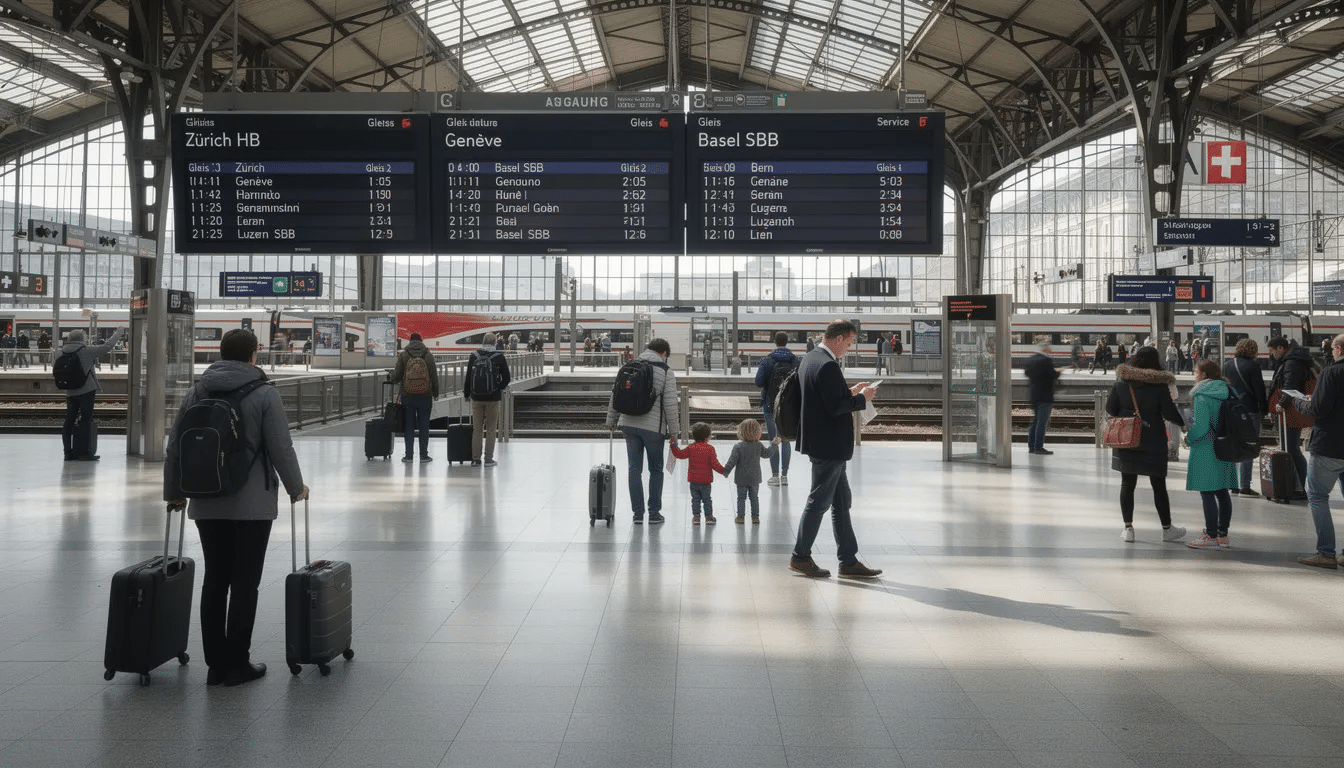
Flagship InterCity/InterRegio routes with journey times:
|
Route |
Approximate Time |
|---|---|
|
Zurich HB – Geneva via Bern |
2h 45min – 3h |
|
Zurich HB – Lucerne |
45–60 min |
|
Zurich HB – Interlaken Ost via Bern |
2h |
|
Geneva – Zermatt via Visp |
3h 40min – 4h |
|
Zurich HB – Lugano via Gotthard |
2h |
|
Bern – Interlaken |
55 min |
|
Geneva – Lausanne |
35–45 min |
Main hub stations for Interrail users:
Zurich HB: Largest hub with frequent IC/IR/S-Bahn connections, many food options, luggage lockers, and long-distance night train departures to amsterdam and other cities
Geneva: Gateway for France and the Lake Geneva region; frequent ICs to Zurich and IRs along the lake shore to Lausanne and Montreux with views of the old town
Basel SBB: Border hub with Germany and France; key for EC/ICE/TGV Lyria connections; note that basel bad bf handles many German services separately
Bern: Central interchange for east-west and north-south routes; quick access to Interlaken and the Oberland
Lausanne: Important stop between Geneva and the eastern Alps
Lucerne: Gateway to central Switzerland and mountain excursions; starting point for Gotthard panorama route
Interlaken Ost: Key transfer point for Jungfrau region and GoldenPass connections
You may see spelling variants in timetables—Genève for Geneva, Zürich for Zurich, Luzern for Lucerne. Both local and international forms appear in systems, but this has no impact on pass validity.
Scenic trains, lakes and mountain add-ons with Interrail
Many visitors come to Switzerland for iconic panoramic routes and mountain views. Interrail’s coverage here is genuinely mixed—some excellent value, some significant gaps.
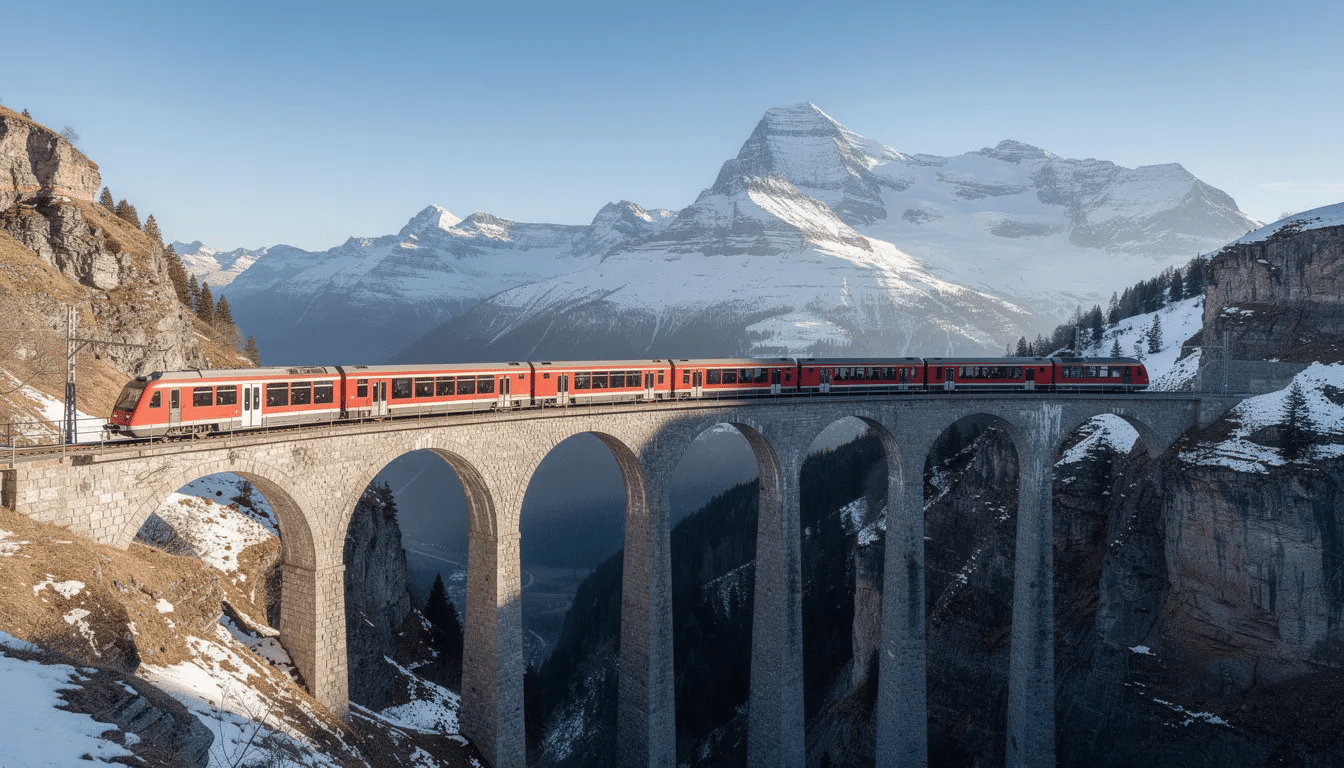
Major scenic trains:
Glacier Express (Zermatt – St. Moritz/Chur):
Route covered by Interrail but mandatory reservation with seasonal fee (CHF 39–49 in summer)
Taking regular regional trains on parts of the route is cheaper and more flexible
The express train itself takes around 8 hours; regional connections require changes but offer similar views
Bernina Line (Chur / St. Moritz – Tirano, crossing into italy):
Interrail valid on the entire route
Branded Bernina Express panoramic coaches require reservation
Regular RhB trains run the same track without supplements—same UNESCO World Heritage scenery, no extra fee
One of the best-value scenic experiences for interrail pass holders
GoldenPass route (Lucerne – Interlaken – Zweisimmen – Montreux):
Generally covered by Interrail
Panoramic coaches need reservations and sometimes supplements
Consider splitting the journey with stops in lakeside towns like Brienz or Montreux to explore without rushing
Boats and lake travel:
BLS boats on Lake Thun and Lake Brienz often discounted or partially included for Interrail Switzerland Pass holders
Lake Geneva and Lake Zurich steamers have varying arrangements—some discounted, some not
Combined train + boat days work well, such as Lucerne – Flüelen by boat linking to the Gotthard panorama route
Always verify current boat coverage before planning a lake-heavy day
Mountain lifts and cable cars:
Most major mountain lifts (Jungfraujoch, Schilthorn, Titlis) are not fully included in Interrail
In many cases only small discounts apply, or none at all
If planning multiple expensive mountain trips, compare Interrail with Swiss Travel Pass and Half Fare Card carefully—those often give better mountain reductions
A single Jungfraujoch visit costs CHF 200+; Swiss Travel Pass gives 50% off while Interrail typically gives 25% or less
|
Scenic Route |
Interrail Coverage |
Reservation Required? |
|---|---|---|
|
Glacier Express |
Yes |
Mandatory (CHF 39–49) |
|
Bernina Express |
Yes |
Yes for panoramic cars |
|
Bernina Line (regular trains) |
Yes |
No |
|
GoldenPass Panoramic |
Yes |
Strongly recommended |
|
Gotthard Panorama Express |
Partial/discount |
Yes |
|
Jungfrau Railway |
25% discount only |
No |
|
Gornergrat Railway |
Partial discount |
No |
|
Lake Thun/Brienz boats |
Often included |
No |
Costs, budgeting and money-saving tips for Interrail in Switzerland
Switzerland is one of the most expensive countries for day-to-day spending, but there are concrete ways to control rail costs.
Sample cost comparison (5-day itinerary):
Route: Zurich – Interlaken – Zermatt – Montreux – Geneva – Zurich
|
Option |
Estimated Cost |
|---|---|
|
Point-to-point tickets (full fare) |
CHF 320–380 |
|
Point-to-point (Supersaver advance) |
CHF 180–240 |
|
Interrail 5-day Switzerland Pass |
€200–240 (~CHF 200–240) |
|
Interrail + GoldenPass reservation |
€220–265 |
|
Half Fare Card + tickets |
CHF 120 + CHF 160–190 = CHF 280–310 |
The winner depends on booking timing and flexibility needs. Advance Supersaver tickets win on pure cost but lock you to specific trains. Interrail wins on flexibility and becomes better value if plans might change.
Practical savings tips:
Use regional trains over premium panoramas when possible—regular trains on Bernina and Glacier routes offer the same scenery without reservation fees
Travel off-peak when possible; avoid expensive TGV Lyria legs by routing via Germany or Italy instead
Consider mixing a shorter Interrail pass (3 or 4 days) with a Swiss Half Fare Card if your stay is longer and involves many cable cars or short local hops
Use supermarket takeaway food (Coop, Migros) and station bakeries to keep daily budget controlled so more money goes to key scenic or mountain experiences
Check for accommodation with breakfast included—Swiss hotel breakfasts are substantial and reduce lunch needs
Three budget case studies:
Interrail-heavy trip (8 days, focused on trains):
8-day Interrail Switzerland Pass: ~€280
Glacier Express + Bernina Express reservations: CHF 70
No mountain railways or cable cars
Total rail cost: approximately CHF 350
Half Fare Card + tickets trip (10 days, mixed activities):
Half Fare Card: CHF 120
6 point-to-point tickets at 50% off: ~CHF 150
Jungfraujoch at 50% off: ~CHF 110
Total rail/mountain cost: approximately CHF 380
Advance-ticket-only trip (5 days, fixed itinerary):
4 Supersaver tickets booked 3 weeks ahead: ~CHF 160
One full-fare ticket (last-minute change): CHF 70
Total rail cost: approximately CHF 230
Final verdict: Is Interrail the right choice for Switzerland?
Interrail in Switzerland is rarely the absolute cheapest option, but it can be excellent for certain traveller profiles and itineraries. The honest assessment: it’s a good choice for flexibility-focused rail adventures, but often loses to Swiss-specific products for mountain-heavy trips.
Choose Interrail if you are:
On a longer European rail adventure who will only spend 4–7 intense rail days inside Switzerland
Someone who values flexibility and spontaneity more than shaving every last euro off the budget
A younger traveller (under 28) benefiting from lower prices and happy to use regular trains instead of premium tourist services
Planning to visit Switzerland as part of a multi-country trip where a Global Pass makes overall sense
Choose other products if you are:
Visiting Switzerland as your entire holiday destination with heavy focus on mountains and cable cars
A family planning lots of boats, museums and mountain trips (Swiss Travel Pass gives more inclusive benefits)
A short-stay visitor doing only one or two main train journeys who can buy discounted advance tickets directly from SBB
Staying 2–3 weeks with mixed journey lengths (Half Fare Card plus tickets usually wins)
Before committing to any pass, sketch your planned routes and compare three totals: Interrail cost plus reservations, Swiss Travel Pass cost, and point-to-point tickets (check both full fare and Supersaver prices on sbb.ch). The “best” option is the one that fits both your specific route and travel style—not just the headline pass marketing.
Switzerland’s railways will impress regardless of how you pay for them. The country rewards thoughtful planning with extraordinary views, punctual connections, and the freedom to explore some of Europe’s most dramatic landscapes by train.
Frequently asked questions
Is Interrail good value in Switzerland?
Interrail usually offers only moderate value in Switzerland compared with point-to-point tickets and Swiss-specific passes, but can make sense for intensive multi-day rail itineraries or as part of a wider European trip.
When is an Interrail pass particularly good value in Switzerland?
It is particularly good value for travellers covering 5–7 long travel days within one month on routes like Zurich–Zermatt–St. Moritz–Interlaken–Lugano, during peak July–August travel when advance ticket discounts are scarce, and for travellers under 28 benefiting from the youth pass discount.
Do standard Swiss trains require seat reservations?
No. Standard Swiss trains — including IC, IR, RE, and most S-Bahn services — operate on a turn-up-and-go basis with no reservation required, even on popular routes like Zurich–Bern or Geneva–Lausanne.
Which Swiss trains require reservations?
Scenic and tourist trains have compulsory or strongly recommended reservations.
How can you check which Swiss services accept your Interrail pass?
Always confirm validity for specific operators such as MGB, RhB, and Zentralbahn in the Interrail Rail Planner app or on the Interrail website before boarding, as the app shows which services require reservations and which accept free travel.