Luggage Storage on European Trains: What to Know Luggage Storage on European Trains: What to Know

Luggage on European Trains: What to Know

Learn essential tips for managing your luggage while traveling by train in Europe, including storage options and safety advice.

When traveling by train in Europe, managing your luggage is straightforward and flexible (often referred to as ‘baggage’ in train travel). Here’s what you need to know:

  • Storage Options: Use overhead racks for small to medium bags, under-seat compartments for essentials, and dedicated luggage areas for larger suitcases.

  • No Strict Limits: Most European trains don’t enforce strict size or weight restrictions, except for budget services like Ouigo or Avlo.

  • Station Lockers: Major train stations offer lockers or storage facilities for temporary luggage storage, costing around $6–$10 in Paris or $9.75–$19.50 in London.

  • No Liquid Restrictions: Train travel does not impose liquid restrictions, so you can carry beverages and toiletries without the hassle of transferring them to smaller containers.

  • Safety Tips: Security measures recommend keeping your bags in sight, using small padlocks, and labeling them with your name and address—especially on Eurostar and TGV. Keep valuables close and secure luggage with locks or cables to avoid theft.

Quick Overview of Luggage Rules:

Here’s how much luggage you can expect to bring on different European train services. Expect some restrictions or prohibited items, especially on international routes like Eurostar, so always check the latest policies before you travel.

Train Service

Luggage Allowance

Size Restrictions

Extra Fees/Fines

Eurostar

2–3 checked bags + 1 hand luggage

Max 33.5 in (85 cm) to/from London

$35–$60 for extra/oversized

TGV INOUI

2 suitcases OR 1 suitcase + 1 special item

Suitcase: 27.5 x 35.5 x 19.5 in

$50–$150 for excess luggage

Regional Trains

Flexible, no strict rules

Must fit in available space

None

Budget Trains

1 cabin bag + 1 hand luggage included

Strict size/weight limits apply

$10–$15 for extra luggage

For a smooth trip, pack light, stay organized, and keep your essentials within reach. European train travel offers a relaxed and convenient experience when you plan ahead.

Types of Luggage Storage on European Trains

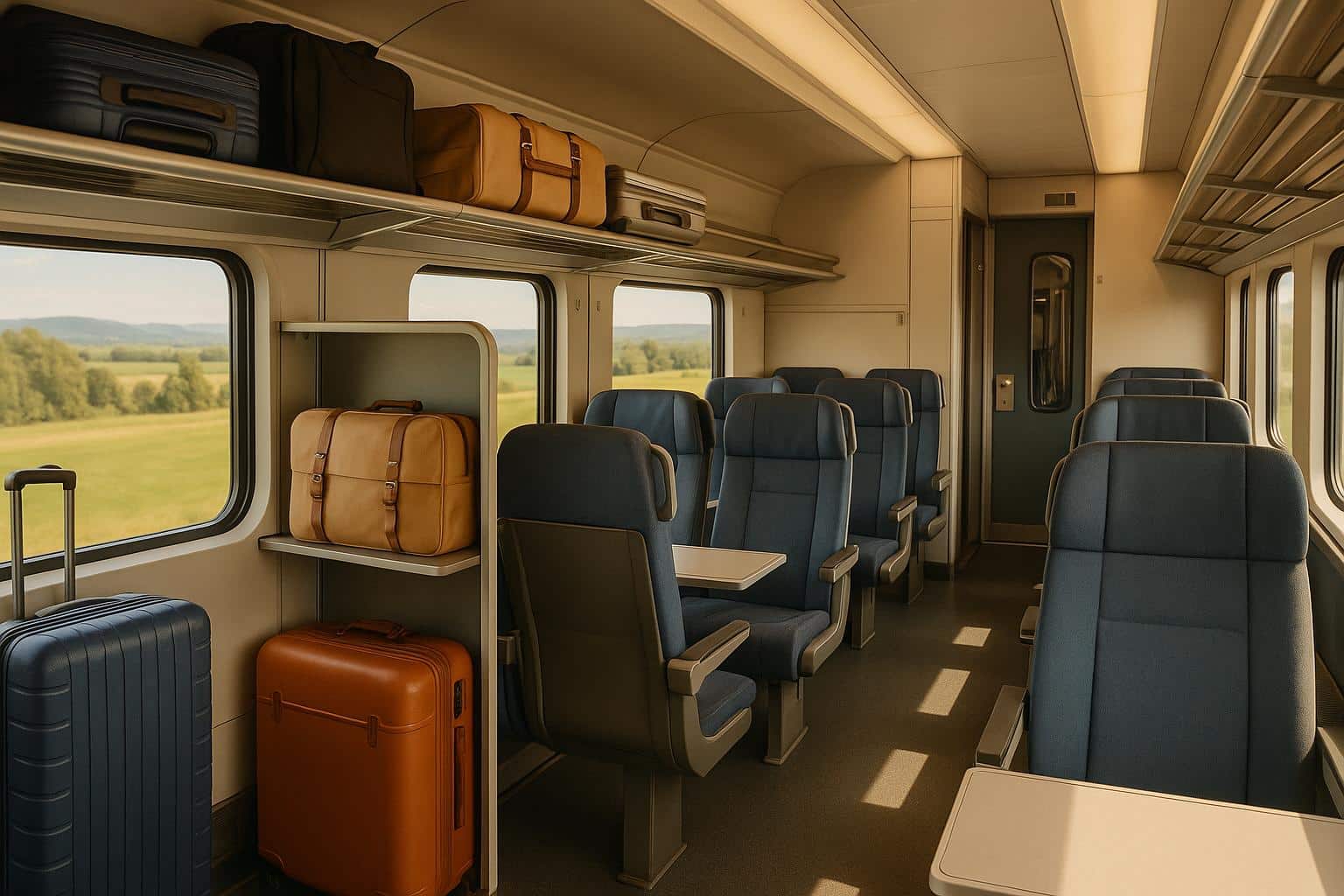
Traveling by train in Europe is convenient, and most trains offer three main luggage storage options within the carriage: overhead racks, under-seat compartments, and dedicated luggage areas (also known as luggage stacks, which are designated storage spaces within the carriage for larger bags). These options make it easier to organize your belongings and travel comfortably.

Overhead Racks

European trains commonly feature overhead racks located above your head, above the seats. These racks are similar to airplane compartments but are often more spacious. They’re perfect for small to medium-sized bags, like backpacks, holdalls, or compact suitcases.

Overhead racks are a practical choice for keeping your luggage within arm’s reach during the journey. However, lifting heavier bags onto these racks can be tricky, especially in narrow train aisles. To make things easier, consider using lightweight or wheeled luggage.

Under-Seat Storage

The space under your seat is another handy option for storing smaller bags and personal items. This spot is ideal for daypacks, purses, or laptop bags – anything you might need quick access to during the trip.

Having your essentials close by is especially useful for shorter journeys or day trips. Items like snacks, entertainment, and important documents can be easily stored here. While this space is great for smaller belongings, larger bags will need to be stored elsewhere, such as in the dedicated luggage areas.

Large Luggage Areas

For bulkier items, most European trains provide dedicated luggage areas. These are typically located at the ends of train cars or near seating sections. They’re designed for a large bag, larger suitcase, large backpacks, and other oversized items that won’t fit in the overhead racks.

Some trains feature racks with shelves, while others offer open floor spaces for stacking bags. Occasionally, you might also find unused bicycle compartments doubling as luggage storage. If you’re traveling with a large bag or larger suitcase, it’s a good idea to arrive early to secure a spot and avoid blocking aisles or exits. It is advisable to keep valuables like laptops and passports in a daypack with you, rather than in larger bags left on luggage racks. Fellow passengers are usually happy to help rearrange bags if needed.

Keep in mind that during busy commuter hours, space for large luggage can be very limited. If possible, avoid bringing oversized items on crowded trains.

Tips for Luggage Safety

European trains allow for a relaxed approach to luggage, but a little preparation goes a long way. When traveling by rail, it’s important to watch your luggage, keeping it where you can see it, especially during stops or when other passengers are moving about. Always label your bags with your first and last name, especially on services like Eurostar or French trains. While some travelers worry about luggage theft, it’s rare on trains—similar to airline baggage theft—so you shouldn’t worry excessively. Luggage thieves typically target bags that contain valuables, so it’s wise to keep such items with you in a daypack or smaller bag that stays with you, rather than in the larger luggage areas. Using a lock on your luggage can inconvenience other passengers and is generally discouraged. This ensures your important items are safe and easily accessible throughout your journey.

Luggage Rules by Train Type

When traveling by train in Europe, understanding the luggage and baggage rules for different train types can make your journey much smoother. High-speed trains like Eurostar and TGV have stricter guidelines, while regional services tend to be more lenient. It’s also important to plan ahead for your baggage at your destination, ensuring you can easily manage your belongings when you arrive.

Eurostar and TGV Rules

Eurostar offers generous luggage allowances. If you’re traveling Standard or Plus, you can bring 2 checked bags and 1 hand luggage item for free, with no extra charge. Premier passengers get an extra checked bag, totaling 3 checked pieces plus 1 hand luggage item. For checked bags, the size limit is 33.5 inches (85 cm) on London routes and 29.5 inches (75 cm) elsewhere. There’s no weight limit, but you must handle your own bags. Planning to bring oversized items like bikes or extra luggage? You can reserve space in advance for fees such as $35 for extra luggage, $60 for oversized items, or $45 for bikes, provided you book at least 48 hours ahead.

When traveling on Eurostar, be aware of prohibited items: dangerous goods, including firearms and explosives, are strictly not allowed. Other prohibited items include knives, gas canisters, e-scooters, and certain quantities of alcohol. As a security measure, always keep your bags in sight, use small padlocks, and label your luggage with your name and address.

TGV INOUI trains have specific size requirements and practical, relatively relaxed luggage policies for travelers departing from or traveling within France. You can choose between two options:

  • Option 1: Two suitcases (maximum size 27.5 x 35.5 x 19.5 inches or 70 x 90 x 50 cm each) and one hand luggage item (maximum size 15.5 x 12 x 6 inches or 40 x 30 x 15 cm).

  • Option 2: One suitcase (same dimensions as above) plus one special item (up to 35.5 x 51 x 19.5 inches or 90 x 130 x 50 cm) and one hand luggage item.

For TGV INOUI trains heading to Italy, stricter rules apply: each checked item must not exceed 51 x 35.5 inches (130 x 90 cm). Like Eurostar, TGV INOUI trains have no weight limits, but passengers must handle their own luggage. Exceeding the rules can result in fines: $50 for one extra item, $100 for two, and $150 for three or more. Dangerous goods, including firearms and explosives, are also prohibited on TGV trains. For security, always keep your bags in sight and label them with your name and address.

Train Service

Luggage Allowance

Size Restrictions

Fines for Excess

Eurostar Standard/Plus

2 checked pieces + 1 hand luggage

Routes to/from London: max 33.5 in (85 cm); Other routes: max 29.5 in (75 cm)

N/A

Eurostar Premier

3 checked pieces + 1 hand luggage

Routes to/from London: max 33.5 in (85 cm); Other routes: max 29.5 in (75 cm)

N/A

TGV INOUI

2 suitcases OR 1 suitcase + 1 special item, plus 1 hand luggage

Suitcase: 27.5 x 35.5 x 19.5 in (70 x 90 x 50 cm); Special item: 35.5 x 51 x 19.5 in (90 x 130 x 50 cm)

$50–$150

Regional and Budget Train Storage

In the past, luggage rules on regional trains were often stricter, but today, regional trains in Europe are much more relaxed when it comes to luggage. Most local services don’t impose formal restrictions as long as you can carry your bags yourself. On local and regional trains, you usually just leave bags on the floor, and larger items can usually be stored on the floor in designated areas without strict size enforcement. For example, French TER trains don’t have maximum dimensions, but passengers are responsible for ensuring their luggage fits in the available space.

Budget train services, on the other hand, often follow stricter policies similar to airlines. Budget operators often only include one small piece of hand luggage in the base fare, and a supplement is required for additional bags. For instance, on Avlo trains in Spain, your ticket includes 1 hand luggage item (about 14 x 10.5 x 10 inches or 36 x 27 x 25 cm) and 1 cabin bag (around 21.5 x 14 x 10 inches or 55 x 35 x 25 cm). If you need to bring an extra, larger bag (up to 33.5 x 23.5 x 14 inches or 85 x 60 x 35 cm), it costs $10 when booking or $15 if added up to 30 minutes before departure.

Regional trains generally provide plenty of floor space and flexible storage options, making them a convenient choice for travelers with bulkier luggage.

Special Items: Storing Bikes, Skis, and Unusual Luggage

Traveling with special items like bikes, skis, or oversized equipment on European trains is entirely possible, but it does require a bit of planning. Many trains, including TGV InOui trains, are equipped with designated spaces for storing bikes and other large items. However, luggage policies can vary widely between operators, so it’s essential to check the specific requirements for your route before you board.

For example, Eurostar allows passengers to bring bikes on certain eligible trains, but you’ll often need to reserve a spot in advance and may be required to pack your bike in a specific type of bag or case. Skis and other sports equipment are generally permitted, but there are usually maximum dimensions and weight limits to consider. TGV InOui trains also provide space for sports equipment, but advance booking is recommended, especially during busy travel periods.

On regional trains, storage space can be more limited, so traveling light is key. If you’re carrying bulky items, try to minimize the number of bags and stick to the essentials. Some larger stations and high-speed services may offer luggage carts or porters to help you move heavy equipment, but this service isn’t always available, especially on smaller regional routes.

To avoid any surprises, always check the train operator’s luggage policies and make any necessary reservations ahead of time. This ensures you’ll have the space you need for your equipment and won’t run into issues with weight limits or maximum dimensions. By planning in advance, you can enjoy a smooth journey across Europe with all your gear in tow.

How to Pack Smart and Keep Luggage Safe

Traveling by train in Europe means navigating busy stations and making sure your luggage fits the train’s storage options. It’s important to travel light, packing efficiently to avoid bulky bags that are hard to manage, especially when dealing with stairs and narrow platforms at stations. Choosing luggage with sturdy wheels is practical for moving across cobbled streets and crowded environments. Packing well not only makes your journey easier but also ensures you can manage your bags comfortably while keeping everything secure.

Smart Packing Tips

For train travel, the number one rule is: pack light and pack smart. Your luggage or baggage should fit in overhead racks, under your seat, or in designated storage areas, and you need to be able to lift it without struggling. Test the weight of your bag at home – if you can’t lift it easily, it’s too heavy.

Instead of one large suitcase, opt for two smaller bags. This can help you stay within size and weight restrictions. For instance, Eurostar allows bags up to 33.5 inches (85 cm) in any dimension, while Spanish Renfe trains permit a total weight of 25 kg (55 lbs) across three items.

To maximize space and stay organized, try packing cubes or compression straps. Pack clothes for about a week and plan to do laundry on longer trips to avoid overpacking.

Keep your essentials – passport, tickets, phone, wallet, chargers, snacks, and medications – in a separate daypack that stays with you at all times. This way, you’ll have everything you need within reach, even if your main luggage is stored elsewhere.

If you plan to use station luggage lockers, keep a few coins in local currency handy, as some lockers only accept cash.

Keeping Your Luggage Secure

Packing smart is only half the battle; keeping your luggage secure is just as important. Train theft can happen, especially when bags are left unattended or out of sight. Always place your bags on the overhead rack or in the luggage compartment within the car directly across from where you sit so you can keep an eye on them. Avoid storing luggage behind you or in areas several rows away.

Use cables or locks to secure your bags to fixed train parts in the car. Even when storing bags vertically, locking them can prevent others from piling items on top or grabbing them in a hurry. In countries like Germany, the risk of theft is relatively low, but it’s still wise to take precautions.

Be especially alert during station stops – this is when thieves are most active. Opportunists may grab a bag and exit the train before you even notice. Get up at each stop to make sure your bag stays where you put it.

Avoid storing valuables in external pockets, and never leave electronics, cash, or important documents in easily accessible compartments. If you’re traveling overnight, secure your luggage before sleeping and consider travel insurance to cover theft or loss. You can also take food and drinks on board, making it easy to have a picnic during your journey. Staying vigilant in Europe’s bustling train environment ensures a safer and smoother journey.

Station Facilities: Lockers, Left Luggage, and Assistance

European train stations are designed to make your journey as convenient as possible, especially when it comes to managing your luggage. Most major stations across Europe offer secure luggage lockers or left luggage offices where you can safely store your bags for a few hours or even a whole day. This is a great option if you have a long layover or want to explore the city without carrying heavy bags.

In addition to lockers, many stations provide luggage carts and porter services to help passengers carry their bags to and from the train. These services can be especially helpful if you’re traveling with multiple suitcases, sports equipment, or other bulky items like skis. Some stations even have dedicated storage areas for bikes and oversized luggage, making it easier to store everything securely while you enjoy your time in the city.

When using these facilities, always follow the posted instructions and keep your belongings organized to prevent luggage theft. It’s a good idea to keep valuables with you and use locks on your bags for extra peace of mind. If you’re unsure about the services available at your station, check the station’s website or contact their customer service in advance. This way, you can plan your journey with confidence and make the most of your time in Europe, knowing your luggage is safe and secure while you discover new destinations.

Key Points for European Train Luggage Storage

Traveling by train in Europe is refreshingly simple when it comes to luggage and baggage. Unlike air travel, most European trains offer relaxed policies with no strict size or weight restrictions, making the journey far less stressful.

Trains typically provide several storage options, including overhead racks, under-seat compartments, and dedicated luggage areas. Familiarizing yourself with these can help you organize your belongings and keep your baggage secure during your trip.

However, some services have specific rules. For instance, Eurostar permits two large items per passenger, each with a maximum size of 33.5 inches (85 cm), plus one piece of hand luggage. French TGV InOui trains also enforce luggage limits, and both services require you to label your bags with at least your first and last name. If you’re traveling on budget operators, be aware they may have stricter restrictions and additional fees, so it’s a good idea to check their policies in advance.

For layovers or city visits, station storage can be a lifesaver. Most major train stations in Europe offer luggage storage facilities, allowing travelers to explore the city without their bags. Most major train stations also offer left luggage lockers or staffed luggage offices for storing bags temporarily. Always keep your valuables with you and position larger bags where you can see them, especially during station stops, to ensure safety.

FAQs

How can I keep my luggage safe while traveling on European trains?

To ensure your luggage or baggage stays safe while traveling on European trains, here are some practical tips:

  • Use locks and secure your bags: Attach a small cable lock or a luggage strap to your baggage, and if possible, fasten them to a fixed object like the luggage rack or your seat. This is particularly helpful if you plan to sleep during the journey.

  • Stay close to your baggage: Whenever you can, choose a seat near your bags so you can keep an eye on your baggage throughout the trip.

  • Don’t leave baggage unattended: Even brief moments of inattention can be risky. Be cautious when using shared luggage racks or storage areas.

  • Consider station lockers or staffed luggage offices during long stops: At most major stations, you can leave your bags in luggage lockers or a staffed luggage office for extra security and peace of mind.

By following these steps, you can help protect your belongings and enjoy a more relaxed travel experience.

How can I check luggage restrictions for European trains before traveling?

Luggage Restrictions on European Trains

Before you pack for your train journey through Europe, it’s a good idea to check the luggage or baggage policies of the train operator you’ll be using. The rules can vary depending on the service. For instance, Eurostar allows passengers to bring two pieces of luggage, each up to 33.5 inches in size. Other operators might have different guidelines – some stricter, some more lenient.

Most trains are designed to handle a variety of bag sizes. Smaller items can typically be stored in overhead racks or tucked under your seat. For larger suitcases, you’ll usually find designated storage areas within the train. Checking these baggage details in advance will help you avoid any last-minute surprises and ensure a smooth trip. For accurate information, visit the official website of your train operator or consult a reliable travel guide.

What are some tips for packing efficiently to make the most of luggage storage on European trains?

To get the most out of luggage storage on European trains, it’s smart to pack light. Stick to a single carry-on bag or piece of baggage that weighs less than 20 pounds. This size easily fits in overhead racks or under your seat, making it simpler to navigate busy train stations and hop on and off trains.

A backpack is an excellent choice because it’s versatile and easy to carry. To make the most of your space, try using packing cubes or organizers – they’ll help keep your belongings neat and compact. Be sure to store essential travel documents in a secure pocket that’s easy to access when needed. Also, take a little time to look into luggage storage options at train stations ahead of your trip. That way, you can explore each city freely without being burdened by heavy bags.