
Interrail in Romania
Interrail is valid on CFR Călători in Romania. The Romania One Country Pass starts at €105 for 3 days; daytime reservations cost about €1 to €5.
- Country
- Romania
- Coverage
- Covered
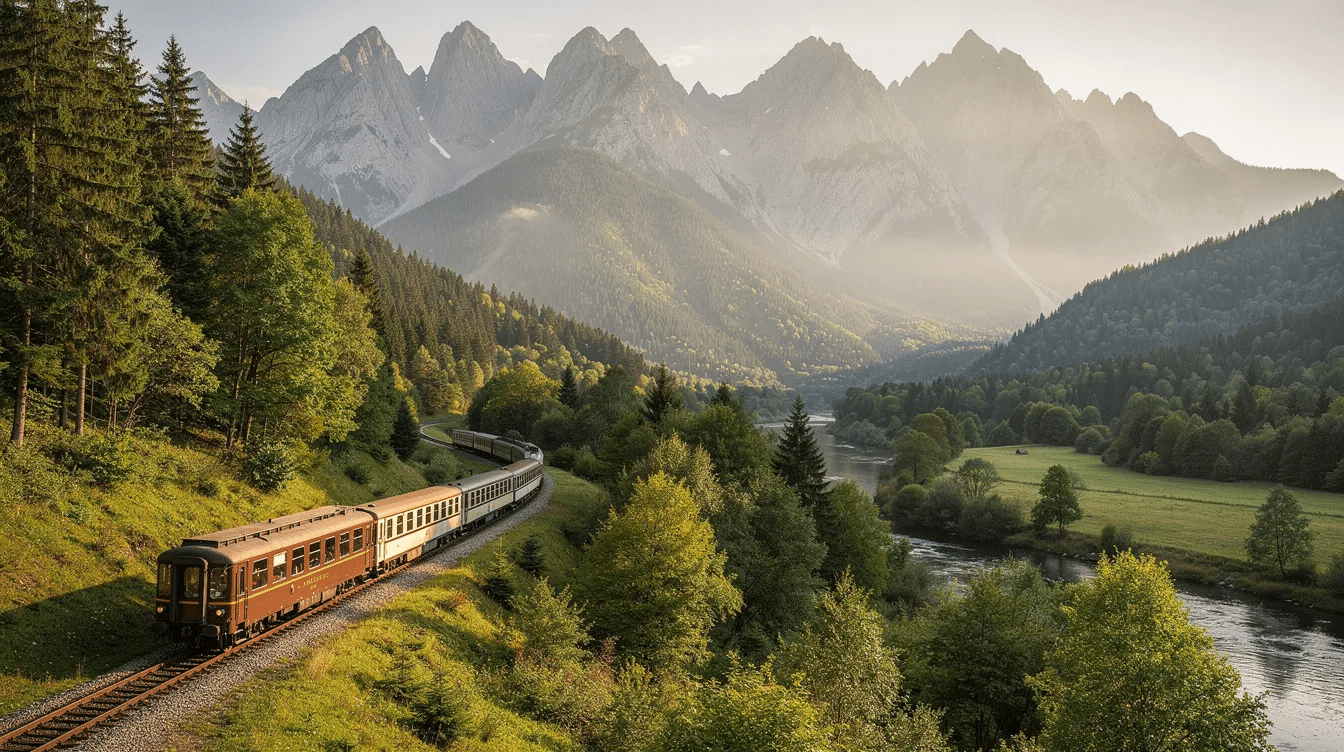
Romania offers some of the most dramatic rail scenery in Europe: think forested valleys, medieval towns, and routes threading through the Carpathian mountains.
Trains are the most popular and rewarding way of getting around Romania. The extensive and affordable CFR network means you can travel almost anywhere by train. The Romanian rail network is the 4th largest and most dense in Europe. Trains in Romania service every town and city, and even in villages, you’re often no further than 10km from a railway station. You can find times for Romanian trains on the website of CFR.
But here’s the thing: Romanian railways are also remarkably cheap. So does it actually make sense to buy an Interrail pass for Romania, or should you simply buy regular tickets?
Romania’s international dialling code is +40, useful for making calls from abroad.
This guide breaks down exactly how Interrail works in Romania, what extra fees to expect, and when a pass genuinely saves money versus when it’s a waste of euros.
What to know before you travel in Romania
Romania is a captivating country in Southeastern Europe, celebrated for its dramatic landscapes, medieval towns, and vibrant traditions. Before you board your first train or plan your scenic routes through the Carpathian mountains, it’s helpful to know a few basics. The official language is Romanian, but English is widely spoken in larger cities and tourist hotspots, making it easy for visitors to get around. The local currency is the Romanian leu (RON), and you’ll find ATMs and currency exchange offices in all major towns and railway stations.
Romania is part of the European Union, so citizens of many countries can enter visa-free for short stays. Always check the latest entry requirements on an official website before you travel. The climate is temperate, with warm summers perfect for exploring the countryside and chilly winters that transform the mountains into a snowy wonderland.
Traveling by train is one of the best ways to experience Romania’s scenic routes, whether you’re connecting cities like Bucharest, Brașov, and Cluj-Napoca or venturing into smaller towns and villages. The Romanian railways (CFR) network is extensive and affordable, making it easy to visit different corners of the country. Don’t forget to sample traditional Romanian food along the way, dishes like sarmale (stuffed cabbage rolls), mamaliga (cornmeal porridge), and ciorba (sour soup) are local favorites.
For up-to-date travel information, use the official CFR website or the Rail Planner app to check train times and routes. With its welcoming people, rich history, and unforgettable scenery, Romania is a rewarding destination for any traveler exploring Europe by train.
Quick verdict on Interrail value in Romania
Let’s start with the honest answer: for short trips confined to a few destinations, buying normal CFR tickets is usually cheaper than an Interrail pass. Domestic fares on Romanian railways are among the lowest in the EU. A return trip from Bucharest to Brașov costs roughly 60 to 80 RON (around €12 to €16) if you book in advance through cfrcalatori.ro. Meanwhile, the Interrail Romania Pass (also known as the Romania One Country Pass) offers unlimited travel on Romanian railways, with discounts for youth, seniors, and families, and prices starting from €105. Interrail Passes are available in both 1st and 2nd class options. The benefits of the Interrail Pass in Romania only apply during the validity of the Pass. The Romania One Country Pass starts at €105 for 3 travel days, meaning you’d need to travel extensively to break even.
That said, Interrail becomes better value in specific situations:
- Long-distance itineraries covering multiple cities over 5 to 7 days (e.g., Bucharest-Cluj-Napoca-Iași-Timișoara)
- Last-minute summer travel when cheap advance fares are sold out and walk-up prices rise
- Multi-country routes where Romania is part of a broader European trip (e.g., Budapest-Brașov-Bucharest-Sofia using a Global Pass)
Ease of use is mixed. You can board most slow Regional trains freely with a valid travel day, no reservations needed. However, InterCity and InterRegio services require compulsory reservations, and overnight trains like the Ister (Budapest to Bucharest) demand sleeper supplements on top of your pass.
Here’s a quick cost comparison to set expectations: A single Global Pass travel day costs roughly €70 (based on a 4-day pass at €283). If you use that day entirely within Romania, say, Bucharest to Brașov to Sighișoara to Cluj, your regular ticket cost would be approximately €45 to €50. The pass day is actually more expensive. Global Pass economics only work when Romania is combined with pricier segments in Austria, Germany, or France.
How Interrail works in Romania
Interrail is valid on CFR Călători, Romania’s state railway operator, which runs the vast majority of long-distance services across the country. This includes Regional (R), InterRegio (IR), and InterCity (IC) trains connecting all major cities from Bucharest to Brașov, Cluj-Napoca, Timișoara, Iași, and Constanța.
Some private regional operators exist (Softrans, Astra Trans Carpatic, Regio Călători), but Interrail validity varies. Always verify acceptance in the Rail Planner app or on the official Interrail website before boarding private services.
Romania One Country Pass
This pass covers unlimited train travel within Romania on your chosen travel days:
- Validity options: 3, 4, 5, 6, or 8 days within a 1-month period
- 2026 adult prices (2nd class): €105 for 3 days, €129 for 4 days, €152 for 5 days, €175 for 6 days, €216 for 8 days
- Youth discount (12 to 27): From €79 for 3 days
- Senior discount (60+): From €136 for 3 days
- Children (4 to 11): Travel free with a paying adult
The pass only covers domestic Romanian journeys, you cannot use it for cross-border segments into Hungary, Bulgaria, or beyond.
Interrail Global Pass
The Global Pass covers 33 European countries including Romania, making it the right choice if your trip extends beyond Romanian borders:
- Valid on cross-border trains to and from Hungary, Bulgaria, Serbia, Austria, and beyond
- Common pass options: 4 days in 1 month (€283), 5 days in 1 month (€319), 7 days in 1 month (€381)
- Children under 12 travel free with an adult pass holder
Night trains like the Ister (Budapest-Brașov-Bucharest) and Dacia Express (Vienna-Sibiu-Brașov-Bucharest) are fully covered for the base fare. However, couchette and sleeper supplements are extra, more on that below.
Both pass types are now primarily digital, activated through the Rail Planner app. You choose your start date, add each train journey to your trip before boarding, and conductors scan your QR code. Paper passes may still be available in some markets, but digital is now standard.
Reservations on Romanian trains
One of the biggest advantages of traveling by train in Romania is the low cost of reservations compared to Western Europe. However, the rules vary by train type, so here’s what to expect.
Train reservations in Romania can be made locally at the train station.
For overnight and international services, such as the Budapest Bucharest route, booking for trains from Budapest to Romania (including Budapest-Bucharest) typically opens 60 days ahead. Reservations are compulsory for daytime trains from Budapest to Romania. You can also book train tickets for Budapest-Bucharest routes through the MÁV-START website.
When booking sleeper train tickets for the Budapest Bucharest route, it is recommended to check availability as soon as bookings open and consider alternative dates if your preferred option is sold out.
Regional (R) trains
Most Regional trains operated by CFR do not require reservations. You simply board with a valid Interrail travel day activated and find any available seat. These trains are slower and use older rolling stock, but they offer maximum flexibility, perfect for spontaneous travel or connecting smaller towns and villages.
InterRegio (IR) and InterCity (IC) trains
Reservations are usually compulsory on IR and IC services. The good news: domestic reservation fees are remarkably low:
- Typical cost: 4 to 15 RON (approximately €1 to €3) per journey
- IC supplements: Some fast IC services charge a small additional supplement for speed and comfort, but totals rarely exceed €3 to €5
By Western European standards, where TGV or Railjet reservations can cost €10 to €30,Romania’s fees are negligible.
Overnight and international services
This is where costs add up. Interrail covers the base fare, but you must pay for accommodation:
- Ister (Budapest-Brașov-Bucharest): Seat reservation around €3. Couchette supplements approximately €10 to €15 for 6-berth, €20 to €30 for 4-berth. Sleeper compartments €30 to €40 for 2-berth.
- Dacia Express (Vienna-Sibiu-Brașov-Bucharest): Similar structure, mandatory reservation plus sleeper/couchette fees in the €10 to €35 range depending on comfort level.
- Domestic night trains (Bucharest-Timișoara, Bucharest-Iași, Bucharest-Cluj): Reservations and supplements required for sleepers, typically €10 to €25 per berth.
Where to make reservations
You have three main options:
- Interrail self-service reservation tool: Book online before your trip, but note the €2 booking fee per passenger per train on top of the reservation price
- CFR ticket offices: Visit counters at major stations (Gara de Nord in Bucharest, Brașov, Cluj, Timișoara). Often cheaper than online, accepts cash or card, and staff can issue day-of reservations
- CFR website (cfrcalatori.ro): Online reservations possible for some trains, though the system is primarily designed for integrated ticket+reservation purchases
Budget guidance: Plan for roughly €1 to €5 per daytime IR/IC segment and €10 to €35 per night train berth on top of your pass cost.
Seasonal pressure: During July-August, Orthodox Easter, Christmas, and the 15 August holiday, popular IC/IR services and sleepers can sell out days in advance. Book early or risk standing.
Interrail vs point-to-point tickets in Romania
Domestic CFR tickets are among the cheapest in Europe. Here’s what you’re looking at for typical one-way IR/IC fares (2nd class, 2025 estimates):
- Bucharest-Brașov (~166 km): €10 to €15
- Bucharest-Cluj-Napoca (~495 km): €24 to €36
- Bucharest-Iași (~400 km): €18 to €28
- Bucharest-Constanța (~225 km): €12 to €20
- Bucharest-Timișoara (~530 km): €26 to €40
Advance “Smart” fares on cfrcalatori.ro can reduce these by 20 to 40%, though they’re quota-limited and tied to specific trains. Once sold out, you pay the higher walk-up price.
Example 1: 3-day Transylvania loop
Route: Bucharest → Sinaia → Brașov → Sighișoara → Cluj-Napoca → Bucharest
Point-to-point costs:
- Day 1: Bucharest-Sinaia-Brașov (IR): approximately €10 to €18. Brașov is known for its proximity to Castle Bran, often referred to as Dracula’s castle, making it a popular stop for those interested in Dracula-related tourism.
- Day 2: Brașov-Sighișoara-Cluj (R/IR): approximately €15 to €26
- Day 3: Cluj-Bucharest (IR): approximately €24 to €36
Total: Roughly €49 to €80 at walk-up prices; potentially €35 to €60 with Smart fares and some Regional train use.
Romania One Country Pass (3 days): €105 + approximately €6 to €10 in reservations = €111 to €115 total.
Verdict: Point-to-point wins for most travelers, especially those willing to use some slower trains or book specific services in advance. The pass only approaches break-even if you’re buying expensive last-minute tickets in high season.
Example 2: 5 to 7 day multi-city circuit
Route: Timișoara → Sibiu → Brașov → Bucharest → Constanța (summer)
Point-to-point costs (walk-up IR/IC):
- Timișoara-Sibiu: €15 to €22
- Sibiu-Brașov: €10 to €15
- Brașov-Bucharest: €10 to €15
- Bucharest-Constanța: €12 to €20
- Constanța-Bucharest (return): €12 to €20
Total: Approximately €59 to €92 one-way chain; €71 to €112 including return.
Romania One Country Pass (4 days): €129 + approximately €8 in reservations = €137 total.
Verdict: Still more expensive than point-to-point, even compressed into 4 travel days. The pass only makes sense if you’re traveling last-minute in peak season when cheap fares are gone.
When point-to-point clearly wins
- Short stays visiting only 1 to 2 destinations from a single base like Bucharest or Cluj
- Travelers who can commit to specific trains and book Smart fares in advance
- Those mainly using slow Regional trains (which can cost under €10 to €15 for an entire day of travel)
When Interrail offers better value
- Complex, spur-of-the-moment routing over several days where you don’t want to calculate every ticket
- Last-minute or high-season travel when cheap quotas are sold out
- Multi-country itineraries combining Romania with Hungary, Bulgaria, Serbia, or Austria
One important nuance: regular CFR tickets include the seat reservation in the fare. Interrail users must buy reservations separately. When comparing costs, remember to add reservation fees to your pass total.
Sample routes for the Romania One Country Pass
If you do choose a Romania One Country Pass, it’s helpful to consult a rail map of Romania to plan your routes and visualize train connections across the country. Some travelers may also prefer to join an organized rail tour, which can include train travel, hotels, and transfers for a more comprehensive and convenient experience.
Here are three itineraries that make good use of the pass.
Classic Transylvania loop (3 travel days)
Route: Bucharest → Sinaia → Brașov → Sighișoara → Sibiu → Bucharest
This is the quintessential Romanian rail trip, threading through the Carpathian mountains past Dracula’s castle country, medieval citadels, and fortified Saxon churches.
- Day 1: Bucharest to Sinaia (1.5 to 2 hours), visit Peleș Castle, continue to Brașov (1 to 1.5 hours). Stay in Brașov.
- Day 2: Brașov to Sighișoara (2 to 3 hours), explore the citadel, continue to Sibiu (2 to 3 hours). Stay in Sibiu.
- Day 3: Sibiu to Bucharest (5 to 6 hours via the scenic Cozia route or back through Brașov).
Train types: Mix of IR and Regional services. Choose IR/IC for the longer hops; Regional works fine for short segments.
Pass efficiency: A 3-day pass covers all major movements. If you want extra non-travel days to explore Brașov or Sibiu, the flexi format lets you pause between travel days.
Across Romania west to east (4 to 5 travel days)
Route: Timișoara → Deva → Cluj-Napoca → Iași → Suceava
This ambitious route crosses Romania from the Hungarian border to the Bucovina monasteries in the northeast, a serious undertaking by train.
- Day 1: Timișoara to Deva (2 to 3 hours), with optional bus connection to Hunedoara for Corvin Castle.
- Day 2: Deva to Cluj-Napoca (3 to 5 hours). Explore the city.
- Day 3: Cluj to Iași (9 to 12 hours via the cross-Carpathian route. Bring food and a book).
- Day 4: Iași to Suceava (2 to 3 hours), base for visiting Bucovina’s painted monasteries.
Pass efficiency: A 4- or 5-day pass makes these long distances easier to budget. The Cluj-Iași segment alone could cost €25 to €35 one-way; combining multiple such journeys quickly adds up.
Mountains to the Black Sea (3 travel days)
Route: Brașov → Sibiu → Bucharest → Constanța
Perfect for late May through September when the Black Sea coast comes alive.
- Day 1: Brașov to Sibiu (2.5 to 3.5 hours IR).
- Day 2: Sibiu to Bucharest (5 to 6 hours IR/IC).
- Day 3: Bucharest to Constanța (2 to 2.5 hours IC, fast electrified line).
Train types: The Bucharest-Constanța corridor has high-frequency IC/IR services in summer with compulsory reservations. Pass + small supplement makes hopping between departures easy.
Important note: The pass covers CFR trains only. Metro, trams, and buses in Bucharest, Cluj, or Iași require separate tickets. Budget for local transport and accommodation separately.
International connections on a Global Pass to and from Romania
Comprehensive European rail maps show routes stretching from Portugal in the west all the way to Istanbul in the east and south to Athens or Sicily, with Romania positioned at a key crossroads of Central and Southeastern Europe. Romania sits at a crossroads of Central and Southeastern Europe, making it a natural stop on broader Interrail itineraries. There are international trains to nearby countries from Romania, including routes heading south and east. To understand the full range of international connections available from Romania, it is helpful to consult a European rail map. Here’s how the main cross-border routes work.
Key international connections
Hungary:
- Budapest-Oradea-Cluj-Napoca: Daytime IC services connect Budapest to Romanian cities. Reservations recommended; €3 via Interrail’s system.
- Ister (Budapest-Brașov-Bucharest): The flagship overnight route bringing travelers from Central Europe into Transylvania. Pass covers the base fare; sleeper supplements €10 to €35.
Austria:
- Dacia Express (Vienna-Sibiu-Brașov-Bucharest): Overnight connection linking Vienna to central Romania. Same deal: pass covers transport, you pay for the bed.
Bulgaria:
- Bucharest-Ruse-Sofia/Varna/Burgas: Cross the Danube bridge at Giurgiu-Ruse. Schedules vary; some routes require changes. Check current timetables on Interrail’s website.
Serbia:
- Routes via Timișoara-Vršac-Belgrade have been intermittent in recent years. Verify 2025/2026 timetables before planning.
Moldova and Ukraine:
- Historically, trains ran from Iași to Chișinău and from Suceava toward Ukraine. Interrail is not valid in Moldova or Ukraine (outside the 33-country scheme), and services may be disrupted. Check safety advisories and updated information before attempting these crossings.
Global Pass itinerary examples
Example 1: Central Europe to the Balkans Kraków → Budapest (night train or via Vienna) → Brașov → Bucharest → Sofia → Thessaloniki
A 7-day Global Pass in 1 month covers this comfortably. The expensive segments (Austria, Greece) justify the pass; Romania adds scenic routes at minimal extra cost.
Example 2: Vienna loop through Transylvania Vienna → Sibiu (Dacia overnight) → Brașov → Sighișoara → Budapest → Prague
A 5-day pass handles this circuit. One travel day gets you from Vienna to Sibiu; another from Sighișoara to Budapest; the Romanian segments between are low-cost bonuses.
Reservation fee comparison
This is where Romania shines. International reservations to Romania cost around €3 via Interrail. Compare that to:
- TGV (France): €10 to €20+
- Eurostar: €30+
- Railjet (Austria): €3 to €10
- AVE (Spain): €10 to €25
Romania’s low fees make it one of the easiest countries to traverse on a Global Pass. The pass itself is rarely justified by domestic Romanian travel alone, it’s the combination with expensive Western European segments that makes economic sense.
Timetables and using your pass in Romania
Checking timetables
Use multiple sources and don’t forget to verify close to your travel date:
- cfrcalatori.ro: Official CFR site with domestic timetables and fares
- mersultrenurilor.infofer.ro: Authoritative national timetable portal
- Rail Planner app: Shows Interrail-valid routes, but can lag behind seasonal timetable changes, cross-check with CFR sources
Using your pass correctly
Digital passes:
- Add each train journey to your trip in the Rail Planner app before boarding
- Activate the travel day when ready to travel
- Conductors scan your QR code, have your phone charged
Paper passes (if applicable):
- Write the date and route clearly in ink before boarding
- Mistakes or omissions can result in fines or being forced to use an extra travel day
Ticket inspection
- Conductors check passes and may ask for ID, especially on international trains
- Border police on services like the Ister or Dacia also check passports
- Fines for undeclared travel days or missing reservations are substantial. Take completion seriously
Comfort tips
Many long-distance IR/IC trains have air-conditioning, but some older Regional stock does not. Summer temperatures in Romania can exceed 35°C. Bring water.
Bistro or trolley service exists on some IC/IR and night trains, but it’s inconsistent. The Ister and Dacia often lack full restaurant cars. Bring food for overnight journeys. To enhance your journey, consider enjoying a glass of red wine while relaxing on a high-speed or scenic train.
Station announcements are primarily in Romanian, but the Latin alphabet makes station names easy to read. Staff on major routes typically speak basic English. Notable things that make train travel in Romania comfortable or unique include scenic views of the Carpathian Mountains, friendly staff, and the occasional use of historic carriages on certain routes.
Documentation
Keep a printed or offline copy of all reservations. Phone screens can be hard to scan in older carriages, especially in tunnels or at night. A paper backup saves hassle.
Accommodation and insurance for Interrail travellers
When planning your Interrail adventure through Romania, finding the right accommodation and securing travel insurance are key to a smooth and enjoyable trip. Romania offers a wide range of places to stay, from budget hostels in lively cities to charming guesthouses in mountain villages and comfortable hotels in every major town. Booking your accommodation in advance: especially during summer or around major holidays, ensures you get the best rates and your preferred location. Popular booking platforms like Booking.com and Hostelworld make it easy to search, compare, and reserve a place that fits your plans and budget.
Travel insurance is another essential for Interrail travelers. Even the best-planned trip can face unexpected changes, from train delays to lost luggage or sudden illness. Choose a policy that covers medical emergencies, trip cancellations, and baggage issues. If your itinerary includes outdoor activities like hiking in the Carpathian Mountains, make sure your insurance covers those adventures too. Well-known providers such as Allianz, AXA, and Europ Assistance offer policies tailored for European rail travel. Just remember to read the terms carefully and select coverage that matches your needs.
With your Interrail pass, you’ll have the flexibility to connect cities, explore scenic routes, and discover hidden corners of Romania. Pairing your pass with reliable accommodation and comprehensive insurance means you can simply enjoy the journey, whether you’re boarding a night train to Budapest, planning a day trip to a medieval town, or relaxing after a long day of travel. Don’t forget to keep copies of your bookings and insurance details handy, and check each provider’s website for the latest offers and information. With a little preparation, your Interrail Romania trip will be comfortable, safe, and full of unforgettable experiences.
Extra pass benefits in Romania
Interrail passes come with a few extra benefits beyond train travel, though they shouldn’t be your primary reason for buying a pass.
Romanian Railway Museum
Interrail pass holders receive free or reduced entry to the Romanian Railway Museum in Bucharest:
- Location: Str. Griviței nr. 193 B, Sector 1, near Gara de Nord (Bucharest North station)
- Exhibits: Historic steam, diesel, and electric locomotives; signalling equipment; railway models and documents tracing CFR’s history
- Visit length: 1 to 2 hours recommended
The museum makes a pleasant stop before or after arriving in Bucharest, especially if you have time to kill between connections.
Other partner discounts
Interrail occasionally offers discounts on hostels, attractions, ferries, and buses in Romania. The list changes year by year, so check the official Interrail benefits page before your trip. These perks modestly improve pass value but won’t tip the scales on their own.
Final verdict on an Interrail pass for Romania
Let’s be direct: for purely domestic travel confined to a few routes, buying normal CFR tickets is usually cheaper than an Interrail pass. Romania’s per-kilometre fares are among the lowest in Europe, and a 3-day Romania One Country Pass at €105 rarely saves money over point-to-point purchases unless you’re covering serious distance every single travel day.
Where Interrail does make sense is for long, complex itineraries spanning multiple cities over a week or more, or when Romania forms part of a larger European adventure. If your trip includes Hungary, Austria, Bulgaria, or beyond, a Global Pass simplifies planning and makes costs predictable. The low reservation fees in Romania (€1 to €5 per train versus €10 to €30 in Western Europe) mean the country adds scenic mileage to your pass without punishing your budget.
My recommendations
Choose point-to-point tickets if:
- You’re visiting only 1 to 3 destinations with a fixed itinerary
- You can book specific trains in advance via cfrcalatori.ro
- Budget is your priority and you’re willing to use slower Regional trains
- You’re mainly traveling within Romania without crossing borders
Choose an Interrail pass if:
- Romania is one stop on a multi-country European trip
- You want flexibility to change plans day-by-day
- You’re traveling last-minute in high season when cheap fares are sold out
- You prefer simple budgeting over calculating every ticket
Before committing to a pass, sketch your intended routes, search for real fares on CFR’s website, and enter those numbers into a comparison. Add realistic reservation supplements (€1 to €5 daytime, €10 to €35 night trains) to the pass cost. The math will tell you what makes sense for your specific trip.
Either way, Romania remains one of Europe’s most rewarding countries for rail travel. The scenic routes through the Carpathian mountains, the connection between medieval Transylvanian towns, the overnight link from Budapest or Vienna to Bucharest, these experiences are available whether you travel with a pass or with regular tickets. The train is simply a comfortable way to see this corner of Europe, year round.
Don’t forget to download offline timetables before you go, carry a backup of your reservations, and leave room in your plans for the unexpected. Romania rewards travelers who stay flexible, with or without an Interrail pass.
Find the right rail pass for Romania
Train companies in Romania that accept Interrail Global Pass
Frequently asked questions
How extensive is Romania's rail network?
Romania's rail network is the 4th largest and most dense in Europe. Trains service every town and city, even in villages, you are often no further than 10km from a railway station.
Are Romanian trains expensive?
No. Romanian railways are remarkably cheap, which means an Interrail pass does not always represent savings over buying regular tickets.
What are the Global Pass price options for travelling in Romania?
Global Pass options include 4 days in 1 month (€283), 5 days in 1 month (€319), and 7 days in 1 month (€381). Children under 12 travel free with an adult pass holder.
Which night trains are covered by an Interrail pass in Romania?
Night trains like the Ister (Budapest, Brașov, Bucharest) and the Dacia Express (Vienna, Sibiu, Brașov, Bucharest) are fully covered for the base fare, though couchette and sleeper supplements are extra.
How are Interrail passes activated and used in Romania?
Both pass types are now primarily digital, activated through the Rail Planner app. You choose your start date, add each train journey before boarding, and conductors scan your QR code.