
Interrail in Lithuania
Interrail covers LTG Link trains, but low Lithuanian fares often beat a pass; Vilnius to Riga takes about 4 hours and requires a reservation costing around €5.
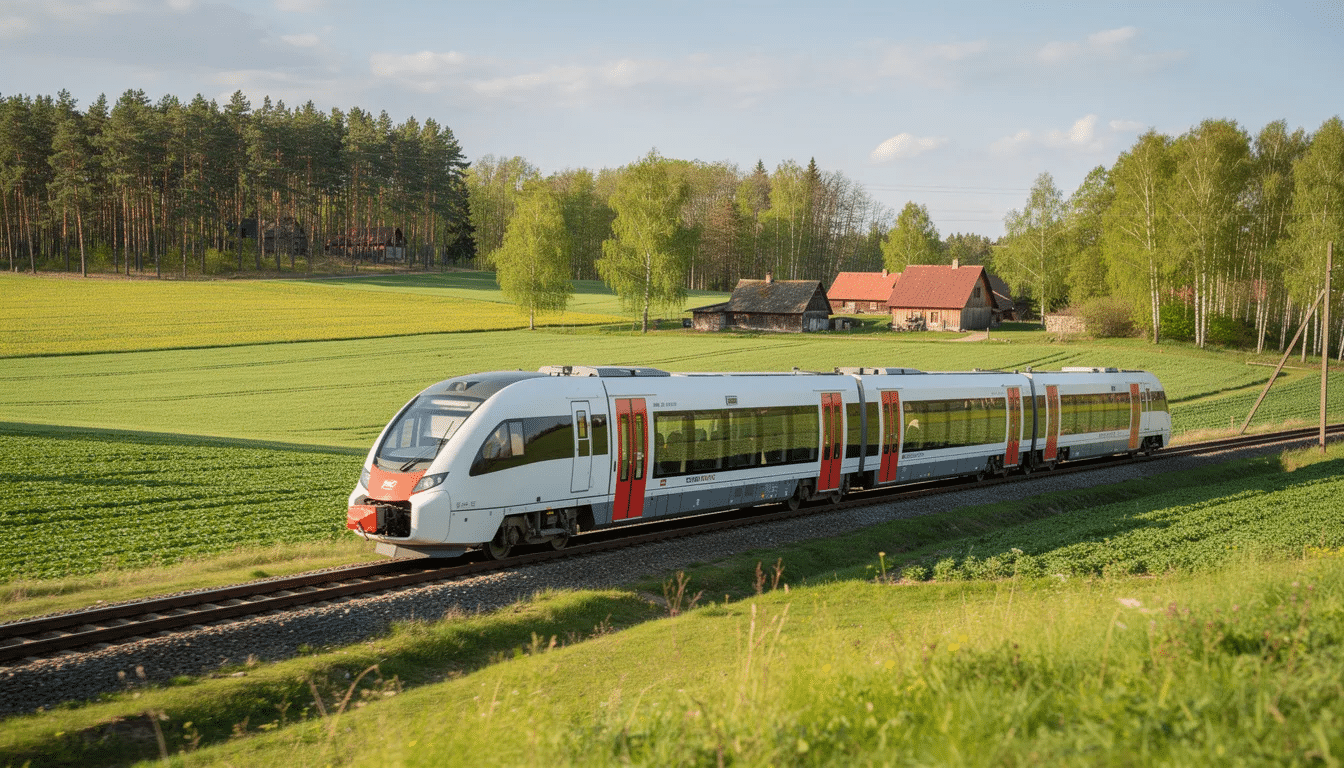
- Country
- Lithuania
- Coverage
- Covered
Planning an Interrail trip through the Baltics? Lithuania offers charming old town streets, medieval castles, and easy access to the Baltic Sea coastline.
But before you commit to a pass, you need to know whether Interrail actually saves you money here, or whether buying regular tickets makes more sense.
This guide breaks down everything about using Interrail in Lithuania: costs, reservation requirements, cross-border routes to Poland, Latvia, and Estonia, and an honest verdict on when a pass is worth it.
The quick verdict on Interrail in Lithuania
Let’s cut to the chase: Interrail is usually poor value for Lithuania-only trips, but it can make sense as part of a wider Baltic or Poland-Lithuania-Latvia itinerary.
The reason is simple. Regular Lithuanian train tickets are remarkably cheap by European standards. A one-way ticket from Vilnius to Klaipėda costs around €20 to €25 per person in 2nd class. Vilnius to Kaunas runs about €7 to €9. When you break down a Global Pass day-by-day, you’re often paying €25 to €45 per travel day, which is hard to justify if you’re only riding one or two domestic trains.
The Interrail Lithuania One Country Pass exists, starting from around €58 for the shortest option. However, its per-day cost typically exceeds what you’d spend on point-to-point fares unless you’re riding multiple long routes on each travel day.
Here’s what ease-of-use looks like:
- Domestic trains are straightforward and mostly reservation-free
- Interrail users need to understand how to get a zero-fare ticket or reservation via LTG Link for certain services
- The rail planner app doesn’t always show Lithuanian trains correctly, so manual additions may be necessary
The bottom line: Recommend the Interrail Global Pass mainly for multi-country trips including Poland, Latvia, and Estonia, not for Lithuania alone. Budget-conscious travelers should always compare pass costs versus local fares before buying.
How Interrail works in Lithuania
Lithuanian Railways’ passenger brand, LTG Link, accepts both the Interrail Global Pass and the Interrail Lithuania One Country Pass on its trains. This means pass holders can travel on the country’s rail network without purchasing standard tickets, though some routes require additional reservations.
Coverage includes:
- Domestic routes: Vilnius-Kaunas, Vilnius-Klaipėda, Vilnius-Šiauliai, Kaunas-Klaipėda
- International routes to Riga (Latvia) via Šiauliai
- Poland connections via Mockava border crossing
A valid Interrail pass gives you a 100% fare discount on the rail component in Lithuania. However, travelers must still obtain a ticket or seat reservation from LTG Link for certain trains: especially international services and higher-demand routes during summer weekends.
To activate your journey:
- Use the Rail Planner app to mark your travel day
- Visit ltglink.lt or the LTG Link app to secure Interrail tickets/reservations where needed
- Select the “Interrail/Eurail” option during booking
- Pay any applicable reservation fee
Important: Interrail does not cover city buses, trolleybuses, or private coaches in Lithuania. It applies only to participating railway operators, primarily LTG Link.
When the Lithuania One Country Pass makes sense
The One Country Pass targets travelers focusing exclusively on Lithuania, with options like 3, 4, 6, or 8 travel days within 1 month. This structure lets you spread out your rail journeys across several weeks of exploring.
Typical pricing falls in the mid-double-digit euros for 3 days, rising to low-triple digits for 8 days in 2nd class. Exact prices change seasonally, so always check the official Interrail site for current rates.
Here’s where the math gets tricky. Consider these approximate 2025 domestic fares:
| Route | One-way fare (2nd class) | Journey time |
|---|---|---|
| Vilnius-Klaipėda | €20 to €25 | 4h 25min |
| Vilnius-Kaunas | €7 to €9 | 1h 20min |
| Vilnius-Šiauliai | €15 to €20 | 2h 30min |
| Vilnius-Trakai | €2 to €4 | 30-35min |
Two or three long trips still often cost less than one pass travel day. A return journey Vilnius-Klaipėda plus Vilnius-Kaunas might total €35 to €40,potentially competitive with a pass day, but only if you’re doing both on the same day.
Scenarios where the One Country Pass could work:
- Intensive rail days covering Vilnius-Kaunas-Klaipėda-Šiauliai in 1 to 2 days
- Travelers who value flexibility to change plans without worrying about ticket changes
- Those combining rail travel with frequent spontaneous day trips
Honest assessment: For most visitors doing 3 to 5 simple legs (Vilnius-Trakai, Vilnius-Kaunas, Vilnius-Klaipėda return), point-to-point tickets from LTG Link will almost always be cheaper than a Lithuania One Country Pass.
Using the Global Pass in Lithuania
Lithuania works best as part of a larger Baltic or Central/Eastern European route. Think itineraries like Berlin-Warsaw-Vilnius-Riga-Tallinn or Kraków-Vilnius-Riga connecting three countries on one trip.
The Interrail Global Pass covers Lithuania just like any of the 33 participating countries. However, individual trains may not always show correctly in the Rail Planner app, so travelers should be ready to add journeys manually to their digital pass.
Domestic Lithuanian legs (Vilnius-Klaipėda, Vilnius-Kaunas) count as normal Interrail travel days. Before using a pass day, always check whether the cash price of a domestic ticket is lower than your pass’s per-day cost. For a short €7 hop to Kaunas, paying separately often makes more sense than burning a travel day.
When the Global Pass delivers value:
- Combining Lithuania with higher-fare countries like Germany or Sweden
- Long cross-border rides: Vilnius-Warsaw/Kraków, Vilnius-Riga-Tallinn
- Multi-country trips where Lithuania becomes a low-cost “bonus” within wider travel
Planning tip: Use one Global Pass travel day to cover several segments. For example, ride Kaunas-Vilnius in the morning, then Vilnius-Riga in the afternoon, maximizing value from a single travel day.
Reservations on Lithuanian trains
In Lithuania, most regular intercity trains do not require seat reservations for Interrail holders. This is different from countries like France or Italy where mandatory reservations add significant costs. However, specific international routes and higher-demand services have compulsory reservations with small fees.
Domestic routes:
Routes like Vilnius-Klaipėda and busy holiday trains to the coast don’t legally require reservations, but they’re strongly recommended. During summer weekends, trains can sell out. Getting a free Interrail ticket through LTG Link ensures you have a confirmed seat.
International route to Riga:
Since late 2023, there’s a daily direct train from Vilnius to Riga taking approximately 4 hours. Interrail is accepted, but a seat reservation (around €5) is required. Book through ltglink.lt or via their online contact channels.
Poland connection:
The Vilnius-Kaunas-Mockava route connects to Polish IC/TLK trains heading to Białystok, Warsaw, and Kraków. Key details:
- Reservation is compulsory on the Lithuanian segment Mockava-Vilnius (~€5)
- Most Polish train services also require reservations (small PLN fee, typically ~PLN 15)
- Passengers change trains at Mockava with coordinated schedules
The booking process:
- Visit LTG Link and select “Interrail/Eurail” option
- Enter your pass details
- Pay the reservation fee
- Receive e-ticket confirmation
These fees are non refundable, and tickets are valid only together with a valid pass.
A word of caution: Some conductors may insist on advance booking for Interrail even where the Rail Planner shows “no reservation needed.” Avoid arguments by securing a free or low-cost seat ticket whenever possible before boarding.
How to book with LTG Link
Unlike in some Western European countries, Lithuanian reservations are handled mostly through the national operator LTG Link rather than the Interrail site itself. This means you’ll need to navigate their system directly.
Booking channels:
- LTG Link website (ltglink.lt)
- LTG Link mobile app (Android/iOS)
- Ticket offices at major stations like Vilnius and Kaunas
- Onboard purchase from staff (only if seats remain, sometimes with surcharge)
Step-by-step for reserving Vilnius-Riga or Vilnius-Mockava:
- Go to ltglink.lt and select your route and date
- Choose your preferred departure time and class (1st class or 2nd class)
- Look for the “Interrail/Eurail pass holder” option instead of standard fare
- Enter your pass number and traveler details
- Pay the ~€5 reservation fee
- Download your e-ticket PDF or QR code
Critical reminder: Always carry both your active Interrail Pass (digital in Rail Planner or paper) and your LTG Link ticket/reservation. Conductors will typically scan both on higher-demand or international services.
Some routes like Vilnius-Klaipėda and the Pajūrio ekspresas offer drinks and snacks included in 1st class, though they’re available for purchase with a 2nd class ticket.
Interrail versus point-to-point tickets in Lithuania
Because Lithuania’s railway fares are relatively low by European standards, buying regular tickets is often cheaper than using an Interrail travel day: especially for short hops.
Sample 2025 price comparison:
| Journey | Point-to-point fare | Typical Global Pass per-day cost |
|---|---|---|
| Vilnius-Kaunas | €7 to €9 | €25 to €45 |
| Vilnius-Trakai | €2 to €4 | €25 to €45 |
| Vilnius-Klaipėda | €20 to €25 | €25 to €45 |
| Vilnius-Šiauliai | €15 to €20 | €25 to €45 |
Value thresholds:
Interrail becomes financially interesting only when total walk-up fares for that day exceed your pass’s per-day cost by a comfortable margin. Using one day to ride Vilnius-Klaipėda-Šiauliai-Vilnius could work out, but Vilnius-Kaunas alone definitely doesn’t.
Flexibility as a non-monetary advantage:
Interrail allows late route changes or extra stops without rebooking. Some discounted local tickets are restricted to specific trains. If your travel style involves spontaneous changes, this flexibility has value beyond pure cost.
Practical scenarios:
- Simple week in Lithuania (Vilnius base plus day trips to Trakai, Kaunas, one return to Klaipėda): Use normal tickets. You’ll likely spend €50 to €70 total versus burning 4 to 5 pass days.
- 2 to 3 week Europe trip including expensive countries plus Vilnius-Riga-Tallinn: A Global Pass can be good value, and Lithuania becomes a low-cost bonus within your pass coverage.
Domestic routes and cities worth the trip
Although this is a rail-focused guide, knowing what key cities are connected helps you plan whether those train rides justify using pass days.
Vilnius-Kaunas: Frequent trains run under 1.5 hours, making this ideal for day trips between Vilnius with its baroque old town. Vilnius’ Old Town is a UNESCO-listed area filled with stunning baroque, gothic, and neoclassical architecture. Highlights include Gediminas Tower, Gediminas’ Tower offers a magnificent panoramic view of Vilnius and houses a small museum, and Three Crosses hill. Don’t miss the Republic of Uzupis, a bohemian self-governed area known for its vibrant artistic community. Kaunas features its interwar modernist architecture, Kaunas is known for its unique interwar architecture and was the 2022 European Capital of Culture, and Kaunas Castle. The city also features several museums that showcase its history, art, and unique local culture. Interrail is valid, and reservations are usually not required. The city centre of both is easily walkable from the station.
Vilnius-Klaipėda: This long east-west route takes about 4 hours to reach the Baltic Sea coast. It’s popular in summer for access to Klaipėda’s charming old town and ferry connections to the Curonian Spit with its famous sand dunes. Book seats in advance during high season even if technically optional.
Vilnius-Trakai: A short commuter-style route taking just 30 to 35 minutes, perfect for visiting Trakai Island Castle and surrounding lakes. Trakai Island Castle is a well-preserved museum located on an island in Lake Galvė. However, at €2 to €4 one-way, using an Interrail day only for this leg is poor value. Pay cash.
Vilnius-Šiauliai and Kaunas-Šiauliai: These routes serve travelers heading towards the Hill of Crosses region, a powerful cultural and history landmark. From Šiauliai, some travelers continue towards Latvia via bus where train connections are sparse.
Don’t miss Vilnius Cathedral in the capital and exploring the cobblestone streets around it. Nature lovers will appreciate how quickly you can escape the city for forests and lakes.
A typical 7-day itinerary in Lithuania includes visits to Vilnius, Trakai, Kaunas, Klaipėda, Nida, and Šiauliai.
Nature and scenery reachable by train
Lithuania’s rail network opens up a world of natural wonders for travelers with an Interrail pass. Whether you’re a seasoned nature lover or just looking to add some scenic stops to your interrail adventure, the country’s landscapes are both accessible and unforgettable.
One of the top destinations is the Curonian Spit, a UNESCO World Heritage site famous for its sweeping sand dunes, pine forests, and charming fishing villages. You can reach Klaipėda by train from Vilnius or Kaunas, then hop on a short ferry ride to the spit itself. Once there, explore the unique blend of wild beaches and tranquil towns, perfect for a day of hiking, cycling, or simply soaking up the Baltic Sea breeze.
Back in Vilnius, the Hill of Three Crosses is a must-visit for panoramic views over the city centre and the winding River Neris. The hill is easily reached on foot from the old town after arriving by train, making it a convenient stop for those exploring Lithuania’s capital. The river itself offers scenic walking paths and green spaces right in the heart of the city.
For those eager to venture further, Lithuania’s national parks and lush forests are well-connected by regional trains. Destinations like Aukštaitija National Park or the lakes around Trakai are ideal for day trips, offering a peaceful escape from urban life. Whether you’re traveling from Kaunas, Vilnius, or another city, the train makes it easy to reach these natural highlights without the hassle of car rental.
With your Interrail pass, you can hop between city and countryside, discovering everything from historic hills to pristine sand dunes. It’s a flexible, eco-friendly way to experience the best of Lithuania’s outdoors, one train journey at a time.
Cross-border trips to Latvia, Estonia, and Poland
Lithuania is now better integrated into the Baltic rail network than ever. Daily direct links to Riga and through services toward Poland enable full rail journeys connecting Tallinn to Vilnius and beyond.
Vilnius-Riga:
The daily direct train takes approximately 4 hours. Interrail is valid with a mandatory seat reservation (~€5). Note that timetable data may not always appear correctly in the Rail Planner, so you may need to add the journey manually to your digital pass. From Riga, you can visit Latvia’s capital before continuing north to Estonia.
Onward travel: Riga to Tallinn via Valga:
Travelers can continue through Latvia and Estonia using connecting trains. No reservations are required with Interrail in Estonia and Latvia. Just show your pass on board. However, separate tickets are cheap if you’re trying to save travel days for more expensive routes.
Vilnius-Poland route:
Since December 2022, a daily connection links Vilnius and Kaunas with Warsaw and Kraków via Mockava-Białystok. You’ll change trains at Mockava (the border), where schedules are coordinated. Account for the 1-hour time difference between the countries.
Reservations are compulsory on both the Lithuanian segment and most Polish train services.
Fare comparison worth noting:
Separate tickets for Tallinn-Vilnius via Riga and Valga can run as low as ~€39 for 2nd class through-tickets (2025 promotional offers). Sometimes this is cheaper than using multiple Interrail travel days. Calculate whether saving pass days is worth paying local fares based on your overall trip.
Budget and where to stay in Lithuania
Traveling through Lithuania with an Interrail pass doesn’t have to break the bank: especially if you plan ahead and make smart choices about where to stay and how to get around. Accommodation in Lithuania ranges from cozy hostels to stylish hotels, many of which are located right in the city centre, close to must-see sights like Vilnius Cathedral and Gediminas Tower. For example, Downtown Forest Hostel & Camping in Vilnius offers a unique, budget-friendly atmosphere surrounded by greenery, while The Monk’s Bunk in Kaunas is a favorite among backpackers for its friendly vibe and central location.
When it comes to getting around, the Interrail Lithuania pass can help you save on train tickets, especially if you’re planning multiple journeys. For popular international routes, such as the Polish train connecting Warsaw and Vilnius, be sure to reserve seats in advance, as these can fill up quickly. Reservations for these trains are sometimes non refundable, so double-check your plans before booking.
To make the most of your trip, download the Rail Planner app. It’s an essential tool for accessing up-to-date timetable data, checking train times, and planning your journey across Lithuania and beyond. Opting for a 2nd class ticket is usually the most budget-friendly choice, offering comfort and value for most travelers.
Keep in mind that while some seat reservations are required (especially on international routes), many domestic trains don’t need them, though booking in advance can guarantee your spot during busy periods. Always check the latest information on reservations and ticket validity before you travel.
With a bit of advance planning, you can enjoy a memorable Interrail adventure in Lithuania, exploring its rich history, vibrant culture, and stunning landscapes, all while keeping your budget in check.
Common mistakes with Interrail in Lithuania
Reports from travelers mention confusion: apps showing “no reservation required” while some conductors insist on a ticket or booking for Interrail users. Here’s how to navigate this.
The safest approach:
Obtain at least a free zero-fare Interrail ticket or a low-cost seat reservation from LTG Link for any intercity train. This applies especially to:
- Longer routes like Vilnius-Klaipėda
- All international trains to Riga and Poland
- Summer weekend services to coastal destinations
When systems conflict:
Always check both the Interrail Rail Planner app and LTG Link’s own timetable and reservation system. If there’s a conflict, follow LTG Link’s rules, conductors operate according to national railway policy, not Interrail’s general guidelines.
Consequences of traveling unprepared:
Without the appropriate booking, you may be asked to pay a full fare on board or potentially told to leave the train. Neither scenario is pleasant when you’re exploring a new country.
Practical tips:
- Keep PDFs or screenshots of LTG Link’s Interrail terms on your phone
- Save booking confirmation emails
- Build in extra time to sort reservations at stations or online before departure
- The Vilnius railway station is the largest hub, staff there are most familiar with international passes
One more note: Interrail passes are not valid on buses or trams. Routes like the Pajūrio ekspresas include bus transfers from Klaipėda to Nida and Palanga on the Curonian Spit. Pass holders can use the train portion but need separate tickets for bus segments.
The final verdict on Interrail in Lithuania
After examining all the costs, routes, and reservation requirements, here’s the honest assessment:
Domestic Lithuanian fares are low, reservations are cheap but sometimes fiddly, and the country’s rail network is relatively compact. An Interrail pass offers more flexibility than financial savings within Lithuania itself.
The Interrail Lithuania One Country Pass is usually poor value for travelers only visiting Lithuania. Normal tickets from LTG Link are easier and cheaper for typical itineraries involving 3 to 6 train rides. Unless you’re planning an unusually intensive rail schedule, skip this pass.
The Interrail Global Pass can be worth it for travelers combining Lithuania with Poland, Latvia, Estonia, and other higher-cost countries. It shines when making long cross-border journeys like Kraków-Vilnius-Riga-Tallinn, where Lithuania becomes an inexpensive leg within a more expensive overall route.
Recommended strategy:
- Buy a Global Pass if doing a multi-country route through Europe
- Use it selectively in Lithuania when you can stack several medium/long journeys on a single travel day
- Pay cash for short domestic hops like Vilnius-Trakai or Vilnius-Kaunas
Lithuania, once part of an independent republic stretching to the Black Sea, now a modern European nation with its own Lithuanian currency history, is a genuinely rewarding rail destination. The journey from the city to the coast, the morning light over Kaunas, the ferry from Klaipėda to the Curonian Spit, these experiences don’t require an expensive pass to enjoy.
Choose an Interrail pass for its flexibility and wider European coverage, not for domestic savings alone. And if you’re doing a focused Lithuania trip, embrace the simplicity of LTG Link’s affordable tickets instead.
Find the right rail pass for Lithuania
Train companies in Lithuania that accept Interrail Global Pass
Frequently asked questions
Is Interrail good value for Lithuania-only trips?
Interrail is usually poor value for Lithuania-only trips, as regular Lithuanian train tickets are remarkably cheap by European standards.
When does an Interrail pass make sense for Lithuania?
It can make sense as part of a wider Baltic or Poland, Lithuania, Latvia itinerary, particularly for longer cross-border rides such as Vilnius, Warsaw or Vilnius, Riga, Tallinn.
How much do regular train tickets cost within Lithuania?
A one-way ticket from Vilnius to Klaipėda costs around €20 to 25 per person in 2nd class. Vilnius to Kaunas runs about €7 to 9.
Do Lithuanian trains always appear correctly in the Rail Planner app?
No. Individual trains may not always show correctly in the Rail Planner app, so travellers should be ready to add journeys manually to their digital pass.
How can you maximise value from a single Global Pass travel day in Lithuania?
You can maximise value by combining segments, for example, riding Kaunas to Vilnius in the morning, then Vilnius to Riga in the afternoon, covering both within a single travel day.