


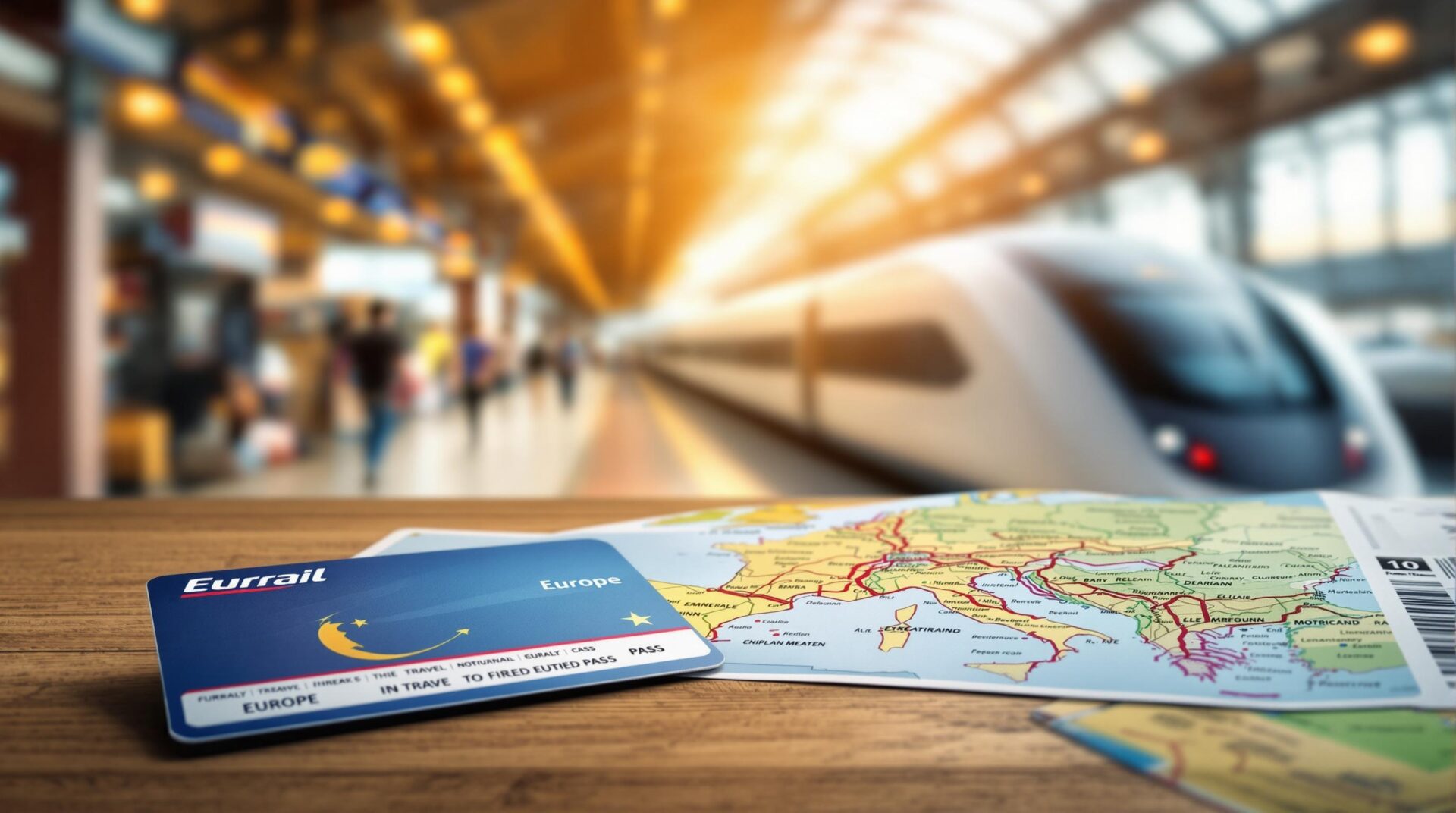
Quick Answer: When a Eurail Pass Is (and Isn’t) Worth It
Here’s the direct verdict before we dive into details: a Eurail Global Pass usually makes sense if you’re planning at least 5–7 medium or long-distance train journeys across multiple countries within 1–2 months, especially if you’re booking relatively late and want the freedom to change plans. On the flip side, point to point tickets are typically cheaper if you know your exact travel dates 2–3 months ahead and you’re comfortable with non-refundable, fixed tickets locked to specific departures.
The pass tends to deliver strong value in specific situations:
-
Multi-country trips during peak season (June–September) when last-minute fares skyrocket
-
Travel through expensive rail countries like Switzerland, Germany, the UK, and Scandinavia
-
Youth travelers under 28 who qualify for approximately 20–25% discounts
-
Families with children under 12 who travel free with an adult passholder
The pass often loses value in these scenarios:
-
Itineraries heavy on France, Italy, or Spain where mandatory seat reservations add €15–€30 per leg
-
Trips focused on Eastern Europe where regional buses and cheap tickets dominate
-
Short trips with only 2–3 train journeys total
Rule of thumb: If you’re crossing 4–6 countries in 2–4 weeks and booking less than a month ahead, you should seriously consider a Eurail Pass.

How a Eurail Pass Works (Without the Jargon)
What is a Eurail Pass?
A Eurail Pass is a single rail pass for non-European residents that works on most trains across 33 countries instead of buying separate tickets for each journey. The Eurail Pass is designed for non-European residents, while European residents can use the Interrail Pass. If you’re a European resident, you’d use the nearly identical Interrail Pass instead.
Global Pass vs One Country Pass
There are two main types of Eurail Passes: the Global Pass, which allows unlimited train travel in 33 countries, and the One Country Pass, which is valid for travel in one selected country only. A Eurail Global Pass covers train travel across all participating countries—perfect for routes like “Paris–Switzerland–Germany–Czech Republic in one trip.” A One Country Pass (sometimes called a country pass) restricts you to a single nation like Italy or Germany, typically at a lower price if you’re focusing your whole trip there.
Flex vs Continuous
Eurail Passes can be purchased as either a Continuous Pass or a Flex Pass. A Continuous Pass allows unlimited travel for a set number of consecutive days, while a Flex Pass provides a set number of travel days within a longer period. A flex pass gives you a set number of travel days to use within a longer window—for example, “10 travel days to use anytime within 2 months.” You pick which days count. A continuous pass gives unlimited travel for consecutive days—“15 days of unlimited train travel starting from your activation date.” Choose flex if you’re staying 3–5 nights per city; choose continuous if you’re moving almost daily.
What’s a Travel Day?
A travel day covers any number of train rides from 00:00 to 23:59 on that calendar day (local time). You could take one train or five trains—it still counts as one day against your pass.
How to Use the Pass
Since 2023, most people use mobile passes through the Rail Planner app. You activate your pass, select which day you’re traveling, add your specific trains to that day, and show the QR code (plus your passport or ID) when conductors come through.
1st vs 2nd Class
Eurail offers both. Second class is perfectly fine for most travelers; first class adds about 25–30% to the price but offers more space and quieter cars. We’ll cover when it’s actually worth upgrading later.
Step-by-Step: How to Calculate If a Eurail Pass Is Worth It for Your Trip
Step 1: List Your Likely Train Routes with Approximate Travel Dates
Write out something like:
-
Paris–Amsterdam: June 15
-
Amsterdam–Berlin: June 19
-
Berlin–Prague: June 23
-
Prague–Vienna: June 27
-
Vienna–Budapest: June 30
Step 2: Check Point-to-Point Prices at Two Time Horizons
Use national railway websites (SNCF for France, DB for Germany, ÖBB for Austria, Trenitalia for Italy) or aggregators like Trainline or Rail Europe. Look up prices both 2–3 months ahead AND 5–7 days before departure. You’ll see dramatic swings—sometimes a €19 advance fare becomes €95 or more last-minute.
Step 3: Add Up Total Cost Including Mandatory Reservations
For each leg, note whether seat reservations are required (Eurostar, TGV, Frecciarossa, AVE, Nightjet sleepers) and add those fees. High-speed trains in France and Italy typically run €10–€30 for reservations; Eurostar can hit €30–€40.
Step 4: Compare to Your Eurail Pass Cost
Find the exact pass price for your needs on the Eurail website. For example, a 10-day-in-2-months Global Pass in 2nd class might cost roughly €507 for youth or €676 for adults. Add your estimated reservation fees on top.
Worked Example with Rough Numbers
Let’s say you’re planning 8 long-distance journeys in June, bought about 1 week before travel:
-
Individual tickets: approximately €650
-
Reservation fees: €100
-
Total without pass: €750
Versus:
-
10-day Global Pass (adult): €676
-
Same reservation fees: €100
-
Total with pass: €776
In this scenario, the pass costs about €26 more. But here’s the thing: that €26 buys you the flexibility to change routes, catch earlier or later trains, and add spontaneous day trips without losing non-refundable tickets.
The Practical Threshold
If the pass saves at least 15–20% versus late-booked tickets, or costs less than about €10–€15 extra per long-distance journey while giving you real flexibility, it’s usually a good deal.
Types of Eurail Passes (and Which One Fits Your Itinerary)
Eurail Global Pass
Valid in 33 countries, the Global Pass is ideal for cross-border routes like “London–Paris–Geneva–Milan–Florence–Munich–Prague in 3 weeks.” This is the flagship eurail global pass most travelers consider. Common configurations include:
-
5, 7, 10, or 15 travel days within 1–2 months (flex)
-
Continuous 15 or 22 days
-
Extended options up to 3 months for longer adventures
One Country Pass
If your trip focuses on a single nation, a one country pass often makes more sense. Examples:
-
Italy Pass: 5 days in 1 month for Rome–Florence–Cinque Terre–Milan–Venice
-
Germany Pass: Perfect for a two-week beer and castles route through Bavaria, the Rhine Valley, and Berlin
These typically cost 30–50% less than a Global Pass for similar travel days.
Flex vs Continuous: Matching Your Style
-
Flexi pass: Best for slower trips where you’re staying 3–5 nights per city. A “10 days in 2 months” pass gives you flexibility without wasting travel days.
-
Continuous pass: Best for intensive backpacking where you’re moving almost daily. A “15-day continuous” pass works out cheaper per day if you’re actually traveling most of those days.
1st vs 2nd Class
Second class is fine for most travelers. Consider 1st class if:
-
You’re traveling during busy summer months (June–August) on popular routes
-
Your train days regularly exceed 5 hours
-
You’re working while traveling and want guaranteed power outlets and more space
Age-Based Pricing
Eurail uses three pricing brackets:
-
Youth (12–27): Approximately 20–25% cheaper than adult rates
-
Adult (28–59): Standard pricing
-
Senior (60+): Roughly 10% discount
A youth pass at €34 per travel day versus an adult pass at €45 per travel day makes a significant difference over a multi-week trip.
Which Pass Would I Pick?
-
For a 2-week trip hitting Paris–Amsterdam–Berlin–Prague–Vienna: A 5-day flexi Global Pass (you’re only actually on long-distance trains 5 times despite visiting 5 cities).
-
For a 1-month backpacking adventure across 8 countries: A 10-day flexi Global Pass gives breathing room for side trips without committing to train travel every single day.
Hidden Costs: Reservations, Supplements & Where the Pass Doesn’t Shine
The eurail pass cost you see advertised isn’t the complete picture. Understanding what’s included—and what costs extra—prevents unpleasant surprises.
-
The pass is not fully “all-inclusive”
-
Many high speed trains, international routes, and night trains require paid seat reservations on top of your pass. Your train pass gets you onboard, but securing a specific seat often costs extra.
Realistic reservation fee ranges:
-
Domestic regional and IC trains (Germany, Austria, Switzerland): Often €0–€10, sometimes optional
-
TGV in France: €10–€20 per leg
-
Eurostar (London–Paris/Brussels/Amsterdam): €30–€40+ per leg
-
Italian Frecciarossa/Frecciargento: €10–€15
-
Spanish AVE: €10–€30
-
Night trains with couchettes or sleeper cabins: €20–€60 depending on accommodation type
Expensive reservation countries to watch:
France, Italy, Spain, Portugal, and the Eurostar corridor between London and mainland Europe are where reservation fees pile up fastest. On a 2–3 week trip heavy on these countries, expect to add €100–€150+ in reservations to your pass cost.
Where passes shine brightest:
In Germany, Austria, Switzerland, the Netherlands, Belgium, Denmark, and much of Scandinavia, you can often board regional trains and even high-speed IC/ICE trains with no mandatory reservation. These countries maximize your pass value.
Eastern and Southeastern Europe caveat:
Countries like Poland, Czech Republic, Hungary, Bulgaria, Romania, and Serbia often have very cheap regular train tickets and strong intercity bus networks. Unless you’re taking multiple international or overnight trains through this region, a pass may not save money compared to buying individual train tickets or bus fares.
Other “gotchas” to know:
-
Some private mountain railways in Switzerland only give 25–50% discounts rather than free travel
-
City metros, trams, and buses are usually not included—budget separately for local transport
-
Scenic tourist trains like the Glacier Express or certain panoramic routes often require supplements
Essential homework: Before committing to any route, check it in the Rail Planner app. Each journey shows whether reservations are “required” or “optional.” This prevents the nasty surprise of arriving at a train station and learning you can’t board your preferred service.

Real-World Value: Example Itineraries Where Eurail Helps (and Hurts)
Example 1: Good Value — 3-Week Summer Backpacking
The trip: London–Paris–Lyon–Geneva–Interlaken–Milan–Florence–Rome–Munich–Prague in June–July
Why the pass works:
-
10–12 major train days across 8+ countries
-
Summer pricing means last-minute individual tickets run €80–€150+ per leg
-
Route changes likely (weather in the Alps, new friends suggesting detours)
-
Mix of expensive rail countries (Switzerland, Germany, UK) where walk-up fares hurt
The math: A 10-day Global Pass plus roughly €120 in reservations costs approximately €790–€850 for an adult. Buying these same routes 1–2 weeks ahead would easily run €900–€1,100. The eurail pass saves roughly €100–€250 while adding flexibility to catch the next train if you miss one or change plans entirely.
Example 2: Borderline — 10-Day Italy City Break
The trip: Rome–Florence–Cinque Terre–Venice–Milan in April, dates locked 90 days ahead
Why it’s close:
-
Only 4–5 train journeys total
-
Italy offers “Super Economy” fares starting around €19–€29 when booked early
-
Frecciarossa reservations required on most trains, adding €10–€15 per leg
The math: Point-to-point Super Economy tickets might total €110–€150. A One Country Italy Pass (5 days) runs approximately €190–€220 plus €50 in reservations. The pass costs about €90–€120 more.
When the pass still makes sense: If there’s any chance you’ll miss a train (delayed flights, oversleeping, wanting to stay longer in Florence), that €90 premium buys insurance. Fixed train tickets are usually non-refundable.
Example 3: Poor Value — 2-Week Spain in August
The trip: Madrid–Seville–Granada–Valencia–Barcelona in August
Why the pass loses:
-
Only 4–5 train legs total
-
AVE reservations run €15–€30 per leg even with a pass
-
Spain’s Renfe offers decent advance fares if booked 60+ days ahead
-
Low-cost flights within Spain sometimes cost €25–€50
The math: Early-bird AVE tickets: roughly €180–€250 total. A Global Pass (5 days) plus reservations: approximately €350–€420. The pass costs €100–€170 more while offering less convenience than direct flights on some legs.
Family Example: Christmas Markets in December
The trip: 2 adults + 2 children under 12 doing Frankfurt–Stuttgart–Munich–Salzburg–Zurich over 3 weeks
Why it works:
-
Children under 12 get free Child Passes when traveling with adult passholders
-
December has higher walk-up prices due to holiday demand
-
Mix of Germany and Switzerland—both expensive rail countries
The math: Without passes, 4 people on 6 train days could easily spend €800–€1,200. With 2 adult passes (roughly €700 combined) plus free kids, total comes to about €700 plus €60 in reservations. Savings of €400+ for the family.
Who Should Buy a Eurail Pass (and Who Should Skip It)
Rather than relying on averages, figure out which profile matches your travel style.
The pass usually makes sense for:
-
First-time Europe visitors traveling 2–4 weeks across at least 3–4 countries
-
Backpackers on flexible itineraries who don’t want to be locked into specific departure times
-
Last-minute planners traveling during June–September when advance fares are sold out
-
Youth travelers under 28 maximizing the 20–25% youth pass discount
-
Photographers, slow travelers, and anyone who changes plans when weather shifts or a local recommends an unexpected detour
-
Families with children under 12 on multi-country trips—the free Child Passes provide real savings
The pass probably isn’t worth it for:
-
Travelers visiting only one or two cities and flying between them
-
Digital nomads parking in one base for weeks with just 1–2 long train journeys
-
Ultra-budget travelers happy to take slower buses or buy non-refundable tickets 90+ days ahead
-
Anyone doing a quick 1-week trip with only 2–3 train legs
-
Itineraries focused entirely on eastern European countries where bus networks dominate
Think about your personality:
If you get anxious locking in specific trains months ahead or you love changing plans on the fly, the pass provides real peace of mind worth paying for. If you enjoy pre-planning every detail and get satisfaction from optimizing costs, point to point might fit better.
The shortcut: If you’re visiting 6 cities in 3 weeks across borders and hate spreadsheets, the convenience alone may justify the pass.
Pros & Cons of Traveling Europe with a Eurail Pass
Pros
-
Flexibility to change plans: Miss a train or want to leave a day early? No penalty. Walk up to the next train (on routes without mandatory reservations) and go.
-
One purchase instead of many: Rather than navigating 8–12 different national railway websites in different languages with different payment systems, you buy a eurail pass once and manage everything through one app.
-
Spontaneous day trips become easy: With your pass active, deciding to hop from Zurich to Lucerne for an afternoon or from Munich to Salzburg for lunch costs nothing extra.
-
Significant savings in certain situations: When booking late in expensive rail countries, the pass can undercut individual tickets by 20–40%.
-
Train travel beats flying in many ways: Arrive at central stations often walking distance from old towns, skip airport security queues, bring full-size luggage without fees, and enjoy scenic routes like Zurich–Chur–Tirano or Munich–Salzburg that become easy add-ons.
Cons
-
Upfront sticker shock: Spending €500–€900 before your trip even starts feels significant, even if the math works out.
-
Learning curve with the app: You need to understand how to activate travel days, add journeys before boarding, and show QR codes correctly. Forgetting to add a train in the Rail Planner app before boarding can technically result in fines.
-
Confusing reservation patchwork: Every country has different rules. France requires reservations on nearly everything; Germany rarely does. This takes research.
-
Risk of over-traveling: Some people push themselves to take as many trains as possible just to “justify” the pass, leading to exhaustion rather than enjoyment.
-
Seat quotas can sell out: In France, Italy, Spain, and on Eurostar, passholders compete for limited quota seats. During peak season, you might still need to plan ahead weeks in advance despite having a “flexible” pass.
Real Mishap Example
One traveler arrived at Paris Gare de Lyon for a TGV to Lyon, pass in hand, only to find all passholder seats sold out for the afternoon. They had to wait 4 hours for a train with availability—or pay full fare. The lesson: check reservations early on popular routes, even with a pass.
How to Make Your Eurail Pass Worth It (Practical Strategies)
Prioritize Expensive, Long Distance Trains
-
Use your travel days for routes that would cost €70+ in individual tickets—Paris to Barcelona, Zurich to Milan, Stockholm to Copenhagen.
-
Pay cash for short, cheap hops under €15–€20 that don’t justify burning a pass day.
Mix Reservation-Heavy Routes
-
Use a pass day with reservations for a Paris–Milan TGV, then the next day take slower, reservation-free regional trains through Tuscany.
-
This balances speed with spontaneity.
Consider Overnight Trains
-
Night trains like Vienna–Venice or Berlin–Zurich combine transport and accommodation.
-
You save a hotel night while covering ground.
-
Sleeper trains require extra reservation costs (€20–€60 for berths), but the overall economics often work—just book berths early during summer.
Book Reservations Early
-
For June–September travel and around holidays (Easter, August 15, Christmas), passholder quotas sell out fast.
-
Get those TGV, Eurostar, and Frecciarossa reservations locked in weeks ahead.
Download the Right Apps
-
The Rail Planner app is essential for managing your pass.
-
Also download local apps for real-time delays and alternatives:
-
DB Navigator for Germany
-
SBB Mobile for Switzerland
-
SNCF Connect for France
-
ÖBB for Austria
-
Take Advantage of Passholder Discounts
-
Your eurail pass covers more than trains.
-
Look for:
-
Ferry discounts (30–50% off routes like Italy–Greece)
-
Some city tourism cards offer passholder rates
-
Private scenic lines like certain Swiss mountain railways offer 25–50% off
-
-
These extras can add €50–€100 in value over a multi-week trip.
Calculate Your Break-Even Point
-
If your 7-day Global Pass works out to €70 per travel day, aim for itineraries where a normal day of train travel would cost more than €70 in walk-up tickets.
-
When that math works, the pass pays for itself.
Eurail Pass FAQs (Short, Concrete Answers)
How does a Eurail Pass actually work day to day?
You activate your pass in the Rail Planner app, select which day you’re traveling, add each train journey before boarding, and show the QR code plus your passport or ID when conductors check. The process takes about 30 seconds per train once you’re familiar with the app.
Can I buy a Eurail Pass once I’m already in Europe?
Yes. Passes are purchased online through the Eurail website and can be activated up to 11 months from purchase. However, buying before you leave means you won’t miss seasonal sales (10–20% discounts happen several times per year) and ensures your pass is ready when you land.
Is a Eurail Pass worth it in Switzerland, Italy, or Germany?
-
Switzerland: Usually yes—it’s Europe’s most expensive rail network, and passes include many scenic routes.
-
Germany: Often yes for intensive rail trips since most trains don’t require reservations.
-
Italy: Only if booking late or taking many fast trains in a short period; early advance fares can be very cheap.
Is 1st class Eurail worth it?
It depends on when and how you travel. During August on popular routes, 2nd class can get crowded and warm. First class offers more space, quieter cars, and often power outlets at every seat. For short hops under 2 hours, 2nd class is usually fine. For train journeys over 4–5 hours in summer, the upgrade adds real comfort.
Can I use Eurail on city metros, trams, or buses?
Usually no. The pass covers national and regional train operators, not local urban transit. Budget separately for metro tickets, tram passes, and city tourism cards.
Eurail vs flights vs buses: when do alternatives win?
Low-cost airlines beat Eurail on price and time for certain long-haul segments—Paris to Budapest, for example, is 14+ hours by train but 2 hours by air and sometimes €30–€50 on budget carriers. Intercity buses (FlixBus, BlaBlaBus) can undercut trains in eastern Europe significantly. Compare before assuming train is always best.
What’s the biggest mistake people make with Eurail?
Not checking reservation rules before travel and underestimating realistic train time. Some travelers plan 4 major cities in 4 days, spending more time at train stations than experiencing destinations. Others show up for a TGV without a reservation and get stranded. Research requirements for each train journey on your route.

Final Verdict: Is a Eurail Pass Worth It for You?
A Eurail Pass is usually worth it for multi-country trips lasting 2–4 weeks with 6+ long train days, especially in expensive rail countries like Switzerland, Germany, and Scandinavia—and particularly for youth travelers and families who unlock meaningful discounts.
Early-bird planners with just a handful of train journeys in one country will typically save more with individual advance tickets. There’s no shame in that approach if it matches how you like to travel.
Don’t guess based on averages. Run the simple cost comparison described earlier with your actual routes and travel dates. The calculation takes 15 minutes and could save you hundreds of euros—or confirm that the pass is your right choice.
Here’s the real question to ask yourself: Do you want maximum flexibility (the pass) or maximum savings with a fixed itinerary (point-to-point tickets)? Your answer depends on your personal tolerance for planning and change, not on a one-size-fits-all formula.
The best way to explore Europe by train is the way that matches how you actually travel. Now you have the framework to decide which approach that is.


