Eurail Global Pass Eurail Global Pass

Eurail Global Pass

This guide is for non-European travelers planning to explore Europe by train. It covers everything you need to know about the Eurail Global Pass—features, pricing, eligibility, and whether it’s right for your trip—so you can travel flexibly and save money. The Eurail Global Pass offers unlimited train travel across participating European train networks. This page is your complete guide to the Eurail Global Pass, including how it works, what it costs, and who can use it.
Planning a multi-country European adventure by train? The Eurail Global Pass is one of the most popular ways for travelers from outside Europe to explore the continent’s rail network without buying dozens of separate tickets. Only non-European residents can travel with a Eurail Pass.

This guide breaks down everything you need to know: what the pass covers, how pricing works, when you need reservations, and whether it’s actually worth the money for your trip. By the end, you’ll have a clear picture of how to decide if a Eurail pass fits your travel plans.

What Is the Eurail Global Pass? (Quick Answer)

The Eurail Global Pass is a flexible rail pass designed for non-European residents that provides access to train travel across 33 European countries within a set validity period. The Eurail Global Pass offers unlimited train travel across participating European train networks. Instead of purchasing individual train tickets for each journey, you pay one upfront price and then board most trains freely throughout your trip.

The pass is ideal for multi-country trips lasting anywhere from a few days to several months, with options ranging from 4 travel days within 1 month up to 3 consecutive months of unlimited daily travel.

Here’s the key distinction: the pass covers your fare on most national rail networks, but it does not automatically include seat reservations (which are mandatory on many high speed trains and overnight trains) or local transport like metros and trams.

Who it’s best for:

  • Travelers planning to visit at least 3–4 countries
  • Anyone taking multiple medium-to-long-distance train journeys
  • Those who value flexibility to change plans on the go
  • Backpackers, families, and seniors doing extended European tours

Now that you have a quick overview, let’s dive deeper into the features, eligibility, and how the Eurail Global Pass works.

Introduction to Eurail Passes

You’re looking at Europe, and here’s the move that’ll change everything: grab a Eurail Global Pass. Picture this – you hop trains across 33 countries without fumbling for tickets at every station. France, Italy, Germany – they’re all yours with one pass tucked in your pocket. Whether you want to blitz through capitals or drift through countryside that looks like postcards, you’ve got options that actually work.

Let’s talk practical stuff. First class if you want space to spread out, second class if you’re watching euros – both work. Student? Senior? Regular human being? There’s a pass designed for you. Here’s what really matters: you step off a train in Prague, decide Berlin sounds better than Budapest, and you just… go. No ticket booth stress, no “sorry, that train’s full” drama. You scan the departure boards, pick your track, and keep moving.

The money part’s straightforward – you’ll save compared to buying individual tickets, especially if you’re covering serious ground. But here’s the real win: flexibility. Your plans change because that’s what happens when you travel. Maybe you fall for a tiny German village and want an extra day, or Barcelona calls and you ditch your Rome plans. With 33 countries covered, you’ve got the freedom to follow your instincts and discover what actually grabs you – all while riding Europe’s clean, efficient rail network.

Detailed Features and Eligibility

The Eurail Global Pass is a prepaid rail pass that grants access to trains operated by participating national railways and some private partners across 33 countries in Europe. Rather than booking point-to-point tickets for each leg of your journey, you purchase a pass that covers a set number of travel days within a defined validity window.

Only non-European residents can purchase and use a Eurail Pass. If you live in Europe (including non-EU countries like Switzerland, Norway, or the UK), you must use the Interrail Global Pass instead, which offers similar coverage but different pricing and eligibility rules.

Key Features

  • Available in first class and second class
  • 1st class Passes are valid in both 1st and 2nd class coaches; 2nd class Passes are only valid in 2nd class coaches
  • Traveler categories: Adult (28–59), Youth (12–27), Child (4–11), Senior (60+)
  • Children aged 4 to 11 travel for free with a Child Pass
  • Up to two children travel free with each paying adult
  • Digital passes managed through the Rail Planner app, which aids users in planning their journeys offline and checking train times
  • Covers trains, plus discounts on some ferries and buses
  • Valid for up to 11 months from issue date before activation required

Your choice depends on how intensively you plan to use trains throughout your trip.

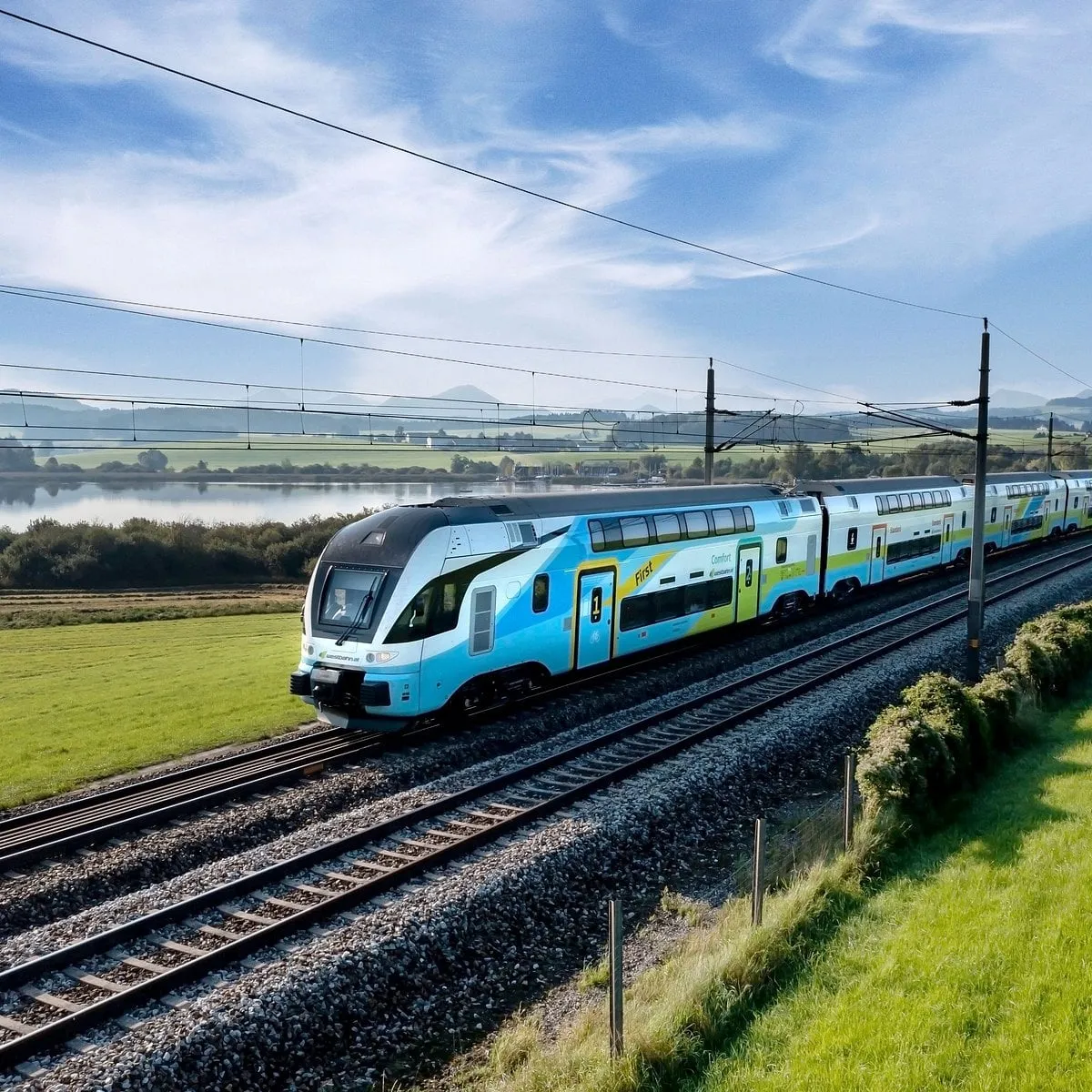
A high-speed passenger train is racing through the lush green countryside of Europe, with majestic mountains rising in the background. This scenic route showcases the beauty of train travel, perfect for exploring 33 European countries with a Eurail global pass.

Next, let’s see exactly where you can travel with your Eurail Global Pass.

Where Can You Travel with the Eurail Global Pass?

The Eurail Global Pass currently covers 33 countries, allowing you to combine destinations freely on a single itinerary. You could start in Portugal, travel through Spain and France, cross into Switzerland, continue to Italy, and finish in Croatia—all on one pass.

Covered Countries by Region

Region Countries
Western Europe France, Germany, Belgium, Netherlands, Luxembourg, Switzerland, Austria
Southern Europe Italy, Spain, Portugal, Greece
Nordic Countries Sweden, Norway, Finland, Denmark
British Isles Great Britain (England, Scotland, Wales), Ireland
Central & Eastern Europe Poland, Czech Republic, Hungary, Slovakia, Romania, Bulgaria
Balkans & Southeast Croatia, Slovenia, Serbia, Montenegro, Bosnia-Herzegovina, North Macedonia
Baltic States Estonia, Latvia, Lithuania
Other Turkey

Coverage typically includes national rail operators like Deutsche Bahn in Germany, SNCF in France, Trenitalia in Italy, and SBB in Switzerland. However, most city metros, trams, and municipal buses are not covered—you’ll need separate tickets for the Paris Metro, London Underground, or Rome’s transit system.

Some ferry routes are included or discounted with the pass, particularly connections between Italy and Greece, Scandinavian routes, and certain Baltic crossings. The exact discount or inclusion depends on the ferry company, so check the Rail Planner app or Eurail’s website for current details.

For planning purposes, the official Eurail network map shows all participating countries and major routes. It’s worth bookmarking before you finalize your itinerary.

Now that you know where you can go, let’s explore the different pass options and prices.

Pass Options and Prices

Pass prices vary based on duration, class of travel, and traveler category. Eurail adjusts pricing periodically and frequently runs promotions (often 20–25% off), so treat any figures as approximate ranges rather than fixed costs. When comparing the total expense of a rail pass versus individual tickets, travelers should consider the extra cost of seat reservations and supplements, as these can add to the overall price of using a Eurail Global Pass.

Flexi Pass Options

These work well for city-hopping trips where you stay a few days in each destination before moving on. Second class or flexi passes are often the most cheap or budget-friendly options for travelers.

  • 4 days in 1 month
  • 5 days in 1 month
  • 7 days within 1 month
  • 10 days in 2 months
  • 15 days within 2 months

Continuous Pass Options

These suit intensive rail trips where you’re moving almost daily.

  • 15 days continuous
  • 22 days continuous
  • 1 month continuous
  • 2 months continuous
  • 3 months continuous

Example Price Positioning

  • A 7-days-in-1-month Global Pass in second class for adults typically falls in the mid-hundreds of euros
  • A 15-days-in-2-months flexi pass costs more but offers greater flexibility
  • A 3-month continuous first class pass can exceed a thousand euros

Prices for the Eurail Global Pass can go up to USD $1,287 for 3 months of continuous travel.

Traveler Categories

  • Adult pass (28–59): Full price
  • Youth (12–27): Discounted, typically around 25% off adult prices. Youth travelers (ages 12–27) can receive up to a 25% discount with the Eurail Global Pass.
  • Discounted senior pass (60+): Similar discount to youth. Seniors (ages 60 and over) receive up to a 10% discount with the Eurail Global Pass.
  • Children (4–11): Up to two children travel free with each adult pass holder
  • Under 4: Travel free without a pass (though you may need reservations)

Now that you know the options and prices, let’s look at the differences between first and second class.

First Class vs Second Class

Both classes travel on the same trains and follow the same schedules—the difference is in onboard comfort and amenities.

First class offers a premium experience that can make long journeys more comfortable. You’ll find wider, more padded seats with extra legroom, quieter coaches with fewer passengers, and easier access to power outlets for devices. Some routes include at-seat service for food and drinks. In certain countries like Germany and Switzerland, first class pass holders may access station lounges, though policies vary by operator.

Second class is the standard option on European trains and remains comfortable on most routes. Expect modern but more compact seating, shared tables on many trains, and a livelier atmosphere with more families and backpackers. Journey times and basic amenities like WiFi and toilets are identical to first class.

First class pros:

  • More space and comfort on long journeys
  • Quieter environment for working or resting
  • Potential lounge access at major stations
  • A first class pass is valid in both classes

Second class pros:

  • Significantly cheaper pass price
  • Still comfortable on modern European trains
  • Better value for shorter journeys
  • More social atmosphere for meeting fellow travelers

A first class Global Pass allows you to sit in either class, giving you flexibility. A second class pass restricts you to second class coaches only.

Next, let’s clarify who can use the Eurail Global Pass.

Who Can Use the Eurail Global Pass?

The Eurail Global Pass is available only to non-European residents. If you hold permanent residency in any European country (including non-EU nations like Switzerland, Norway, or the UK), you must purchase an Interrail Pass instead.

Eligible travelers include those with permanent residence in:

  • United States and Canada
  • Australia and New Zealand
  • Asian countries (Japan, South Korea, Singapore, etc.)
  • Latin American countries
  • Middle Eastern and African countries
  • Any country outside Europe

Your passport and official residency documentation determine eligibility—not where you were born. An American citizen living in Germany would need Interrail, while a German citizen living in the US would qualify for Eurail.

Traveler categories and age limits:

  • Youth: Ages 12–27 (must be 27 or under on the first day of travel)
  • Adult: Ages 28–59
  • Senior: Ages 60 and above
  • Child: Ages 4–11 (up to two free per paying adult)
  • Infants under 4: Travel free without a pass but may need seat reservations on some trains

Now, let’s explore the main benefits of the Eurail Global Pass.

Global Pass Benefits

Here’s what you get with the Eurail Global Pass – it’s loaded with perks that’ll make your European adventure way smoother.

Unlimited Travel

Unlimited train travel means you can hop on as many trains as you want each travel day. Zip between capitals on high-speed rails or take those scenic routes through countryside that’ll make your phone camera work overtime. You’ve also got access to night trains – cover serious ground while you’re sleeping and wake up somewhere completely new.

Flexibility

The beauty of this pass? You don’t need to stress about buying tickets for every single journey. Just hop on, hop off, change your plans when that random conversation with a local sends you somewhere unexpected. This kind of flexibility is perfect if you’re the type who wants to explore at your own pace and stumble onto those hidden gems that don’t make it into guidebooks.

Discounts

You’ll also score special discounts if you’re a senior or student – makes the whole thing more affordable for pretty much everyone. Whether you’re planning some epic grand tour of Europe or just a series of quick city breaks, the Eurail Global Pass gives you the convenience, the savings, and the freedom to squeeze every bit of magic out of your European adventure.

Now that you know the benefits, let’s see how travel days work with your pass.

How Travel Days Work

A travel day is a 24-hour period during which you can take as many trains as you want. For most purposes, this means a single calendar date from 00:00 to 23:59 local time.

Flexi Pass Travel Days

With a flexi pass, you have a limited number of travel days to use within your validity window. For example, a “10 days in 2 months” pass gives you 10 travel days that you can spread across any 60-day period. On each travel day, you can hop on unlimited trains—whether that’s one long-distance journey or five regional connections.

Continuous Pass Travel Days

Continuous passes treat every day of the validity period as a travel day. A 1 month continuous pass means 30–31 consecutive days of unlimited train travel.

Night Train Rules

Overnight trains have special conditions. Generally, only the departure date counts as your travel day, provided the train leaves after a certain time (often 19:00). If you board a sleeper departing Paris at 21:00 and arriving in Barcelona the next morning, you typically only use one travel day. Check specific conditions in the Rail Planner app, as rules can vary by operator.

Practical Examples

  • Morning train from Paris to Lyon, afternoon train to Marseille, evening train to Nice = 1 travel day
  • Day trip from Munich to Salzburg and back = 1 travel day
  • Overnight train departing Amsterdam at 20:00, arriving in Zurich at 08:00 = 1 travel day (departure date)
  • Three separate day trips on different dates = 3 travel days

You must register or activate each travel day in the Eurail app before boarding your first train. For paper passes, you fill in the date on your travel diary.

Next, let’s discuss seat reservations and supplements.

Seat Reservations and Supplements

Most local and regional trains can be boarded with a Eurail Pass, but most high-speed, international, and night trains require a reservation.

The Eurail Global Pass covers your fare—but not the seat reservation fees required on many trains. This is one of the most important details to understand before purchase.

Seat reservations are mandatory on high speed trains in several countries, most international services, and virtually all night trains. You cannot simply board these trains with a valid pass; you must also hold a separate reservation.

Trains that typically require reservations:

  • Eurostar (London–Paris, Brussels, Amsterdam)
  • TGV and other SNCF services in France
  • AVE and Alvia trains in Spain
  • Frecciarossa and Frecciargento in Italy
  • Most overnight trains (Nightjet, Thello, etc.)
  • Some cross-border services

Trains that usually don’t require reservations:

  • Regional trains in Germany, Austria, Switzerland
  • Most trains in the Netherlands, Belgium, Luxembourg
  • Many intercity services in Scandinavia and Eastern Europe
  • Local and regional trains across most countries

Reservation fees range from a few euros on some routes to €30 or more on premium international and night trains require berth supplements on top. These reservation fees are an extra cost that travelers should factor into their total trip budget. Eurostar reservations for pass holders, for example, can cost €30–50 depending on the route and availability.

Book reservations early during peak travel months (June–September, Easter, Christmas/New Year). Trains can sell out even for pass holders, which limits the spontaneity benefit of having a pass.

Reservations can be booked through the Eurail website, the Rail Planner app, national railway websites, or at station ticket counters.

A group of travelers with luggage waits on a bustling European train station platform, where departure boards display various train schedules. The scene captures the excitement of train travel across 33 European countries, highlighting the convenience of using an Eurail Global Pass for unlimited train travel.

Next, let’s review the documents you’ll need to travel with your Eurail Global Pass.

What Documents Do You Need?

Traveling with a Eurail Global Pass requires proper documentation for both train inspections and international border crossings within Europe.

Essential Documents

  • Valid passport (must cover your entire trip duration)
  • Activated Eurail Global Pass (mobile or paper)
  • Seat reservations for trains that require them
  • Schengen visa (if required for your nationality)
  • Travel insurance documentation
  • Proof of onward travel or accommodation (occasionally requested at borders)

EU citizens living outside Europe should check rules carefully—residency determines whether you qualify for Eurail or Interrail, and you may need to show proof of non-European residence.

Keep both digital and printed copies of your pass details, reservation confirmations, and travel insurance. While most ticket checks are now digital, having backup documentation helps when phone batteries die or connectivity fails on rural routes.

Now, let’s see how to activate and use your Eurail Global Pass.

How to Activate and Use the Pass

Your pass must be activated before first use. For Mobile Passes, this happens in the Eurail Rail Planner app. For Paper Passes, you’ll need to visit a staffed ticket office at a European train station.

Passes can be activated any time up to one day before your first travel date, and must be used within 11 months from the issue date.

Mobile Pass Activation

  1. Download the Rail Planner app (iOS/Android)
  2. Enter your pass code and personal details
  3. Link your passport information
  4. Choose your first travel day (this starts your validity period)
  5. Add each journey to your pass before boarding

Paper Pass Activation

  1. Visit a staffed ticket counter at any major European station
  2. Show your passport and pass
  3. Staff will stamp the pass with your start date
  4. Fill in the travel diary for each journey before boarding

Typical Journey Workflow

  • Plan your route using the Rail Planner app or national railway apps
  • Check if your train requires a reservation (and book if needed)
  • Add the trip to your pass in the app before boarding
  • Board the train with your pass, ID, and any reservations ready
  • Show all documents when the conductor checks tickets

Conductors scan the QR code on mobile passes and may ask for your passport to verify identity. Keep everything accessible rather than buried in your luggage.

Next, let’s look at how to buy your Eurail Global Pass.

Buying the Pass

You can snag a Eurail Global Pass online or through authorized resellers – it’s pretty straightforward. The price shifts based on what you’re after: the type of pass you pick, how many travel days you’ll use, and whether you’re going first class or staying budget-smart with second class. Let’s be real – you’ll want to match this to your actual itinerary and what your wallet can handle, especially since discounts pop up for youth, seniors, and during those sweet promotional windows.

Here’s a quick move that’ll save you headaches: buy your pass ahead of time, particularly if you’re hitting Europe during peak season. You’ll lock in availability and might catch some early-bird pricing. Before you click “purchase,” though, scan through the fine print – things like mandatory seat reservations on certain high-speed and night trains, plus how they actually count your travel days. Trust me, you don’t want surprises when you’re standing on a platform in Prague.

When you’re weighing your options, think hard about how many travel days you’ll actually use and which class fits your travel style. First class gives you extra legroom and perks, while second class delivers solid value without the premium price tag. Either way you go, the Eurail Global Pass takes the complexity out of planning your European rail adventure and keeps you moving smoothly from city to city.

Now, let’s review the main conditions and restrictions of the pass.

Conditions and Restrictions

The Eurail Global Pass is personal and non-transferable. Only the named holder can use it, and you must carry matching photo ID (passport) when traveling.

Key restrictions:

  • You cannot lend your pass to another person
  • Altering pass details (name, dates, etc.) invalidates the pass
  • Traveling without required reservations can result in fines
  • Railway staff may confiscate passes that appear tampered with

Refunds and exchanges:

Most unused passes can be refunded or exchanged before activation, subject to processing fees. Once a pass is activated or partially used, refunds are typically not available. Check current Eurail refund policies before purchase, as terms can change.

Residence country travel:

Interrail users face restrictions on travel within their country of residence. Eurail users should verify any limitations that might apply if traveling through a country where they hold legal residency—this rarely affects visitors but is worth checking for edge cases.

Always refer to Eurail’s official terms and conditions for precise legal details. These notes provide a practical overview, not comprehensive legal guidance.

Now, let’s evaluate whether the Eurail Global Pass is worth it for your trip.

Is the Eurail Global Pass Worth It?

The value equation depends entirely on your itinerary. The pass works best for travelers covering significant distances across multiple countries, particularly when flexibility matters. Traveling by train with the Eurail Global Pass is also more environmentally friendly than flying, making it a sustainable choice.

When the pass usually saves money:

  • Visiting 4+ countries in 2–4 weeks
  • Taking frequent long-distance trips (3+ hours each)
  • Booking close to travel dates when individual train tickets are expensive
  • Using night trains to combine transport and accommodation
  • Wanting freedom to change plans without rebooking penalties
  • Enjoying scenic views and access to a wide variety of destinations across Europe, which adds value beyond just transportation

When individual tickets may be cheaper:

  • Staying mostly in one country (consider a eurail one country pass instead)
  • Taking only 2–3 long journeys total
  • Booking advance purchase tickets 2–3 months ahead
  • Traveling primarily in low-cost Eastern European countries
  • Mixing trains with budget airlines and buses

Sample itinerary comparison:

A 3-week trip through France, Switzerland, Italy, and Austria might include:

  • Paris to Zurich
  • Zurich to Milan
  • Milan to Florence
  • Florence to Venice
  • Venice to Vienna
  • Vienna to Munich

That’s 6 major train journeys, potentially using a 7-days-in-1-month flexi pass. Add up the walk-up ticket prices for those routes in summer (often €50–150 each), factor in reservation fees (€10–30 per segment in France and Italy), and compare to the pass cost. Be sure to consider the extra cost of reservations and supplements when calculating the total expense. In many cases, the pass wins—especially when you add day trips and regional connections.

However, if you book the same routes 2–3 months in advance, single tickets with advance discounts might undercut the pass. The trade-off is losing flexibility to change dates.

Sketch your itinerary first, then use national railway websites to price out individual journeys. Compare that total to the pass price plus estimated reservation fees and any extra cost for an accurate picture.

Next, let’s look at alternatives to the Global Pass.

Alternatives: One Country Passes and Single Tickets

The Global Pass isn’t always the best fit. Consider these alternatives depending on your route.

Eurail One Country Pass

If you’re spending most of your trip in a single country, a One Country Pass often provides better value. Options exist for Italy, Spain, Germany, Switzerland, France, and many others. These work similarly to the Global Pass but are valid only within that country’s borders. Note: The youth ticket option is available for both Global Passes and single-country passes.

Good candidates for One Country passes:

  • 10 days exploring Italy’s cities and coastline
  • A week circling Switzerland’s scenic rail routes
  • Two weeks covering Spain from Barcelona to Seville

Point-to-Point Tickets

For simple itineraries with 1–2 cross-border trips, buying advance tickets on national railway websites or platforms like Trainline can be cheaper and simpler. Many European railways offer substantial discounts for tickets purchased 2–3 months ahead.

Budget Alternatives

Low-cost airlines (Ryanair, EasyJet) and long-distance buses (FlixBus, BlaBlaBus) often undercut rail prices on certain routes. The trade-offs include less central departure points, security screening time, and reduced comfort. For travelers prioritizing cost over convenience, these deserve consideration. To save even more, use cheap flight search engines and look for budget-friendly accommodation options such as hotels, hostels, and guesthouses.


Draft your must-visit destinations first, count the train days you’d actually need, then compare realistic options: Global Pass, One Country pass, individual tickets, or a mix.

Now, let’s get practical with tips for using your Eurail Global Pass.

Practical Tips for Traveling with a Eurail Global Pass

Getting the most from your pass means planning strategically and knowing how the system works in practice.

Booking and Reservations

  • Book reservations early for travel in June–August, Easter week, and Christmas/New Year
  • Eurostar, TGV, and popular night trains can sell out pass holder allocations quickly
  • Check reservation requirements before arriving at stations—not all can be booked on the spot

Timing and Routes

  • Travel on weekday mid-mornings or afternoons to find more space
  • Avoid Friday evenings and Sunday afternoons when locals commute
  • Consider slower regional trains to skip reservation requirements on scenic routes

Apps and Tools

  • Use the Rail Planner app for pass management and basic timetables
  • Download national rail apps (DB Navigator, SNCF, Trenitalia) for real-time platform changes and delays
  • Keep apps updated—new features like live departure information are being added regularly

Country-Specific Notes

  • In the UK, check National Rail for strike schedules, engineering works, and holiday timetables (no trains December 25, limited January 1)
  • Swiss mountain railways offer 25–50% discounts with the pass but aren’t fully covered—budget for these extras
  • Night trains require advance booking; walk-up options rarely exist

Practical Comfort

  • Reserve window seats for scenic routes through Switzerland, Austria, and Norway
  • Pack light—many trains have limited luggage space and you’ll carry bags through stations
  • Keep valuables secure on busy trains, especially when dozing on overnight services
  • Bring a portable charger; power outlets aren’t always available in second class

A traveler with a backpack is intently studying a map inside a modern train carriage, with picturesque scenery visible through the window, perfect for planning their next adventure using a Eurail Global Pass for unlimited train travel across 33 European countries.

Now, let’s summarize the key takeaways from this guide.

Key Takeaways

  • The Eurail Global Pass covers train travel in 33 countries for non-European residents
  • Flexi passes work for occasional travel; continuous passes suit intensive daily rail use
  • The pass covers fares but not mandatory seat reservations on high speed trains, night trains, and some international services
  • Youth and senior travelers get discounted passes; children under 12 often travel free
  • Value depends on your itinerary—compare pass prices plus reservations against point-to-point ticket costs
  • Book reservations early in peak season to avoid sellouts
  • The Rail Planner app manages your mobile pass, timetables, and trip records

The Eurail Global Pass remains one of the most flexible ways to explore Europe by rail, especially for multi-country adventures where spontaneity matters. Start by mapping your dream route, count how many travel days you’d actually need, and run the numbers. That comparison will tell you whether a pass makes sense—or whether a mix of advance tickets and one country passes serves your trip better.

Conclusion

The Eurail Global Pass? It’s your ticket to smart, flexible European train travel – and here’s why it works. You’ll get unlimited rides across 33 countries, options that fit whether you’re backpacking or luxury-hopping, and the freedom to change your mind when you spot that perfect medieval town from the window. No wonder seasoned travelers keep coming back to this pass. Maybe you’re drawn to zipping between capitals on high-speed rail, maybe you want to wake up in a new country after sleeping on an overnight train, or maybe you’ve done the math and realized individual tickets would cost you twice as much. Either way, the Global Pass gives you a straightforward path through Europe’s incredible mix of cobblestone squares and mountain peaks. Take some time to map your route, compare what’s available, and pick the pass that matches your travel style – then get ready to explore, keep money in your pocket, and collect those stories you’ll tell for years.

Frequently asked questions

What countries can I visit with a global rail pass covering Europe?

A European Global Rail Pass covers travel in up to 33 European countries. It includes most of Western and Central Europe. Major countries include France, Germany, Italy, Spain, and Switzerland. It also covers Austria, the Netherlands, Belgium, and Luxembourg. Northern Europe is included, such as Sweden, Norway, Finland, and Denmark. Central and Eastern Europe are partly covered, including Poland, Czechia, Hungary, Slovakia, and Romania. Southern Europe is included, such as Portugal, Greece, Croatia, and Slovenia. The United Kingdom and Ireland are included. Not all European countries participate. Coverage depends on national rail operators. The exact list can change over time. Always check the official country list before buying.