Interrail in Bulgaria
Interrail covers BDZ trains, but cheap Bulgarian fares often beat it; a 3-day One Country Pass starts around €58, and most domestic trains need no reservation.
- Country
- Bulgaria
- Coverage
- Covered
Domestic Bulgarian train fares are low: Sofia to Plovdiv costs about €6 to €10, so an Interrail pass rarely pays off in-country.
This guide breaks down exactly how Interrail works in the country, what extra costs to expect, and whether an Interrail pass actually saves you money compared to buying regular tickets.
Quick verdict on Interrail value in Bulgaria
Domestic fares in Bulgaria run low enough that an Interrail Bulgaria Pass is often a questionable buy for travelers staying within the country. If you’re only exploring within the country, you’ll often spend less by simply buying point-to-point tickets at the station.
However, the Interrail Bulgaria Pass gives you access to the trains in Bulgaria and allows you to focus on the entire country.
The numbers tell the story. In 2026, a Bulgaria One Country Pass starts at approximately €58 per person for 3 travel days within one month. The pass allows for travel on a flexible basis, with options for 3, 4, 5, 6, and 8-day passes. Compare that to typical second-class fares: Sofia to Varna runs approximately €18 to €25, Sofia to Burgas costs €15 to €22, and Sofia to Plovdiv is just €6 to €10. You’d need to take multiple long journeys each travel day to break even on the pass.
The train network is straightforward to use, with few mandatory reservations on domestic trains and supplement fees that rarely exceed €1. The main drawback is that you cannot book Bulgarian reservations through the Interrail online system, you’ll need to sort these out at station ticket counters. Rolling stock varies depending on the route, with some older carriages still in service. The Interrail Bulgaria Pass makes most sense for youth travelers under 28 who benefit from discounted pricing. Children aged 4-11 can get a free Child Pass when traveling with an adult, and seniors aged 60 years or over save up to 10% off the regular adult price. The pass is also ideal for rail enthusiasts planning intensive multi-day touring. For casual visitors taking just two or three train journeys entirely inside Bulgaria, buying regular tickets is almost always cheaper.
Interrailing is an environmentally friendly alternative to flying or driving.
How Interrail works in Bulgaria
Your Interrail pass is valid on Bulgarian State Railways (BDZ), which operates the vast majority of passenger rail services in the country. Unless you’re taking a specific cross-border service run by another operator, BDZ will be your only interaction with Bulgarian rail.
The Interrail Bulgaria Pass functions as a One Country Pass, giving you a set number of travel days to use within a one-month period. You can choose between 3, 4, 6, or 8 days of travel, with prices starting around €58 for the basic 3-day option. Youth travelers under 28 get reduced rates, and there are family and senior categories available. The pass is available only to European residents, and Bulgarian citizens cannot purchase it for use in their own country. You’ll receive the pass in digital format through the official Interrail/Eurail app on your phone.
The Interrail Global Pass takes a different approach, Bulgaria is simply one of over 30 countries included in the pass. This makes sense for travelers on longer Balkan itineraries who might enter Bulgaria from Romania via the Bucharest-Ruse-Sofia route, cross from Serbia through Nis to Sofia, or arrive on the Sofia-Halkalı night train from Turkey (Halkalı is a suburban station on Istanbul's European side, not the city centre). The Global Pass starts at around €212 and becomes increasingly good value as you add more countries and longer international legs to your trip.
Both pass types grant unlimited train travel on each activated travel day from 00:00 to 23:59 within Bulgaria. This covers all major routes including Sofia to Plovdiv, Sofia to Varna, Sofia to Burgas, and Plovdiv to Burgas. To use your pass, you’ll need to sign in to the Interrail app, activate your pass, and add each journey manually before boarding. Be aware that real-time data for BDZ can be incomplete in the app, so double-check train times against the BDZ website for accuracy.
One important limitation: your Interrail pass does not cover Sofia metro, city buses, or trams in any Bulgarian town. It’s strictly valid for mainline railway services operated by BDZ.
The Bulgarian rail network and main routes
Bulgaria maintains over 4,000 km of standard-gauge railway, largely managed by BDZ, with Sofia functioning as the primary hub for both domestic and international connections. Geographically, Bulgaria is located in Southeast Europe, bordered by Romania to the north, Greece and Turkey to the south, and the Black Sea to the east, making it a strategic gateway for Interrail travelers. The network spreads out from the capital to reach the Black Sea coast, southern regions near Greece, the Danube border with Romania, and smaller towns throughout the Rila Mountains and beyond. Bulgaria offers diverse scenic views onboard its trains, from river valleys to mountain landscapes.
The Sofia to Plovdiv route is one of the most frequently traveled, taking approximately 2 hours 30 minutes to 3 hours with at least 7 to 8 departures daily. This makes it easy for a day trip or as the first leg toward the coast. From Sofia to Varna on the Black Sea coast, expect a longer journey of 7 to 8 hours, with several day trains and seasonal night services during summer months; this route offers scenic views along the way, especially as you approach your arrival at Varna. The Sofia to Burgas route takes around 6 to 7 hours and provides beautiful landscapes en route to the southern coast, making the arrival at Burgas a highlight for many travelers. Between the two coastal cities, Plovdiv to Burgas runs about 3 to 4 hours, offering a connection that bypasses the capital entirely. For those interested in the historic city of Veliko Tarnovo, trains from Sofia take approximately 5 to 6 hours via Gorna Oryahovitsa. The line between Septemvri and Dobrinishte is highly recommended for its scenic journey through the mountains.
Bulgarian trains fall into three main categories that affect your journey time and comfort. The Expresen Vlak services are faster express trains connecting major cities, where a seat reservation is either compulsory or strongly recommended. The Barz Vlak are fast regional trains that don’t require reservations and cover medium-distance routes reliably. Finally, patnicheski slower local trains stop at small stations along the way and need no reservation, these are fine for short hops but make long journeys tedious.
The main train station in Bulgaria is the central station in Sofia. Sofia Central Station, known locally as Tsentralna Gara, serves as the nerve center for both domestic trains and international connections to Bucharest, Istanbul (via Halkalı, a suburban terminus, not the city centre), and other cross-border destinations. Most international trains depart from Sofia Central Station (‘Tsentralna Gara’). The station connects to Metro Line M2, which runs directly to the city centre and continues to Sofia Airport, making arrivals and departures straightforward. For international routes, the train ride from Bucharest to Sofia crosses the Danube from Giurgiu in Romania to Ruse in Bulgaria over Europe’s longest steel bridge (2.5 km), offering scenic views of the river valleys before arrival at Sofia Central Station. This journey is a lovely scenic ride through beautiful green valleys.
A practical note on navigation: most stations and timetables display names in Cyrillic script first with Latin translations second. Learning to recognize key cities helps avoid confusion: София is Sofia, Пловдив is Plovdiv, Варна is Varna, Бургас is Burgas, and Велико Търново is Veliko Tarnovo.
Reservations on Bulgarian trains
Bulgaria keeps things relatively simple for Interrail travelers when it comes to reservations. Most domestic trains do not require them, though faster express services and night trains are exceptions that need booking locally.
The frustrating reality is that Interrail reservations for Bulgarian domestic trains cannot be made through the Interrail self-service system online. Instead, you’ll need to visit BDZ ticket counters at major stations like Sofia, Plovdiv, Varna, or Burgas. For cross-border trains, some reservations can be arranged at stations in neighboring countries.
Domestic reservation costs are minimal. Expresen Vlak express trains and certain long-distance services have optional but recommended seat reservations costing around 1 to 3 BGN (roughly €0.50 to €1.50). Night services running to coastal cities during summer require mandatory reservations for couchette or sleeping car accommodation, which varies depending on the berth type. Expect to pay somewhere between €6 to €15 on top of your pass.
International routes carry different requirements. The Sofia to Istanbul night train (officially the Sofia-Halkalı service) accepts Interrail for basic travel, but you must purchase compulsory reservations plus supplements for couchette or sleeper berths. Halkalı is a suburban station on Istanbul's European side, not the city centre, so budget extra time and fare for a Marmaray or metro connection into central Istanbul. Reservation and supplement costs run approximately €10 to €35 depending on accommodation type, up to €35 for a single sleeper berth, available through BDZ international ticket desks or certain online agencies. The Sofia to Bucharest route, which runs as a direct train in summer or requires a change at Ruse during other months, typically needs only a seat reservation of a few euros. Note that catering options are limited on cross-border services, so bring your own food and water.
If you’re traveling with a bicycle, BDZ charges a fee that varies depending on distance, generally amounting to a few leva per journey. First-class upgrades are available on some trains for a small supplement where that class exists.
Reservation policies and fees can shift from year to year. Check bdz.bg or Interrail.eu close to your travel date for current pricing, but these indicative costs should help you budget realistically.
Domestic fares undercut the pass, but Global Pass holders come out ahead
Bulgarian rail fares rank among the lowest in the EU, which creates a fundamental challenge for Interrail value. Point-to-point tickets are often cheaper than using Interrail travel days, especially for second-class local journeys.
Consider typical full-price second-class fares: Sofia to Plovdiv often costs around 15 to 20 BGN (approximately €7 to €10), Sofia to Varna runs roughly 35 to 45 BGN (around €18 to €23), Sofia to Burgas falls in a similar range, and Plovdiv to Burgas costs about 20 to 30 BGN (€10 to €15). These are standard ticket prices without any special discounts applied.
Now compare these against the Interrail Bulgaria Pass. A 3-day pass at approximately €58 works out to about €19 per travel day. To make that worthwhile, you’d need to pack in at least two or three significant journeys each day you activate the pass, possible, but exhausting and not how most travelers explore.
BDZ offers additional discounts for youth, students, and return tickets that make regular fares even more competitive. While these are primarily aimed at residents, they further illustrate why the Interrail Bulgaria Pass struggles to deliver value for casual visitors.
The One Country Pass might make sense in specific circumstances: travelers planning intensive domestic rail touring across multiple cities over a few days (perhaps Sofia to Plovdiv to Burgas to Varna to Veliko Tarnovo and back), those who strongly value flexibility to hop on any train without committing to specific tickets, or visitors who prefer avoiding ticket counter queues and potential language barriers.
The calculation changes significantly for Global Pass holders. If you already have an Interrail Global Pass covering countries like Hungary, Romania, Greece, and Turkey, including Bulgaria in your itinerary adds substantial mileage at almost no extra marginal cost. A Budapest to Bucharest to Veliko Tarnovo to Varna to Istanbul route justifies the Global Pass through higher fares in western and central Europe, with Bulgaria becoming essentially bonus territory.
During summer, cross-border trains to Greece, Turkey, and Romania fill up quickly. With Interrail, you only pay the reservation and supplement on top of your pass, while point-to-point international tickets may sell out of cheaper fare quotas. This makes the pass relatively more competitive for international legs even when domestic-only travel favors regular tickets.
Practical tips for Interrail in Bulgaria
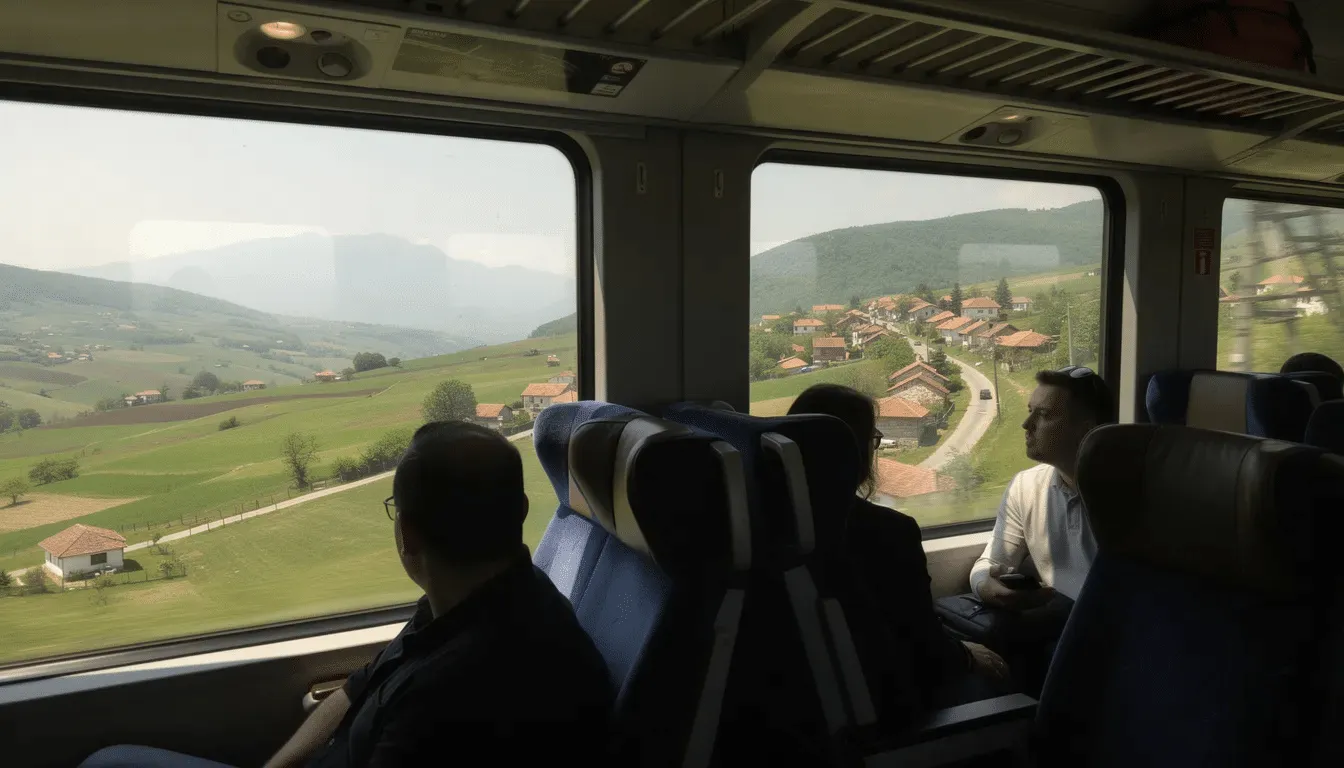
Bulgaria’s railways are slower than western European equivalents but often more scenic, winding through mountains and valleys that reward patient travellers. Travellers can enjoy affordable train journeys across Bulgaria, taking in picturesque landscapes and unique local experiences. Set your expectations for older rolling stock, occasional delays, and basic facilities, you’ll enjoy the journey more with realistic assumptions.
For route planning, use both the Interrail/Eurail app and the BDZ website at bdz.bg. The official BDZ timetable typically has more accurate and up-to-date schedules, particularly for seasonal changes, engineering works, and special services during summer months.
Arrive at major stations like Sofia, Plovdiv, Varna, and Burgas about 20 to 30 minutes before your departure. Platform announcements come in Bulgarian first, and finding the right train requires some extra time, especially at busier stations. Station staff generally understand the word “Interrail” and can help direct you to platforms or reservation counters.
Learning to recognize key station names in Cyrillic script makes travel considerably less stressful. Focus on the major stops: София (Sofia), Пловдив (Plovdiv), Варна (Varna), Бургас (Burgas), and Русе (Ruse). Inside carriages, many trains display Latin script as well, but platform signs often don’t.
Comfort varies depending on the route and time of year. Many long-distance BDZ trains lack air-conditioning, relying instead on windows that open during hot summer months. Bring plenty of water, snacks, and cash, card payments don’t always work on board or at smaller stations outside major cities. The trip from Sofia toward destinations like Pirin National Park, Bansko, or access points for Rila Monastery often requires bus connections, as rail doesn’t reach everywhere.
Ticket inspectors will check your digital Interrail pass and any seat or sleeper reservation during the journey. Make sure to mark each travel day correctly in the app before boarding, failing to do so can result in fines even if you have a valid pass.
A classic Interrail-style loop within Bulgaria might run Sofia to Plovdiv (3 hours), then Plovdiv to Burgas (4 hours), ferry or train connections along the Black Sea to Varna, before returning via Veliko Tarnovo to Sofia. Budget at least 4 to 5 full days to cover this comfortably without rushing.
Accommodation and activities for Interrail travellers in Bulgaria
One of the joys of traveling with an Interrail Bulgaria Pass is the freedom to hop off the train and discover a wide range of accommodation and activities across the country. Whether you’re arriving at the main train station in Sofia or rolling into a coastal town on the Black Sea, you’ll find options to suit every budget and travel style.
In the city centre of Sofia, Interrailers can choose from lively hostels like Smart Hostel Sofia, which not only offer a comfortable bed but also organize tours and social activities, perfect for meeting fellow travelers and planning your next route. If you prefer a more relaxed pace, Plovdiv’s charming guesthouses and boutique hotels, such as Hostel Old Plovdiv set in a beautifully restored historic building, provide a unique atmosphere and easy access to the city’s ancient streets.
Your Interrail pass unlocks unlimited train travel on domestic trains operated by Bulgarian State Railways, making it easy to reach Bulgaria’s top sights. Don’t miss a trip to the Rila Monastery, nestled in the Rila Mountains, a UNESCO World Heritage Site that’s a highlight of any visit to Bulgaria. While the train network doesn’t reach the monastery directly, you can take a train to nearby towns and connect by bus for the final stretch. For outdoor enthusiasts, the Pirin National Park offers hiking and skiing opportunities, and the Black Sea coast is ideal for sunbathing and swimming during the summer months. Cities like Varna and Burgas are well-connected by both day and night trains, making spontaneous beach getaways a breeze.
When planning your trip, it’s wise to check train times in advance, as schedules can vary depending on the season and route. The main train station in Sofia is the central hub for most international trains, with direct connections to Bucharest, Istanbul, and Budapest, perfect for those looking to extend their adventure across Eastern Europe. The Interrail Bulgaria Pass also makes it easy to explore neighboring countries like Romania, Serbia, and Greece, with most international trains departing from Sofia.
For a taste of local culture, be sure to try classic Bulgarian dishes such as Shopska salad, which you’ll find in restaurants and cafes throughout the country. Many towns along the train network offer vibrant markets, historic sites, and opportunities to experience authentic Bulgarian hospitality.
Keep in mind that seat reservations may be required for some express and night trains, especially during peak travel periods. It’s a good idea to plan your route and make any necessary reservations in advance to ensure a smooth journey. The Patnicheski slower local trains are a great way to reach smaller towns and enjoy the scenic countryside at a leisurely pace.
Whether you’re exploring ancient monasteries, hiking in the mountains, or relaxing by the Black Sea, Bulgaria offers a wealth of experiences for Interrailers. With the flexibility of the Interrail Bulgaria Pass, you can craft your own itinerary and discover the country’s hidden gems at your own pace. Start planning your trip today and get ready to experience the best of Bulgaria by rail!
Our honest verdict on Interrail for Bulgaria
For travel only inside Bulgaria, the Interrail Bulgaria Pass is usually poor to mediocre value. Domestic fares are simply too cheap. In many cases, buying regular tickets at BDZ counters will cost you significantly less than activating pass days.
The One Country Pass can make sense for specific traveler profiles. If you’re planning multiple long train journeys over a few concentrated days, prefer complete flexibility to change plans without penalty, benefit from youth pricing (under 28), or genuinely dislike queuing at ticket counters and navigating language barriers, the pass offers convenience that might justify the premium over individual tickets.
Global Pass holders face a much more positive equation. If you already have an Interrail Global Pass covering Germany, Austria, Hungary, Romania, Greece, Turkey, or other countries, then adding Bulgaria to your itinerary delivers excellent value. The higher fares elsewhere in Europe justify the pass cost, and Bulgaria becomes essentially free mileage. Routes like Budapest to Sofia to Istanbul or Bucharest to Varna to Thessaloniki make the Global Pass genuinely worthwhile.
Reservation and supplement costs within Bulgaria are modest enough that they don’t undermine Global Pass value. However, these same costs slightly erode the appeal of the Bulgaria One Country Pass when you’re already comparing it unfavorably to cheap local tickets.
The balanced recommendation comes down to your itinerary scope. Budget-conscious visitors planning Sofia plus one or two side trips should stick to point-to-point tickets and pocket the savings. Rail enthusiasts on multi-country Balkans adventures will be happiest with a Global Pass that includes Bulgaria as part of a larger eastern Europe exploration. The One Country Pass occupies an awkward middle ground that only occasionally makes financial sense.
Appendix: Key Bulgarian rail facts for Interrailers
Main operator: Bulgarian State Railways (BDZ), managing over 4,000 km of track.
Main hub: Sofia Central Station (Tsentralna Gara), with metro connection to city centre and airport.
Typical journey times: Sofia to Varna 7 to 8 hours, Sofia to Burgas 6 to 7 hours, Sofia to Plovdiv approximately 2.5 to 3 hours.
Domestic reservations: Most trains require no reservation; express services need cheap bookings (€0.50 to €1.50) purchased at station counters.
Cross-border routes for Interrail: Sofia to Bucharest via Ruse (direct in summer, change required October through June), Sofia to Istanbul night train (year-round, reservation required), Sofia to Thessaloniki (when operating, reservation required).
Key takeaway: Bulgarian rail is cheap, slow but scenic, and friendly to budget travelers. Interrail works smoothly here, but doesn’t always save money compared to buying regular tickets.
Find the right rail pass for Bulgaria
Train companies in Bulgaria that accept Interrail Global Pass
Frequently asked questions
Is Interrail good value for travel within Bulgaria?
Bulgaria has some of the cheapest rail fares in Europe, making an Interrail pass questionable value for most travellers exploring only within the country. Buying point-to-point tickets at the station is often cheaper.
How much does a Bulgaria One Country Pass cost?
In 2026, a Bulgaria One Country Pass starts at approximately €58 per person for 3 travel days within one month, with options for 3, 4, 5, 6, and 8-day passes.
How long does it take to travel between major Bulgarian cities by train?
Sofia to Plovdiv takes approximately 2.5 to 3 hours with at least 7 to 8 daily departures. Sofia to Varna takes 7 to 8 hours, Sofia to Burgas around 6 to 7 hours, and Plovdiv to Burgas about 3 to 4 hours.
Which Bulgarian train route is particularly recommended for its scenery?
The line between Septemvri and Dobrinishte is highly recommended for its scenic journey through the mountains.
Are there night trains in Bulgaria?
Yes, there are seasonal night services on some routes, such as Sofia to Varna, during the summer months.