

Train service
SNCF
SNCF is France’s state-owned rail operator, running high-speed, regional, and international TGV services across Europe.

Trenitalia
Trenitalia is Italy’s state-owned rail operator, running high-speed, intercity, and regional trains across the country and beyond.

NTV
Italo (NTV) is Italy’s first private high-speed rail operator, offering a competitive alternative to Trenitalia since 2012.
Train tickets

Omio
Omio connects you with over 1,000 transport providers - trains, buses, flights, and more - to simplify your travel planning.

Trainline
Trainline sells rail and coach tickets worldwide on behalf of major UK and European transport companies.

Raileurope
Rail Europe is a leading travel tech company specializing in European train bookings for over 15,000 travel professionals worldwide.
There’s no direct train from Paris to Florence in 2026. Every journey requires at least one change, typically in Milan or Turin, but the connection is straightforward and the route is one of Europe’s finest rail corridors. Let’s get into what you need to know.
Paris to Florence by Train: Quick Answers First
The typical train journey from Paris to Florence takes around 9 hours 20 minutes to 12 hours 30 minutes depending on your routing and connection times. You’ll make at least one change, most commonly at Milano Centrale or Torino Porta Susa. Advance fares start from roughly €80–€110 one way in second class when booked several weeks ahead, though prices climb to €150–€250 or more if you’re booking close to departure.
The fastest options combine a high speed train from Paris Gare de Lyon to Milan or Turin with a Frecciarossa or Italo service onward to Firenze Santa Maria Novella. Leave Paris in the morning, arrive in Florence the same afternoon or evening. No regular direct daytime or sleeper train exists on this route in 2026.
You’ll buy train tickets as separate legs—Paris to Milan or Turin, then Milan or Turin to Florence. Seat reservations are always included in high-speed ticket prices, so there’s no extra booking step. The journey start feels seamless once you understand the pattern: one long international leg, one quick domestic sprint.
Route Overview: How the Paris–Florence Train Journey Works
The Paris Florence route always takes you through northern Italy, either via the Alps into Milan or Turin, or through Switzerland before dropping into Lombardy. From there, Italian high speed Frecciarossa trains or Italo services whisk you south into Tuscany.
- Geography: The full distance spans approximately 1,150–1,200 km. You’ll cross south-eastern France, pierce the Alps via the Fréjus or Mont Cenis tunnels, then ride high-speed lines across northern Italy into the rolling hills of Tuscany.
- No direct trains: As of 2026, no TGV or Frecciarossa runs the entire route without stopping. At least one change is required, most commonly in Milan Centrale or Torino Porta Susa.
- Operators: The international leg from Paris uses SNCF TGV INOUI or Trenitalia Frecciarossa trains. The Milan/Turin to Florence run relies on Trenitalia Frecciarossa or the private operator Italo.
- Daily pattern: Several morning departures from Paris connect to midday or early afternoon trains reaching Florence the same day. Expect 2–3 viable same-day combinations depending on the weekday.
- No night trains: There’s no classic sleeper train on this route. Thello night services to Italy ceased after 2019. If you prefer an overnight journey, you’ll need a hotel stop in Turin, Milan, or Zurich.
Fastest Options in a Single Day (Via Milan or Turin)
For most passengers, the best way to reach Florence is a single long day of travel combining two high speed services. You’ll cross the French countryside and Alps in the morning, change trains in Italy, and arrive with time for dinner.
Option 1: Via Milan
- A morning Frecciarossa or TGV departs Paris Gare de Lyon and reaches Milano Centrale in around 6 hours 30 minutes to 7 hours.
- Same-station change onto a Frecciarossa or Italo bound for Firenze Santa Maria Novella—that leg takes approximately 1 hour 55 minutes.
- Total journey times run between 9 hours 20 minutes and 10 hours 30 minutes with one change.
- Milan to Florence trains depart frequently, with at least 2–3 fast services per hour during daytime, so you have flexibility even if your first train runs slightly late.
Option 2: Via Turin
- A morning TGV INOUI or Frecciarossa leaves Paris Gare de Lyon and arrives at Torino Porta Susa in around 5 hours 40 minutes to 6 hours 15 minutes.
- An easy underground platform-level change leads to a Frecciarossa or Italo for Florence, taking about 3 hours 30 minutes to 4 hours (sometimes via Bologna).
- Total journey usually falls between 9 hours 30 minutes and 10 hours 45 minutes.
- Turin’s compact train station makes changes less stressful than Milan’s sprawling multi-level setup.
Indicative prices: Advance fares for Paris–Milan or Paris–Turin start around €35–€60 in second class. The Milan or Turin to Florence leg typically costs €20–€30 when booked early. Realistic totals for a one-way trip run €100–€180 when you book a few weeks ahead.
Onboard features: Reserved seating is standard, with air conditioning, free wifi on most trains (though signal drops in tunnels), and power sockets at nearly every seat. A restaurant car or bistro serves hot drinks, snacks, and simple meals. Luggage racks accommodate bags without airline-style weight limits—just make sure your suitcase fits overhead or at the end of the carriage.
Scenic and Multi-Day Alternatives Via Switzerland or With Stopovers
If speed isn’t your priority, several alternatives let you trade a few hours for Alpine drama or a more relaxed pace. These options are typically longer and sometimes pricier than the direct high-speed day route.
Swiss Alps Route in a Day
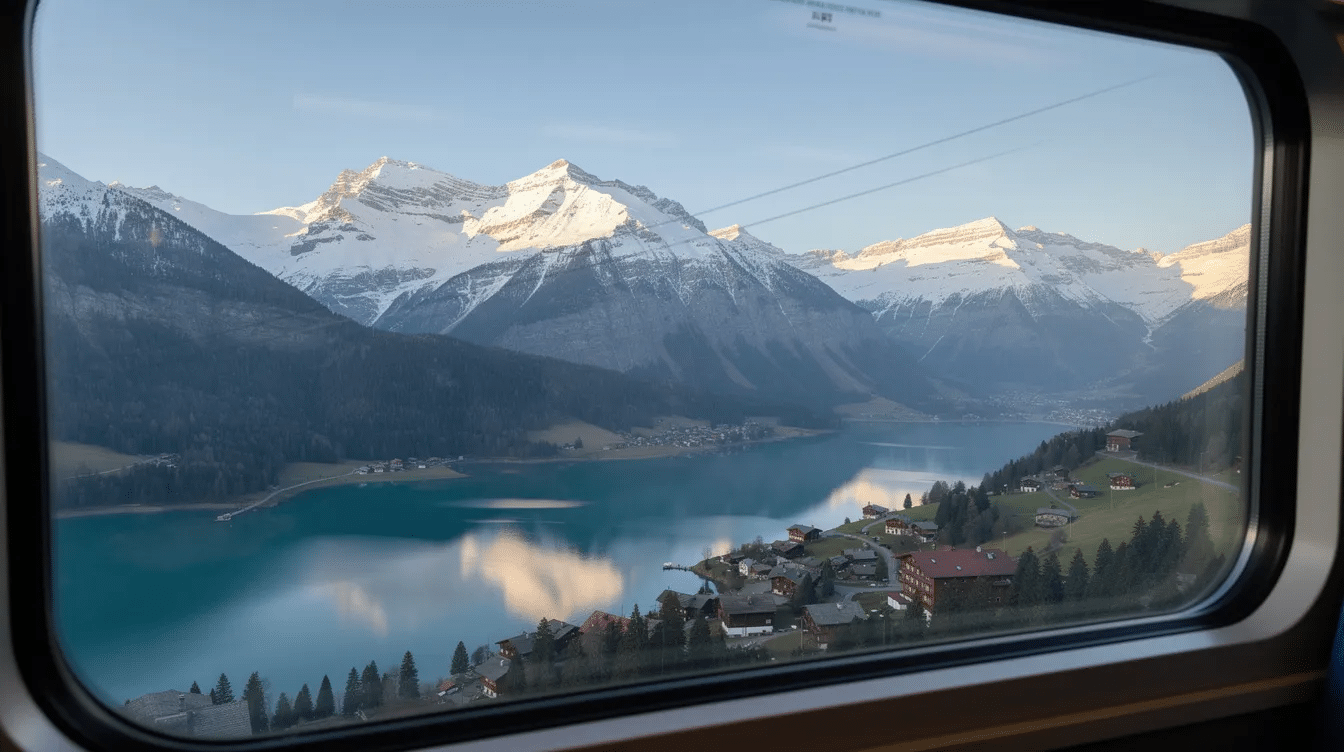
Take TGV Lyria from Paris to Basel or Geneva (around 3 hours), then an EuroCity train via the Gotthard route to Milan (3 hours 30 minutes to 4 hours). Finish with a Frecciarossa or Italo to Florence (approximately 2 hours). Total travel time runs 10 hours 30 minutes to 12 hours with two changes. The scenery through Switzerland makes this a memorable trip for those willing to spend a longer day on rails.
Zurich Overnight
Day one: Paris to Zurich by TGV Lyria (about 4 hours 5 minutes), then an evening in Zurich and a hotel night. Day two: Zurich to Milan by EuroCity (around 3 hours 15 minutes), then Milan to Florence (1 hour 55 minutes). This approach splits fatigue across two days and lets you relax without rushing connections.
Turin or Milan Stopover
Travel 5 hours 45 minutes to 7 hours from Paris to Turin or Milan, spend the night, then take a mid-morning high speed train to Florence the next day. This works well if your first train arrives late in the afternoon, or if you’d like to explore Turin’s historic centre or Milan’s Duomo and Navigli before continuing south.
Ultra-Scenic Bernina Express Connection
For rail enthusiasts, routes connecting to the Bernina Express via Tirano offer UNESCO-listed glacial scenery but require 2 days, 4+ changes, and costs exceeding €200. Seasonal closures can disrupt plans. This is strictly for flexible travellers who prioritise the journey over the destination.
Tickets, Fares and How to Book
Fares on this route are dynamic. Prices shift based on how far in advance you book, time of day, and ticket flexibility. Procrastination gets expensive.
Typical price bands:
- Paris–Milan or Paris–Turin: around €35–€60 in second class, €70–€120 in first class when booked early
- Milan/Turin–Florence: about €20–€35 in second class, €35–€60 in business class
- Same-day or last-minute fares can easily exceed €200 one way for second class alone
Ticket types:
- Non-flexible / Super Economy: Cheapest option, no changes or refunds permitted
- Semi-flexible: Changeable with a fee (typically €10–€20), partial refunds possible
- Flexible: Higher price but allows same-day train changes and full or near-full refunds
Booking strategy:
- Book Paris–Italy high-speed tickets as soon as booking opens, usually 3–6 months ahead depending on the operator
- Avoid Friday evenings and Sunday afternoons when possible—these cost more and fill faster
- Consider slightly earlier or later departures for cheaper fares
- Midweek mornings typically offer the best combination of price and availability
Reservations: Every high-speed train on this route requires a seat reservation, which is automatically included when you buy your ticket. You cannot simply turn up and sit anywhere—reserve seats are mandatory.
Separate vs through tickets: For complex itineraries (via Switzerland or with overnight stops), buying separate point-to-point tickets for each leg is often cheaper than a single through-ticket. The trade-off: you carry the risk if you miss a connection that isn’t protected under a single booking contract.
Stations, Connections and Practical Logistics
Knowing the main departure and arrival stations—and what to expect when you change trains—makes the whole trip smoother.
Paris Gare de Lyon
Your journey start for this route. Located in the 12th arrondissement, it’s connected to Métro lines 1 and 14 and RER lines A and D. The station splits into Halls 1 and 2 with clear platform numbering. Left-luggage facilities are available (around €10–€15 per day), and cafés line the concourse for pre-boarding breakfast or coffee. Arrive at least 30–40 minutes early to find your platform—announcements often come just 15–20 minutes before departure.
Milano Centrale
An imposing terminus with high concourses and multiple levels. Signage points to “Partenze” (departures). Most Paris trains arrive on high-numbered platforms (20–24), while Florence-bound Frecciarossa and Italo services typically leave from central platforms (1–12). A 20–30 minute connection buffer is comfortable for most travellers; allow more if you have heavy luggage or mobility concerns.
Torino Porta Susa
A modern, linear underground-style station with easy platform changes using lifts and escalators. More compact than Milan and often simpler for tight connections. If you’d rather avoid the bustle of Centrale, routing via Turin is worth considering.
Firenze Santa Maria Novella (SMN)
Your arrival station in Florence, a short walk from the Duomo. Taxi ranks, tram connections, and bus stops sit directly outside. Ticket offices, information desks, and luggage storage (around €6–€10 for 5 hours) are all on site. The city centre is immediately accessible—no secondary transport needed.
Connection tips:
- Allow at least 25–30 minutes for changes in Milan or Turin when booking separate tickets
- Build in longer margins during winter months or when travelling with children or bulky luggage
- Watch departure boards—platforms may only be announced 15–20 minutes before the train leaves
- Keep essentials in a daypack rather than buried in checked bags
Seat Reservations, Classes and Onboard Experience
Nearly all long-distance trains on this route are reservation-only high-speed services with allocated seats across different comfort classes.
Reservation rules:
- TGV INOUI, TGV Lyria, and Trenitalia Frecciarossa trains all require compulsory reservations, included in your ticket price
- Italo tickets are always for a specific train and seat
- Regional trains in Italy (if used for connections) usually don’t require reservations—you can turn up and board
Classes:
- Second class / Standard: Comfortable open-plan seating in a 2+2 layout, air conditioning, power sockets at seats
- First class / Business: Wider seats (often 2+1 layout), more legroom, quieter carriages, sometimes complimentary snacks or drinks
- Premium / Executive (some Frecciarossa services): Extra-wide reclining seats, at-seat meal service on certain routes, enhanced privacy
Onboard facilities:
- Free wifi on most high-speed trains, though signal can drop in tunnels and mountains
- Power sockets at nearly every seat
- Café-bar or bistro car serving hot drinks (around €3), snacks, and simple meals (€5–€15)
- Toilets in each carriage
- Overhead luggage racks plus larger storage areas at carriage ends
Luggage practicalities: There’s no weight-based checking—you carry your own bags. Suitcases up to typical cabin or medium size fit best. Oversized luggage can be awkward in crowded compartments, so pack sensibly.
Rail Passes: Interrail, Eurail and Whether They’re Worth It on This Route
Both Interrail (for European residents) and Eurail (for non-European residents) are valid on most trains between Paris and Florence, but you’ll pay additional reservation fees for almost every high-speed leg. Let’s break down whether a pass makes sense.
Pass validity:
- Valid on SNCF TGV INOUI and TGV Lyria services between Paris and the French/Swiss borders
- Valid on Trenitalia Frecciarossa within Italy
- Valid on cross-border Frecciarossa/TGV services, subject to seat quotas and supplements
- Not valid on Italo—pass holders should stick to Trenitalia-operated trains
Reservation costs:
- French and cross-border TGV/TGV Lyria: compulsory reservation fees around €10–€30 per journey depending on distance and quota availability
- Trenitalia Frecciarossa within Italy (e.g. Milan–Florence): mandatory pass-holder reservation of roughly €10–€15 per leg
Value comparison: A typical one-way point-to-point fare bought early (Paris–Milan–Florence) runs roughly €80–€120 in second class. If you’re only making this single journey, the pro-rata cost of a global Interrail pass (starting around €250 for 4 travel days) plus €40–€60 in reservation fees makes pass travel more expensive. Passes start to deliver value if you plan at least 4–7 international travel days within one month.
Seat availability issues: Pass holders face reservation quotas on busy TGV and Frecciarossa services, especially on Fridays, Sundays, and around holidays. You may need to be flexible with departure times or book reservations as soon as they open (typically 60–120 days ahead).
Recommendation:
- For a straightforward holiday involving only Paris–Florence and maybe one or two other long trips, cheap train tickets bought in advance usually beat a pass on both price and simplicity
- For extended multi-country rail trips across France, Switzerland, Italy and beyond, an Interrail pass can be cost-effective and flexible—just budget for reservations
When to Travel, Seasonal Considerations and Sample Same-Day Timings
The route operates year-round, but train times, scenery, and crowding shift with the seasons.
Seasonal notes:
- Winter (December–February): Shorter daylight reduces scenic views on late afternoon legs. Possible weather-related delays in the Alps, though major routes are well maintained—expect average delays around 15 minutes during disruptions.
- Spring and autumn: Often ideal, balancing good daylight, vivid scenery, and moderate crowds.
- Summer (June–August): The busiest and typically most expensive period. High demand on Paris–Italy links means booking early is essential.
Weekday vs weekend: Friday afternoons, Sunday afternoons, and public holidays are the most crowded and costly. Midweek mornings offer the best combination of price and seat availability.
Sample same-day timing patterns:
- Example 1 (via Milan): First train around 07:00–07:30 from Paris Gare de Lyon reaches Milan early afternoon. Connect to a mid-afternoon Frecciarossa, arriving at Firenze SMN roughly 16:30–18:00. Total travel around 9 hours 30 minutes to 10 hours 30 minutes.
- Example 2 (via Turin): Departure around 08:30–09:00 from Paris reaches Turin mid-afternoon. Connect to a late afternoon train, arriving in Florence early evening. The last train from Milan to Florence departs around 21:30, giving you options if your Paris leg runs late.
Practical Tips for a Smoother Paris–Florence Rail Journey
A few small details turn a long day into a comfortable one.
- Arrive early at Paris Gare de Lyon: 30–40 minutes before departure gives you time to find your hall, check platform announcements, and locate your coach without stress.
- Pack food and water: All major trains have café-bars, but queues build up and station supermarkets charge less. French and Italian stations usually have bakeries near the concourse—grab something before boarding.
- Keep essentials in a daypack: Passport or ID, wallet, phone, charger, any medication, and a light sweater stay with you. Stow larger luggage on overhead or end-of-car racks where you can keep an eye on it.
- Check your train and coach number: Long 16-car TGV formations mean your reserved coach could be at either end of the platform. Verify on your ticket and on platform displays before walking.
- Watch for announcements: Expect French and Italian, sometimes English on international services. Carriage displays show intermediate stops; apps and onboard route maps help you track progress.
- Relax and enjoy the ride: This train ride crosses some of Europe’s finest scenery. Unlike flying, you’ll arrive in the heart of each city—no Air France security queues, no bus transfers from distant airports. The distance feels shorter when you’re watching the French countryside give way to Alpine passes and then the gentle slopes of Tuscany.
With advance bookings, realistic connection margins, and a bit of station awareness, the Paris to Florence train journey becomes one of Europe’s most rewarding rail days. Plan your trip, book early, and let the rolling hills of Italy slide into view as you sit back and spend the afternoon crossing a continent by rail.
Frequently asked questions
Is there a direct train from Paris to Florence?
No. There is no direct train from Paris to Florence in 2026. Every journey requires at least one change, most commonly at Milano Centrale or Torino Porta Susa.
How long does the Paris to Florence train journey take?
The journey takes around 9 hours 20 minutes to 12 hours 30 minutes depending on your routing and connection times.
How much does the Paris to Florence train cost?
Advance fares start from roughly €80–110 one way in second class when booked several weeks ahead. Prices rise to €150–250 or more when booking close to departure.
What is the fastest way to travel by train from Paris to Florence?
The fastest option combines a high-speed train from Paris Gare de Lyon to Milan or Turin, followed by a Frecciarossa or Italo service to Firenze Santa Maria Novella. Leaving Paris in the morning, you can arrive in Florence the same afternoon or evening.
What should you know about Florence's arrival station?
Florence's arrival station is Firenze Santa Maria Novella (SMN), a short walk from the Duomo. Taxi ranks, tram connections, and bus stops are directly outside. Luggage storage is available on site for around €6–10 for 5 hours. Allow at least 25–30 minutes for connections in Milan or Turin, and note that platforms may only be announced 15–20 minutes before departure.


