
Train service

NTV
Italo (NTV) is Italy’s first private high-speed rail operator, offering a competitive alternative to Trenitalia since 2012.
Check times & pricesOfficial website Check times & prices
Trenitalia
Trenitalia is Italy’s state-owned rail operator, running high-speed, intercity, and regional trains across the country and beyond.
Check times & pricesOfficial website
SNCF
SNCF is France’s state-owned rail operator, running high-speed, regional, and international TGV services across Europe.
Check times & pricesOfficial website
Renfe
Renfe is Spain’s national railway operator, offering high-speed, long-distance, and regional train services with extensive domestic coverage.
Check times & pricesOfficial websiteTrain tickets

Omio
Omio connects you with over 1,000 transport providers - trains, buses, flights, and more - to simplify your travel planning.

Trainline
Trainline sells rail and coach tickets worldwide on behalf of major UK and European transport companies.

Raileurope
Rail Europe is a leading travel tech company specializing in European train bookings for over 15,000 travel professionals worldwide.
Planning to take the train from Rome to Madrid? There’s no direct train connecting these two capitals, but with the right combination of high speed services across Italy, France and Spain, you can make this epic European rail journey work – and discover some stunning scenery along the way.
Rome to Madrid: Quick Answers for Journey, Time and Price
No direct train exists between Rome and Madrid. The overland distance spans roughly 1,360 km, and you’ll need 2–3 changes minimum, typically routing through northern Italy, southern France and into Spain. Most realistic itineraries take between 18 and 28 hours depending on your route choices, connection times and whether you add an overnight stop.
Ticket prices vary considerably based on when you book and which class you choose. Well-planned advance purchases can bring the total cost down to around €150–€180, while mid-range bookings typically land between €200–€260. Travelling at peak times, booking last-minute or opting for first class can push fares to €300 or more.
Here’s a quick snapshot:
- Journey time: 18–28 hours (fastest rail-only combos around 18h; relaxed multi-day options 24–30h)
- Typical changes: 3 (occasionally 2 or 4)
- Price range: €150–€180 cheapest advance; €200–€260 typical; €300+ peak/flex
- Daily combinations: 3–9 workable options depending on the date
Why choose this over a flight? Direct Rome–Madrid flights take about 2h 30m–3h and often cost €40–€70 when booked early. But trains offer city-centre arrivals, generous legroom, no security queues and significantly lower emissions. If you want to relax and watch the Alps and Pyrenees roll past your window, rail wins. The rest of this page covers best routes, how to book, seat reservations, rail passes and practical station logistics.
Route Overview: How to Travel from Rome to Madrid by Train
The distance from Rome to Madrid is approximately 1,360 km as the rail network runs. Since no single national railway company operates this entire route, your journey involves multiple train companies: Trenitalia or Italo in Italy, SNCF in France, and Renfe (including budget options like Avlo) in Spain.
Most itineraries follow one of these patterns:
- Via Milan and Barcelona: Frecciarossa trains from Rome to Milano Centrale, then onward through France (Lyon or Marseille) to Barcelona Sants, finishing with Spanish AVE to Madrid.
- Via Turin and Lyon: Some routes head northwest through Torino Porta Susa into Lyon Part-Dieu before continuing to Spain.
- Coastal/scenic route: Through Genoa and Nice along the Mediterranean, adding time but offering spectacular views.
- Mixed train-bus options: When cross-border trains run limited schedules, some travellers combine daytime trains with overnight coaches between France and Spain.
Timetables shift with the season – summer schedules boost high speed frequencies, while winter can reduce cross-border options. Trains run on separate ticketing systems for each country, so you’ll often buy tickets in two or three parts rather than a single through-ticket.
You can choose between a faster, higher-cost itinerary using mostly high speed trains, or a slower journey incorporating regional trains and Intercités services in France. The first approach gets you to Madrid in around 18–20 hours with tight connections; the second might stretch to 26–30 hours but costs less.
Typical Itineraries: Fastest and Most Convenient Rome–Madrid Train Routes
Exact train times vary by date, but here are realistic sample patterns to help you plan. Treat these as typical frameworks, not guaranteed schedules.
Fastest Daytime Itinerary
Your journey start happens early at Roma Termini. Catch a first train around 06:00–07:00 on Frecciarossa trains or Italo, reaching speeds of 300 km h to arrive at Milano Centrale by roughly 10:00. Allow 45–60 minutes for the transfer, then board a TGV heading towards Lyon Part-Dieu or Marseille Saint-Charles (arrival around 15:00–16:00). From there, another high speed train takes you to Barcelona Sants by early evening. The last train to Madrid departs Barcelona around 21:00–22:00, with arrival at Madrid Puerta de Atocha close to midnight.
Total: approximately 18–20 hours with three changes if connections align well.
Scenic but Longer Route
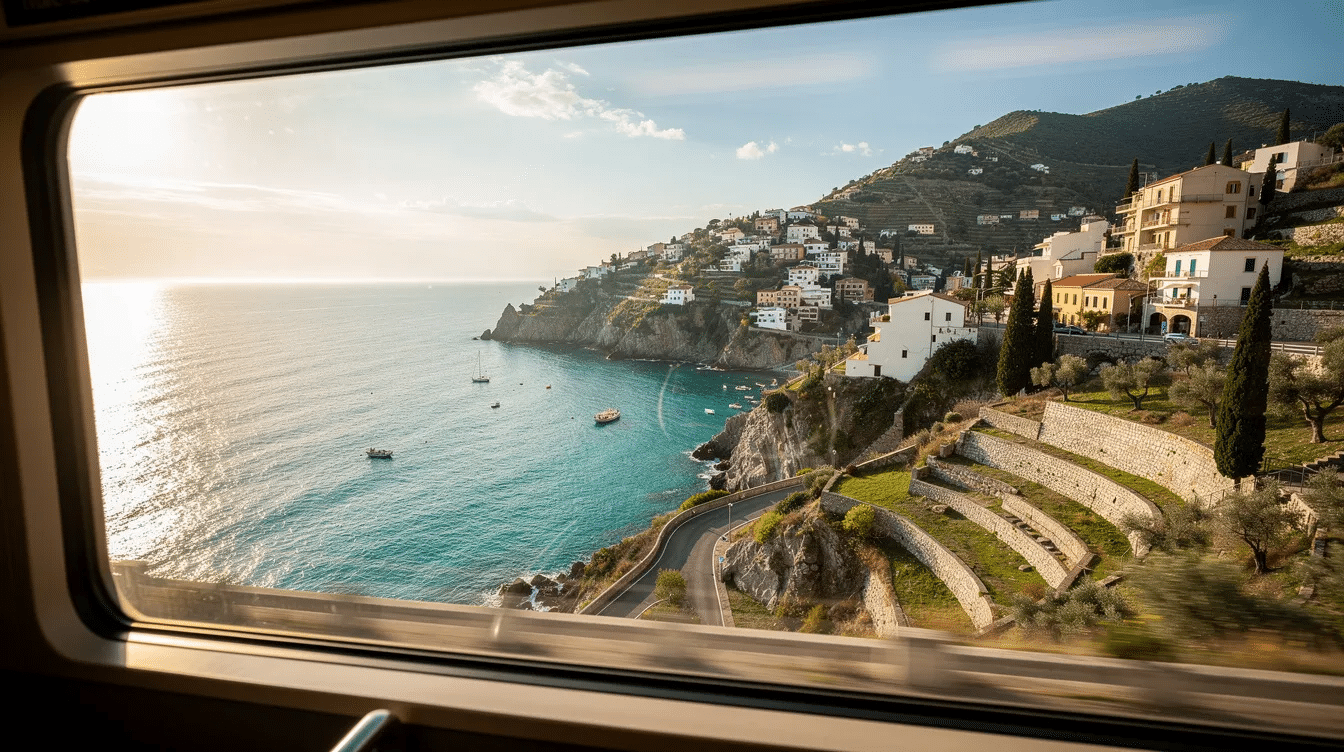
If time matters less than experience, consider routing via Genoa and Nice. Take a morning train from Rome through the Ligurian coast, overnight in Nice or Marseille, then continue the next day through Montpellier and Perpignan into Spain. This approach spans 24–30 hours including your stopover but lets you wake up refreshed and soak in the Riviera scenery.
Overnight Stop Suggestions
Breaking the trip transforms a marathon into a manageable adventure. Good stopover cities include:
- Lyon: Vibrant food scene, easy Part-Dieu transfers, mid-route positioning
- Marseille: Port city energy, gateway to Provence, convenient for next-day Spain services
- Barcelona: Cultural heavyweight where you can visit Gaudí’s artistic masterpieces before the final Madrid leg
Some budget-conscious travellers combine late-night coaches (FlixBus or ALSA) from Milan or Lyon to Barcelona with daytime trains elsewhere, trading comfort for savings.
Journey Time, Frequency and Seasonality
How long does the Rome to Madrid train journey actually take? It depends on your choices.
- Fastest rail-only pattern: Around 18 hours with tight connections and three changes
- Typical relaxed route: 22–26 hours with comfortable layovers at each hub
- Two-day spread: 28+ hours including an overnight stop
Most itineraries involve three changes, though rare direct legs (like a Turin–Lyon connection) can reduce this to two. Some slower combinations using regional trains add a fourth.
Unlike a single direct line, “frequency” here means how many workable combinations exist. Expect 3–9 viable options daily, with departures from Rome clustered between 06:00 and 12:00 for same-day arrivals in Spain. Weekend engineering works – especially in France and Spain – occasionally disrupt patterns with replacement buses.
Seasonal factors matter:
- Summer (June–September): More high speed services, but trains run busier and prices climb 20–50%
- Winter: Reduced cross-border frequencies; some routes add bus segments
- Peak periods (Easter, August, Christmas): Advance quotas sell out 90–120 days before departure
If flexibility exists in your travel dates, midweek departures in shoulder seasons offer the best balance of availability and value.
Ticket Types and Prices for Rome–Madrid by Train
Booking this multi-country journey means navigating three separate fare systems – Italian, French and Spanish – each with similar structures under different names.
Fare Categories
- Advance/Super-Economy: Non-refundable, limited changes, released 60–120 days out. Cheapest price available but rigid.
- Semi-Flex/Economy: Changes allowed with fees (€10–30 typical), partial refunds possible. Mid-range pricing.
- Fully Flexible: Short-notice changes and cancellations permitted. Premium of 50–100% over advance fares.
Price Estimates by Leg (2026)
- Rome–Milan/Turin (Frecciarossa/Italo): €30–€90 in second class advance; €50–€120 flexible
- Italy–France (TGV/Intercités): €60–€150 depending on speed and timing
- Barcelona–Madrid (AVE/Avlo): €20–€80 advance; €50–€120 standard
Combined Totals
| Booking Type | Approximate Total |
|---|---|
| Cheapest advance combo | €150–€180 |
| Typical mid-range | €200–€260 |
| Peak/flexible/last-minute | €260–€320+ |
First class or business fares typically add 30–70% to these prices, offering wider seats, quieter coaches, and sometimes complimentary snacks on certain operators.
Discounts to Check
- Children: Under-12 reductions of 50–75% in France; under-14 often free with adult in Italy or 40–60% off in Spain
- Youth (under 28): 20–30% off on many operators
- Seniors (60+): 20–40% discounts with cards like Spain’s Dorada
Each operator requires specific ID at boarding, so carry the documents you used to book.
How to Book Rome–Madrid Train Tickets
You can purchase all legs through international platforms like Rail Europe or Omio, or book directly via each national railway company website: Trenitalia.it, SNCF-Connect, and Renfe.com.
Step-by-Step Booking Approach
- Pick your travel date and decide whether you want same-day connections or an overnight stop.
- Secure the bottleneck first. The France–Spain high speed leg has limited seats; book this 90–120 days ahead if possible.
- Add your Italian departure (Rome–Milan/Turin) with at least 45–60 minutes of transfer buffer at Milano Centrale.
- Complete with the Spanish leg (Barcelona–Madrid AVE or Avlo) that fits your Barcelona arrival time.
Key Booking Tips
- Cheapest advance fares appear 60–120 days before departure and sell quickly
- Midweek trains (Tuesday–Thursday) tend to price lower
- Names on tickets must match passport details exactly – especially important for AVE services where security checks ID before boarding
- Download mobile tickets to your phone and save offline copies; an internet connection isn’t always reliable in transit
Allow generous transfer margins: 40–60 minutes minimum at international hubs. Milan’s platforms sit far apart, and Barcelona Sants requires passing through security before boarding Madrid-bound trains.
Seat Reservations, Classes and Onboard Experience
Most high speed and long-distance trains on this route require compulsory seat reservations. When you buy a specific train ticket, your reservation is included automatically – you’re assigned a coach and seat for that exact departure.
How Reservations Work
- Frecciarossa trains, French TGV and Spanish AVE/Avlo all mandate reservations
- Regional trains and some French Intercités segments may have optional or limited reservations
- Your ticket locks you to a specific train and time; changes usually cost €10–50 or require a new ticket
- Window/aisle preferences can sometimes be requested but aren’t guaranteed
Class Options
| Class | Features |
|---|---|
| Second class / Standard | Comfortable 2+2 seating, air conditioning, power outlets, luggage racks |
| First class / Business | Wider 2+1 seating, extra legroom, quieter environment, sometimes drinks or snacks included |
| Executive class | Available on some Italian trains; premium perks, lounge access |
Onboard Facilities
High speed trains across all three countries offer:
- Wi-Fi (quality varies, especially in rural areas)
- Café car or trolley with bar service and snacks (€5–15)
- Accessible toilets in each carriage
- Dedicated luggage racks and overhead storage
There’s no onboard entertainment system on most trains – bring your own device. Small pets in carriers are generally permitted on most services with advance notice.
For luggage, there’s no airport-style check-in. You handle your own bags, so make sure you can lift them onto overhead racks. Dedicated luggage areas exist at carriage ends, but spaces fill quickly on busy departures.
Stations and Transfers: Rome, French Hubs, Barcelona and Madrid
Careful station planning keeps stress low on this multi-leg journey. Here’s what to expect at each hub.
Rome Departure
- Roma Termini: Your likely journey start. Italy’s largest train station with metro lines A and B, buses and airport connections.
- Arrive 30–40 minutes before departure to find your platform and settle in.
- Some services depart from Roma Tiburtina – double-check your ticket.
Italian Transfer Hubs
- Milano Centrale: Grand historic station with excellent signage but heavy crowds. Allow 45 minutes minimum between trains. This station handles trains toward France and serves as a transport hub for major destinations across Europe including London and Paris via onward connections.
- Torino Porta Susa: Modern through-station for some France-bound routes. Quicker transfers, less overwhelming.
French Hubs
- Lyon Part-Dieu: Key TGV junction for Barcelona-bound services. Well-organized but busy.
- Marseille Saint-Charles: Hilltop station with Spain connections. Check escalator closures – the stairs are steep.
- Slower scenic routes may also pass through Nice, Montpellier or Perpignan.
Barcelona Sants
- Main Spanish hub connecting France arrivals with Madrid departures
- Security screening and ID checks occur before boarding AVE/Avlo platforms
- Arrive 30–45 minutes before your Madrid departure to clear these
Madrid Arrival
- Madrid Puerta de Atocha-Almudena Grandes: Most high speed trains from Barcelona terminate here. The station features a famous tropical garden in its old concourse – worth a look after your arrival.
- Connect to metro (Lines 1, 5, U1) for central hotels in 20–30 minutes, or grab a taxi from the forecourt (€20–30 to most districts).
Watch your luggage storage at busy stations, especially during peak hours. Platform changes happen 10–20% of the time, so keep scanning the boards.
Rail Passes on the Rome–Madrid Route: Interrail and Eurail
Both Interrail (for European residents) and Eurail (for non-European visitors) passes are valid on the Italian, French and Spanish rail network segments you’ll use between Rome and Madrid. However, there’s a catch: high speed trains require paid seat reservations on top of your pass.
What Passes Cover
- Trenitalia, SNCF and Renfe services are generally included
- Some private operators or special trains may not be covered
- You still need to book and pay for reservations separately
Reservation Fees (Approximate)
| Segment | Fee Per Train |
|---|---|
| Italian high speed (Frecciarossa) | €10–€20 |
| French TGV | €10–€30 |
| Spanish AVE | €15–€35 |
For a 3–4 leg journey, reservation fees alone add €50–€100 to your pass cost.
When a Pass Makes Sense
Rail passes work well if you’re:
- Visiting multiple cities (Rome–Florence–Milan–Nice–Barcelona–Madrid–Seville) within a short period
- Prioritising flexibility to change plans day by day without heavy rebooking fees
- Making this trip part of a larger Europe adventure rather than a one-off day trip between cities
When Point-to-Point Wins
For a simple one-way Rome–Madrid trip, separate advance tickets bought early often cost less than a multi-day pass plus reservations. Example: a pass day effectively costs €70–€100 once averaged, and adding €50–€100 in reservation fees for high speed legs brings your total close to, or above, a carefully booked €150–€180 advance ticket combination.
Pass rules and reservation prices change regularly – always check current conditions shortly before purchase. Book pass reservations early, as quotas for pass holders are limited on popular France–Spain high speed trains.
Train vs Flight (and Bus) for Rome–Madrid
Let’s be honest: flying is faster and often cheaper upfront. But trains score higher on comfort, scenery and environmental impact.
Flight
- Time: 2h 30m–3h direct
- Cost: From €40–€70 booked early; €150+ at peak or with luggage/seat extras
- Downsides: Airport transfers, security queues, luggage fees, emissions of roughly 150–250g CO₂ per passenger-km
Train
- Time: 18–28 hours with multiple changes
- Cost: €150–€300 depending on booking timing and class
- Advantages: City-centre to city-centre, generous legroom, freedom to walk around, no liquid restrictions, Alpine and Pyrenean views, emissions of roughly 10–30g CO₂ per passenger-km
Long-Distance Coach
- Time: 26–36 hours
- Cost: Under €100 on some routes
- Trade-off: Least comfortable, most time-consuming, but lowest cost and emissions
Bottom line: Time-poor travellers will fly. Slow-travel enthusiasts, rail fans or anyone wanting to avoid airports will find the train journey rewarding despite its length. Budget-focused travellers with time to spare might consider the bus.
Money-Saving and Planning Tips for the Rome–Madrid Train Journey
Smart timing and route choices can significantly reduce your cost on this long international journey.
- Book 2–3 months ahead to lock in the cheapest advance fares, particularly on French and Spanish high speed legs where quotas are limited
- Travel midweek (Tuesday–Thursday) and avoid peak holiday periods in August, around Easter and late December
- Be flexible with departure times – very early or late trains sometimes price lower than mid-morning options
- Consider a slower French leg using Intercités rather than TGV to shave €30–€50 off your total, accepting extra journey time
- Break the trip overnight in Lyon, Marseille or Barcelona when hotel prices are reasonable; this often allows purchasing cheaper daily advance tickets rather than one expensive same-day chain
- Travel light to avoid needing premium seats and to make tight transfers less stressful
- Check age-based discounts on each operator – youth, senior and family fares can reduce costs by 20–40%
When comparing times and tickets across different dates, Tuesdays and Wednesdays typically offer the best prices. The fastest train combinations tend to sell out first, so if speed matters, book early.
Practical Travel Logistics and Arrival in Madrid
After an 18–28 hour train journey across three countries, smooth final logistics make all the difference.
Arriving at Madrid Puerta de Atocha
Most AVE services from Barcelona terminate at Madrid Puerta de Atocha-Almudena Grandes, a central station with excellent onward connections:
- Metro: Lines 1, 5 and U1 reach most central areas in 15–25 minutes
- Cercanías: Commuter trains to outer districts
- Taxis: Available at the forecourt, typically €20–30 to central hotels
If your arrival time is close to midnight, check late-night transport options in advance – metro and Cercanías services reduce frequency after 23:30.
Final Practical Notes
- Keep tickets and ID handy for potential checks at station exits
- Follow “Salida” (exit) signs and “Metro” directions – signage appears in Spanish and English
- Both Rome and Madrid operate on Central European Time with the same daylight-saving changes, so there’s no time zone adjustment to worry about
- Allow 30–45 minutes from platform to hotel lobby if arriving in afternoon or early evening; late arrivals should confirm hotel check-in policies
Whether you’ve traversed the route for the scenery, the eco-friendly credentials or simply to discover Europe without the airport hassle, Madrid rewards your patience. Grab those advance fares early, plan your transfers carefully, and enjoy one of the continent’s great rail adventures.
Frequently asked questions
Is there a direct train from Rome to Madrid?
No. There is no direct train between Rome and Madrid. The journey requires a minimum of 2–3 changes, typically routing through northern Italy, southern France, and into Spain. The overland distance spans roughly 1,360 km.
How long does the Rome to Madrid train journey take?
Most realistic itineraries take between 18 and 28 hours depending on route choices and connection times.
How much does a Rome to Madrid train journey cost?
Well-planned advance purchases can bring the total cost down to around €150–180. Mid-range bookings typically land between €200–260, while last-minute or first-class travel can push the cost higher.
How much connection time should you allow at major stations on this route?
Allow 40–60 minutes minimum at international hubs like Milan. At Barcelona Sants, you must pass through security before boarding Madrid-bound trains, making extra connection time especially important there.
Do the trains on the Rome to Madrid route require seat reservations?
Yes. Most high-speed and long-distance trains on this route require compulsory seat reservations, which are included automatically when you buy your ticket. Your ticket locks you to a specific train and time; changes usually cost €10–50 or require a new ticket.