

Why travel Europe by train?
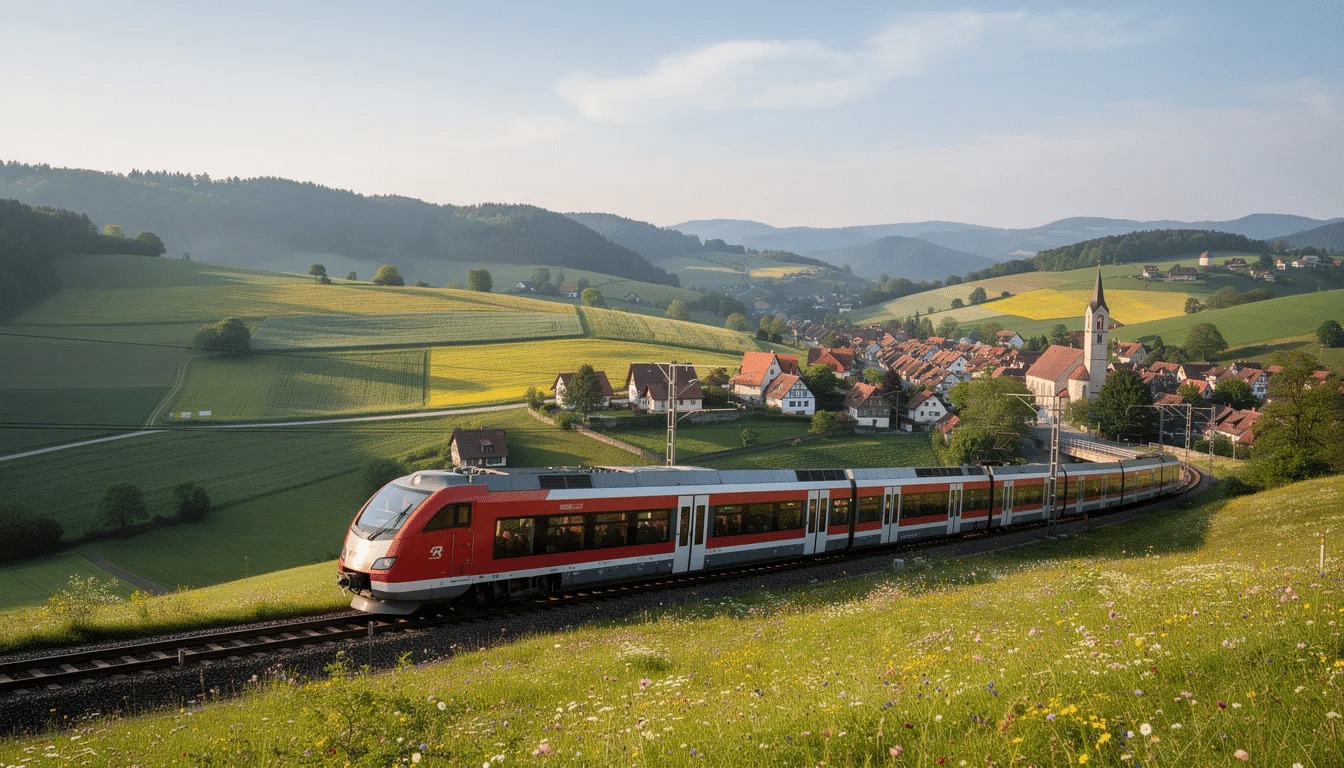
There’s something undeniably satisfying about watching the scenery shift from English countryside to French vineyards to Alpine peaks—all from a comfortable seat with a coffee in hand. Train travel remains the smartest way to explore Europe in 2025, offering city-centre arrivals, generous luggage allowances, and views that flying simply can’t match. While budget airlines promise cheap fares, the hidden costs and hassle often tip the balance firmly in favour of rail.
Here’s what makes European train travel stand out:
- No liquid restrictions, no removing shoes, no arriving two hours early—just walk onto the platform and board
- Luggage travels with you at no extra charge, with no weight limits on most railways (you carry it yourself, that’s the only rule)
- Arrive directly in central stations like Paris Gare de Lyon, Roma Termini, Amsterdam Centraal, and Berlin Hauptbahnhof—often steps from your hotel
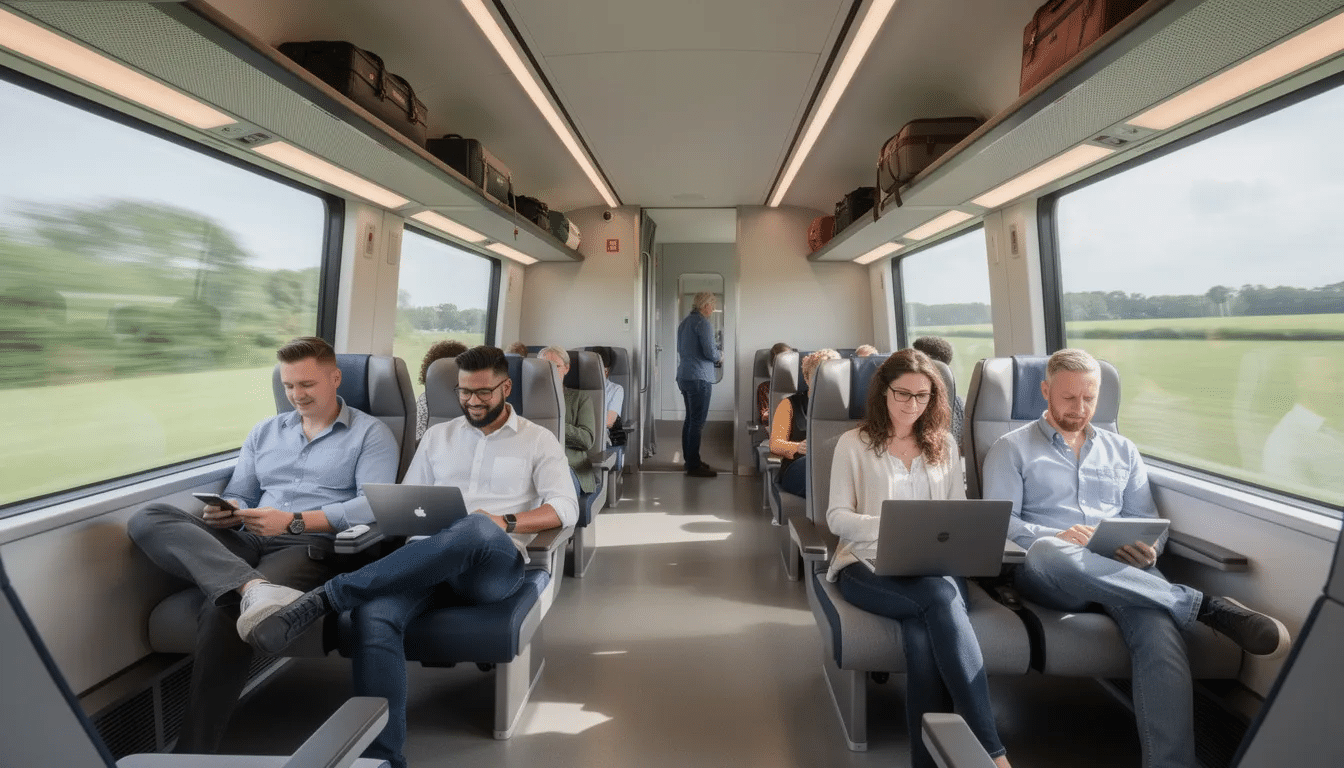
- Comfortable seats with legroom that economy class can only dream of, plus power sockets and Wi-Fi on many routes
- Scenic journeys through stunning landscapes rather than cloud cover and tarmac
- Reduced carbon footprint compared to short-haul flights, making it the greener choice for conscious travellers
Most vibrant cities across mainland Europe connect via high speed trains in under seven hours. Paris to Amsterdam takes just over three hours. Rome to Milan? Under three hours by Frecciarossa. Barcelona to Madrid clocks in at two and a half hours on the AVE.
Here’s a vivid example of what’s possible: breakfast in London, lunch in Paris, dinner in Zurich—all on the same day. Catch the morning Eurostar from St Pancras, arrive at Paris Gare du Nord by lunchtime, transfer to Gare de Lyon, and board a TGV Lyria that deposits you in Zurich by early evening. No airports, no overnight stays, just seamless european rail connections.
Is train travel in Europe right for your trip?
Not every journey suits the rails, but for most travellers, trains unlock Europe in ways planes and buses simply cannot. This section helps you quickly decide whether train tickets belong in your itinerary.
European trains work best for:
- First-time visitors covering 2–6 cities over 10–21 days
- Slow travellers who value the journey as much as the destination
- Families with children who need space to move and no strict baggage limits
- Flight-free travellers minimising their carbon footprint
- Interrail or Eurail pass holders making the most of flexible multi-country access
Ideal train trip examples include:
- The classic Western Europe loop: Paris–Brussels–Amsterdam–Cologne, with 2–3 hour hops between each city
- A London–Paris–Lyon–Barcelona route combining Eurostar, TGV, and AVE services
- The Central European circuit: Munich–Vienna–Budapest–Prague with stunning scenery and manageable distances
Trains may not be ideal when:
- You’re attempting very long jumps in a single day, like Lisbon to Prague (over 24 hours of travel)
- You have a tight weekend and flying saves a full day
- Extreme budget constraints push you toward overnight buses, which can undercut train fares significantly on certain routes
Types of trains in Europe
Europe’s rail network spans over 155,000 miles of track, but not all trains are created equal. Understanding the different categories helps you choose the right balance of speed, comfort, and price for each leg of your journey.
- High speed trains: The flagships of European rail. Eurostar whisks passengers from London to Paris in 2 hours 16 minutes. France’s TGV covers Paris–Lyon in just 2 hours. Spain’s AVE connects Madrid and Barcelona in 2 hours 30 minutes, while Germany’s ICE links Berlin and Munich in around 4 hours. Italy’s Frecciarossa races between Rome and Milan in under 3 hours. These trains often rival or beat flight times when you factor in airport transit.
- Intercity and long distance trains (IC/EC/ICN): Where high-speed lines don’t exist, these workhorses fill the gap. Think Zagreb–Budapest, Hamburg–Copenhagen, or Prague–Warsaw. Journey times run longer, but many routes offer dining car service and scenic views that high-speed lines, often built through tunnels, cannot match.
- Regional and commuter trains (R, RE, TER, Regio, Cercanías, S-Bahn): Perfect for shorter hops like Florence–Pisa (1 hour), Munich–Füssen (2 hours for Neuschwanstein Castle access), or Barcelona–Girona (40 minutes). These regional trains stop frequently but connect you to smaller towns that long distance trains skip entirely.
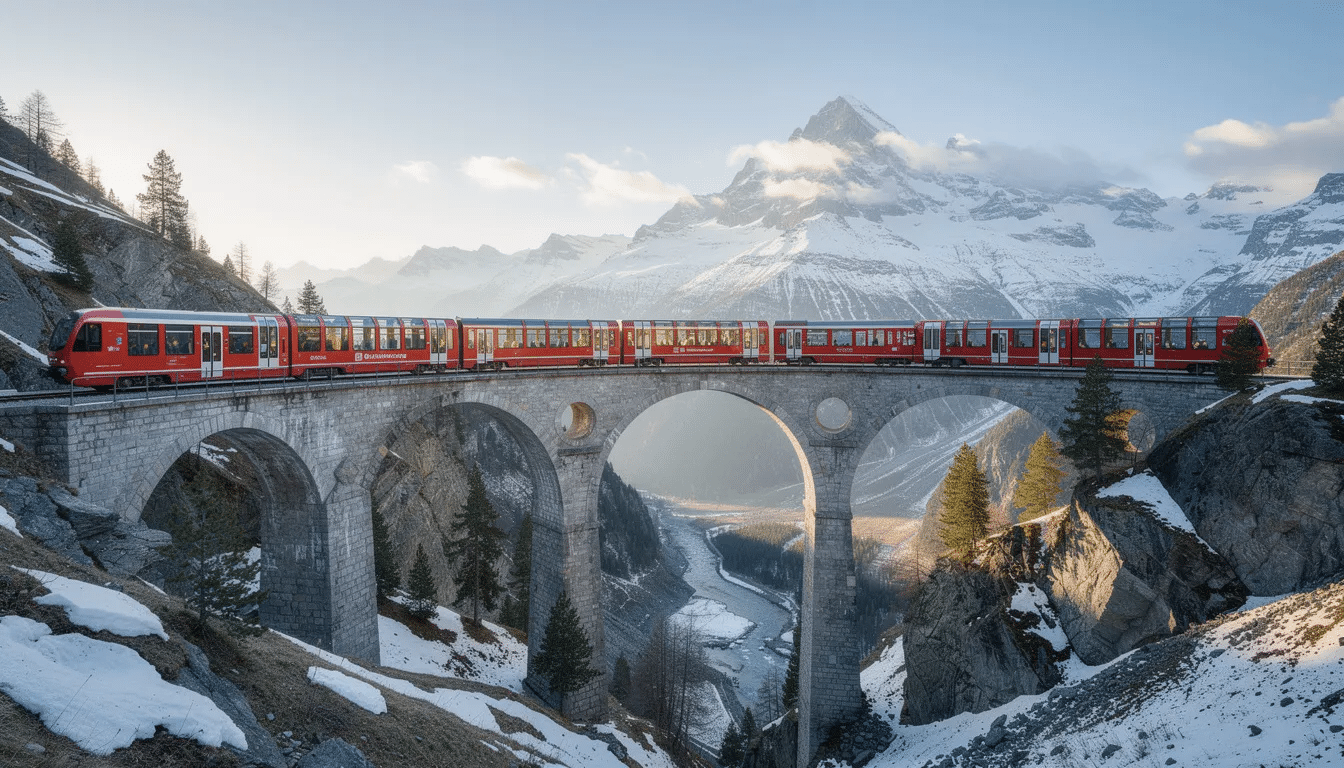
- Scenic and tourist trains: Some train rides are destinations in themselves. Switzerland’s Glacier Express traverses alpine peaks between Zermatt and St. Moritz over 8 hours. The Bernina Express climbs to 2,253 metres between Chur and Tirano. Scotland’s Jacobite Steam Train crosses the famous Glenfinnan Viaduct (yes, the Harry Potter bridge). Norway’s Flåm Railway descends through breathtaking scenery—technically outside the EU but firmly on most “Europe by train” bucket lists.
- Overnight and sleeper trains: Cover long distances while you sleep. ÖBB’s Nightjet connects Vienna–Venice, Berlin–Zurich, and dozens of other city pairs. The European Sleeper runs Brussels–Berlin–Prague. France’s Intercités de Nuit links Paris with Nice, Toulouse, and Briançon. These sleeper trains save on hotel costs while maximising your daytime exploring.
Key train passes and point-to-point tickets
One of the first decisions any Europe by train traveller faces is whether to invest in a rail pass or book individual tickets. The right choice depends entirely on your itinerary, booking timeline, and travel style.
Point-to-point tickets work like this:
- Purchased per journey, either at stations or online
- Dynamic pricing applies on most high speed trains—a Paris–Amsterdam ticket might cost €35 booked 60–90 days ahead, but €150+ last minute
- Regional trains in countries like Germany, Austria, and Switzerland often have fixed fares regardless of when you book
- Best value when you’re making only a few journeys or can commit to specific departure times well in advance
Eurail Pass (for non-European residents):
- Covers up to 33 countries across the continent
- Flexible options include 5 travel days within 1 month, 10 days within 2 months, or continuous passes for 15 days to 3 months
- Reservations and supplements are still required on many high-speed and sleeper trains—the pass is not an all-access ticket
- Works well for spontaneous travellers who want flexibility without rebooking fees
Interrail Pass (for European residents):
- Nearly identical coverage and structure to Eurail
- Available to EU/EEA/Swiss/UK residents with one inbound and one outbound travel day allowed in your home country
- Same reservation requirements apply
Mandatory reservations even with passes:
- Eurostar (London–Paris/Brussels): €30–38 passholder fee
- TGV (France): €10–20 depending on route
- AVE (Spain): €10–€13
- Frecciarossa (Italy): Around €13 for routes like Rome–Venice
- Most Nightjet sleepers: Varies by accommodation type
When passes make sense:
- Two to three weeks with many long distance rides spanning multiple countries—think Amsterdam–Berlin–Prague–Vienna–Budapest–Zagreb
- Travellers who value flexibility and don’t want to commit to specific trains
When point-to-point wins:
- Single-country trips within Italy, Germany, or Spain where advance booking unlocks deep discounts
- Short breaks with only 2–3 train rides total
- Routes where you can book far ahead and lock in promotional fares
How to buy train tickets in Europe
There’s no single website covering every European train perfectly, but with the right tools, you can book almost any route from your laptop.
National railway websites (direct booking, lowest prices, full schedules):
- France: sncf-connect.com (TGV, TER, Intercités)
- Germany: bahn.de or int.bahn.de for international routes
- Italy: trenitalia.com for Trenitalia; italotreno.it for Italo
- Spain: renfe.com for AVE and regional services
- Switzerland: sbb.ch for SBB
- Austria: oebb.at for ÖBB and Nightjet
- Netherlands: ns.nl for NS
Pan-European platforms:
- Rail Europe, Trainline, and Omio offer multi-operator coverage with English interfaces and common payment methods
- Downsides include booking fees (typically €2–5) and patchy coverage for Balkan routes or small private operators
- Useful for comparing options across countries in one search
Passholder seat reservations:
- Some reservations can be booked via eurail.com or interrail.eu
- Others require visiting national operator sites or booking in person at stations
- Popular routes like Paris–Barcelona or Milan–Zurich often sell out weeks ahead in summer
Buying at stations:
- Works well for same-day regional trips: Salzburg–Hallstatt, Florence–Lucca, Barcelona–Sitges
- Risky for high-demand routes like summer Friday TGVs or Eurostar on weekends—book these online
- Multilingual ticket machines available in most western europe stations
Advance booking windows:
- DB (Germany): Routes typically open 120 days ahead
- SNCF (France): Some TGV routes open 180 days ahead, others 120
- Trenitalia: Usually 120–180 days
- Sleeper routes and seasonal services may open later and sell out faster
Classic Europe by train routes
Planning your first train trip through Europe? These sample itineraries give you concrete routes to copy or adapt based on your interests and timeline.
- Western Europe highlights (10–14 days): Start in London, Eurostar to Paris (2h16), onward to Brussels (1h22 by Thalys-successor service), Amsterdam (1h50), and Cologne (2h45 by ICE). Each leg takes 2–4 hours, leaving full days for sightseeing. The route covers vibrant culture, world-class museums, and architectural treasures without exhausting travel days.
- Central Europe loop (2 weeks): Berlin–Prague (4h40 by EC)–Vienna (4h by Railjet)–Budapest (2h40 by Railjet)–Munich (6–7h with changes). This circuit delivers history, stunning architecture, and remarkably affordable destinations in eastern europe. Vienna–Budapest alone offers breathtaking scenery along the Danube.
- Alpine peaks in a week: Zurich–Chur–St. Moritz via regular trains or the Glacier Express (reservations required), then the Bernina Express to Tirano, with connections to Lugano. Time these for daylight to fully appreciate the Swiss Alps. The Bernina route crosses 196 bridges and passes through 55 tunnels at elevations up to 2,253 metres.
- Mediterranean route: Barcelona–Valencia–Alicante–Madrid–Seville using AVE high speed connections (2–3 hour legs), or Nice–Genoa–Cinque Terre–Florence–Rome by Frecciarossa and regional trains. Both itineraries combine beaches, cuisine, and cultural capitals.
- Overnight train adventure: Depart Paris in the evening on the Nightjet, wake up in Vienna, then continue by daytime train to Budapest. Alternatively, take the European Sleeper from Brussels to Berlin overnight, arriving refreshed for a full day of exploring before continuing to Prague.
Step-by-step: your first European train journey
Never taken a train in Europe? This walkthrough covers everything from booking to arrival so you board with confidence.
- Step 1 – Choose the right train: Compare journey time, number of changes, and price. A Florence–Bologna trip takes 35 minutes on the Frecciarossa or 1 hour on slower regional trains at half the price. Decide what matters more: time or budget.
- Step 2 – Buy your ticket: For long distance trains or cross-border routes like Paris–Amsterdam or Milan–Zurich, book online 1–3 months ahead for the best fares. Regional trips within one country often don’t require advance booking.
- Step 3 – Get your ticket: Most operators offer mobile tickets via apps like DB Navigator, SNCF Connect, or the Trenitalia app. Alternatively, download a PDF or collect printed tickets from station machines using your booking reference.
- Step 4 – Go to the correct station: Many cities have multiple stations. Paris alone has six major terminals (Nord, Est, Lyon, Montparnasse, Austerlitz, Bercy). Rome has Termini and Tiburtina. Berlin has Hauptbahnhof, Ostbahnhof, and others. Triple-check your departure station name and address.
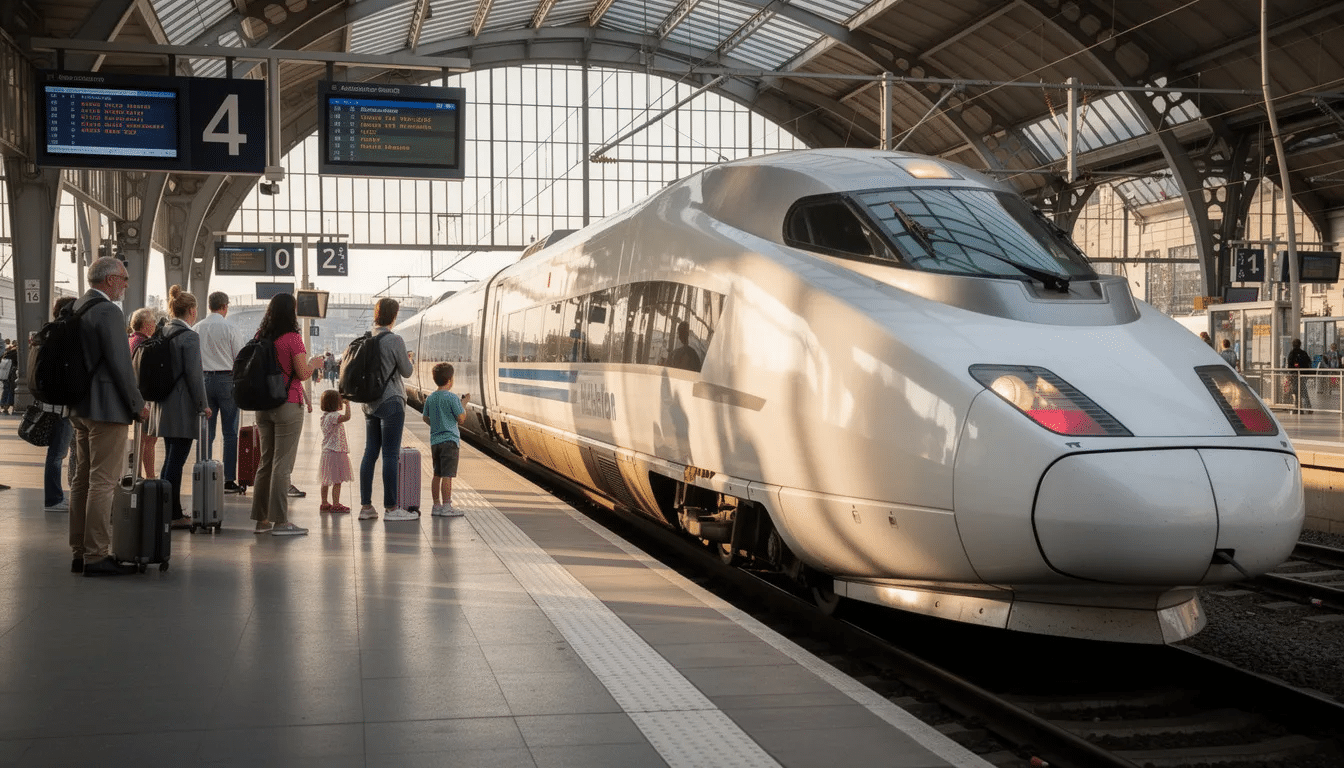
- Step 5 – Find your platform and car: Departure boards display train number and platform in 24-hour time (e.g., IC 2310 at 14:32). In Germany, Switzerland, and Austria, platform screens show coach formation diagrams—find where your car stops before the train arrives.
- Step 6 – Validate if required: Paper regional tickets in Italy, France, and some other countries must be stamped in small yellow or green machines before boarding. E-tickets and most long distance tickets don’t require validation.
- Step 7 – Onboard etiquette and checks: Conductors (capotreno in Italy, Zugbegleiter in Germany, contrôleur in France) will scan your ticket and occasionally check passports on international routes. Respect quiet carriage signs, keep luggage in overhead racks or designated areas, and don’t sit in reserved seats marked with displays or paper slips.
- Step 8 – Before arrival: Listen for announcements and watch station names as you approach your stop. Some have confusingly similar names—Venezia Mestre is the mainland station; Venezia Santa Lucia is the island terminus by the Grand Canal. Exit at the wrong one and you’ll need another train.
Checking timetables, apps, and real-time info
Knowing where to find accurate schedules and live updates makes multi-country trips far smoother—especially when delays threaten your connections.
- int.bahn.de (Deutsche Bahn’s international planner): The single best pan-European timetable. It covers Stockholm–Venice, Lisbon–Warsaw, daytime and overnight trains across many countries. Some private operators like Italo and certain Balkan lines may not appear, but for route planning, it’s unmatched.
- National apps for real-time data: DB Navigator (Germany and connections beyond), SNCF Connect (France), Trenitalia and Italo apps (Italy), Renfe (Spain), SBB Mobile (Switzerland), ÖBB Scotty (Austria). Each shows live platform assignments, delays, and alternative routing when things go wrong.
- Railplanner app for passholders: Offline timetable access for Eurail and Interrail users. Doesn’t show real-time delays but invaluable when you’re without mobile data in rural areas.
- Station departure boards: Physical screens in stations (particularly Germany, Switzerland, Netherlands) show intermediate stops and coach positions. Arrive 10–15 minutes early to locate your platform and walking position.
- Timetable visibility limits: Many networks only publish schedules 2–4 months ahead. If you’re researching a trip for next summer, specific train times may not yet appear. This is normal—check again closer to your departure date.
Comfort, classes, and seat reservations
What you get for your money varies dramatically across European trains. Understanding class distinctions and reservation rules helps you book smarter.
First class vs standard class:
- First class typically offers wider seats, more legroom, quieter carriages, and sometimes complimentary refreshments (coffee on ICE, snacks on some Frecciarossa services)
- Standard class on most high speed trains is already comfortable by airline standards—power sockets at every seat, Wi-Fi on many routes, and adequate legroom
- The first class ticket premium often isn’t worth it for journeys under 3 hours unless you prioritise silence or need guaranteed quiet working space
Mandatory reservations:
- TGV (France), Frecciarossa (Italy), AVE (Spain), Alfa Pendular (Portugal), and Eurostar all require reservations included in the ticket price
- You cannot simply board any departure—you’re locked to your booked train
Optional reservations:
- Germany, Austria, Switzerland, Denmark, Czech Republic, and Poland allow unreserved travel in your ticketed class
- Seat reservations cost €4–5 in Germany and are wise on Friday afternoons, Sunday evenings, and holiday periods
- Look for electronic seat displays above seats showing whether they’re reserved for specific segments
Sleeper train comfort:
- Forget first and standard class labels—sleeper trains divide by accommodation: seats, 4–6 berth couchettes, and 1–3 berth private sleepers
- ÖBB Nightjet deluxe sleepers include private shower, WC, and breakfast—genuine hotel-on-rails experience
- Book sleeper compartments early; they sell out faster than seated options
Reservation verification:
- Always check whether your ticket includes a reservation or requires a separate purchase
- On some routes, travelling without a valid reservation when one is mandatory means fines or being asked to leave the train
Overnight trains and saving on hotels
Sleeper trains are experiencing a renaissance across Europe, and for good reason. Cover 1,000+ kilometres while you sleep, skip a hotel bill, and wake up in a new country ready to explore.
How sleeper trains work:
- ÖBB’s Nightjet network connects Vienna–Venice, Vienna–Rome, Berlin–Zurich, Berlin–Brussels, and dozens more city pairs
- Accommodation ranges from reclinable seats to 4–6 berth couchettes to private 1–3 berth sleeper cabins with wash basins or en-suite facilities
- European Sleeper operates Brussels–Berlin–Prague, ideal for connecting western and eastern europe without flights
- France’s Intercités de Nuit links Paris with Nice, Toulouse, and Briançon—book weeks ahead in summer
Approximate pricing (varies by season and advance booking):
- Seated tickets: €40–70 on popular routes
- Couchettes (4–6 berth): €70–120
- Private sleepers: €150–300+ depending on cabin type and route
- The most luxurious Nightjet deluxe sleepers with private shower run higher but compete with mid-range hotel prices in destinations like Venice or Zurich
Security and comfort tips:
- Couchettes and sleepers have lockable doors; attendants patrol sleeping cars overnight
- Bring a small luggage lock for peace of mind
- Light sleepers should pack earplugs and an eye mask—tracks can be noisy, especially on older stock
- Modern Nightjet carriages (look for the newer blue-and-white trains) offer smoother, quieter rides than legacy equipment
Connections, delays, and your rights
European trains are generally punctual, but when things go wrong, knowing your rights prevents small delays from becoming expensive disasters.
Connection timing guidance:
- 10–20 minutes is usually sufficient for domestic changes on a single ticket
- 45–90 minutes is wiser at major hubs like Paris, Zurich, Brussels, or Cologne when changing between operators or ticket types
- Some itineraries deliberately build in a break at transfer cities—use the time to grab lunch or store luggage
Your rights under CIV (international rail carriage conditions):
- If all legs appear on one international ticket and a delay causes a missed connection, you’re entitled to take the next available train at no extra charge
- The railway must assist you—this might mean rebooking, providing refreshments for long waits, or arranging hotel accommodation for overnight delays
When separate tickets leave you exposed:
- Cheap promotional fares booked individually (e.g., separate Paris–Brussels and Brussels–Amsterdam tickets) may not be legally protected if you miss a connection due to a delay on the first train
- Some operator agreements like Railteam’s HOTNAT or AJC cover specific high-speed connections, but don’t assume coverage—read the terms
What to do when you miss a connection:
- Don’t panic and don’t buy a new ticket immediately
- Ask the conductor on your delayed train to endorse your ticket
- Visit the ticket office of the affected operator at the station
- Explain the situation calmly—staff at major hubs deal with this daily and most are accommodating
Eurostar and other premium operators:
- Generally helpful when a late connecting train causes a missed departure, especially if you allowed reasonable buffer time (90+ minutes in Paris between stations)
- Keep proof of your delayed inbound train (screenshots, ticket endorsement) when seeking rebooking
Practical tips for a smoother Europe by train trip
Small details transform a good trip into a great one. These tips cover everything from dining cars to phone apps.
- Pack snacks and a refillable water bottle: Many long distance trains have bistro cars or dining car service (ICE Bordbistro, TGV Bar, Eurostar Café), but selection varies and prices run high. A sandwich and water from a station supermarket costs a fraction of onboard options.
- Travel light: No formal weight limits exist on most European railways, but you must be able to carry your own bags. Wheeled suitcases or travel backpacks that fit overhead work best. Avoid blocking aisles or doorways.
- Wi-Fi and power expectations: Many ICE, TGV, Eurostar, and modern regional units offer sockets at every seat and onboard Wi-Fi. Tunnels and rural stretches cause dropouts. Download entertainment offline and consider an eSIM for reliable roaming across many countries.
- Observe quiet zones: ICE and some TGV services designate quiet carriages where phone calls and loud conversations are forbidden. Even outside quiet zones, keep voices low—especially on evening and night services. Other travelers will appreciate it.
- Stay aware of your belongings: Europe’s trains are generally safe, but watch bags near doors (a common spot for grab-and-run theft at station stops), don’t leave valuables unattended, and use hotel-style awareness on busy commuter services in major cities.
- Double-check station names: Brussels Midi, Brussels Central, and Brussels Nord are different stations. Venice Mestre and Venice Santa Lucia are 10 minutes apart by train but worlds apart in location (mainland vs island). Small errors here cause big problems.
- Plan at least one scenic daytime leg: The Zurich–Milan route via the Gotthard Pass, Innsbruck–Zurich via the Arlberg, the Rhine Valley between Koblenz and Bingen—these routes rival dedicated tourist trains for sheer beauty. Check departure times to ensure daylight and sit on the side with the best views (usually river-side on Rhine routes, right side heading south through the Alps).
Whether you’re planning a quick weekend escape to Paris or a month-long adventure spanning estonia finland france and beyond, Europe by train offers flexibility that flying simply cannot match. The midnight sun in Scandinavia, the grand canal in Venice, the ancient streets of Rome—all accessible from the same comfortable train seat.
Start with a single route. Book your first train between two cities you’ve always wanted to visit. Master the booking process, discover how relaxing train rides can be, and build confidence for more ambitious itineraries.
The tracks are waiting. Your journey starts now.