
Train service

Deutsche Bahn
Deutsche Bahn (DB) is Germany’s national railway company, operating long-distance, regional, and international train services across Europe.
Check times & pricesOfficial website Check times & prices
Flixtrain
FlixTrain is a German long-distance train operator offering affordable, tech-enabled rail travel on key routes across Germany and into neighboring countries.
Check times & pricesOfficial website
DSB
DSB is Denmark’s national rail operator, running regional, intercity, and commuter trains, including Copenhagen’s S-train network.
Check times & pricesOfficial websiteTrain tickets

Omio
Omio connects you with over 1,000 transport providers - trains, buses, flights, and more - to simplify your travel planning.

Trainline
Trainline sells rail and coach tickets worldwide on behalf of major UK and European transport companies.

Raileurope
Rail Europe is a leading travel tech company specializing in European train bookings for over 15,000 travel professionals worldwide.
Hamburg is one of Germany’s busiest railway hubs, with ICE trains from Berlin taking around 1 hour 50 minutes and Frankfurt connections arriving in roughly 3 hours 40 minutes. Almost all long-distance trains use Hamburg Hauptbahnhof, which sits in the city centre beside the Alster Lake. A few services continue to Hamburg-Altona instead. Check your train details before you book. If the ticket shows Altona, confirm whether it also calls at Hauptbahnhof.
Deutsche Bahn runs most long-distance trains. FlixTrain offers a cheaper low-cost alternative on the Berlin corridor, and international options include Copenhagen by ICE (jointly with DSB) and a new Snälltåget daytime train to Stockholm, which launched in May 2026.
Hamburg train stations
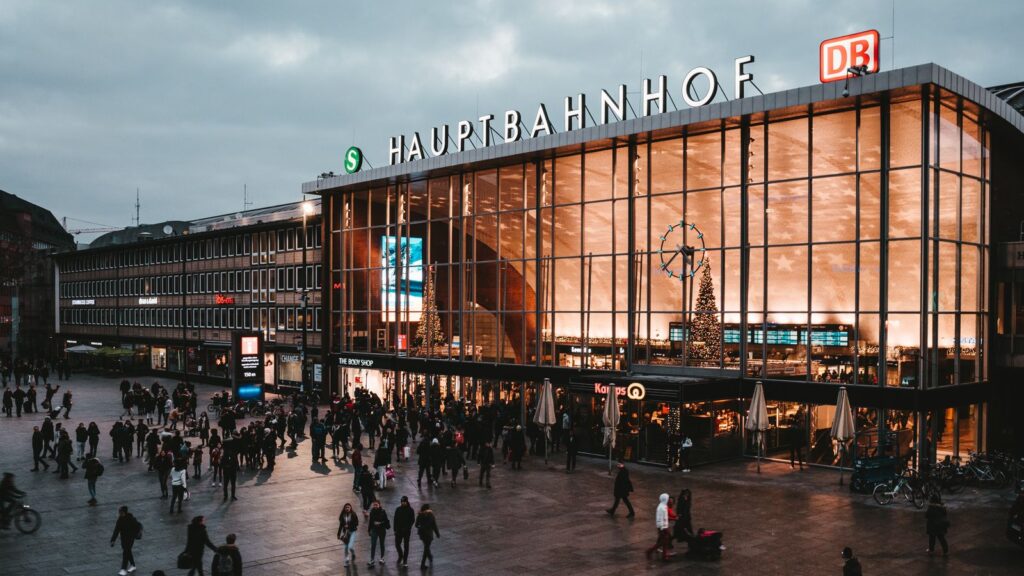
Hamburg Hauptbahnhof
Use Hauptbahnhof. It sits beside the Alster Lake, near the Mönckebergßtraße shopping area, and handles around 550,000 passengers and 720 train movements daily. Four S-Bahn lines and six U-Bahn platforms are built into the station, so you can continue across the city the moment you arrive.
Facilities include a DB Reisezentrum travel centre, an information desk, free Wi-Fi, luggage lockers from around €5, and 75 shops and restaurants in the Wandelhalle mall. The Nordsteg walkway links the north and south concourses. It is useful if your platform is on the opposite side from your exit.
Almost every ICE and IC long-distance train to Hamburg stops here. It is the right station for arrivals from Berlin, Frankfurt, Cologne, Amsterdam, and Copenhagen.
Hamburg-Altona
Altona is a terminus station in the city’s west, opened in 1844. Some services, particularly those heading to or from Schleswig-Holstein, start or end here. Many also call at Hauptbahnhof first. Not all do. Check the stopping pattern on your booking confirmation. If your train ends at Altona and you need the city centre, you may need to change or walk.
Altona has bicycle parking, car rental, a taxi stand, luggage storage, and free Wi-Fi. It is the better choice if your hotel is in the western neighbourhoods or the Altona district itself.
Dammtor and Harburg
Dammtor is near Hamburg University and the CCH congress centre. Use it only if you are heading to an event at Messehallen or CCH. It is rarely relevant for leisure visitors arriving by intercity train.
Harburg is south of the River Elbe. Six regional platforms and an underground S-Bahn connection. Use it only for destinations south of the Elbe. It is off the long-distance route for most visitors.
Train routes to Hamburg
Journey times from key cities
| Route | Main operator | Typical journey time | Frequency |
|---|---|---|---|
| Berlin-Hamburg | DB ICE | Around 1h 50m | Several daily |
| Frankfurt-Hamburg | DB ICE | Around 3h 40m | Several daily |
| Cologne-Hamburg | DB ICE | Around 4h | Several daily |
| Amsterdam-Hamburg | DB IC | Around 5h 30m | 1 or 2 daily |
| Copenhagen-Hamburg | DB + DSB | Around 5h | 4 or 5 daily |
| Stockholm-Hamburg | Snälltåget | Around 11h 30m | Daily (from May 2026) |
Times are typical and vary by departure. Check your exact train on bahn.de or the relevant operator’s site before booking.
Deutsche Bahn
Deutsche Bahn runs the majority of long-distance trains to Hamburg. ICE (InterCity Express) trains are the fastest, reaching up to 300 km/h and connecting Hamburg to Berlin, Frankfurt, Cologne, Munich, and other major cities. IC (InterCity) trains cover a wider range of destinations at slightly lower speeds.
Seat reservations on ICE and IC are normally optional, at €4.90 in second class or €5.90 in first. From 26 June to 31 August 2026, reservations are compulsory on international ICE journeys. Add the reservation when you buy your ticket. Sorting it separately later is an unnecessary extra step.
DB Sparpreis advance tickets start from around €17.90 for the Berlin-Hamburg route when booked early. Prices rise as the departure date approaches. Flexpreis tickets allow same-day changes and cancellations but cost significantly more.
DB luggage rules: one piece of hand luggage plus one larger item, free of charge. Up to four children under 15 travel free with a paying adult. Small pets in a transport box travel free.
FlixTrain
FlixTrain runs low-cost trains between Hamburg, Berlin, Düsseldorf, and Cologne. Berlin-Hamburg fares start from around €6.99. No seat reservation needed. Trains are slower than ICE and less frequent, but if price is the priority on the Berlin corridor and the timetable works, FlixTrain is worth a look. Book at flixtrain.com or the FlixBus app.
International routes
Amsterdam: One or two direct DB IC trains daily from Hamburg. Journey time around 5 hours 30 minutes. Bring valid ID, as the route crosses the Netherlands border.
Copenhagen: Four to five direct trains daily, operated jointly by DB and DSB. Journey time around 5 hours. The route crosses into Denmark at Flensburg; occasional spot checks occur despite the Schengen area.
The Copenhagen route needs a DSB seat reservation for the Danish portion. You can book through bahn.de, but confirm the DSB reservation appears in your booking confirmation. It does not always generate automatically. If you have an Interrail or Eurail pass, you still need a paid reservation. Book the DSB portion at dsb.dk or ask at a DB counter.
Stockholm: From 4 May 2026, Snälltåget runs a daily daytime train connecting Hamburg, Copenhagen, Malmö, and Stockholm. Departs Hamburg Hauptbahnhof at 09:51, arrives Stockholm C at 21:17. The train has a restaurant car (Krogen) on board. Times are preliminary; check snalltaget.se for current details and to book. Snälltåget also runs a night train on the Hamburg-Berlin-Stockholm route if you prefer overnight travel.
Paris: There is no direct daytime ICE train between Hamburg and Paris. European Sleeper runs an overnight service on the Hamburg-Brussels-Paris route, with tickets from around €69.99. Journey time is roughly 9 to 10 hours. Book at europeansleeper.eu.
Basel, Vienna, and Zurich: Direct ICE connections run from Hamburg to all three. Journey times vary; check bahn.de. Seat reservations are recommended and may be compulsory depending on the service.
Tickets, fares, and booking
Booking channels
Book through bahn.de (available in English) or the DB Navigator app. Both show live timetables, allow seat reservations, and accept international cards and PayPal. For in-person help, use the Reisezentrum desk inside Hauptbahnhof or a self-service kiosk.
For Snälltåget, book at snalltaget.se. For European Sleeper (Paris), book at europeansleeper.eu. Trainline, Rail Europe, and Omio also sell Hamburg train tickets and can be useful for comparing options across operators in one place.
Ticket types
Sparpreis is the advance fare. Tied to a specific train, non-refundable if you miss it. For Berlin-Hamburg, this can start from around €17.90 when booked early. Book Sparpreis if your schedule is fixed.
Flexpreis allows same-day changes and full cancellation. Costs considerably more. Use it only when flexibility genuinely matters. The price premium is often not worth it for a straightforward point-to-point journey.
Seat reservations
When a reservation is compulsory:
- Summer 2026 (26 June to 31 August): mandatory for ICE international journeys.
- Copenhagen (Danish section): mandatory, booked through DSB.
- Interrail/Eurail pass holders: always required on ICE and IC trains, regardless of season.
When optional: most domestic ICE and IC journeys outside peak periods. The fee is €4.90 second class, €5.90 first class. Worth adding for travel on busy Fridays, school holiday weekends, and routes with limited capacity.
FlixTrain and regional trains (RB, RE) have no reservation system.
Interrail and Eurail passes
Interrail and Eurail passes cover DB ICE and IC trains to Hamburg. The pass handles the travel; seat reservations are still required and paid separately.
Domestic ICE reservation for pass holders: around €4.90 per seat. For Copenhagen, the DSB portion is also pass-covered, but you need a DSB reservation. Book it at dsb.dk or through a DB counter.
The Deutschlandticket (€63/month) is different. It covers regional trains, S-Bahn, U-Bahn, and buses across Germany, but not ICE, IC, or FlixTrain. It is useful for getting around Hamburg after you arrive. It will not carry you from Berlin or Frankfurt to Hamburg.
Saving money
The biggest lever is when you book. On Berlin-Hamburg and Frankfurt-Hamburg, a Sparpreis booked weeks ahead can be €17.90 to €29.90. The same train booked the day before can cost €70 or more. On a return trip, the difference can exceed €80.
Other routes to lower fares: mid-morning and early afternoon trains are often cheaper than peak departures. DB BahnCard 25 gives 25% off Flexpreis and some Sparpreis fares and typically pays for itself within two return trips if you travel fairly regularly. Groups of six or more qualify for group discounts; families should check the child fare rules (up to four children under 15 travel free with a paying adult).
Getting around Hamburg
From the station to your hotel
Hauptbahnhof is easy to leave. The eastern exit onto Kirchenallee leads directly to a taxi rank and several nearby hotels. The western exit opens onto a pedestrian street heading toward the city centre and Alster Lakes.
For hotels in the Speicherstadt district, bus M6 runs a direct connection from Hauptbahnhof. Two U-Bahn stations are integrated into the building: Hamburg Hbf Nord (U2 and U4) and Hamburg Hbf Süd (U1 and U3). Choose the line that runs toward your hotel area.
Hamburg’s public transport
Hamburg’s public transport is managed by HVV (Hamburger Verkehrsverbund). The network covers four U-Bahn lines, four S-Bahn lines, regional trains, ferries, and a large bus network. Local services run from around 04:30 to 00:30 on weekdays, with 24-hour service on weekends and night buses on key routes.
Hamburg Card: €12.90 for one day. Covers unlimited HVV travel in the Hamburg AB zone and gives discounts of up to 50% on many museums and attractions. Multi-day versions are available. It is worth buying if you plan to visit two or more paid attractions in a day; compare it against single ticket prices otherwise.
Deutschlandticket: €63/month on a rolling subscription. Covers regional trains, S-Bahn, U-Bahn, and buses across Germany. Does not cover ICE, IC, or FlixTrain. Not available as a day ticket. For most short-stay visitors, the Hamburg Card is the simpler choice for getting around the city.
Getting to Hamburg Airport
Take the S1 from Hamburg Hauptbahnhof. Journey time to Hamburg Airport is around 25 minutes. At Ohlsdorf station, the S1 line splits. One branch goes to the airport, the other to Poppenbüttel. Check the destination on the train display at Ohlsdorf before boarding.
Attractions accessible by transit
- Miniatur Wunderland: Over 15 km of model railway track. The attraction is a 22-minute walk from Hauptbahnhof, or take the U4 to HafenCity Universität.
- Hamburg Town Hall (Rathaus): 12-minute walk from Hauptbahnhof, or U3 to Rathaus.
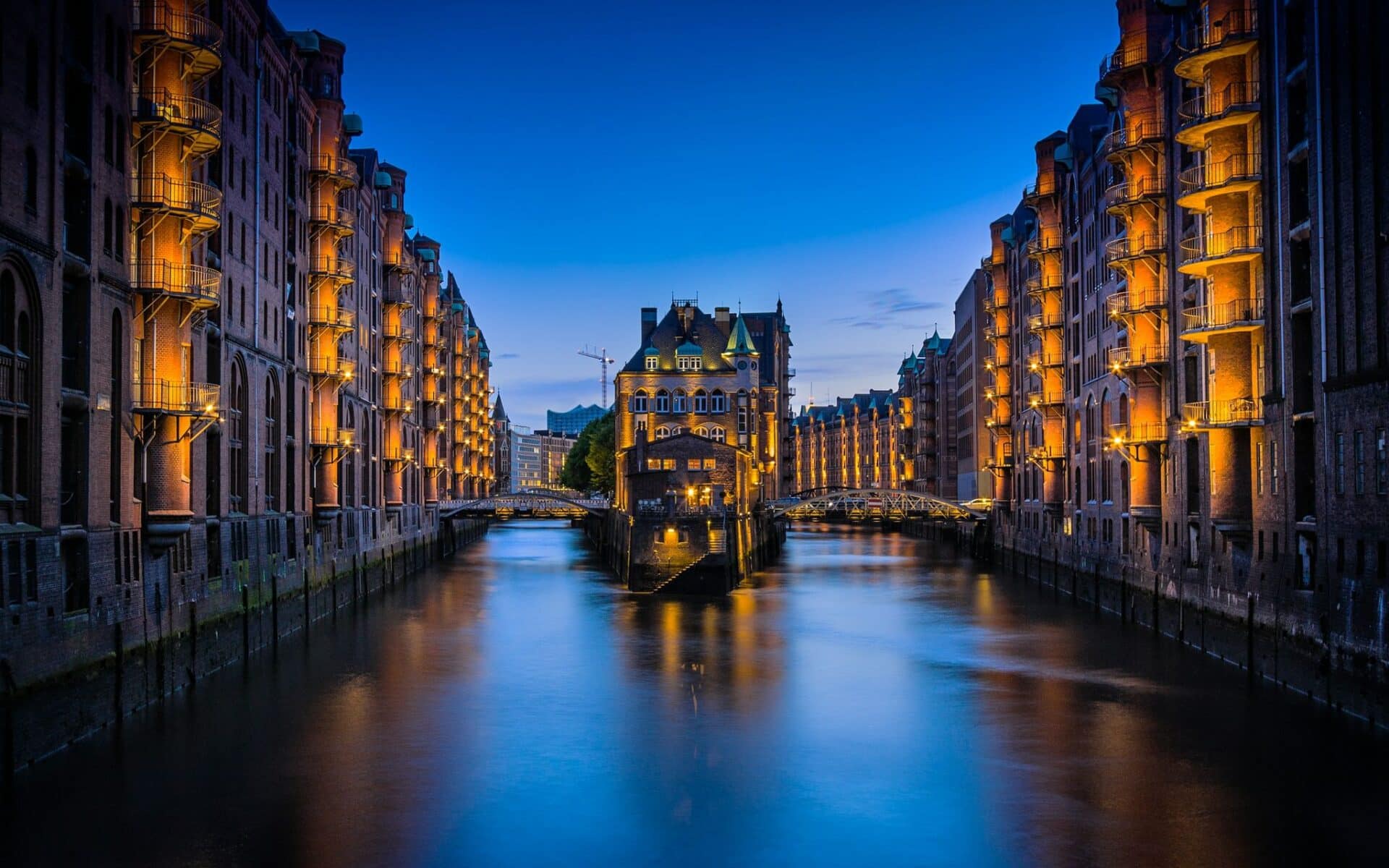
- Speicherstadt and HafenCity: 20-minute walk from Hauptbahnhof, or U4 to HafenCity Universität.
- Reeperbahn (St Pauli): U3 to St Pauli station.
- Park and Ride: Around 110 sites near rapid transit stops across the Hamburg network.
When to book and what to expect
Summer and peak periods
Hamburg trains fill up from May to September. The busiest weekends are the Port Anniversary (Hafengeburtstag, usually May) and the Reeperbahn Festival (September). ICE trains at these times can be very full.
For ICE international travel from 26 June to 31 August 2026, seat reservations are compulsory. Add the reservation when you buy your ticket. Do not rely on finding a seat when you arrive on the platform.
Local S-Bahn and U-Bahn are busiest during the weekday commuter rush: 07:30 to 09:00 in the morning and 16:00 to 18:30 in the afternoon. Travel outside these windows if you want space.
Current engineering works
The Hamburg-Berlin line refurbishment that ran from August 2025 through April 2026 is complete. ICE services on the Berlin corridor are running normally. Smaller track maintenance closures continue throughout the year. Check bahn.de or the DB Navigator app for service updates before you travel, especially for weekend journeys where engineering works are more frequent.
Winter travel
Deutsche Bahn invests around €30 million per year in station maintenance and winter resilience. Around 49,000 of the network’s 70,000 track switches have heating elements; a further 12,700 have protective covers. ICE trains reduce speed in severe ice conditions. Winter delays happen, so allow extra time for connections and check service alerts before travelling in bad weather.
Frequently asked questions
Which train operators serve Hamburg?
Deutsche Bahn runs the most trains to Hamburg, including high-speed ICE services from Berlin (around 1 hour 50 minutes), Frankfurt (around 3 hours 40 minutes), and Cologne (around 4 hours). For international routes, DB operates jointly with DSB on the Copenhagen corridor and with other European operators on services to Basel, Vienna, and Zurich. FlixTrain runs low-cost trains between Hamburg, Berlin, Dusseldorf, and Cologne. Snalltaget operates a daily daytime service connecting Hamburg, Copenhagen, and Stockholm, launched in May 2026.
Do I need a seat reservation on trains to Hamburg?
On most ICE and IC trains, seat reservations are optional and cost around EUR 4.90 in second class or EUR 5.90 in first class. From 26 June to 31 August 2026, reservations are compulsory on international ICE journeys. If you hold an Interrail or Eurail pass, you must book a paid reservation on all ICE and IC trains regardless of season. For the Hamburg to Copenhagen route, a separate DSB reservation is required for the Danish portion of the journey.
How do I buy train tickets to Hamburg?
Book through bahn.de (available in English) or the DB Navigator app. Both accept international payment cards and PayPal and allow you to add a seat reservation at the same time as your ticket. Tickets are also available at DB station kiosks and the Reisezentrum desk at Hamburg Hauptbahnhof. For the Stockholm daytime service, book at snalltaget.se. For the Paris overnight service, book at europeansleeper.eu. Third-party sites such as Trainline, Rail Europe, and Omio also sell Hamburg train tickets.
Which station should I use when arriving in Hamburg by train?
Hamburg Hauptbahnhof is the right station for almost every long-distance arrival. It is centrally located beside the Alster Lake and connects directly to Hamburg's S-Bahn and U-Bahn networks. A smaller number of services, particularly those continuing to Schleswig-Holstein, also stop at Hamburg-Altona in the city's west. Check your booking details to confirm which station your train uses.
What public transport is available after arriving in Hamburg?
Hamburg Hauptbahnhof connects directly to four S-Bahn lines and six U-Bahn platforms. The Hamburg Card costs EUR 12.90 per day and covers unlimited travel on the HVV network (S-Bahn, U-Bahn, buses, and ferries within the Hamburg AB zone) plus discounts of up to 50 percent on museums and attractions. Multi-day versions are available. The Deutschlandticket (EUR 63 per month) covers regional and local public transport across Germany but does not cover ICE or IC long-distance trains.