
Train service

SNCB
SNCB is Belgium’s national railway operator, offering domestic and international train services with flexible ticket options, including youth and senior discounts.
Check times & pricesOfficial website Check times & prices
Flixtrain
FlixTrain is a German long-distance train operator offering affordable, tech-enabled rail travel on key routes across Germany and into neighboring countries.
Check times & pricesOfficial website
CFF
CFF is Switzerland’s national rail operator, known for punctual, fully electrified train services across the country and beyond.
Check times & pricesOfficial website
Deutsche Bahn
Deutsche Bahn (DB) is Germany’s national railway company, operating long-distance, regional, and international train services across Europe.
Check times & pricesOfficial website
SNCF
SNCF is France’s state-owned rail operator, running high-speed, regional, and international TGV services across Europe.
Check times & pricesOfficial websiteTrain tickets

Omio
Omio connects you with over 1,000 transport providers - trains, buses, flights, and more - to simplify your travel planning.

Trainline
Trainline sells rail and coach tickets worldwide on behalf of major UK and European transport companies.

Raileurope
Rail Europe is a leading travel tech company specializing in European train bookings for over 15,000 travel professionals worldwide.
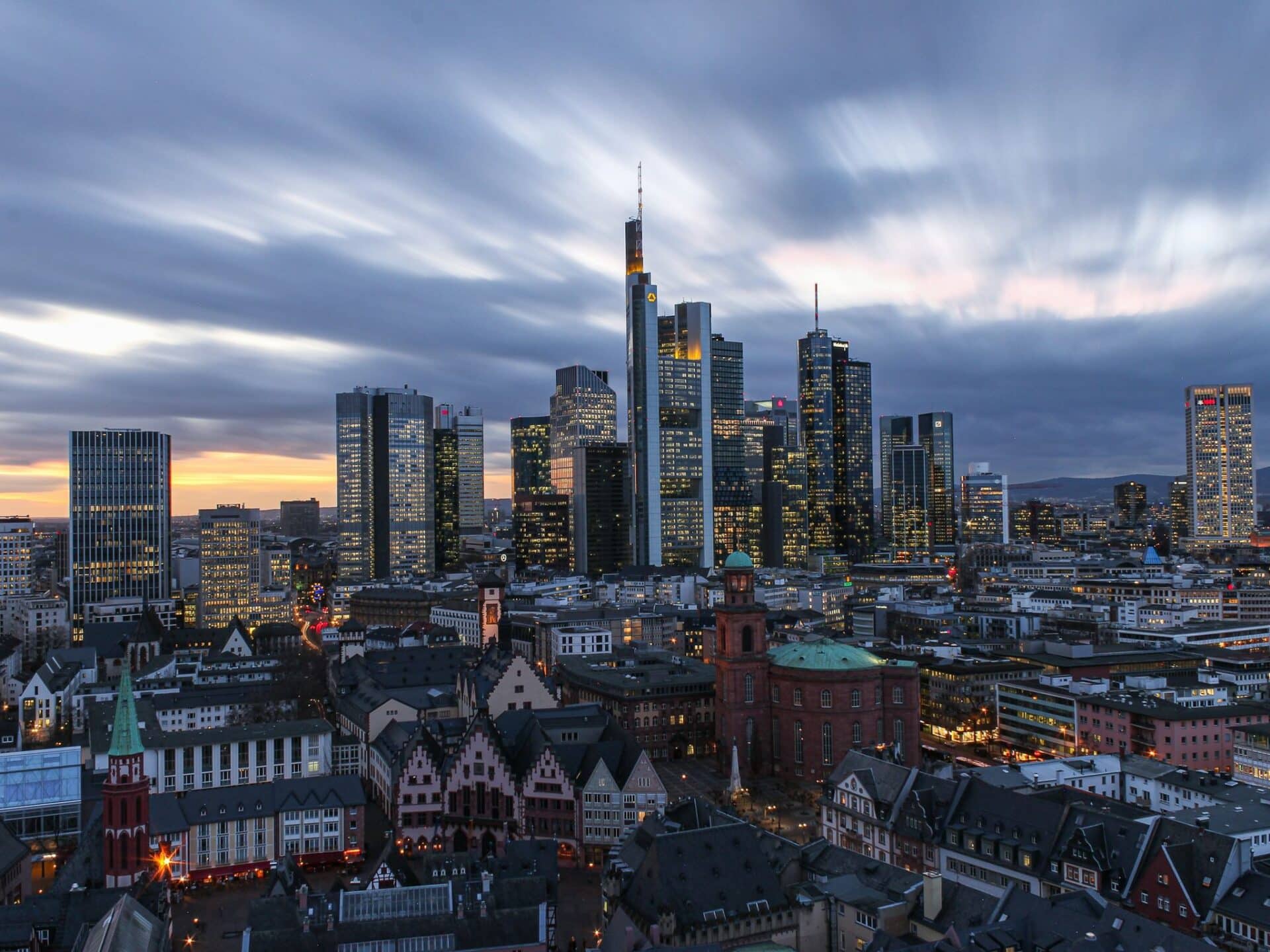
Frankfurt is Germany’s busiest rail hub, offering over 1,100 daily train connections to cities across Europe and Germany. Frankfurt is known as the financial capital of Europe and features a distinctive skyline. Whether you’re traveling domestically or internationally, Frankfurt’s central station and airport train services make it easy to get around. Here’s what you need to know:
Frankfurt (Main) Hauptbahnhof (493,000 passengers daily) and Frankfurt Airport (regional and long-distance stations).
Popular Routes: High-speed ICE trains connect Frankfurt to Berlin (3h 53m), Munich (3h 30m), Paris (3h 45m), and more. Frankfurt is a key hub for high-speed train connections across Western Europe, including direct services to London.
Ticket Options: Book early for discounts (Super Sparpreis fares start at €19.99). Regional travel is affordable with the €49 Deutschland-Ticket.
Facilities: Free WiFi, luggage lockers, and accessible platforms are available at all major stations.
Local Transit: U-Bahn, S-Bahn, buses, and trams connect the city seamlessly, with day passes starting at €7.
Frankfurt is also a gateway to nearby cities like Heidelberg, Cologne, and Stuttgart. Frankfurt is a popular city break destination, with many museums and pleasant restaurants for visitors to explore. Whether you’re planning a quick trip or a scenic journey, Frankfurt’s rail system offers convenience and flexibility, connecting to major destinations across Western Europe.
Train Stations in Frankfurt
Frankfurt (Main) Hauptbahnhof
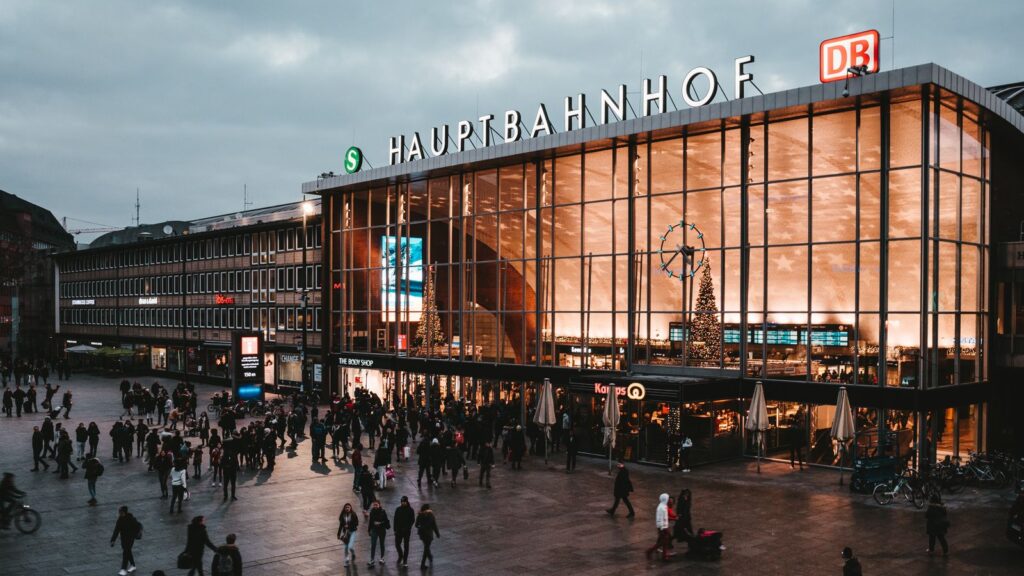
Frankfurt (Main) Hauptbahnhof is Germany’s busiest train station, handling an impressive 493,000 passengers daily. It features 24 mainline platforms, 4 S-Bahn platforms, and 4 U-Bahn platforms (three for passengers), along with 6 tram platforms spread across three locations.
Here’s a quick look at the station’s amenities:
|
Essential Services |
Convenience Features |
Support Services |
|---|---|---|
|
24/7 DB Information |
Free WiFi |
Mobility Service Center |
|
DB Reisezentrum |
Shopping & Dining Options |
Lost and Found Office |
|
Luggage Lockers |
Travel Lounge |
24/7 Mobile Staff Assistance |
|
Currency Exchange |
Hotel Services |
Bahnhofsmission (Aid Services) |
|
Car Rental |
Bicycle Garage |
Cleaning Team |
The station is designed for accessibility, featuring elevators throughout and a range of mobility services. When boarding trains to Frankfurt, be sure to check your carriage number for seat reservations and to locate amenities such as luggage storage or accessible features within your specific carriage. It also provides bicycle parking, a mobility hub, and a taxi rank for easy transportation options.
If you’re heading south, Frankfurt (Main) Süd is another key station, offering essential services for southern routes.
Frankfurt (Main) Süd
Frankfurt Süd (South Station) operates with 9 tracks on 5 platforms. Despite being smaller, it provides a comfortable experience with:
Free WiFi
Elevator access
Public restrooms
Bicycle parking
Taxi stand
This station connects seamlessly with public transportation, making it a convenient choice for travelers in the southern districts.
For those flying in or out of Frankfurt, dedicated train services at the airport make traveling even easier.
Frankfurt Airport Stations
Frankfurt Airport features two train stations. The regional station (Regionalbahnhof) is located on the ground floor of Terminal 1, while the long-distance station (Fernbahnhof) caters to high-speed and international routes.
To reach the regional station, follow the clearly marked “Train stations S T” signs upon arrival. Whether you’re catching a local train or a high-speed connection, the airport stations are designed to make transfers smooth and efficient.
Train Companies and Routes
German Train Services
Deutsche Bahn (DB) is the leading provider of train services in Frankfurt, offering frequent high-speed ICE connections across Germany. Saver fares are available for early bookings, allowing passengers to save money on their journeys. DB Navigator is the main app for planning and ticketing for Deutsche Bahn, making it easy to check schedules and purchase tickets. Here’s a snapshot of some popular routes:
|
Route |
Frequency |
Journey Time |
Starting Fare |
|---|---|---|---|
|
Frankfurt-Berlin |
Hourly |
3h 53m |
€19.99 |
|
Frankfurt-Munich |
Every 2 hours |
3h 30m |
€29.99 |
|
Frankfurt-Hamburg |
Every 2 hours |
4h 15m |
€29.99 |
|
Frankfurt-Stuttgart |
Hourly |
1h 15m |
€19.99 |
If you’re looking for a more affordable option, Flixtrain operates budget-friendly services on select routes, such as Frankfurt Süd to Berlin, with fares starting as low as €9.99. Keep in mind that prices depend on demand and how early you book.
Frankfurt isn’t just a domestic hub – it’s also a key gateway for international train travel, with numerous cross-border connections.
Cross-Border Train Routes
Frankfurt’s position as a major international rail hub provides direct links to several European cities. Direct services from Frankfurt include Paris, Amsterdam, Brussels, Zurich, and Vienna. Frankfurt is also accessible via major European rail hubs with high-speed connections from cities like Munich and Brussels. Here are the main routes:
|
Destination |
Operator |
Journey Time |
Starting Fare (2nd/1st Class) |
|---|---|---|---|
|
Paris |
DB/SNCF |
3h 45m |
€39.99/€69.99 |
|
Brussels |
DB/SNCB |
3h 10m |
€29.99/€59.99 |
|
Amsterdam |
DB/NS |
4h 00m |
€29.99/€49.99 |
|
Zurich |
DB/SBB |
3h 55m |
€37.99/€69.99 |
|
Vienna |
ÖBB |
6h 30m |
€27.99/€59.99 |
|
DB/CD |
6h 00m |
€20.99/€29.99 |
In June 2023, EuroNight services were introduced. These overnight trains come with first- and second-class seating, complete with power outlets at every seat. However, there’s no onboard catering, so you’ll need to bring your own food and drinks.
Direct trains from Amsterdam to Frankfurt take about 3 hours and 54 minutes.
For international trips, optional seat reservations are available for €5.20 in second class and €6.50 in first class. You can book tickets directly through Deutsche Bahn’s international website without any extra booking fees. When booking, be sure to specify your travel date to ensure seat availability and to view accurate schedules, especially during busy periods or when summer timetables are in effect.
Here’s a breakdown of Frankfurt’s key international rail connections:
Western routes: High-speed services to France and Benelux countries
Southern routes: Regular trains to Switzerland and Italy
Eastern routes: Links to the Czech Republic and Poland
Northern routes: Services to Denmark with onward connections to Sweden
To snag the best fares, especially for international routes, book as early as possible. Sparpreis (savings) tickets offer great discounts but come with limited availability and reduced flexibility.
How to Buy Train Tickets
Where to Buy Tickets
You can easily book your train tickets using the DB Navigator app, which lets you purchase, store, and check real-time schedules. At Frankfurt train stations, look for the turquoise RMV machines for local and regional travel – they have touchscreen interfaces and offer instructions in English. For long-distance and international trips, use the red DB ticket machines.
If you’re at Frankfurt Hauptbahnhof, you’ll find both types of machines: turquoise RMV for local and regional tickets, and red DB for longer journeys. There’s also a Travel Center where you can print tickets for about €2.
Ticket Options and Classes
Deutsche Bahn provides several ticket options to suit different needs:
Super Sparpreis: These discounted fares are ideal if you book early but come with restrictions on refunds and changes.
Sparpreis: Moderately priced tickets with some flexibility, though still limited compared to other options.
Flexpreis: A more expensive option, but it allows same-day booking and offers full flexibility.
Deutschland-Ticket: A monthly pass for unlimited regional travel across Germany.
You can also save money with discount programs like the BahnCard 25 and BahnCard 50, which reduce standard fares significantly. For regional travel, options like the Quer-durchs-Land-Ticket provide affordable access to regional trains across the country.
Traveling with kids? Deutsche Bahn has family-friendly policies: children under 6 travel for free, and those aged 6 to 14 can also travel at no cost when accompanied by a paying adult.
For local travel within the RMV network, prices are straightforward:
Single tickets: €7 for a trip from Frankfurt Airport to the city center.
Day passes: €14 for unlimited travel within a day.
Group tickets: €23 for up to five people traveling together.
Getting Around from Stations
City Transit Network
Frankfurt’s public transit system, managed by the Rhine-Main Transport Association (RMV) and Verkehrsgesellschaft Frankfurt (VGF), connects train stations to the rest of the city seamlessly. It serves about 350,000 users daily. The U-Bahn (subway) and S-Bahn (commuter rail) are the main transit options, with clear signage making navigation simple. During peak hours, S-Bahn trains arrive as often as every three minutes. For late-night travelers, the Nachtbus (night bus) operates between 1:00 AM and 4:00 AM when the U-Bahn and S-Bahn are not running.
Here’s a quick look at local transit fares:
|
Ticket Type |
Regular Price |
Discounted Price |
Validity |
|---|---|---|---|
|
Single Ticket |
€3.95 |
€1.70 |
2 hours |
|
Day Pass |
€7.70 |
€3.25 |
All day |
|
Short Trip |
€2.45 |
– |
Up to 1.2 miles |
|
Group Day Pass |
€14.75 |
– |
Up to 5 people |
These affordable options make it easy to get around and connect to your next destination. Beyond public transit, other transport choices are available for added convenience.
Alternative Transport
Taxis are easy to find, with ranks located outside most train stations. A ride from Frankfurt Central Station to Frankfurt Airport typically costs between €35.75 and €93.20, while a trip to Frankfurt-Hahn Airport is around €274.
For luggage, Frankfurt (Main) Hauptbahnhof offers secure lockers:
|
Locker Size |
Dimensions (W×H×D) |
24-hour Rate |
|---|---|---|
|
Small |
14×18×33 inches |
€6.50 |
|
Large |
20×24×33 inches |
€7.60 |
If you prefer off-site storage, Nannybag partners with local businesses to provide bag storage for €6.50 per day, including insurance.
Additionally, bus stops, marked by green circular “H” signs, are scattered across the city, offering another reliable way to navigate Frankfurt. These options ensure smooth travel at every stage of your journey.
Places to Visit by Train
Frankfurt Sights
Frankfurt is packed with attractions, and its public transit system makes getting around a breeze. One highlight is Museumsufer, the Museum Embankment along the Main River, home to 15 museums. You can easily get there by tram (lines 15 or 16 to Schweizer Platz station). If you’re planning to explore multiple spots, the Frankfurt Card is a great option. It offers unlimited public transport access and discounts on museum entries, starting at just €13.10 for a one-day pass.
Nearby Cities and Towns
As a major rail hub, Frankfurt is the perfect starting point for visiting nearby cities. Here are a few destinations you can reach quickly by train:
|
City |
Travel Time |
Key Attractions |
Train Type |
|---|---|---|---|
|
Heidelberg |
49 min |
Historic University, Old Town, Castle |
ICE/RE |
|
Cologne |
1 hr 6 min |
Gothic Cathedral, Museums |
ICE |
|
Stuttgart |
1 hr 20 min |
Porsche Museum, Mercedes-Benz Museum |
ICE |
|
Düsseldorf |
1 hr 22 min |
MedienHafen, Little Tokyo |
ICE |
|
Nuremberg |
2 hr 6 min |
Palace of Justice, German National Museum |
ICE |
For scenic views, the Rhine Valley Line is a must. Traveling from Cologne toward Mainz? Grab a seat on the left side of the train for stunning views of vineyards and castles. The stretch between Koblenz and Bingen is especially breathtaking, with trains running hourly.
If you’re planning to explore at a slower pace, consider the 49 Euro ticket, which allows unlimited regional train travel across Germany (excluding ICE trains). For faster trips, ICE trains are a better choice. They offer amenities like Wi-Fi and onboard dining but come with higher ticket prices.
Popular day trips from Frankfurt include:
Mainz (35–40 minutes): Known for its Roman history and charming old town.
Wiesbaden (35–45 minutes): Famous for its thermal spas.
Rüdesheim am Rhein (1 hour 12 minutes): A wine lover’s dream, complete with cable car rides.
Next, take a look at seasonal travel tips to make the most of your journey!
Travel by Season
Planning your train travel in Frankfurt? This section breaks down how weather and peak travel times can affect your trip, so you can avoid seasonal hassles and crowded trains.
Winter Train Travel
Winter weather can disrupt train schedules in Frankfurt. For safety, Deutsche Bahn (DB) reduces ICE train speeds to around 200 km/h during harsh conditions. They rely on advanced forecasting systems, increase staffing, enforce speed limits, and adjust services as needed.
“Even with the best protection, there will still be extreme weather events from which railways – like other modes of transport – are not immune.” – Deutsche Bahn spokesman
Still, severe winter weather can lead to cancellations and delays.
Winter Travel Tips:
Use the DB Navigator app for real-time updates before your trip.
Allow extra time when traveling during bad weather.
Opt for flexible tickets to accommodate potential delays.
Check DB’s website for any service changes.
As winter fades, travel patterns shift, leading to the busier summer months.
High Season Travel
Summer (June–August) is the busiest travel season in Frankfurt. From June 1 to September 1, most long-distance trains in Germany require seat reservations, except for routes through Basel and Schaffhausen.
Here’s a quick look at ticket options during this time:
|
Ticket Type |
Starting Price |
Flexibility |
|---|---|---|
|
Super Sparpreis |
€10.89 |
Non-refundable |
|
Sparpreis |
€14.16 |
Limited changes |
|
Flexpreis |
Variable |
Fully flexible |
The Christmas market season (late November through December) also brings a spike in train travel to Frankfurt.
High Season Planning Tips:
Book your tickets up to 12 months in advance for the best deals.
Travel mid-week to avoid the worst of the crowds.
Check for summer maintenance schedules that might affect your route.
Consider the Deutschland Ticket (€63.22 per month) for affordable regional travel.
For a quieter experience, the shoulder season (mid-September to October) offers mild weather, fewer travelers, and better ticket availability.
Food and Drink on Trains
When you’re heading to Frankfurt am Main by train, you’ll want to fuel up along the way – and let’s be honest, train food has come a long way. Those long-distance Deutsche Bahn trains pack dedicated restaurant cars where you can grab freshly made meals, solid sandwiches, and a full spread of hot and cold drinks. Even better? Many trains run trolley service right to your seat. No need to trek through three cars when you’re craving that afternoon coffee.
Got dietary needs? Here’s a smart move: pre-order your meals when you book your tickets. Vegetarian, gluten-free, whatever you need – just flag it early and you’ll have something waiting that actually works for you. Of course, you can always pack your own favorites. Tuck a few snacks in your bag and you’re set for the journey.
Frankfurt’s main station is where things get interesting. The place buzzes with cafes, restaurants, bakeries, and food shops – everything from grab-and-go bites to proper sit-down spots. Whether you need to eat fast before catching your next connection or want to settle in and decompress after the ride, you’ll find exactly what hits the spot.
Accessibility and Mobility
Frankfurt am Main’s got your back when it comes to accessible train travel. Most trains rolling through the city pack wheelchair-accessible carriages and designated seats – and here’s the smart move: book these spots when you grab your tickets. Need a hand boarding, getting off, or finding your seat? Just let the train operator know when you book. They’ll sort you out.
Frankfurt’s main station? Built with you in mind. You’ll spot ramps, lifts, and accessible toilets scattered throughout – no hunting required. The real gem is their dedicated mobility service center. Pop in here and they’ll hook you up with wheelchair rentals, luggage assistance, or personal support to navigate the maze of platforms. Think of it as your accessibility command center.
Here’s where it gets even better – the city’s U-Bahn and S-Bahn networks are your ticket to exploring Frankfurt without the hassle. Many stations feature elevators and step-free access, so you can cruise from the city center to wherever your day takes you. Station staff and train crews? They’re there to keep your journey smooth and comfortable. Just ask – they know the drill.
Safety and Security
Safety on your Frankfurt am Main train ride? You’re covered. Most trains roll with CCTV keeping watch, and the crew’s trained to handle whatever comes up – they’ve got your back when you need a hand. Frankfurt’s main station doesn’t mess around either: you’ll spot police and security throughout the concourses, making sure everyone gets where they’re going without drama.
Keep your stuff close and scan your surroundings, especially when the station gets packed. Tuck your bag against your body in crowded spots, and if something feels off during your journey, flag down train staff or station authorities right away. Those emergency call points? They’re clearly marked everywhere – one quick press gets you immediate help.
Here’s the thing: both train operators and station teams run regular safety drills and have solid emergency plans locked down. They’ve done the homework so you can focus on your trip. Your journey to and from Frankfurt am Main stays smooth and secure when everyone knows their moves.
Customer Service
You’ll discover that train travel to Frankfurt am Main comes with genuinely helpful customer service – the kind that actually makes your journey smoother. Onboard most trains, you’ll find friendly staff who’ll tackle your questions head-on, share useful details about your route, and sort out whatever’s bugging you. Need help tracking down your seat, securing a reservation, or getting the inside scoop on your destination? Just ask – assistance is always within reach.
When you step into Frankfurt am Main’s main station, you’ll spot a solid range of customer service spots: information desks where real people give real answers, ticket offices that’ll sort your travel plans, and a lost property office for when life happens. Whether you’re booking tickets, accessing services, or stashing your luggage safely, the staff know their stuff and they’re ready to help. For quick solutions, you can also reach train operators and station teams through phone calls, emails, or their official apps and websites – whatever works for you.
Digital channels make planning your trip a breeze – book tickets, grab real-time updates, and get support when you need it. Services like luggage storage and porter assistance are there to keep your station experience running smoothly and stress-free. No matter what you’re dealing with, Frankfurt am Main’s customer service teams are genuinely focused on making your journey as enjoyable as it can be.
Quick Reference Guide
Here’s a quick summary of key travel details for Frankfurt’s train system, based on the information above.
|
Category |
Key Information |
|---|---|
|
Main Station |
Frankfurt (Main) Hauptbahnhof – handles 493,000 passengers daily |
|
Station Facilities |
– 24 mainline platforms + 4 S-Bahn platforms – Luggage lockers – DB Lounge (1st class) – Free WiFi |
|
Popular Routes |
– Frankfurt–Berlin: ~4 hours – Frankfurt–Brussels: 3h10 |
|
Booking Channels |
– Deutsche Bahn website – Trainline app – Station ticket offices |
|
Connection Times |
Allow at least 25 minutes for transfers at Frankfurt Hauptbahnhof |
|
On Board Amenities |
Most trains offer free Wi-Fi, power sockets, and spacious seating. ICE trains provide spacious seating, power sockets, and Wi-Fi on board. Deutsche Bahn trains offer free Wi-Fi and onboard restaurants on certain routes. TGV INOUI trains feature onboard Wi-Fi and a Bistro. Eurostar trains offer complimentary Wi-Fi and power sockets at every seat. Most ICE and many IC/EC trains have a Bordrestaurant where passengers can sit and eat. Quiet zones are available on many train services for a peaceful environment. Accessibility features include wheelchair spaces and accessible toilets. |
Travel Tips for a Smooth Journey
Book Sparpreis tickets early to save up to 85%.
Check platform numbers on station screens or the DB website.
Consider a BahnCard for discounts of 25–50% on regular travel.
Station Features
Fully accessible across the main hall, concourse, and platforms.
DB Lounge provides complimentary refreshments for first-class Flexpreis travelers.
Direct Connections
Amsterdam: ~4 hours
Vienna: 6h25
Milan: 7h45
Service Frequency
Berlin: hourly
Brussels/Amsterdam: every two hours
International: several daily departures
Frequently asked questions
Why is Frankfurt's train station particularly significant?
Frankfurt (Main) Hauptbahnhof serves 493,000 passengers daily and is Germany's busiest rail hub, offering over 1,100 daily train connections to cities across Europe and Germany. Frankfurt Airport also has dedicated regional and long-distance train stations.
How long does it take to travel from Frankfurt to major European cities by ICE train?
High-speed ICE trains connect Frankfurt to Berlin in 3 hours and 53 minutes, Munich in 3 hours and 30 minutes, and Paris in 3 hours and 45 minutes. Direct services to London are also available.
What ticket types are available for trains to Frankfurt?
Deutsche Bahn offers several options: Super Sparpreis (discounted early-booking fares from €19.99 with refund restrictions), Sparpreis (moderately priced with some flexibility), Flexpreis (same-day booking with full flexibility), and the Deutschland-Ticket (a monthly pass for unlimited regional travel).
What are the different ticket machines at Frankfurt Hauptbahnhof?
Frankfurt Hauptbahnhof has two types of ticket machine: turquoise RMV machines for local and regional travel (with English-language touchscreen instructions), and red DB machines for long-distance and international journeys. A Travel Center is also available where tickets can be printed for around €2.
What facilities are available at Frankfurt's main train station?
Major stations offer free Wi-Fi, luggage lockers, and accessible platforms. The DB Navigator app can be used to buy tickets, store them, and check real-time schedules.