


Train service

NTV
Italo (NTV) is Italy’s first private high-speed rail operator, offering a competitive alternative to Trenitalia since 2012.
Train tickets

Omio
Omio connects you with over 1,000 transport providers - trains, buses, flights, and more - to simplify your travel planning.

Trainline
Trainline sells rail and coach tickets worldwide on behalf of major UK and European transport companies.

Raileurope
Rail Europe is a leading travel tech company specializing in European train bookings for over 15,000 travel professionals worldwide.
Rail pass validity
A traveler going from Rome to Florence can use the Eurail Pass if they are not a resident of the EU as it provides coverage for train travel within Italy, including the journey from Rome to Florence. EU residents cannot use the Eurail Pass. If the traveler is a resident of a European country other than Italy, they can use an Interrail Global Pass for this journey. The Interrail One Country Pass for Italy can also be used by travelers who are residents of a European country other than Italy. However, both the Interrail Global Pass and the Interrail One Country Pass cannot be used by residents of Italy for this domestic trip within Italy.
Getting around
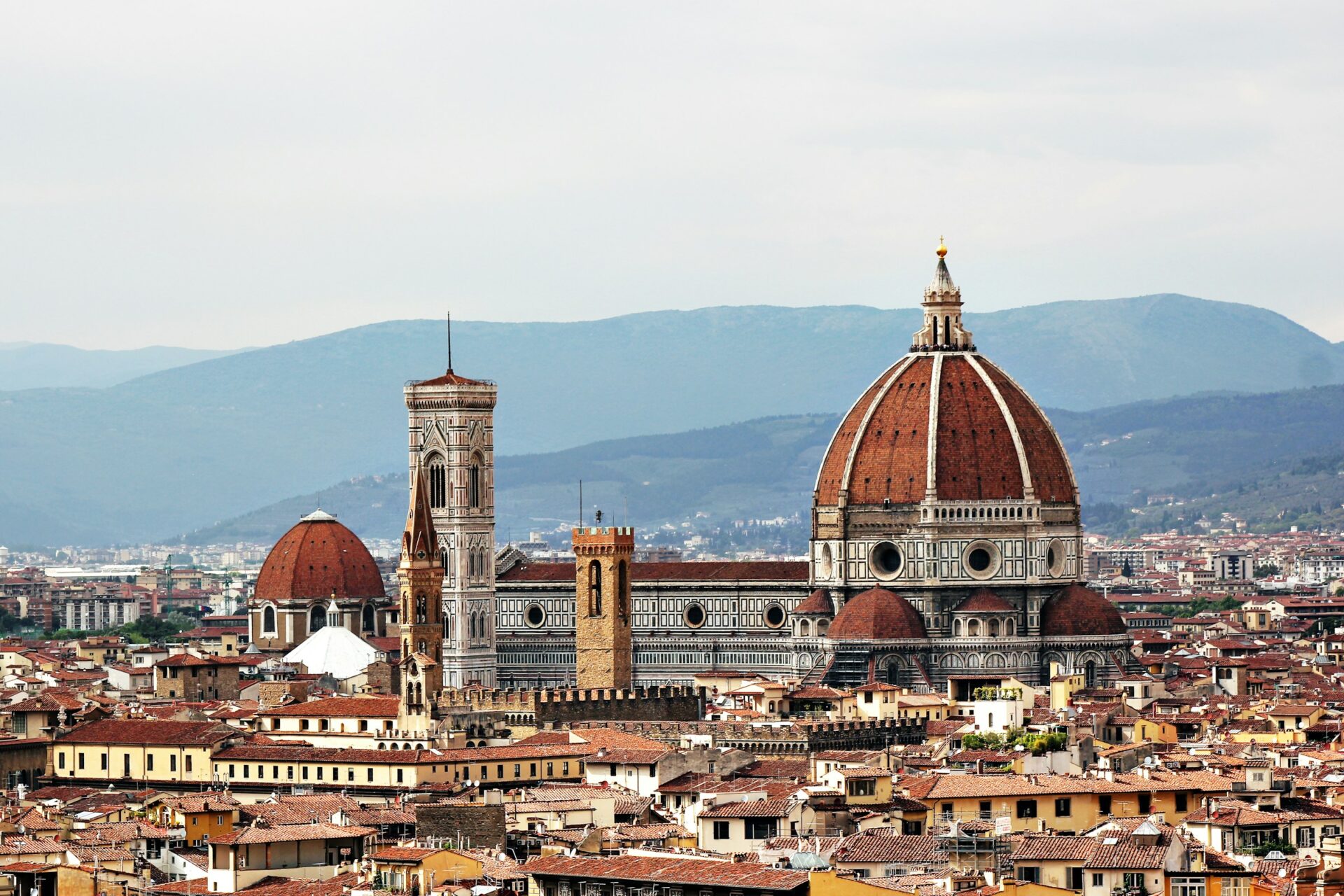
Florence has a well-structured local transportation network that makes getting around convenient for visitors arriving by train. Upon your arrival at Firenze Santa Maria Novella, the central train station, you can start exploring the city using several transportation options. The tram system in Florence is efficient, with the T1 line being the primary route connecting the city center to key areas such as Scandicci and Careggi, running north-south through the heart of Florence. Tickets can be purchased at tram stops or newsstands, and it's important to validate them upon boarding.
While Florence does not have a metro system, its size makes trams and buses sufficient for most travel needs. The city buses, operated by ATAF, are extensive and reach most neighborhoods, though traffic can affect journey times. Purchasing a ticket before boarding is required, which can be done at various authorized vendors or ticket machines near major stops.
Taxis are readily available, especially at taxi stands near major train stations and squares, as hailing a taxi on the street is uncommon. Keep in mind taxis in Florence typically only allow up to four passengers and extra charges apply for luggage or nighttime travel.
Ridesharing services such as Uber are not widely available, but local app-based services like MyTaxi can be used to book a ride conveniently. Remember that Florence is a compact city with many attractions within walking distance, making a pleasant stroll through its historic streets often the best way to experience what it has to offer.
Onward connections
Florence, located in central Italy, serves as a major hub for rail connections both domestically and internationally. Domestically, one of the most popular train routes from Florence is to Rome. High-speed trains, such as the Frecciarossa, connect Florence's Santa Maria Novella station to Rome's Termini station, taking roughly 1.5 hours. Another frequent route is to Milan, with trains taking around 1 hour and 45 minutes. The high-speed rail network also facilitates connections to Venice, with journeys typically lasting about 2 hours.
For travelers interested in exploring the Tuscan region, regional trains are available to Pisa, which takes about 1 hour, and to Siena, with travel times of approximately 1.5 hours. Other popular domestic destinations include Bologna, which is reachable in about 35 minutes by high-speed train, and Naples, which takes approximately 3 hours.
Internationally, popular rail connections include routes to Switzerland and France. Trains from Florence to Zurich are accessible via Milan, with total travel times around 6 hours. Another option is to travel to Paris by high-speed service, although it typically involves a transfer in Milan or Turin, with a total travel time of about 9 to 10 hours. Florence is well-connected to Munich, Germany, via overnight and daytime train services, with total durations varying between 7 and 10 hours depending on connections.
The frequent and efficient train services from Florence provide travelers with numerous options to explore Italy and venture into neighboring European countries.
Best time to visit
The best time to visit Florence is during the spring months of April to June and the early fall months of September to October. During these periods, the weather is generally mild and pleasant, with fewer tourists compared to the peak summer months. This makes it an ideal time to explore the city's outdoor attractions and enjoy comfortable strolls through Florence's historic streets. In terms of cost, these times often see better deals on accommodations and train fares than during July and August, when tourism peaks and prices surge. Visiting in the spring allows you to catch the stunning bloom of flowers, while the fall offers the vibrant colors of the changing foliage. Additionally, these periods coincide with various local events and festivals, such as the Maggio Musicale Fiorentino, an annual opera and classical music festival in late spring and the Festa della Rificolona in September, which celebrates the city’s history and traditions with a lively lantern parade. Arriving by train is convenient year-round, but avoiding the rush of summer crowds means a smoother travel experience overall.
Frequently asked questions
What affects the cost of a train ticket from Rome to Florence?
According to EveryRail, train ticket prices from Rome to Florence are dynamic. Departure time affects prices. Peak hours cost more. Booking in advance usually reduces prices. Demand significantly influences pricing. Travel class alters costs. Discounts and promotions play a role. Specific train services can vary in price.
What trains run from Rome to Florence?
Trains from Rome to Florence are operated by NTV. Trenitalia also operates trains from Rome to Florence. Flixbus operates buses from Rome to Florence.
How long does the train from Rome to Florence take?
According to EveryRail, the train from Rome to Florence takes 1.5 to 2 hours.
When is the best time to travel from Rome to Florence?
Early mornings are less crowded. Prices are often lower mid-week. Avoid peak tourist seasons. Fewer travelers in the shoulder season. Off-peak times have more seat availability. Weekends are usually busier. Check for local events impacting demand.
What’s the best route or train to take from Rome to Florence?
Trenitalia runs direct train services from Rome to Florence. Flixbus operates direct bus services from Rome to Florence.
What rail passes can I use to travel from Rome to Florence?
According to EveryRail, the Interrail pass applies if you are a resident of the EU or an eligible European country. The Eurail pass applies if you are not a resident of the EU or an eligible European country. A One Country Pass applies to this route for any traveler since it begins and ends within Italy. A Global Pass does not apply, as it is meant for travel between different countries.