



Spain has one of Europe’s most impressive high-speed rail networks, but using an Interrail pass here is a different experience from hopping trains in Germany or Switzerland. Before you buy a pass expecting seamless spontaneous travel, you need to understand how Spain’s reservation system, operator landscape, and passholder quotas actually work. This guide cuts through the promotional material to answer one question: does Interrail reliably work in Spain for your specific trip?
Quick verdict: Is Interrail a good idea for Spain?
The short answer is that Interrail works in Spain, but with significant friction. Spain is a reservation-heavy, pass-unfriendly country where compulsory reservations apply to almost all long distance trains, and passholder quotas can sell out independently of regular tickets.
Expect to pay roughly €6–€15 per journey in reservation fees on top of your interrail pass cost. On AVE and ALVIA services—the backbone of Spanish rail travel—you’re typically looking at €10–€15 per reservation in second class. A week of major city hops can easily add €60–€100 per person in supplementary fees before you’ve bought a coffee.
High speed trains on core routes like Madrid–Barcelona, Madrid–Seville, and Madrid–Valencia run frequently, but they can sell out around weekends, national holidays, and throughout July–August. This limits the spontaneity that makes Interrail attractive in other countries.
Here’s a critical point many travelers miss: low-cost high-speed brands like Avlo, Ouigo España, and many iryo fares do not accept Interrail at all. This means passholders are locked into classic RENFE fare buckets with dedicated passholder quotas, while budget travelers booking cash tickets often get cheaper fares on the same routes.
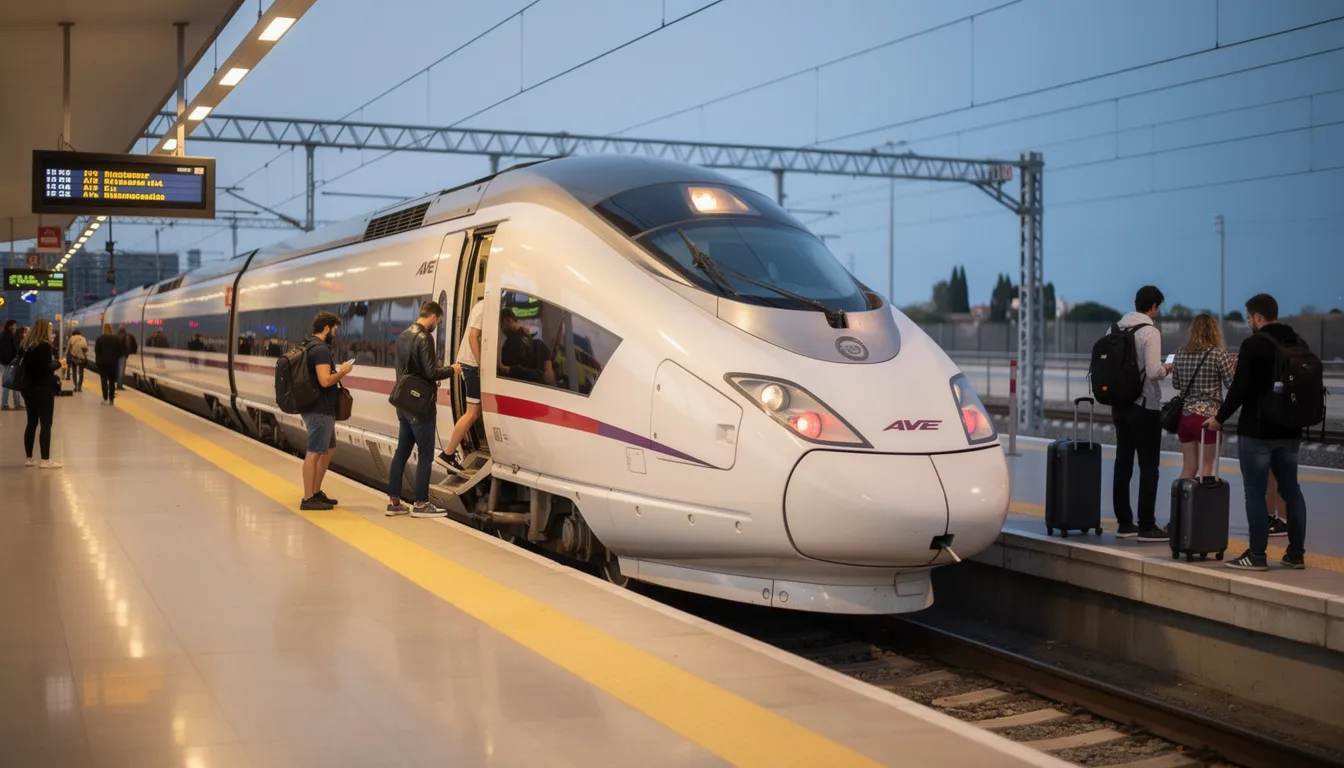
For interrail global pass travelers, Spain can become a bottleneck—cross-border routes have limited seats, and the reservation requirement adds planning overhead to multi-country itineraries. For Spain One Country Pass travelers, value depends entirely on how many long-distance legs you’ll realistically take.
Rule of thumb: Use Interrail in Spain if you’ll string together 4+ medium or long-distance legs in 7–15 days and can book reservations in advance. Avoid it if you mainly stay in one region, rely on last-minute decisions, or would happily book ultra-cheap advance tickets.
How Spain behaves inside a Global Pass itinerary
This section is for travelers using an Interrail Global Pass across multiple countries, where Spain is one segment of a wider European loop—perhaps France–Spain–Portugal, or Italy–France–Spain.
The Madrid-centric network challenge
Spain’s rail network is strongly radial, with Madrid at the center. Many high speed routes run “via Madrid,” meaning journeys like Barcelona–Seville or Barcelona–Málaga often require changing in the capital. This concentrates demand on Madrid-bound trains and can increase total journey times compared to what a direct route would suggest on a map.
For Global Pass holders, this means your Spain segment likely involves at least one Madrid connection, and securing reservations for those high-demand legs becomes critical to your itinerary.
Cross-border entry and exit options
Your options for entering or leaving Spain by train directly affect how reliably your global pass works:
France–Spain via Barcelona or Figueres Vilafant
-
TGV and AVE international trains require reservations with limited passholder quotas
-
Popular Paris–Barcelona route can sell out days in advance during peak season
-
Reservation supplements for cross-border high-speed typically run €20–€35
Hendaye/Irun border crossing
-
Regional TER trains from France and Cercanías/Media Distancia services in Spain
-
Cheaper reservations, fewer quota issues, but significantly slower
-
Good fallback when direct trains are full or expensive
Euskotren at Hendaye–San Sebastián
-
This narrow-gauge railway does not accept Interrail
-
However, at roughly €2.75–€3.00 one-way, it’s an affordable workaround when TGV/AVE options are problematic
-
Useful for reaching the Basque Country without fighting for high-speed reservations
La Tor de Querol / Latour de Carol
-
Mountain border crossing via slower regional trains
-
Can be used as an alternative Paris–Toulouse–Barcelona routing
-
Reservation pressure is lower, but journey times are substantially longer
Availability risk on popular routes
Global Pass holders face a specific problem: passholder seats may disappear before full-fare tickets do. On the Paris–Barcelona corridor during June–September, Easter week, and long weekends, this means you might see available tickets on the booking website while being told no passholder reservations remain.
Many Global Pass holders must accept slower, multi-leg routings to avoid fully booked high speed trains. A journey via Narbonne–Portbou–Barcelona using regional trains, for example, takes significantly longer but avoids the booking scramble for direct TGV/AVE services.
Specific bottleneck warnings
If you’re planning popular multi-city tours, watch these choke points:
|
Route |
Peak pressure times |
Why it matters |
|---|---|---|
|
Madrid–Barcelona |
Friday afternoons, Sunday evenings |
Highest-demand domestic corridor |
|
Madrid–Seville/Málaga |
Weekend edges, Semana Santa |
Main Andalucía access |
|
Barcelona–Valencia |
Holiday weekends |
Mediterranean corridor competition |
|
Paris–Barcelona |
July–August, Easter |
Limited international quota |
National holidays like 15 August, 12 October (Día de la Hispanidad), and the Christmas–New Year period see particularly heavy demand.
Operator mix and what accepts your pass
Understanding which trains in Spain accept your interrail ticket is essential:
Interrail-valid RENFE services:
-
AVE (high-speed)
-
ALVIA (high-speed/conventional hybrid)
-
Euromed (Mediterranean corridor)
-
Intercity trains
-
Media Distancia (medium distances, some require reservations)
-
Cercanías trains (suburban trains, no reservation needed)
NOT valid with Interrail:
-
Ouigo España (French low-cost high-speed)
-
Avlo (RENFE’s own low-cost high-speed)
-
Many iryo promotional fares
This means you’ll regularly see cash fares on Avlo or Ouigo España that undercut your pass-plus-reservation cost on the same route at the same time. It’s frustrating, but it’s the reality of Spain’s liberalized rail market.
A concrete planning example
Consider a 7–10 day France–Spain–Portugal segment. Your critical reservations would be:
-
Paris–Barcelona (TGV/AVE, book as early as possible)
-
Barcelona–Madrid (AVE, high demand)
-
Madrid toward Lisbon (currently no direct train; requires planning around bus connections or multi-train routings via Badajoz)
These spine journeys should be booked as soon as your pass and travel dates are confirmed. Security checks and ticket barriers for AVE/ALVIA (bag scans, QR codes at turnstiles) add 10–20 minutes of non-negotiable buffer at major railway stations, which matters when chaining cross-border connections.
Guidance for Global Pass travelers
Treat Spain as a segment requiring pre-booked “spine” journeys. Keep the flexible, spontaneous parts of your trip in more pass-friendly countries like Switzerland, Austria, or Germany, where seat reservation requirements are optional on most intercity trains. Spain rewards planners; it punishes improvisers.
Spain’s reservation system and its impact on flexibility
This section focuses on how compulsory reservations and quotas directly affect how reliably you can use an Interrail Pass within Spain.
What requires a seat reservation
Almost all Spanish long distance trains require a paid reservation even with a valid pass:
|
Train type |
Reservation required? |
Typical cost (2nd class) |
|---|---|---|
|
AVE |
Yes |
€10–€15 |
|
ALVIA |
Yes |
€10–€13 |
|
Euromed |
Yes |
€10–€13 |
|
Intercity |
Yes |
€6–€10 |
|
Media Distancia |
Some routes |
€4–€7 |
|
Cercanías |
No |
Free |
|
FEVE trains |
Generally no |
Free |
Only cercanías trains (suburban/commuter services) and FEVE trains (narrow-gauge lines in northern Spain) are generally reservation-free. Everything else—the trains you’d actually want for inter-city travel—requires booking and payment.
Quota realities
Some trains have dedicated passholder quotas that can sell out even when normal tickets remain on sale. This is especially common on:
-
Madrid–Barcelona (Spain’s busiest corridor)
-
Madrid–Seville and Madrid–Málaga (Andalucía access)
-
Barcelona–Valencia (Mediterranean coast)
-
Busy times like Friday/Sunday evenings and holiday periods
You might check RENFE and see available seats, then find the interrail reservation service tells you no passholder spots remain. This disconnect catches many travelers off guard.
How to book reservations
Your options for securing reservations as a pass holder:
Interrail reservation service (online)
-
Covers most AVE, ALVIA, and other trains
-
PDF reservations delivered electronically
-
Some routes unavailable online
RENFE ticket office in Spain
-
Can book trains not available through online systems
-
Staff may not always speak English fluently
-
Having train number, date, and times written down speeds things up
Rail Europe and partner agencies
-
Often charge service fees on top of reservation cost
-
Useful for advance bookings before arriving in Spain
RENFE own website
-
Works for some passholder bookings
-
Interface can be confusing for Interrail users
The rail planner app helps identify which trains exist, but use DB Planner (bahn.de) or RENFE’s own website to verify schedules—Interrail’s journey planner has known accuracy issues for Spanish train routes.
Station procedures that affect reliability
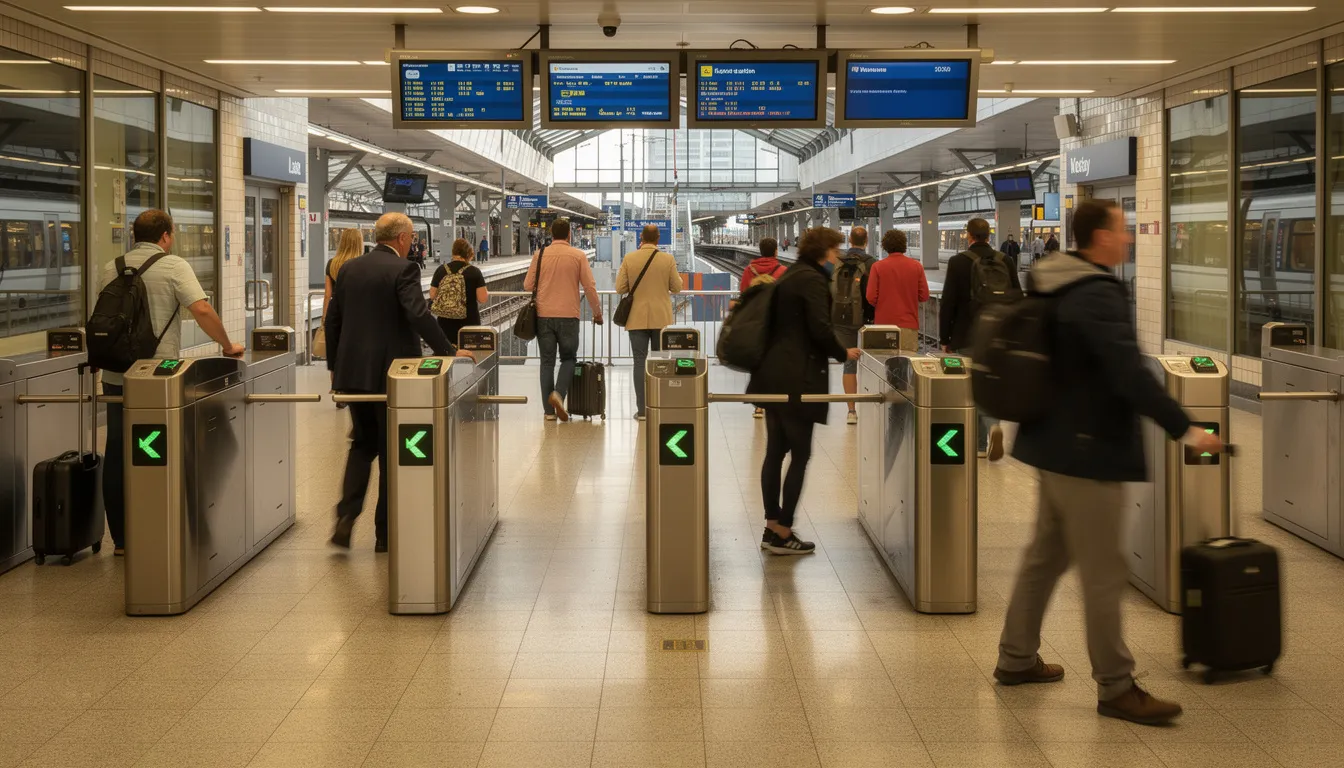
AVE and ALVIA services require security screening before platform access. At major stations like Madrid Atocha, Barcelona Sants, and Seville Santa Justa, expect airport-style bag scans. Budget 15–20 minutes minimum before departure.
Ticket barriers require either your reservation QR/barcode or, for cercanías, a €0.00 “Sin Percepción” ticket from machines. Missing this paperwork causes delays when changing between train types.
An example scenario
Consider a 5-day mini-tour: Barcelona–Madrid–Seville–Madrid–Valencia–Barcelona.
|
Leg |
Train type |
Estimated reservation |
|---|---|---|
|
Barcelona–Madrid |
AVE |
€12 |
|
Madrid–Seville |
AVE |
€13 |
|
Seville–Madrid |
AVE |
€13 |
|
Madrid–Valencia |
AVE |
€11 |
|
Valencia–Barcelona |
Euromed |
€10 |
Total reservation costs: approximately €59–€65 per person
In peak months, these need booking at least a few days ahead. Waiting until arrival in Spain risks awkward departure times or sold-out passholder quotas.
The flexibility trade-off
Spain offers fast, punctual high speed trains that work beautifully if you lock in reservations. But it is poor territory for “wake up and decide at breakfast” rail travel. Compare this to Germany or Austria, where you can board most regional trains and even many intercity trains without any pre reservation. In Spain, that spontaneity simply doesn’t exist for the trains you’d actually want to ride.
Interrail Spain One Country Pass: value vs regular tickets
This section focuses specifically on the Spain One Country Pass—not the Global Pass—and whether it beats normal tickets for typical 1–3 week Spain trips.
What the Spain Pass actually buys you
The spain pass provides a set number of travel days to cover most RENFE medium and long-distance services. However:
-
Included: AVE, ALVIA, Euromed, Intercity, Media Distancia, Cercanías
-
Not included: Ouigo España, Avlo, most iryo promotional fares, some private operators
-
Still required: Per-train reservation fees on all long-distance services
You’re paying for the right to board renfe trains, but you still pay €10–€15 per leg in reservations. This is critical for calculating true value.
Price comparison with point-to-point tickets
Let’s look at concrete numbers:
Barcelona–Madrid
-
Advance promo fares (1–2 months ahead): €20–€45
-
Last-minute/peak fares: €80–€120
-
Spain Pass cost: ~€25–€35 per travel day + €12 reservation
Madrid–Seville
-
Advance promo fares: €25–€50
-
Last-minute/peak: €70–€100
-
Spain Pass cost: travel day value + €12 reservation
Madrid–Málaga
-
Similar pricing structure to Seville corridor
The math tilts toward the pass when you’re booking late, traveling on busy days, or chaining multiple legs. It tilts toward individual tickets when you can commit to specific trains 1–2 months in advance.
When the One Country Pass offers good value
The interrail pass tends to save money when:
-
Short-notice trips: Buying fares within a few days of travel when promos are gone
-
Dense itineraries: 4–6 long-distance hops in 7–10 days
-
Flexibility needs: You want the option to change departure times (if seats remain)
-
Complex routes: Multiple segments where individual tickets add up
A real user example from the reference data: 29 days of travel including Spain cost €361.66 total (pass share + €74.80 in reservations), working out to about €12.47/day. For dense itineraries, this beats buying many trains individually at walk-up prices.
When normal tickets usually win
Skip the pass if:
-
Simple returns: Just Barcelona–Madrid–Barcelona, especially if booked ahead
-
Regional focus: Staying mostly in Catalonia, Andalucía, or one area with only 1–2 big hops
-
Advance commitment: You’re happy locking in non-refundable promos 1–2 months out
-
Low-cost preference: You’d rather use Avlo/Ouigo/iryo which Interrail doesn’t cover anyway
Budgeting realistically
For a 7-day Spain One Country Pass, add €10–€15 per planned long-distance leg to the advertised pass price to see the real total.
|
Pass days |
Advertised price (approx) |
Add for 5 AVE legs |
True cost estimate |
|---|---|---|---|
|
4 days |
€167 |
€50–€75 |
€217–€242 |
|
6 days |
€210 |
€60–€90 |
€270–€300 |
|
8 days |
€250 |
€80–€120 |
€330–€370 |
Prices vary by age category—youth pass and senior discounts available
Regional considerations
Some areas offer relatively expensive per-kilometer individual tickets:
-
Madrid–Extremadura corridor: Fewer trains, less competition
-
Galicia routes: Limited frequency, higher unit costs
-
North coast FEVE lines: Slow but can add up as individual fares
For region-spanning itineraries touching these areas, the pass can offer better value than it might appear at first glance.
Spanish resident alternatives
Note that European residents eligible for Interrail may also qualify for Spanish domestic discount schemes—Abonos, youth cards, and regional promotions. These sometimes beat Interrail on pure domestic trips, especially for those under 26 or over 60.
The decision checklist
Before buying a One Country Pass, ask yourself:
-
Can I list at least 4–5 inter-city train legs I will definitely take?
-
Am I booking less than 3 weeks before travel?
-
Do my routes primarily use RENFE services (not Avlo/Ouigo/iryo)?
-
Am I comfortable adding ~€60–€100 in reservations to my pass cost?
If you answered “no” to more than one question, price out individual tickets first.
Typical Spain One Country Pass trip patterns
This section provides concrete patterns where the Spain One Country Pass is commonly used, analyzed from a value and reliability perspective.
Pattern 1: Madrid + Andalucía loop
Example route: Madrid–Córdoba–Seville–Granada–Madrid
Characteristics:
-
3–4 long-distance legs
-
Heavy reliance on AVE/ALVIA for Madrid connections
-
At least one slower regional trains segment (Seville–Granada via Antequera)
-
High reservation pressure around weekends and Semana Santa (Easter)
Value assessment: Strong pass value if taking all four legs, especially if booking within 2 weeks of travel. The Seville–Granada connection often has limited frequency, making flexibility valuable.
Recommended pass: 4 days within 1 month typically sufficient.

Pattern 2: Barcelona-centric itinerary
Example route: Barcelona–Valencia–Alicante–Murcia or Barcelona–Zaragoza–Madrid
Characteristics:
-
Frequent high-speed service on Barcelona–Madrid and Barcelona–Valencia
-
Strong low-cost competition on these corridors (Avlo, Ouigo, iryo)
-
Interrail users may sometimes pay more than cash passengers on low-cost brands
Value assessment: Weaker pass value here because cheap advance fares are readily available. Only makes sense if booking last-minute or combining with other trains and extending toward Santiago de Compostela or southern Spain.
Recommended pass: Only worthwhile as part of a larger loop, not for Barcelona-centered trips alone.
Pattern 3: Northern arc
Example route: Bilbao–San Sebastián–Oviedo–A Coruña–Santiago de Compostela
Characteristics:
-
Relies more on slower regional trains and feve trains
-
Trains can be infrequent with limited seats
-
Some segments require reservations for medium distances services
-
Long journey times make a pass potentially valuable if covering several segments quickly
Value assessment: Moderate pass value. Individual tickets on these routes aren’t always cheap, and frequencies are lower. The pass provides flexibility when connections are tight.
Recommended pass: 4–5 days if covering the full arc. Don’t over-buy—you won’t use pass days for local trains or buses within cities.
Pattern 4: Whole-Spain sweep
Example route: Barcelona–Madrid–Seville–Granada–Valencia–Barcelona over 10–15 days
Characteristics:
-
Maximum long-distance legs (5–6 major train rides)
-
Crosses multiple regions using the full AVE network
-
Requires disciplined early reservation booking once dates are fixed
-
Highest potential savings versus last-minute individual tickets
Value assessment: Strong pass value for this pattern, often saving 30–50% compared to walk-up fares. However, requires the most advance planning.
Recommended pass: 6–8 days within 1 month, depending on how many rest days between cities.
Avoiding common mistakes
For each pattern:
-
Don’t over-buy travel days: You won’t use a pass day for exploring town on foot, taking suburban trains around Madrid or Barcelona, or traveling by buses to smaller destinations
-
Map your actual legs: Sketch city-to-city routes with real dates before purchasing
-
Check current ticket prices: Compare RENFE direct trains prices to pass-day cost + average €10–€15 reservation per leg
When Interrail works well in Spain vs when it doesn’t
This final section provides a concise decision guide—quick bullets to determine if an Interrail (Global or Spain One Country) suits your specific Spain trip.
Interrail works well in Spain if:
-
You’re doing 4+ medium/long-distance train hops within 7–15 days (a full loop of major cities)
-
You’re booking relatively late (inside 2–3 weeks of travel) when flexible promo fares are already limited
-
You’re comfortable reserving specific trains a few days in advance and not traveling entirely spontaneously
-
You value the option to re-order cities or adjust times slightly, provided seats remain on the new trains
-
Your route primarily uses RENFE services rather than low-cost competitors
-
You’re combining Spain with other countries on a Global Pass where overall value is strong
Interrail is usually a bad fit in Spain if:
-
Your plan involves only 1–3 inter-city trips (e.g., one return Madrid–Barcelona)
-
You’re happy to buy non-refundable advance tickets 1–3 months ahead on Avlo, Ouigo España, or iryo
-
You expect to hop on any fast train at the last minute, especially on Fridays, Sundays, or in July–August
-
You mainly travel within a single region using cercanías, metros, and buses where Interrail adds little
-
Your travel dates align with major holidays when passholder quotas vanish before regular tickets
-
You’re a budget traveler who prioritizes lowest cost over flexibility—low-cost carriers often beat pass+reservation pricing
A strategic approach for multi-country travelers
For many travelers, Interrail is better used to cover flexible free travel in pass-friendly countries (Germany, Switzerland, Austria, Benelux), with Spain handled using targeted advance tickets at the start or end of the long journey. Buy cheap Ouigo or Avlo fares for your Spain legs, use the pass where it shines.
The final word
Spain is not the place to “test” Interrail’s legendary spontaneity. The reservation system, passholder quotas, and exclusion of low-cost operators create friction that doesn’t exist in northern Europe.
However, if you accept that your pass is valid only with reservations booked in advance, Spain can be a solid, fast, and reasonably-priced component of a rail trip. The trains are punctual, the high-speed network is extensive, and the reservation fees—while annoying—are manageable for planned itineraries.
Bottom line: Know your route, count your legs, run the numbers, and book your reservations early. Do that, and Interrail in Spain works. Skip the planning, and you’ll spend your trip wrestling with sold-out quotas, ticket office queues, and the frustration of watching cheaper trains leave without you.