


Norway’s railway network is one of Europe’s best-kept secrets for scenic travel. With trains crossing mountain plateaus, hugging fjord coastlines, and even crossing the Arctic Circle, an interrail trip through Norway delivers landscapes you simply cannot experience from a plane or car.
Quick overview: Interrail in Norway
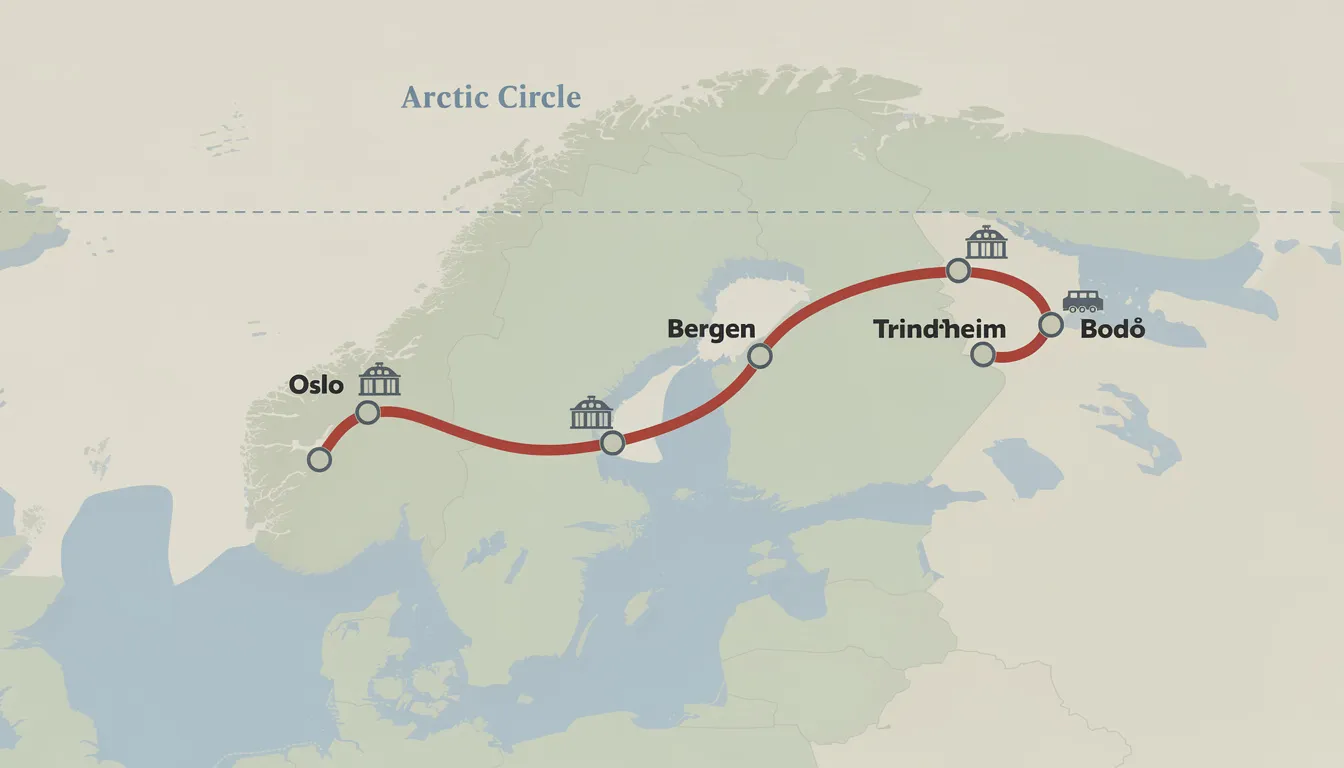
Interrail is a rail pass system that allows European residents to travel across the continent’s train networks using a single pass. In Norway, this means access to over 3,000 kilometres of track, 336 stations, and some of the most dramatic long distance trains anywhere in the world. The Norwegian rail network connects Oslo in the south to Bodø in the north, with major scenic lines running through Bergen, Trondheim, and deep into Arctic territory.
Here’s an important clarification before you plan your trip: there is no standalone “Interrail Norway Pass.” Norwegian residents cannot use a one country pass within Norway itself. If you want to travel Norway by rail with Interrail, you typically need either an Interrail Global Pass (which covers 33 countries including Norway) or a combination of another country’s One Country Pass plus separate Norwegian tickets. This distinction catches many travellers off guard.
Norway is fully included in the Interrail Global Pass network. Key routes covered include Oslo–Bergen (the famous Bergen Line), Oslo–Trondheim (Dovre Line), Trondheim–Bodø (Nordland Line), and regional lines across Eastern and Western Norway.
Who is Interrail in Norway for? Backpackers chasing the midnight sun in summer (June–August), hikers in spring and autumn wanting access to trailheads, and anyone dreaming of seeing fjords and the Arctic by scenic train rather than by air.
What this guide covers:
-
Which Interrail pass to use for Norway and how to choose
-
How travel days work and how to maximise their value
-
Seat reservations and where they’re compulsory
-
The key scenic routes you shouldn’t miss
-
Discounts and benefits for Interrail pass holders
-
Example itineraries for 7-day, 14-day, and multi-country trips
-
Practical planning tips for budget, weather, and booking
Which Interrail Pass to use for Norway
Choosing the right pass is the first decision you’ll make, and it significantly affects your trip flexibility and budget. The main options are the Interrail Global Pass and the various One Country Passes—but Norway has specific quirks you need to understand.
-
Interrail Global Pass: This pass covers up to 33 countries across Europe, including Norway. It’s ideal if you’re travelling from Central Europe (Germany, Denmark, Sweden) into Norway by train and ferry. You can cross borders freely, making it perfect for Scandinavia-wide itineraries that include Copenhagen, Stockholm, and Norwegian destinations.
-
One Country Pass limitations: There is no Interrail One Country Pass specifically for Norway. If you want to focus on a single country, you’d need to use a Sweden or Denmark One Country Pass and purchase separate Norwegian tickets, or simply opt for the Global Pass. For most Norway-focused trips, the Global Pass makes more practical sense.
-
Residence rules: You cannot use the Global Pass freely in your country of residence except for one outbound and one inbound journey. For most readers planning a Norway trip from elsewhere in Europe, this means your home country legs are limited, but you can travel freely once you cross into Scandinavia.
-
Age categories and pricing: Interrail offers different rates based on age. Youth passes (12–27) offer significant discounts, Adult passes cover ages 28–59, Senior passes apply to travellers 60+, and children (4–11) travel at reduced rates. Prices differ strongly between categories, so always check current tariffs on the official Interrail site before purchase.
-
Pass duration for Norway trips: For a Norway-focused interrail journey of 7–14 days, most travellers find 4, 5, or 7 travel days within one month sufficient. You don’t need a travel day for every day of your trip—only for days when you’re actually on trains.
|
Feature |
Global Pass |
One Country Pass (Sweden/Denmark) + Norwegian Tickets |
|---|---|---|
|
Coverage |
33 countries including Norway |
Single country + separate Norway purchases |
|
Best for |
Multi-country Scandinavian trips |
Focused trips with minimal Norway rail |
|
Typical trip length |
10–21 days |
5–10 days |
|
Example use case |
Copenhagen → Oslo → Bergen → Stockholm loop |
Stockholm-focused with one Oslo excursion |
How travel days work in Norway
A travel day is a single calendar day during which your Interrail pass is activated, allowing unlimited train journeys. The rules work identically in Norway as elsewhere in Europe.
-
A travel day runs from 00:00 to 23:59 local Norwegian time. Once activated, you can take as many trains within Norway (and other covered countries, if using a Global Pass) as you can physically manage within that 24-hour window.
-
Night trains inside Norway (such as Oslo–Bergen or Trondheim–Bodø) follow the “7pm rule.” If your night train departs after 19:00 and you don’t need to change trains before 04:00 the following morning, only the arrival day counts as a travel day. This can save you a travel day on overnight journeys.
-
Cluster your long distances strategically. If you’re covering major routes like Oslo to Bodø or Oslo to Stavanger, plan to use your travel days on these lengthy train journey segments to extract maximum value from your pass.
-
Example day allocation: Using one travel day, you could travel Oslo–Myrdal, take the Flåm Railway (paid supplement required, not included in pass), and continue Myrdal–Bergen—all in a single travel day. The next day, spend time exploring Bergen without activating your pass, then use another travel day for Bergen–Oslo or Bergen–Trondheim.
Sample 10-day Norway itinerary travel day calculation:
|
Day |
Activity |
Travel day needed? |
|---|---|---|
|
1 |
Arrive Oslo, explore city |
No |
|
2 |
Oslo → Myrdal → Flåm → Bergen |
Yes |
|
3–4 |
Explore Bergen, fjord cruise |
No |
|
5 |
Bergen → Trondheim (via Oslo) |
Yes |
|
6 |
Explore Trondheim |
No |
|
7 |
Trondheim → Bodø (Nordland Line) |
Yes |
|
8 |
Explore Bodø, Arctic Circle area |
No |
|
9 |
Bodø → Trondheim (night train) |
Yes |
|
10 |
Trondheim → Oslo |
Yes |
This 10-day trip uses only 5 travel days, leaving rest days for exploring destinations without burning through your pass allocation.
Seat reservations and compulsory supplements in Norway
Norway operates a mixed system where some trains require advance seat reservations while others allow you to simply board with a valid pass. Understanding this distinction is essential for smooth travel.
-
Reservation-free regional trains: Most local and regional Vy trains around Oslo, Bergen, and Trondheim do not require reservations. You can board these freely with a valid Interrail travel day activated. These include suburban services and shorter regional connections.
-
Reservation-compulsory long-distance trains: The major scenic routes typically require seat reservations even with a valid interrail ticket. This includes Oslo–Bergen (Bergen Line), Oslo–Stavanger (Sørland Line), Oslo–Trondheim (Dovre Line), and Trondheim–Bodø (Nordland Line). Night trains with sleeper accommodation always require booking.
-
Seasonal pressure: During peak summer (late June to mid-August), Easter, and Christmas periods, reservations on scenic lines can sell out days in advance. Don’t assume you can reserve seats the morning of travel during high season.
-
Where to reserve seats: Book reservations online via the operator websites (Vy.no for most routes, SJ NORD for some northern services), at staffed ticket desks at major train stations like Oslo S, Bergen, or Trondheim, or via customer service phone numbers. The Entur platform can also help coordinate bookings across carriers.
-
Reservation fees: Expect to pay approximately 50–150 NOK (roughly €5–15) per reservation depending on the route and class. These fees are separate from your Interrail pass cost and must be paid regardless of pass validity.
-
Cross-border routes: Trains on international routes like Oslo–Stockholm or Oslo–Gothenburg often have their own reservation requirements and operator-specific rules. Always check the relevant operator’s website (SJ for Swedish connections) before assuming your pass grants free boarding.
Key scenic Interrail routes in Norway
Norway’s railway lines are the primary reason to visit with Interrail. Where else can you cross Arctic tundra, descend into deep fjord valleys, and traverse high mountain plateaus—all from a comfortable train seat? This section covers the routes that define Norwegian rail travel.
-
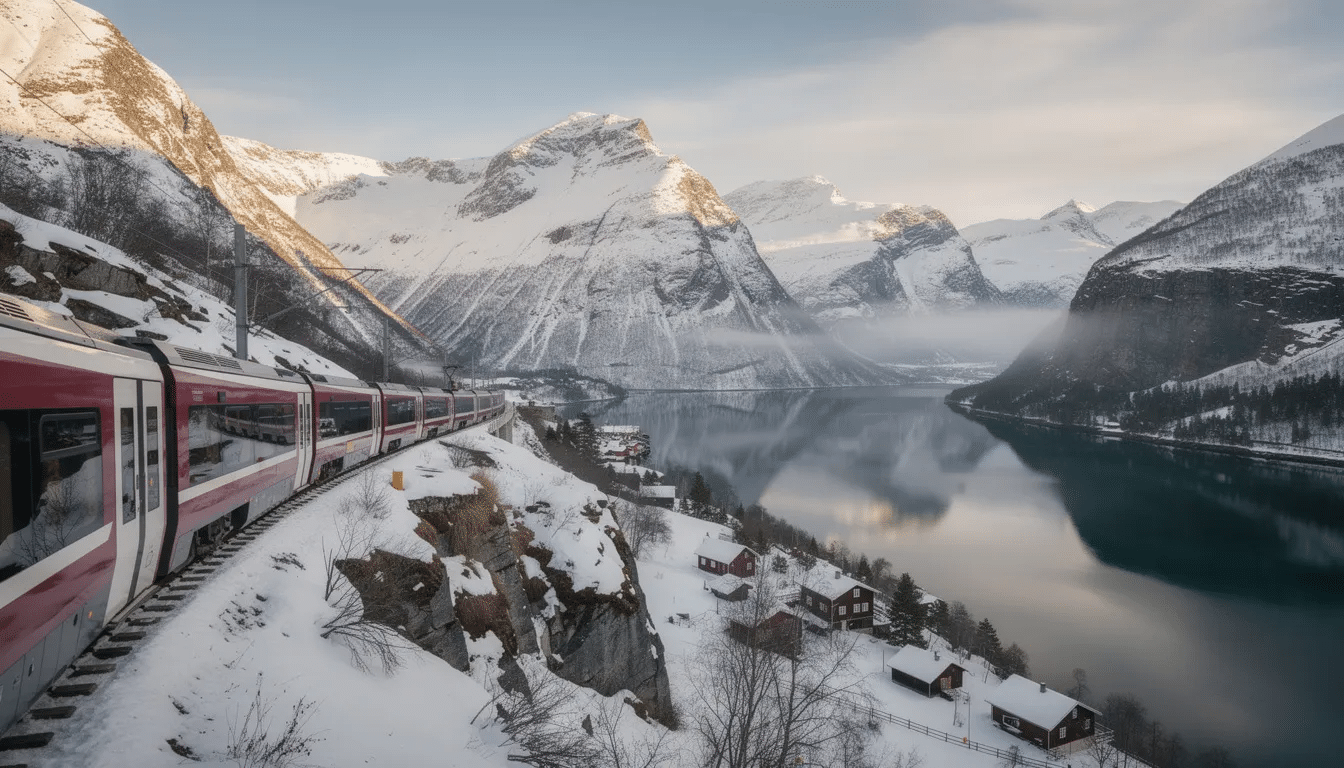
Oslo–Bergen (Bergensbanen): Often cited as one of the world’s most scenic train routes, the Bergen Line crosses the Hardangervidda plateau at over 1,200 metres elevation. The train journey takes 6–7 hours with several departures daily. You’ll pass frozen lakes, mountain huts, and dramatic descents toward the coast. Plan at least one or two nights in Bergen to explore Norway’s second city.
-
Myrdal–Flåm (Flåmsbana): The Flåm Railway is not included in your Interrail pass, but pass holders receive approximately 30% discount on the standard fare. This 20.2-kilometre branch line descends 865 metres from Myrdal station to the fjord village of Flåm, making it one of the steepest railway lines in the world. Book seats well in advance during summer—this route fills up fast.
-
Oslo–Trondheim (Dovre Line): The Dovre Line passes through the Gudbrandsdalen valley and skirts the Dovrefjell mountains, where you might spot musk oxen grazing near the tracks. The route takes approximately 7 hours and offers both day and night train options with sleeper compartments. This is your gateway to northern Norway.
-
Trondheim–Bodø (Nordland Line): This is the only railway in Norway that crosses the Arctic Circle. At roughly 10 hours, it’s the longest single train journey in the country and passes through some of the most remote scenery in Scandinavia. Try to do at least one leg during daylight—the landscape of forests, lakes, and Arctic tundra deserves your full attention.
-
Branch lines worth exploring: The Raumabanen from Dombås to Åndalsnes offers views of Trollveggen (Europe’s tallest vertical rock face) and takes just under two hours. The Ofotbanen from Narvik connects to Sweden and represents the northernmost passenger railway in the world, accessible via bus connections from Bodø.
Discounts and benefits for Interrail users in Norway
Your Interrail Global Pass unlocks more than just train access. Several Norwegian ferries, buses, and attractions offer discounts to pass holders—though most are partial reductions rather than free admission.
-
Ferry discounts to Denmark: Ferry companies like Fjord Line and Color Line offer percentage discounts to Interrail holders travelling as foot passengers on routes such as Bergen–Hirtshals or Kristiansand–Hirtshals. Discounts typically range from 20–30%, though you’ll need to book through specific channels. These ferry crossings provide useful alternatives for entering or exiting Norway.
-
Stena Line to Sweden: Similar offers apply on Stena Line routes connecting Norway to Sweden and Denmark. Interrail holders often receive around 30% off selected sailings when booking with a promotional code. A practical itinerary might combine train travel from Stockholm to Gothenburg, then a ferry to Norway, continuing by rail to Oslo and Bergen.
-
Regional bus discounts: Some regional bus operators in Western Norway, including FRAM buses, offer reduced fares to Interrail holders on selected routes. Show your valid pass when purchasing a ticket from the driver. These buses can help you reach fjord destinations like Geirangerfjord that lie beyond the rail network.
-
Flåm Railway discount: As mentioned, Interrail pass holders receive approximately 30% off the standard fare for the Flåm Railway. You still need to purchase a separate ticket through official channels (Vy.no or Entur), and early booking remains essential during peak season.
-
Museum entry: The Norwegian Railway Museum in Hamar offers free admission or reduced entry fees to Interrail pass holders during the validity period of their pass. Check the current benefits list on the official Interrail website, as partnerships and discounts can change by season.
-
Validity requirements: Most discounts and benefits apply only while your pass is valid and, in many cases, only on active travel days. Always verify current offers before assuming a discount will be available.
Example Interrail itineraries for Norway
Concrete planning makes the difference between a stressful trip and an unforgettable one. These sample routes show how to structure your travel days, where to spend your nights, and how to balance train time with exploration time.
7-Day Southern Norway Loop (3–4 travel days)
Focus: Bergen Line, Flåm Railway, fjord scenery
|
Day |
Route |
Accommodation |
|---|---|---|
|
Day 1 |
Arrive Oslo, evening walk |
Oslo |
|
Day 2 |
Oslo → Myrdal → Flåm (Travel Day 1) |
Flåm |
|
Day 3 |
Flåm fjord cruise, afternoon train to Bergen (Travel Day 2) |
Bergen |
|
Day 4–5 |
Explore Bergen, day hike |
Bergen |
|
Day 6 |
Bergen → Oslo (Travel Day 3) |
Oslo |
|
Day 7 |
Depart Oslo |
— |
This itinerary covers Norway’s most famous scenic train routes while leaving time to explore Bergen and take a fjord cruise. Three travel days minimum, four if you want extra flexibility.
10–14 Day Grand Norway Route (5–7 travel days)
Focus: Oslo to the Arctic Circle and back
|
Days |
Route |
Travel days used |
|---|---|---|
|
1–2 |
Oslo arrival and exploration |
0 |
|
3 |
Oslo → Bergen via Myrdal |
1 |
|
4–5 |
Bergen exploration, possible fjord trip |
0 |
|
6 |
Bergen → Oslo → Trondheim |
1–2 |
|
7 |
Trondheim exploration |
0 |
|
8 |
Trondheim → Bodø (Nordland Line) |
1 |
|
9–10 |
Bodø, Arctic Circle area |
0 |
|
11 |
Bodø → Trondheim (night train) |
1 |
|
12 |
Trondheim → Oslo |
1 |
|
13–14 |
Oslo, departure |
0 |
This extended journey crosses the Arctic Circle and covers every major scenic route in Norway. Using night trains strategically saves on accommodation costs while maximising daylight scenery viewing on other segments.
2–3 Week Scandinavia Circuit (7+ travel days)
Focus: Copenhagen, Stockholm, and Norway highlights
-
Days 1–3: Copenhagen (Denmark), train to Stockholm via Malmö (Travel Day 1)
-
Days 4–5: Stockholm (Sweden), explore city
-
Days 6: Stockholm → Oslo overnight or day train (Travel Day 2)
-
Days 7–8: Oslo exploration
-
Days 9: Oslo → Bergen (Travel Day 3)
-
Days 10–11: Bergen and Flåm excursion (Travel Day 4 if needed)
-
Days 12: Bergen → Trondheim via Oslo (Travel Day 5)
-
Days 13–14: Trondheim, possible Åndalsnes day trip
-
Days 15–16: Trondheim → Bodø, Arctic exploration (Travel Day 6)
-
Days 17–18: Return south via train or budget flight
This multi-country trip maximises your Global Pass value across Scandinavia. Reservations on cross-border segments like Stockholm–Oslo are particularly important during summer.
Practical planning tips for Interrail Norway
Norway’s combination of long distances, variable weather, and high prices makes careful planning essential. These tips will help you avoid common pitfalls and spend your money wisely.
-
Best time to visit: Late May through early September offers the most reliable weather and longest daylight. If you’re heading north of the Arctic Circle, June and July bring the midnight sun phenomenon—24-hour daylight that transforms the Nordland Line journey into something magical. Winter travel brings potential aurora borealis viewing but also weather-related delays and some route closures.
-
Budget realistically: While your Interrail pass saves money on train segments, Norway is expensive. Accommodation in Oslo and Bergen can run 800–1500 NOK (€70–130) per night even for hostels and budget hotels. Book well in advance during summer to secure lower rates. Factor in 150–250 NOK per restaurant meal, or buy groceries to save significantly.
-
Use official planning tools: Download the Rail Planner app for offline timetable access and pass management. The Norwegian Entur app and website provide real-time schedules, reservation booking, and journey planning across all Norwegian operators. These tools are essential for checking connections and reservation requirements.
-
Plan beyond the rails: Many of Norway’s top attractions—Geirangerfjord, Preikestolen, the Lofoten Islands—lie beyond the railway network. Factor in ferry and bus connections to reach these destinations. Interrail doesn’t fully cover these modes, but combining a scenic train segment with a fjord cruise or bus ride creates a varied and memorable trip.
-
Pack for long journeys: Train rides of 7–10 hours are normal in Norway. Bring layers (temperatures vary significantly between regions), snacks and a water bottle, a power bank for devices, and something to read or watch. Choose day trains when you want to absorb the scenery, and night trains when you want to save time and accommodation costs.
-
Check rules annually: Interrail conditions, reservation policies, and partner discounts can change season to season. Always verify the latest requirements on the official Interrail website before finalising your booking and travel plans.
Norway rewards travellers who take their time. The long day on a train crossing mountain plateaus or skirting fjord coastlines isn’t wasted travel time—it’s the destination itself. With the right pass, advance reservations on key routes, and a flexible mindset, your interrail Norway adventure can deliver experiences that simply aren’t possible any other way. Start planning, book those scenic train seats early, and prepare for journeys that will stay with you long after you’ve returned home.