


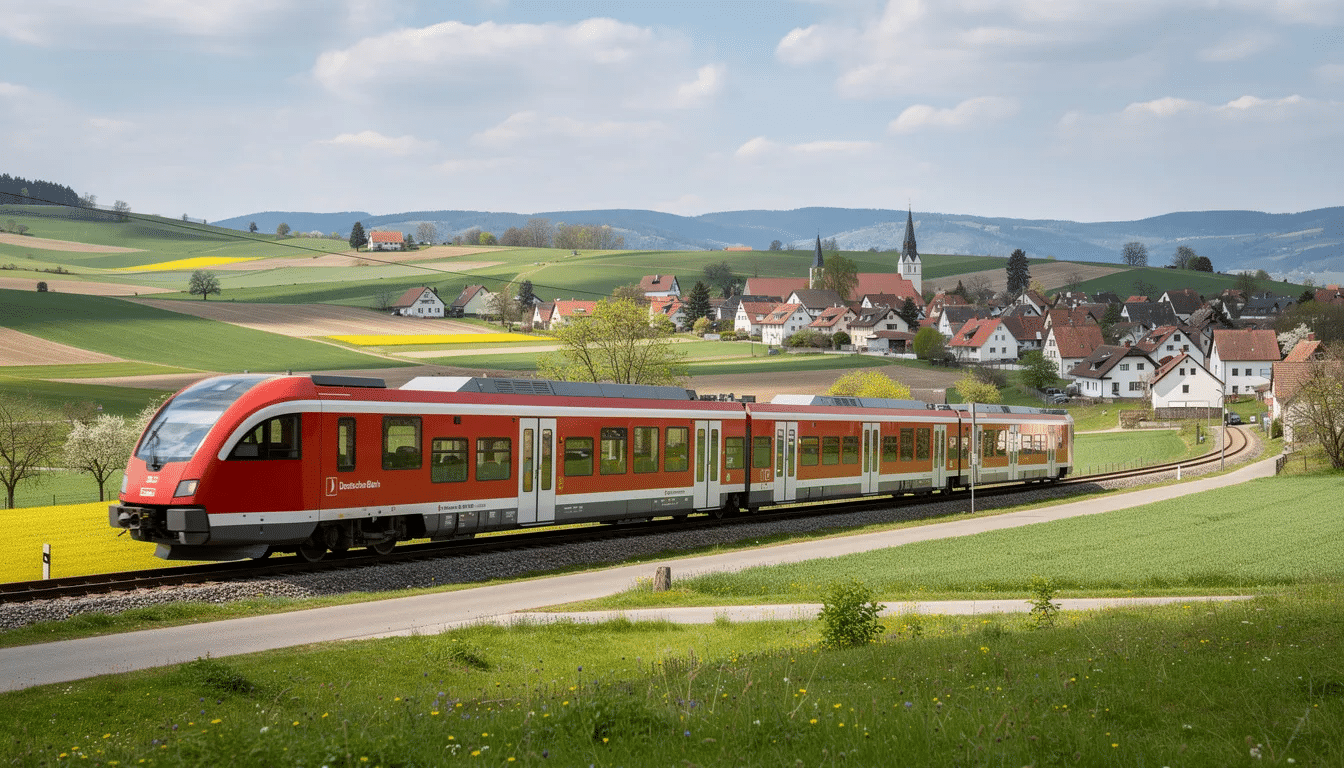
Germany sits at the heart of Europe’s rail network, making it either a backbone or a bottleneck for almost any serious Interrail trip. Before you commit to an interrail pass for Germany, you need honest answers about what actually works—not just a list of pretty cities to visit.
This guide cuts through the marketing to give you a decision framework based on current Deutsche Bahn conditions in 2024–2025.
Quick verdict: using Interrail in Germany in 2024–2025
Does Interrail work well in Germany? Yes, mostly—but with caveats that matter. The network coverage is excellent, train frequencies are high, and reservations are optional on most domestic trains. However, delays are common, and some cross-border routes require advance bookings that can complicate spontaneous plans.
Here’s the quick breakdown:
|
Factor |
Rating |
Reality |
|---|---|---|
|
Ease of use |
Very high |
Once you understand train categories, navigation is straightforward. DB Navigator app is essential. |
|
Reservation pressure |
Low domestically |
Optional €4-5 seat reservations on ICE/IC inside Germany. Higher pressure on night trains and some international high speed trains. |
|
Extra costs |
Minimal to moderate |
No mandatory supplements on most domestic routes. Night train berths and some international services add €30-70+. |
|
Spontaneity |
Excellent on regionals, good on ICE |
Regional trains let you hop on anything. ICE crowding during busy times and ongoing disruptions require more planning. |
This article is a decision guide, not a sightseeing list. You’ll finish knowing whether a rail pass suits your specific trip—not which museums to visit in Munich.
How Interrail “behaves” in Germany: basics that affect reliability
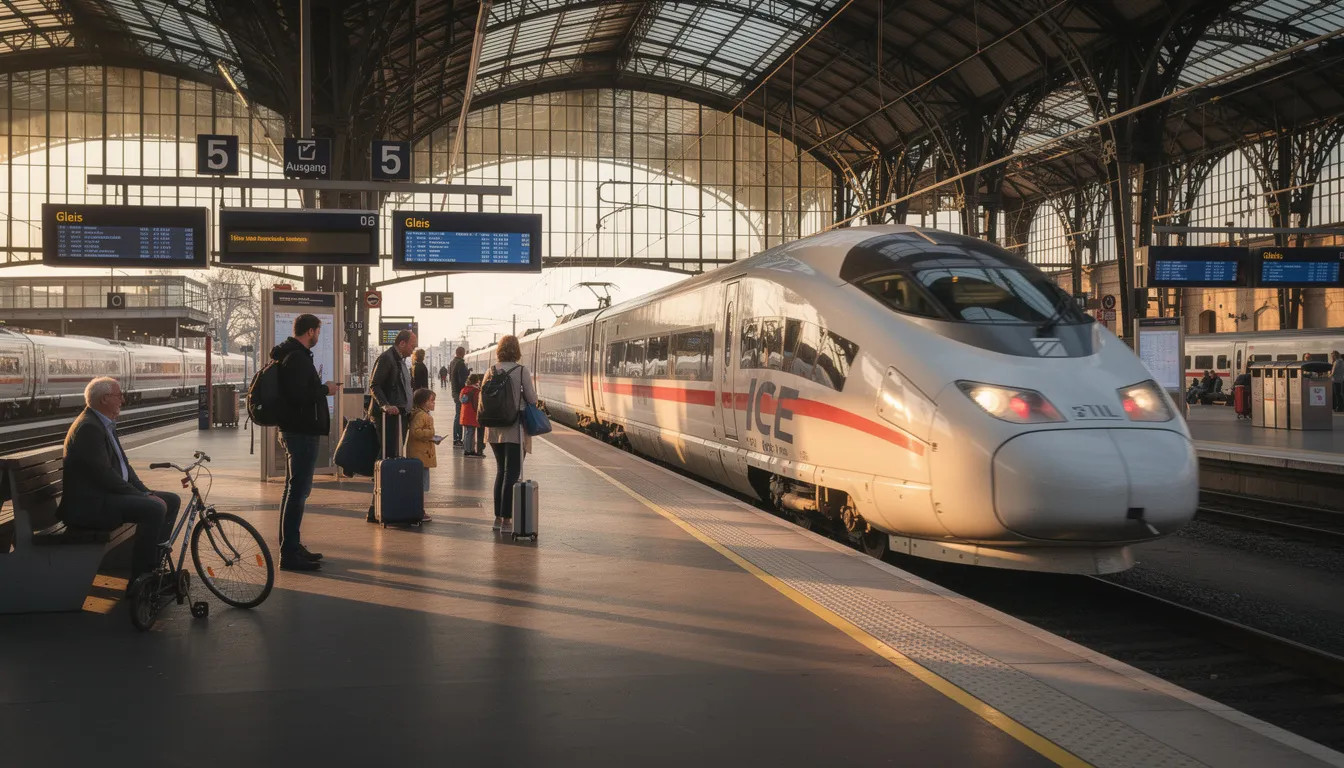
Germany’s rail system is dominated by Deutsche Bahn, which operates the vast majority of trains in Germany across a dense network connecting major cities like Berlin, Hamburg, Frankfurt, and Munich to small towns and everything in between. Understanding how this system works is crucial for getting real value from your interrail germany pass.
Train categories and what they mean for Interrail
|
Train Type |
Speed/Purpose |
Reservation Required? |
Interrail Valid? |
|---|---|---|---|
|
ICE |
High speed trains up to 300 km/h, long distance |
Optional (€4-5) |
Yes |
|
IC/EC |
InterCity/EuroCity express, medium-fast |
Optional (€4-5) |
Yes |
|
IRE/RE/RB |
Regional trains, slower but frequent |
No reservations exist |
Yes |
|
S-Bahn |
Urban/suburban rail |
No reservations exist |
Yes |
|
Nightjet/European Sleeper |
Overnight services |
Mandatory berth booking |
Yes (base fare only) |
The key insight: inside Germany, you can board almost any train operated by DB without touching a reservation system. This is fundamentally different from France or Italy, where mandatory bookings create bottlenecks.
Reliability reputation (the honest version)
Germany’s famous punctuality is largely historical at this point. Since around 2018, and especially post-2022, long distance trains have struggled. Current data suggests 30-40% of ICE and IC services arrive at least 6 minutes late. Cancellations happen but are usually recoverable—the pass lets you simply board the next train.
Reality check: Don’t plan connections under 20-30 minutes on long-distance routes. The rich history of German rail efficiency doesn’t match 2024 reality.
Validation and ticket checks
Conductors throughout Western Europe are familiar with Interrail. In Germany, simply show your physical or digital pass plus ID. Issues are rare compared with some other countries where staff may be less experienced with pass products.
Strike risk
Recurring DB labour disputes—like the GDL strikes during winter 2023/24—can paralyze the network for days. A flexible pass helps here: you can re-route via regional trains or even detour through neighboring countries like Belgium or Switzerland. However, if you’ve built a rigid itinerary around specific trains, strikes will hurt regardless of your ticket type.
All of this applies to both the Interrail Global Pass and the Germany One Country Pass, but the implications differ significantly—which brings us to the next sections.
Interrail Global Pass in Germany: impact on multi-country itineraries
Most interrail global pass trips either start/end in Germany or use the country as a high-speed corridor between destinations like France, the Netherlands, Denmark, Czechia, Switzerland, Austria, Poland, and Italy. Germany’s central position in Europe makes it both an opportunity and a risk.
Using Germany as a transit backbone
Common high-speed axes for Global Pass travellers include:
-
Paris–Frankfurt–Berlin via ICE/TGV cooperation
-
Amsterdam–Düsseldorf–Frankfurt–Munich (note: Bad Bentheim is the border crossing point)
-
Copenhagen–Hamburg–Berlin (new Talgo trains from 2026)
-
Zurich–Stuttgart–Munich (via Basel Bad BF)
-
Prague–Dresden–Berlin connecting Central Europe
If these ICE/EC lines fail, you can usually patch together a route with regional trains—but journey times can double or triple. The pass covers these backups at no extra cost.
Reservation pressure for Global Pass users
Inside Germany: Seat reservations remain optional even on ICE/IC. Recommended on busy corridors (Friday-Sunday, holiday periods, routes like Berlin–Hamburg, Köln Hbf–Frankfurt, Munich–Nuremberg) at approximately €4-5 per train.
Cross-border trains: This is where pressure increases:
-
SNCF-DB Paris–Frankfurt/Stuttgart services: mandatory reservations
-
ÖBB Nightjet services: mandatory berth booking
-
European Sleeper (Paris–Bruxelles Midi–Berlin from March 2026): mandatory
-
Hamburg–Copenhagen from summer 2026: mandatory during peak season
-
Some Poland routes (Berlin–Warsaw, Berlin–Kraków): mandatory
Key warning: Limited Interrail quotas exist on many mandatory-reservation international trains. Book 2-4 weeks ahead during summer.
High-speed dependence and alternatives
Germany’s long-distance network is ICE-centric. To keep long jumps like Amsterdam–Munich or Berlin–Zurich within one pass day, you’ll typically rely on high speed trains.
Regional work-arounds exist—you can travel Berlin–Hamburg or Munich–Frankfurt entirely on RE trains. The pass covers this. But expect journey times to double (Berlin–Hamburg: 1h45 by ICE vs 3h30+ by regional).
Delay risk for cross-border connections
Concrete examples of connection risk:
-
Köln Hbf to Brussels–London: If your ICE from Berlin arrives late at Köln Hbf, you may miss your Eurostar connection at Bruxelles Midi. Eurostar doesn’t accept Interrail and won’t rebook you for free.
-
Hamburg to Copenhagen: A delayed inbound ICE from Munich can strand you overnight in Hamburg.
-
Frankfurt to Milan: Missing an EC connection at Basel Bad BF could add hours to your Italy arrival.
Advice: Pad at least 1-2 hours when a non-Interrail-covered train or flight is at the far end of a German leg.
Night trains with a Global Pass
Germany is a night train hub with several routes relevant to pass holders:
|
Route |
Operator |
Pass Status |
|---|---|---|
|
Berlin–Vienna |
ÖBB Nightjet |
Valid, berth supplement €30-70 |
|
Hamburg–Zurich |
ÖBB Nightjet |
Valid, berth supplement €30-70 |
|
Munich–Venice/Milan |
ÖBB Nightjet |
Valid, berth supplement €30-70 |
|
Berlin–Brussels–Amsterdam |
European Sleeper |
Valid, berth supplement required |
|
Paris–Berlin (from Mar 2026) |
European Sleeper |
Valid, berth supplement required |
These night services let you travel to the city centre of Vienna, Zurich, or Milan without losing a day—but supplements are mandatory and limited. This is where Global Pass holders feel real reservation pressure near Germany.
Border region flexibility
The dense German network creates excellent backup options. If your Prague–Munich–Zurich route gets disrupted, you can often switch to Prague–Dresden–Leipzig–Basel instead. Interrail validity extends on many cross-border RE/RB services to Basel SBB, Salzburg Hbf, Szczecin, and even Strasbourg without supplements.
Recap for Global Pass travellers: Germany is a strong, flexible backbone for multi-country trips if you accept occasional delays and pre-book the few trains that really require reservations. The big country handles spontaneity well domestically—it’s the international connections that need advance bookings.
When Germany strengthens a Global Pass itinerary
Best-case scenarios where Germany adds serious value:
-
Fast multi-city chains: Routes like Berlin–Hamburg–Copenhagen over 2-3 days or Amsterdam–Cologne–Frankfurt–Munich where hourly ICE/IC frequencies and no mandatory reservations make rerouting easy. You can explore German cities along the way without ticketing complexity.
-
Hub-and-spoke days: Using bases like Frankfurt, Munich, or Berlin for same-day trips into neighboring countries. Frankfurt–Strasbourg, Munich–Salzburg, or Berlin–Prague day trips work well without complex international ticket purchases.
-
Off-peak travel: Outside Friday afternoons, Sunday evenings, and national holidays, crowding drops dramatically. The no-reservation model works perfectly, letting you visit the old town of any city that catches your interest and catch the next train out.
When Germany can be a weak link for Global Pass users
Scenarios where Germany creates problems:
-
Tightly timed long-distance chains: Planning sequences like Budapest–Vienna–Munich–Paris in one day with 15-20 minute German connections is asking for trouble. A single delayed ICE can cascade into missed international reservations that cost real money to fix.
-
Peak-season crowding: Summer school holidays (late June–August), Christmas/New Year, Easter, and events like Oktoberfest in late September–early October stress the network. You may stand for part of busy ICE journeys if you skip optional reservations—not ideal after a night train from Prague.
-
Construction seasons: Major line works (Fahrplanänderungen) especially in late spring and summer cause diversions, bus replacements (SEV), and reduced high-speed capacity. The 2026 timetable introduces significant disruptions including reduced Berlin–Hamburg service and Köln–Berlin diversions via Essen. Check DB Navigator before finalizing plans.
Interrail Germany One Country Pass: does it beat normal tickets?
The Germany One Country Pass offers a fixed number of travel days within one month, covering all domestic trains without mandatory reservations. The core question: is it cheaper or more flexible than DB Sparpreis tickets or the Deutschlandticket for a purely German trip?
Price level and target traveller
Current indicative pricing:
|
Pass Type |
Approximate Price (2nd class adult) |
|---|---|
|
3 days in 1 month |
€200-230 |
|
5 days in 1 month |
€240-280 |
|
8 days in 1 month |
€280-330 |
Youth, senior, and 1st class variants adjust these figures. The pass targets travellers making multiple medium-to-long journeys across German cities over a month, with flexibility about exact travel dates.
Comparing to advance-purchase DB tickets
DB’s Sparpreis and Super Sparpreis can be extremely cheap:
-
Berlin–Munich from €17.90-29.90 booked 4-6 weeks ahead
-
Hamburg–Frankfurt from €19.90-34.90
But these lock you into specific trains. Miss your train? Buy a new ticket at walk-up prices (often €60-120+).
The pass lets you decide on the day, reroute around delays, and break journeys without penalty. This flexibility has real value if your trip involves uncertainty—whether from weather, changing plans, or simply wanting to stay longer in a town with a lively atmosphere.
Reservation policy for One Country Pass
Reservations inside Germany are never mandatory on DB-operated ICE/IC/EC trains. A country pass holder can move entirely without compulsory supplements domestically.
Optional reservations cost €4-5 per leg in 2nd class. Suggest reserving on:
-
Long journeys (3+ hours)
-
Peak travel times (Friday PM, Sunday PM)
-
Routes through major hubs during rush hour
Skip reservations on shorter hops or off-peak travel.
Typical trip patterns where the pass shines
The interrail germany pass delivers best value for itineraries like:
-
10-14 day trip linking Hamburg–Berlin–Dresden–Leipzig–Nuremberg–Munich–Stuttgart–Frankfurt with extra day trips to small towns using RE/RB trains, spread across 5-7 active travel days
-
Two-week base-hopping from Munich to explore the Bavarian Alps, Black Forest, Saxon Switzerland, and the Rhine River valley
-
Workation-style travel with scattered train days between co-working sessions in different cities
The pass works particularly well for travellers who change city every 1-2 days and want to visit both famous destinations and spontaneous discoveries like a town’s city hall or world war ii memorial without ticket calculations.
When normal tickets or other passes win
|
Scenario |
Better Option |
|---|---|
|
1-2 long return trips only |
Advance Sparpreis tickets |
|
Single region focus (Bavaria, NRW) |
Regional day tickets or Deutschlandticket |
|
Very price-sensitive, all-regional travel |
Deutschlandticket (€49/month) |
|
Exact trains known months ahead |
Super Sparpreis + €4 reservation |
If your plan is just Frankfurt–Berlin return with maybe one side trip, two advance tickets will undercut any pass.
Supplements and non-DB operators
Most major long-distance operators in Germany accept Interrail without extra supplements. The eurocity express services, IC/EC trains, and ICE network all work seamlessly.
Exceptions exist on some private regional lines (certain Transdev routes, tourist railways). This only matters for niche routes; mainstream city hops along the Elbe River or through the Black Forest are fully covered.
High-frequency regional travel with a One Country Pass
If you avoid ICE entirely and stick to RE/RB/S-Bahn services, the pass experience changes significantly.
Using only regional trains:
Chains like Cologne–Koblenz–Mainz–Heidelberg–Stuttgart or Berlin–Magdeburg–Hannover–Bremen–Hamburg work well with hourly regional services. No reservations exist, so you simply board whatever arrives next.
Reliability angle:
While regional trains can also be delayed, cancellations are easier to recover from—alternatives run at least every 1-2 hours on main routes. The pass lets you just board the next one without checking the deutsche bahn website for rebooking.
Time vs money trade-off:
This “slow network” style delivers maximum spontaneity and value but at the cost of longer travel days. Hamburg–Munich takes under 6 hours by ICE; expect 10-12 hours going all-regional. Your pass still works—you just spend more time watching the countryside.
Using a One Country Pass for high-speed hopping (ICE/IC)
For travellers wanting speed with flexibility, the pass enables patterns like:
Sample 5-day use:
-
Berlin–Cologne (ICE)
-
Cologne–Frankfurt (ICE)
-
Frankfurt–Stuttgart (ICE)
-
Stuttgart–Munich (ICE)
-
Munich–Nuremberg–Berlin (ICE)
Seat availability and comfort:
On these trunk routes, pass holders generally find space avoiding peak rush. During Friday/Sunday peaks or big events, reserve to avoid standing. A dining car usually exists on longer ICE services for meals.
Financial comparison:
|
Approach |
Estimated Cost |
|---|---|
|
5-day One Country Pass |
€240-280 |
|
5 last-minute ICE tickets |
€300-600 (€60-120 each) |
|
5 advance Sparpreis tickets |
€90-150 (if you book 4+ weeks ahead) |
The pass clearly beats last-minute pricing. Against advance bookings, it only wins if your dates are uncertain or you value flexibility over savings.
When Interrail works well in Germany
Use this checklist to identify whether you’re a good fit:
Typical “good fit” profiles:
-
Planning 4+ medium/long train days in Germany within a month
-
Multi-city routes with uncertain dates
-
Comfortable changing at major hubs (Berlin Hbf, Hamburg Hbf, Köln Hbf, Frankfurt Hbf, München Hbf) to bypass disruptions
-
Happy to explore both the Brandenburg Gate in Berlin and a random town along the way that other travellers recommended
Style of travel that benefits:
-
Spontaneous city-to-city hops
-
Last-minute decisions about where to sleep
-
Willingness to use regional trains as backup when ICE disruptions hit
Global Pass specific wins:
-
Itineraries using Germany as a flexible corridor between 3+ countries (Netherlands–Germany–Austria–Italy or France–Germany–Czechia–Poland)
-
Multiple cross-border trips planned (day or overnight to Switzerland, Denmark, Czechia, Austria)
-
Interest in mixing high-speed and night train connections
One Country Pass specific wins:
-
Month-long backpacking or workation with scattered travel days
-
Youth travellers under 28 using discounted pass rates
-
Plans to visit both major cities and regions like Saxon Switzerland or the Bavarian Alps without pre-booking every segment
When Interrail is a poor or marginal choice in Germany
In these cases, regular DB or regional offers typically win:
Low-movement itineraries: Stays focusing on 1-2 cities with one long return trip. Flying to Berlin, one side trip to Hamburg, then flying home? Two advance bookings at busy times will cost €40-80 total versus €200+ for a pass.
Ultra-budget, hyper-flexible regional travel: If the Deutschlandticket (approximately €49 per calendar month for regional trains only) fits your travel dates, it undercuts the Interrail One Country Pass for regional-only plans. You’ll miss ICE access but save significantly.
Very fixed, well-planned routes: Travellers booking months ahead who are happy to commit to exact trains will often find cheaper Sparpreis tickets plus optional seat reservations than any pass product. The pass premium pays for flexibility—if you don’t need flexibility, skip the premium.
Travellers intolerant of delay risk: If missing a connection would ruin an expensive non-refundable booking—cruise departure from Hamburg, long-haul flight from Frankfurt, time-critical event—relying on multi-leg German rail chains on the same day is unwise whether using Interrail or not. Arrive the day before.
Final advice: Map your planned travel days and compare. Sum up likely last-minute ticket prices versus pass cost plus a realistic seat reservation budget (€20-40 total). Use the comparisons above to see where you fall.
The interrail pass remains valid and valuable for the right trip through Germany—but “right” means multi-stop, flexible, and tolerant of the occasional delay. If that describes your plans, Germany’s dense network will serve you well. If you’re chasing the cheapest possible price for a simple A-to-B journey, look elsewhere.