Interrail in Croatia
Interrail covers HŽPP trains in Croatia, but cheap fares and limited coastal rail mean buses or ferries are needed; most regional trains need no reservation.
- Country
- Croatia
- Coverage
- Covered
Croatia draws millions of visitors each summer with its turquoise coastline, medieval old towns, and spectacular national parks.
If you’re looking to visit Croatia and are planning your trip, considering Interrail as a travel option can be a great way to experience the country at a slower, more sustainable pace.
But if you’re planning to travel by train through Europe, you might be wondering whether an interrail pass makes sense for exploring this Adriatic gem. The honest answer? It depends entirely on your itinerary.
Quick verdict on Interrail in Croatia
Let’s cut straight to it: Croatia is absolutely worth visiting, but its rail network is patchy, and an Interrail pass only delivers great value in specific situations.
The country’s trains are cheap but slow. Buses dominate the coast. And Dubrovnik, arguably Croatia’s most famous destination, has no train station at all. If you’re flying into Split for a week of island-hopping, a rail pass would be a waste of money.
Here’s the quick breakdown:
- Global Pass makes sense if Croatia is just one stop on a wider European route (for example, you can arrive in Zagreb from Vienna, continue to Split, and then on to Italy), giving you flexibility across multiple countries
- One Country Pass is often worse value than buying cheap point-to-point tickets, since Croatian domestic fares are already low
- Hidden costs add up: optional but often worthwhile seat reservations on fast trains, supplements on international and night services, plus buses and ferries to reach coastal spots not covered by Interrail
- Network limitations are real: many iconic destinations require buses (Plitvice Lakes National Park, Zadar) or ferries (Hvar Town, Croatia’s islands)
- Flexibility has a price: the pass offers convenience, but for short Croatia-only trips, that convenience often costs more than just buying tickets
I’ll walk you through specific price comparisons, reservation costs, and route examples below so you can make an informed decision.
How Interrail works in Croatia
Interrail is a rail pass for European residents that allows unlimited train travel across participating countries, including Croatia. The pass works on HŽ Putnički prijevoz (HŽPP) services within your chosen validity period. If you’re a non-European resident, you’ll need the Eurail equivalent, but the rules, reservations, and routes in Croatia are essentially identical.
Croatia joined the EU in 2013 and Schengen in 2023, which removed passport checks on most land borders. This makes crossing into Slovenia, Hungary, or onwards to Austria seamless, though it doesn’t directly affect Interrail conditions.
Here’s what you need to know about using Interrail in Croatia:
- Pass activation: The pass is validated and managed through the Interrail app (mobile pass) and must be activated before your first journey
- Who can use it: European residents of any age, with youth (12-27) and senior (60+) discounts available
- Where it’s valid: All HŽPP services, most regional and local trains
- Reservation-free travel: Most Croatian regional and local trains can be boarded without advance reservation. Just add the specific train to your pass before boarding
- What’s not included: Buses, city trams (like Zagreb tram services), ferries to islands, and private bus companies
Interrail Croatia One Country Pass
The Interrail Croatia Pass is designed specifically for travel within HŽPP’s network. It offers 3, 4, 5, 6, or 8 travel days within a one-month period, letting you choose which days you want unlimited train access.
Realistic price ranges (2024-2025):
- 3 days in 1 month: approximately €59 to €75 (2nd class adult)
- 5 days in 1 month: approximately €89 to €105
- 8 days in 1 month: €150 (2nd class adult)
- Youth and senior discounts typically reduce prices by 25-35%
Prices change over time. Always check the official Interrail site for current rates.
What “travel days” means in practice: on each chosen day, you get unlimited trains within Croatia from midnight to midnight. You pick the days as you go, based on your actual travel.
What the Croatia Pass does NOT cover:
- Domestic buses (essential for Split-Dubrovnik, Zagreb-Zadar, and Plitvice access)
- Ferries to islands like Hvar, Brač, Korčula, or Vis
- Zagreb city trams or local buses
- Any international train segments beyond Croatian borders
Example itineraries and value comparison:
- 3-day pass scenario: Zagreb-Split-Zagreb plus Zagreb-Rijeka Pass cost: ~€65 + reservations (~€12 total) = ~€77
- Point-to-point tickets: ~€30 + €30 + €18 = ~€78
- Verdict: virtually identical cost, pass offers no real savings
- 5-day pass scenario: Zagreb-Split, Split-Zagreb, Zagreb-Pula, Pula-Rijeka, Rijeka-Zagreb Pass cost: ~€95 + reservations (~€15 total) = ~€110
- Point-to-point tickets: approximately €95 to €110
- Verdict: marginal difference, flexibility might justify the pass
Who should consider the Croatia Pass:
- Rail enthusiasts doing multiple long-distance trips in under two weeks
- Travellers who value flexibility to change plans without rebooking
- Those combining several inland routes (Zagreb, Osijek, Varaždin, Rijeka, Split corridor)
Who should skip it:
- Beach holidaymakers focused on Dalmatian coast destinations
- Anyone spending most time on Croatia’s islands (ferry-dependent)
- Travellers making only 2-3 train journeys during their visit
Global Pass trips that include Croatia
The Global Pass covers 30+ European countries including Croatia, making it the more flexible option for multi-country rail adventures. It’s ideal when Croatia is one stop on a broader journey, say, Budapest to Zagreb to Split, then a ferry to Italy.
Common Global Pass options with example prices:
- 4 days in 1 month: €283 (2nd class adult)
- 7 days in 1 month: €381
- 10 days in 2 months: €447
- 15 days in 2 months: €553
- 3-month continuous: €956
Check current prices on the official Interrail website.
The same Croatian rules apply: reservations needed on a few key routes, but most regional services remain reservation-free.
Example itineraries where a Global Pass delivers value:
- Central Europe to the Adriatic: London-Paris-Munich-Zagreb-Split, then ferry to Ancona and onwards to Florence or Rome Global Pass covers all rail legs across 5+ countries
- Croatia portion adds 1-2 travel days to your total
- Excellent value if you’re using 7+ travel days overall
- Balkan loop: Vienna-Ljubljana-Zagreb-Rijeka-back to Trieste or Venice Covers Austria, Slovenia, Croatia, and Italy in one pass
- Night train options from Vienna reduce accommodation costs
- Coast and capital combo: Budapest-Zagreb-Split via day train, then Hvar by ferry Hungary and Croatia covered by pass
- Summer night trains available on Budapest-Split route (supplement required)
Extra costs on international legs:
- Budapest-Split summer night train: couchette/sleeper supplements €20 to €40
- EuroCity services via Slovenia or Austria: reservations €3 to €10
- Vienna-Split night train (ÖBB): berth supplements €30 to €50
- Most supplements range €10 to €40 per long leg
In 2026, direct EuroCity trains from Munich and Vienna to Zagreb returned, making Central European connections smoother. These routes typically have optional seat reservations, meaning you can board without mandatory supplements.
Reservations on Croatian trains
Most Croatian trains are reservation-free, which is good news for pass holders who want spontaneous travel. However, the few fast or long-distance services, the ones you’ll actually want to use, carry an optional seat reservation that's often worth booking for a guaranteed seat, even though it isn't legally required.
Domestic routes with an optional seat reservation worth booking:
- ICN (InterCity Nagibni) Zagreb-Split: reservation optional, €1 to €3.60
- IC Zagreb-Rijeka/Osijek/Cakovec: reservation optional, €1 to €3.60
- Any service during summer weekends: book ahead or risk standing
Approximate reservation costs:
- Domestic IC/ICN services: €1 to €3.60 per journey
- International EuroCity trains: €5 to €10
- Night train supplements (couchette): €15 to €25
- Night train supplements (sleeper): €30 to €50
How to book reservations:
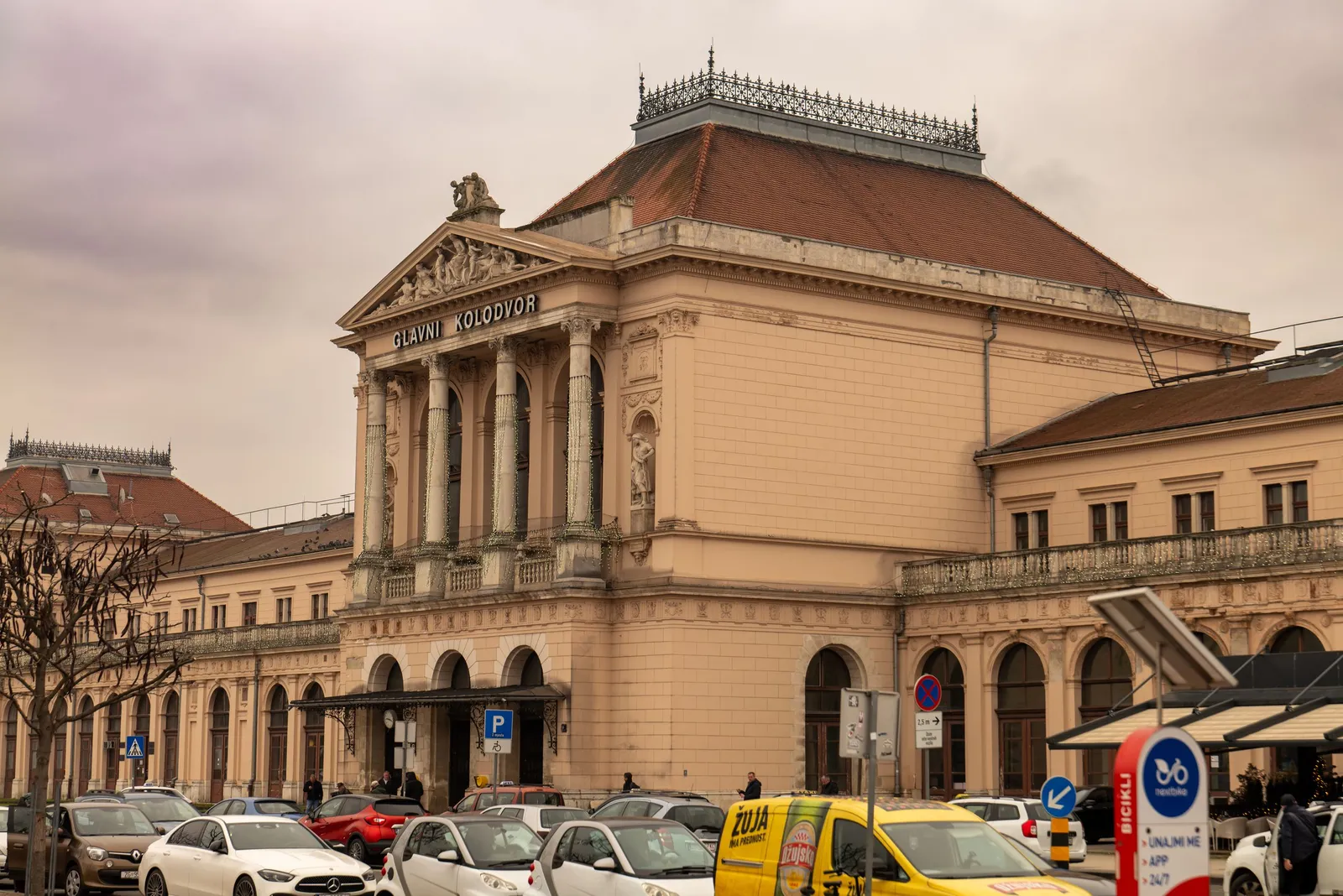
- At stations: Zagreb Glavni kolodvor (main train station), Split, Rijeka, and Osijek ticket counters can issue reservations for pass holders
- Online via partner railways: ÖBB (Austrian Railways) for Vienna-Croatia night trains, MÁV for Hungary connections, enter “Interrail” as your discount type
- Interrail reservation service: Available for some routes, though often with higher fees
Night trains and international supplements:
- Seasonal Vienna-Split night train (ÖBB Nightjet ): couchette €20 to €30, sleeper €40 to €60
- Budapest-Split summer night train: couchette €15 to €25 plus reservation
- EuroCity Ljubljana-Zagreb: reservation recommended, ~€5
Regional cross-border trains to Slovenia or Hungary (Zagreb-Ljubljana, Zagreb-Budapest via Koprivnica) are often reservation-optional, but seats fill quickly in summer. Booking a few days ahead is wise.
Point-to-point tickets versus Interrail in Croatia
Here’s an honest assessment: domestic HŽPP tickets are generally inexpensive, so passes don’t always beat point-to-point prices for travel entirely within Croatia.
Current 2nd-class fare examples:
- Zagreb-Split ICN: approximately €25 to €30 one way
- Zagreb-Rijeka IC: approximately €15 to €20
- Zagreb-Osijek: approximately €15 to €18
- Zagreb-Varaždin regional: under €10
- Zagreb-Pula (via connections): approximately €20 to €25
If you plan only 2-3 long journeys over 10-14 days, say Zagreb-Split-Zagreb and maybe Zagreb-Rijeka,buying normal tickets is almost always cheaper than a One Country Pass plus reservations.
When Interrail genuinely pays off:
- Combining Croatia with other countries on many long legs
- Travelling at short notice when advance cheap fares are sold out
- Wanting maximum flexibility to change plans daily without penalty
- Using night trains from Central Europe to reduce accommodation costs
Worked example: Zagreb-Split-Zagreb-Rijeka-Zagreb loop
Point-to-point tickets:
- Zagreb-Split: €28
- Split-Zagreb: €28
- Zagreb-Rijeka: €17
- Rijeka-Zagreb: €17
- Total: approximately €90
4-day Croatia Pass approach:
- Pass cost: ~€82
- Reservations (3-4 required): ~€14
- Total: approximately €96
The pass actually costs slightly more in this scenario, with the only advantage being flexibility to change departure times without fees.
Additional savings on point-to-point:
- HŽPP offers occasional promotional fares
- Senior and youth discounts apply to regular tickets (not just passes)
- Advance booking sometimes unlocks lower prices
- Return tickets occasionally cheaper than two singles
Where trains do and don't reach in Croatia
Croatia’s rail network radiates outward from Zagreb, the capital city, serving many inland destinations well. But coastal coverage is limited, and some famous spots have no trains at all.
Key domestic routes well served by rail:
- Zagreb-Split via Knin: The main north-south axis, 6 hours by ICN, slower regional options available
- Zagreb-Rijeka: Gateway to the Kvarner Gulf and Opatija, approximately 4 hours
- Zagreb-Osijek/Vinkovci: Eastern Slavonia connections, around 4 hours
- Zagreb-Varaždin-Čakovec: Northern Croatia coverage, under 3 hours
- Pula-inland Istria: Via Pazin to Buzet, connecting to Rijeka
Major gaps where trains don’t reach:
- Dubrovnik: No railway at all, closest station is Ploče (lightly served), then 2-3 hours by bus
- Zadar and Šibenik: Bus-only from Zagreb or Split
- Plitvice Lakes National Park: No station, buses from Zagreb (2.5 hours) or from the coast
- All islands: Hvar, Brač, Korčula, Vis, Mljet accessible only by ferry from Split or Rijeka
Croatia’s islands are a major highlight for travelers, offering beautiful beaches, vibrant nightlife, and unique cultural experiences. The islands of Brač and Vis are easily accessible by ferry from Split, Brač is just an hour away, making it a perfect day trip destination. Pag island is connected to the mainland by a bridge and can be reached by bus from Zadar, while Ugljan island, known for its sandy beaches, is located just off the coast from Zadar. Taking a cruise along the coast or between the islands is a fantastic way to enjoy the sun and Croatia’s stunning natural beauty.
Typical connection patterns for Interrailers:
- Train to Split → Jadrolinija or Krilo ferry to Hvar Town (1-2 hours)
- Train to Rijeka → bus to Opatija, or ferry to Cres, Lošinj, Rab
- Train to Zagreb → bus to Plitvice (no station at the park)
- Train to Split → bus to Dubrovnik (4-5 hours along Croatia’s coast)
Journey time reality check:
- Zagreb-Split: approximately 6 hours (ICN), longer on regional trains
- Zagreb-Rijeka: approximately 4 hours
- Zagreb-Osijek: approximately 4 hours
- Zagreb-Varaždin: approximately 2 hours
One experienced traveller noted that if you’re going from Zagreb to Split, the night train beats dealing with a long day journey. Routes also don’t run frequently, this isn’t Germany or Switzerland, so plan around limited departures rather than assuming hourly service.
Sample Interrail routes through Croatia
Because of its location, Croatia often features as part of a broader Central and Eastern Europe itinerary rather than a stand-alone rail trip. The country works best as a stopping point between Hungary, Austria, Slovenia, and Italy.
Sample routes that make a Global Pass worthwhile:
1. Central Europe to the Adriatic
- Vienna-Graz-Zagreb-Split (rail)
- Split to Ancona (ferry, not covered by pass)
- Ancona-Bologna-Florence-Rome (rail)
- Pass coverage: All rail legs across Austria, Croatia, Italy
- Suggested pass: 7 days in 1 month minimum
2. Balkan loop
- Budapest-Zagreb (rail, ~6 hours)
- Zagreb-Rijeka (rail, ~4 hours)
- Rijeka-Ljubljana (rail via connections)
- Ljubljana-Trieste or Venice (rail)
- Pass coverage: Hungary, Croatia, Slovenia, Italy
- Suggested pass: 5 days in 1 month
3. Coast and capital combo
- Munich-Salzburg-Vienna (rail)
- Vienna-Zagreb (rail, direct EuroCity available)
- Zagreb-Split (rail)
- Split → Hvar/Brač (ferry, not covered)
- Pass coverage: Germany, Austria, Croatia
- Suggested pass: 5-7 days in 1 month
4. Slow route south
- Prague-Brno-Vienna (rail)
- Vienna-Ljubljana-Zagreb (rail)
- Zagreb → Plitvice Lakes (bus, not covered)
- Plitvice → Zadar (bus, not covered)
- Zadar → Split (bus or connection via Knin)
- Pass coverage: Czech Republic, Austria, Slovenia, Croatia
- Suggested pass: 6+ travel days
Where your pass applies and where it doesn’t:
- All rail legs in the routes above: covered
- Buses to Dubrovnik, Plitvice, Zadar from most starting points: not covered
- Ferries from Split or Rijeka to islands: not covered (though Interrail Croatia Pass holders may receive discounts on some ferry routes)
Many international services converge on Zagreb, with regular trains from Budapest, Vienna, Ljubljana, and connections from Munich. This makes the Croatian capital city a natural hub for Interrail journeys.
How to book reservations in Croatia
Once you have your Interrail pass, here’s how to handle Croatian reservations:
At major stations:
- Zagreb Glavni kolodvor, Split, Rijeka, and Osijek ticket counters can issue reservations for pass holders
- Tell the clerk you have an Interrail pass and want a “reservation only”
- Cost: typically €3.50 to €4 for domestic ICN/IC services
- Payment: cash or card accepted at most counters
Online for international trains:
- ÖBB (Austrian Railways) for Vienna-Split night trains: book at oebb.at, select “Interrail” as discount
- MÁV (Hungarian Railways) for Budapest connections
- Deutsche Bahn for services from Germany via Austria
Step-by-step for Zagreb-Split ICN:
- Check departure times on the Interrail app or HŽPP website
- Reserve seats a few days ahead during summer (late June-early September)
- Add the train to your pass in the Interrail app before boarding
- Carry printed or digital reservation slip alongside your pass
- Board train, find your reserved seat, and explore Croatia
Practical tips:
- Regional trains usually have plenty of space, board without reservation
- Summer Fridays and Sundays sell out fast on the Zagreb-Split axis
- If your preferred time is full, flexibility on date or departure hour helps
- Upper town Zagreb and the rest of the city are easy day trip range from the main train station
Safety on Croatian trains
Traveling by train in Croatia is generally a safe and pleasant experience, with crime rates on the rail network lower than in many other parts of Europe. Most journeys are trouble-free, and both locals and tourists use the trains to explore the country’s natural beauty, from the turquoise waters of the Adriatic Sea to the lush landscapes of Plitvice Lakes National Park.
That said, it’s always wise to take standard precautions to ensure your trip goes smoothly. When using your Interrail Croatia Pass or any train ticket, keep your valuables, such as passports, wallets, and electronics, close at hand, especially in busy train stations or on crowded routes. Use luggage racks or designated storage areas, but try to keep your bags within sight whenever possible. At night or when traveling through quieter, more isolated areas, stay aware of your surroundings and avoid displaying expensive items or carrying large amounts of cash.
The flexibility of an Interrail pass means you can choose your travel days and routes, making it easy to plan journeys that feel comfortable and secure. Whether you’re heading from the capital city of Zagreb to the historic streets of Dubrovnik (via bus connections), exploring the vibrant nightlife of Hvar Town, or taking a scenic ride to the famous Plitvice Lakes, train travel in Croatia offers a convenient and enjoyable way to see the country.
By following a few simple safety tips, you can relax and focus on the spectacular scenery outside your window, whether it’s the sparkling Adriatic coast, charming old towns, or the peaceful countryside. With your Interrail Croatia Pass in hand, you’re set to discover the best of Croatia’s cities, islands, and national parks, all while enjoying a secure and memorable journey across this beautiful corner of Europe.
Pros, cons, and comfort notes
Advantages:
- Flexibility to hop on regional trains last-minute without pre-booking
- Easy combination with neighbouring countries (Slovenia, Hungary, Austria)
- Good for longer-distance inland trips without buying tickets for each leg
- No worries about fluctuating fares or currency exchange
- Night trains from Vienna or Budapest can double as accommodation
- Natural beauty of the countryside visible from train windows
Downsides:
- Limited coastal rail coverage, Dubrovnik, Zadar, and most islands require buses and ferries
- Domestic train fares are low, so the pass doesn’t always save money
- Optional but often-worthwhile reservations on useful fast trains, adding cost and reducing spontaneity
- Slower journey times vs express buses on routes like Zagreb-Split or Zagreb-Zadar
- Some regional trains lack air conditioning, uncomfortable on a sunny day in summer
- Train frequency is low, you can’t just turn up and catch the next service hourly
- Reaching destinations like Lake Bled in Slovenia requires separate planning
Comfort notes:
- ICN trains on the Zagreb-Split route have adequate air-conditioning
- Older regional rolling stock can be less comfortable for long journeys
- Night trains offer couchettes and sleepers but book up quickly in peak season
One Country Pass versus Global Pass value in Croatia
For travel only within Croatia, an Interrail One Country Pass delivers poor to middling value compared with cheap point-to-point rail tickets and affordable buses. The network simply doesn’t extend to enough destinations to justify the pass cost for most tourists.
For multi-country trips where Croatia is just one part of a longer rail journey, a Global Pass can be excellent value and far more convenient than buying separate tickets across five or six countries.
Buy the pass when:
- You’re visiting several countries in one month and plan 6+ long train days
- You value flexibility to change plans daily without rebooking penalties
- You want to use night trains from Central Europe (Vienna, Budapest, Munich) to reach the Adriatic Sea
- Croatia is a transit point rather than your main destination
- You’re doing a broader journey through Europe that happens to pass through Zagreb or Split
Skip the pass when:
- You’re flying into Split or Dubrovnik for a week at the beach and islands
- You only plan 2-3 rail journeys inside Croatia
- You’re happy to book cheap buses and advance rail fares instead
- Most of your time will be spent in coastal towns accessible only by bus or ferry
- Your itinerary focuses on Hvar, broken relationships with train schedules aside, or other island destinations
Before committing, sketch your likely itinerary and count your actual long-rail days. Compare the estimated cost of point-to-point tickets (including bus fares to Dubrovnik, Plitvice, and islands) against the cost of a relevant pass plus expected reservation fees.
Croatia remains a spectacular country to visit, from Diocletian’s Palace in Split to the botanical garden walks in Zagreb’s Upper Town, from Pula’s Roman amphitheatre to the turquoise lakes of Plitvice. It’s a great choice for summer travellers, whether you spend your days exploring a hostel-hopping mainland route or cruising between island restaurants and nightlife spots.
But smart travellers match their transport choices to their actual plans. If you’re spending most of your trip in one city, taking a day trip or two, and then hopping a ferry to an island, buying individual tickets makes more sense. If you’re doing a grand tour through Hungary, Austria, Slovenia, and Croatia before continuing to Italy, the Global Pass becomes genuinely worth the money.
The train is a wonderful way to explore Croatia’s world-famous natural beauty. Just make sure the pass you choose actually fits the journey you’re taking.
Find the right rail pass for Croatia
Train companies in Croatia that accept Interrail Global Pass
Frequently asked questions
Is Interrail good value for exploring Croatia?
An Interrail pass only delivers great value in Croatia in specific situations. The country's trains are cheap but slow, buses dominate the coast, and some major destinations have no train station at all.
Does Dubrovnik have a train station?
No. Dubrovnik, arguably Croatia's most famous destination, has no train station at all.
Are seat reservations required on Croatian trains with an Interrail pass?
Reservations are needed on a few key routes, but most regional services remain reservation-free.
What are the extra costs on the Budapest, Split summer night train?
Couchette and sleeper supplements on the Budapest, Split summer night train cost €20 to 40.
What is the main form of transport along Croatia's coast?
Buses dominate travel along Croatia's coast, not trains.