


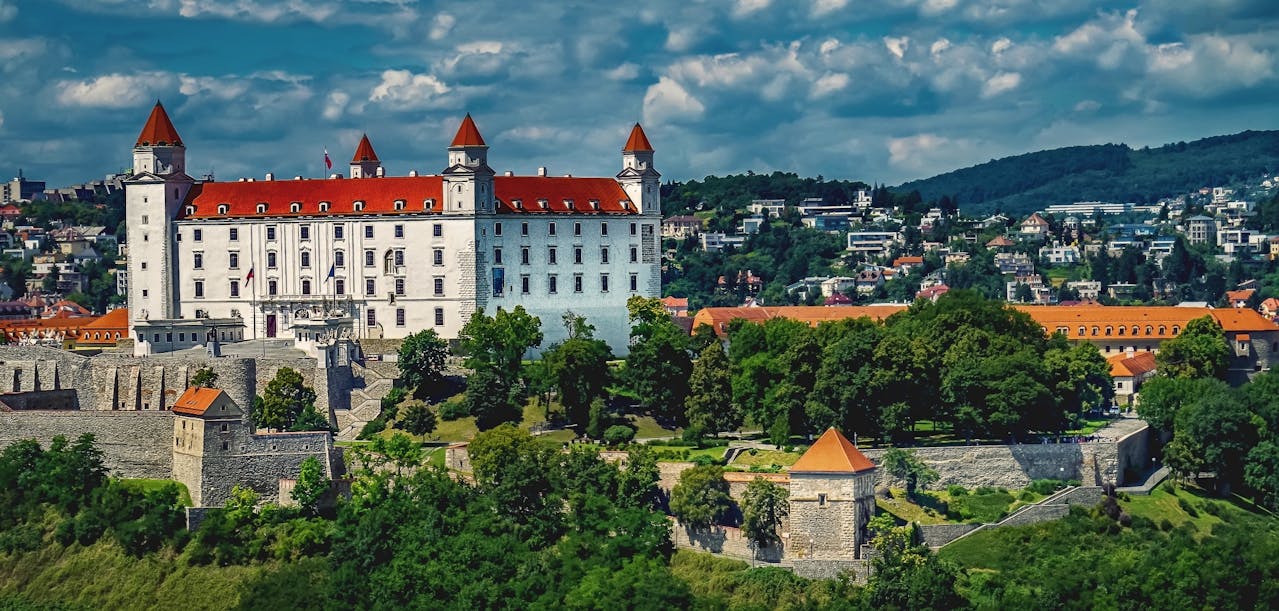
Slovakia sits at the heart of Central Europe, and its rail lines have connected cities, towns, and neighboring countries for nearly two centuries. Whether you’re hopping between Bratislava and Vienna in an hour or traversing the country from west to east, trains in Slovakia offer one of the most practical and affordable ways to travel.
This guide covers everything you need to know about Slovak rail transport—from finding train connections and buying tickets to understanding the zero-fare scheme and navigating delays. You’ll find concrete journey times, specific train designations, and honest assessments of what to expect at train stations across the country.
Quick overview of train travel in Slovakia
Trains represent the backbone of long-distance public transport in the Slovak Republic. The main carrier is ZSSK (Železničná spoločnosť Slovensko), the state-owned passenger operator running most domestic services. Private competitors RegioJet (recognizable by their yellow trains) and Leo Express (black livery) have entered the market on select routes, offering alternatives on busy corridors to Prague, Vienna, and Budapest. For most travelers, ZSSK will be the primary point of contact for domestic journeys.
ŽSR (Železnice Slovenskej republiky) is the state infrastructure manager responsible for tracks, signals, and train stations.
Key facts at a glance:
-
First rail line: 1840 horse-drawn railway from Bratislava to Svätý Jur (extended to Sereď by 1846); first steam line in 1848 connecting Bratislava to Vienna
-
Network length: approximately 3,600 km of track
-
Electrification: about 40% of lines electrified
-
Main hubs: Bratislava hlavná stanica, Košice, Žilina
Is it easy, safe, and cheap?
-
Tickets are inexpensive by Western European standards—domestic journeys often cost under 15 EUR
-
Many EU/EEA citizens travel for free on ZSSK: children under 15, students under 26, and seniors over 62 qualify
-
Trains are generally safe, including late-evening services
-
English is not always widely spoken at smaller stations, but digital tools make planning straightforward
The railway network in Slovakia
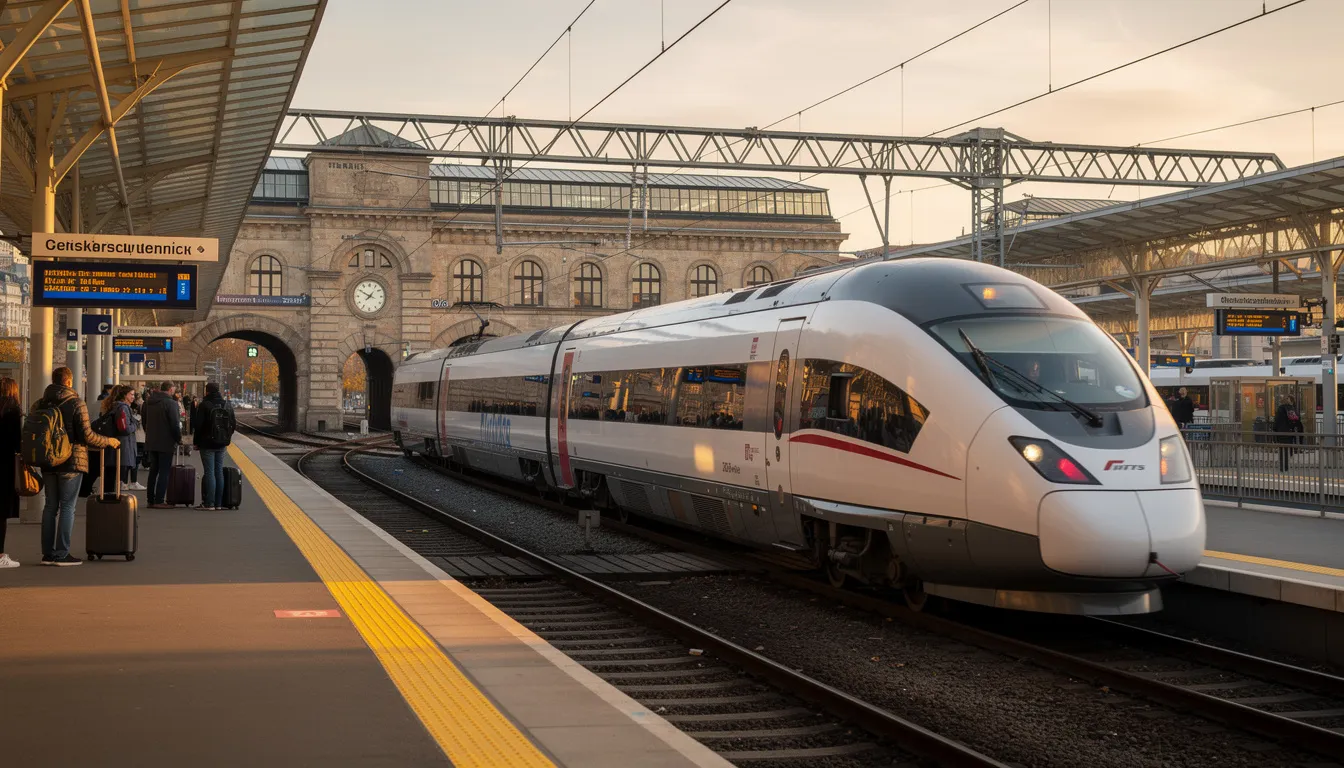
Slovakia’s railway network inherited much of its structure from the former Czechoslovakia and, before that, the Austro-Hungarian Empire. The Košice-Bohumín Railway, completed in 1872, remains a crucial artery linking eastern and western regions—it was the only truly efficient line the First Czechoslovak Republic inherited in 1918. On January 1, 1993, the Slovak Republic became an independent country, and Železnice Slovenskej Republiky (ŽSR) was established. Post-independence developments after 1993 focused on consolidation and EU integration rather than wholesale reconstruction. During this period, significant actions were taken by the government and railway authorities to modernize and integrate the network, with particular intensity during key phases of EU accession and infrastructure investment.
Železnice Slovenskej republiky (ŽSR), established in 1993, serves as the state infrastructure manager responsible for tracks, signals, and train stations. ZSSK, created in 2005 when passenger operations split from ŽSR, runs the majority of domestic services. Private operators RegioJet and Leo Express compete on selected international routes and a handful of domestic lines.
Main corridors and connections:
-
East-west backbone: Bratislava – Trnava – Trenčín – Žilina – Poprad-Tatry – Košice. This route forms the spine of the network, carrying IC trains and most long-distance traffic.
-
Southern route to Hungary: Bratislava – Nové Zámky – Štúrovo, crossing the border toward Budapest.
-
Northern routes: Žilina – Čadca toward the Czech Republic and Poland; Košice – Prešov – Kysak toward Ukraine (via Čierna nad Tisou / Čop).
International connections:
Daily EuroCity (EC) and Railjet trains link Bratislava to Vienna, Prague, Budapest, and Kraków. These services operated by ÖBB, Czech Railways, and MÁV provide comfortable connections to neighboring countries and beyond. The crossing at Čierna nad Tisou offers access to Ukraine, though service frequency varies.
Infrastructure notes:
-
Main corridors use a mix of 25 kV AC and 3 kV DC electrification
-
Modernization projects have upgraded parts of the Bratislava–Žilina line to 160 km/h
-
Many secondary lines remain single-track and non-electrified, limiting speed and capacity
Types of trains and main operators
Slovakia has several types of trains, including regular and high-speed trains. Different train categories in Slovakia vary significantly in speed, comfort, and reservation rules. Understanding these distinctions helps you choose the right service for your journey.
ZSSK train categories:
-
Os (osobný vlak): All-stops local trains serving smaller towns and rural areas. These are the workhorses of the network—slower but essential for regional connectivity.
-
R / REX (rychlík / regional express): Faster services linking regional centers with fewer stops. The REX designation typically indicates a slightly higher comfort level.
-
IC (InterCity): Premium category running between Bratislava and Košice, often branded with numbers like IC 520 or IC 521. Mandatory seat reservations apply, and journey times are the shortest on domestic routes. Intercity trains offer air-conditioned cars and special compartments for women and families.
EuroCity (EC): The EuroCity bullet train serves international routes, including connections to Denmark, and offers multiple travel classes.
Private operators:
-
RegioJet: Yellow trains operating on the Bratislava – Dunajská Streda – Komárno domestic route and international services to Prague, Vienna, and Budapest. RegioJet trains provide a wide network of domestic and international connections with amenities like free Wi-Fi and power sockets, and are known for onboard service including free drinks and newspapers.
-
Leo Express: Black trains on the Prague – Ostrava – Žilina – Košice corridor. Sometimes uses buses for route extensions where rail connections are limited.
OBB trains: OBB trains connect Slovakia with Austria and offer various travel classes and onboard amenities. The OBB Railjet Xpress is one of the fastest trains in Slovakia, capable of reaching speeds up to 230 km/h (143 mph).
Rolling stock examples:
-
Older compartment coaches still appear on some Os and R services
-
ZSSK Class 671 double-decker EMUs operate around Bratislava for suburban traffic
-
Class 660/661 “Panter” EMUs serve western and central Slovakia with modern, air-conditioned interiors
Comfort features:
-
Wi-Fi available on most IC, EC, Railjet, and RegioJet services
-
Air-conditioning standard on newer stock
-
1st class offers more spacious seating, often with at-seat power outlets
Trains in Slovakia are generally modern, safe, and comfortable, providing a pleasant travel experience.
Fastest and most notable trains in Slovakia
Slovakia does not have dedicated high-speed rail infrastructure, but several fast international services pass through Slovak territory, and domestic ICs offer respectable journey times for a country this size.
Fastest international services:
ÖBB Railjet and Railjet Xpress trains (e.g., RJX 66 / RJX 67) on the Bratislava – Vienna route represent the quickest way to cross the border. These trains are capable of 230 km/h in Austria, though they operate at lower speeds within Slovakia due to infrastructure limitations. Journey time from Bratislava-Petržalka to Wien Hauptbahnhof sits around 1 hour for the roughly 60 km distance.
Key domestic corridor:
The Bratislava – Žilina – Košice backbone carries named IC trains like IC 520 “Kráľovná” (Queen). Typical journey time from Bratislava to Košice runs about 4 hours 30 minutes to 5 hours, depending on the specific train and number of stops.
Concrete journey examples:
-
Bratislava – Vienna: ~1 hour by Railjet (approximately 60 km)
-
Bratislava – Prague: ~4 hours by EuroCity via Břeclav
-
Košice – Prague: ~8 hours by daytime EC or night train
-
Bratislava – Budapest: ~2.5 hours by EuroCity via Štúrovo
Scenic routes worth considering:
Even if speed isn’t the priority, certain routes offer remarkable scenery. The “Telgárt loop” in central Slovakia features dramatic curves and tunnels through mountainous terrain. The Tatra Electric Railway (TEŽ) between Poprad-Tatry, Starý Smokovec, and Štrbské Pleso climbs into the High Tatras on a narrow-gauge line—a must for travelers seeking alpine views from a train window.
How to find train connections and buy tickets
Online planners and apps
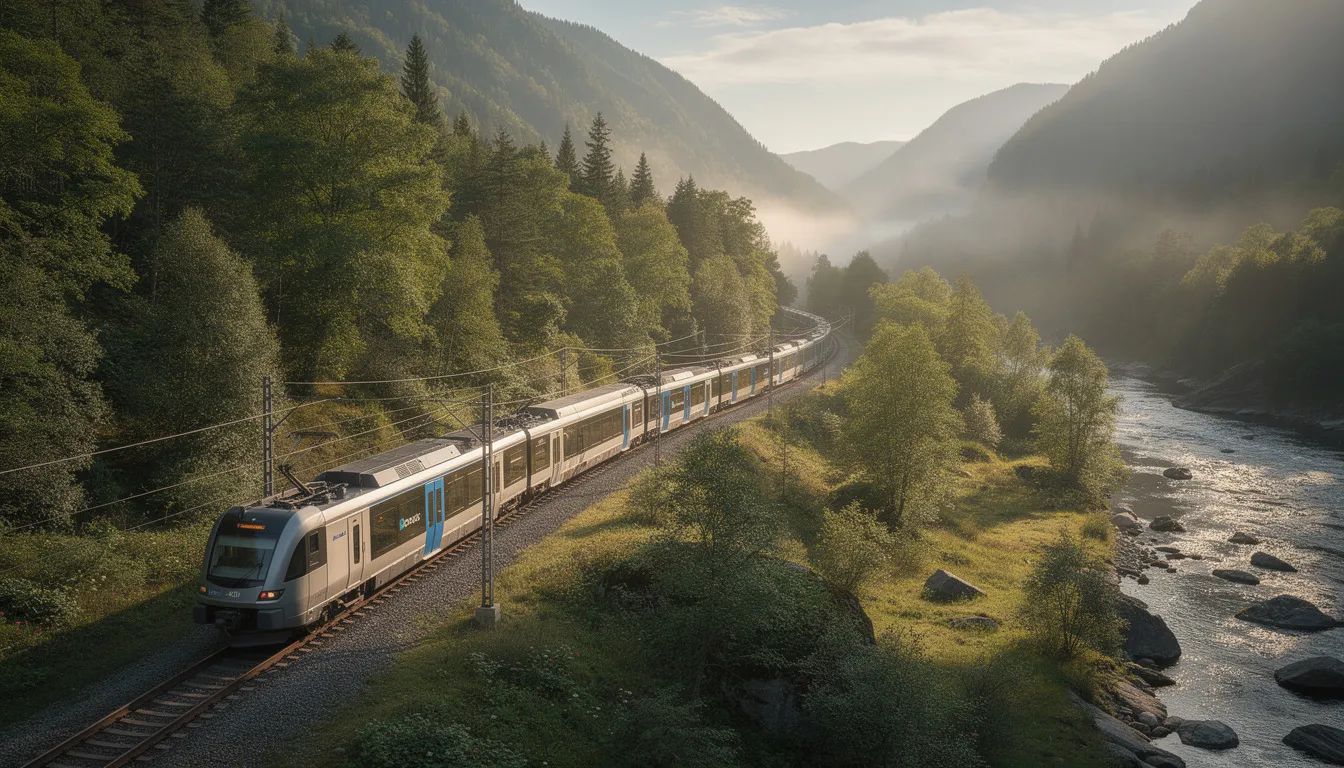
While station staff may not always speak English, digital tools make planning and booking straightforward. A few minutes with the right apps or websites will give you complete itineraries with prices and platform information.
-
cp.sk (IDOS/cp-online): The most comprehensive search tool for combined rail and bus itineraries across Slovakia and neighboring countries. The planner helps travelers choose the optimal means of public transportation, including trains and buses, making it easier to plan efficient routes.
-
ZSSK journey planner (www.zssk.sk): Official site for schedules, prices, and e-ticket purchases
-
Ideme vlakom app (Android/iOS): ZSSK’s mobile app for searching connections, buying train tickets, and storing e-tickets
Where to buy tickets
-
Station ticket offices (pokladňa): Available at staffed stations; useful for complex itineraries or if you prefer paper tickets
-
Ticket machines: Self-service kiosks at major train stations (Bratislava hl. st., Košice, Žilina, and others) accept cards and cash
-
Onboard purchase: Conductors can sell tickets, though a surcharge may apply if you boarded at a staffed station without purchasing in advance
-
Online/app: E-tickets via ZSSK website or Ideme vlakom app—convenient and often the cheapest option. Eligible passengers can also register and obtain their zero-fare transport cards online via the internet.
Advance booking
-
Domestic tickets can usually be purchased 60 days ahead
-
IC trains and international EC/Railjet services often open booking 60–90 days in advance
-
Early booking discounts may apply on some international routes and private operators
Third-party platforms
Sites like Omio or Trainline cater to international travelers and offer multi-country searches, but they typically charge higher fees than booking directly through ZSSK or ÖBB. For the best price, book directly when possible.
Seat reservations and zero-fare travel
Reservation rules
Many Slovak trains do not require reservations, but popular routes and peak times can get crowded. Travel patterns are heavily influenced by students traveling to and from schools, especially on weekends and holidays, making these periods particularly busy. Understanding when a seat booking makes sense—and who qualifies for free travel—can save both money and hassle.
-
Mandatory: IC trains on the Bratislava–Košice corridor and most Railjet/EC international services require reservations
-
Recommended: Busy R and Os services on Friday afternoons and Sunday evenings, especially on routes to university cities like Košice, Prešov, and Banská Bystrica
What is a “miestenka”?
A miestenka is a seat reservation. When buying a ticket online or at the counter, you can add a reservation for around 1–2 EUR per seat domestically. On IC trains, the reservation fee is often included in the ticket price.
Practical tip: Without a reservation on peak-time trains—particularly Sunday evening Košice–Bratislava student services—passengers may stand for hours. If your travel dates are fixed, book early.
Zero-fare travel scheme
Since 2014, Slovakia has offered free train travel on ZSSK for eligible passengers:
-
Children under 15 years of age
-
Students under 26 with valid EU/EEA student status
-
Seniors over 62 with EU/EEA residence
Students in Slovakia can receive discounts of up to 70% on train journeys. Discounts on ZSSK trains are also available for eligible EU residents under 26 or over 62, but these discounts do not apply to IC and EC trains.
How to access zero-fare tickets
You’ll need to obtain a ZSSK customer card in advance. This can be done at a station ticket office or online through the ZSSK website. Present this card when booking free tickets.
Limitations to know
-
Zero-fare applies only to ZSSK standard categories (Os and R) within Slovakia
-
IC trains and private operators (RegioJet, Leo Express) are not included
-
Free tickets cover travel to the last Slovak station before the border; an EC supplement of approximately 1 EUR may apply for certain cross-border services
-
International journeys abroad require separate ticketing
ZSSK also operates overnight night trains (EN/NightJet), providing various seating and sleeping car options for longer journeys.
Punctuality, delays, and what to expect at stations
Common delay sources
Delays of 10–30 minutes are fairly common on Slovak railways, particularly on long-distance routes crossing busy junctions. Setting realistic expectations and knowing how to adapt will make your journey smoother. Some travelers have reported that station employees can be unfriendly or lack professionalism, which may affect customer service, especially for tourists. This highlights the need for better staff training and improved service at some stations.
-
Late platform announcements at medium-sized stations like Žilina or Poprad-Tatry
-
Sudden track changes, often announced only in Slovak
-
Delays propagating from Czech or Austrian connecting trains, especially on international EC services
-
Single-track sections causing knock-on effects across the network
Practical tips for navigating delays
-
Arrive at your station early, especially for international connections
-
Watch departure boards (look for “odchody” = departures)
-
Listen for announcements, though these may be Slovak-only at smaller stations
-
Use apps like Ideme vlakom, ÖBB Scotty, or Czech IDOS for live delay information
Station infrastructure examples
-
Bratislava hlavná stanica: The main station features an older building with several small kiosks, luggage storage (approximately 3–5 EUR per item per day), and limited seating. Facilities are basic but functional.
-
Bratislava-Petržalka: A modern but compact station focused on cross-border trains to Vienna. Clean and efficient, with fewer amenities than the main station.
-
Košice: Recently renovated concourse with shops, ATMs, and left-luggage options. One of the more comfortable waiting environments in the country.
Available services
-
Free Wi-Fi at many larger stations
-
Drinking fountains on some Bratislava platforms
-
Lockers and manned luggage storage vary by station—check ahead if you need to store bags for a day trip
Train station facilities in Slovakia
You’ll find Slovak train stations work pretty hard to keep your journey smooth, whether you’re hustling through Bratislava or catching a connection in some quiet countryside spot. Take Bratislava hlavná stanica and Bratislava-Petržalka – these spots pack in everything you need. Scan the concourses and you’ll spot convenience stores where you can grab energy bars, decent coffee, or even a proper meal before your train rolls in. Tuck your extra bags into the storage lockers while you explore the city or kill time between connections – it’s one less thing to worry about.
Free Wi-Fi’s becoming standard at the bigger hubs, so you can check schedules, map out your next move, or text home without burning through your data. But here’s the thing – facilities shift dramatically depending on where you land. Those smaller stations in rural areas? They’ll give you shelter and a bench, maybe clear signage to point you in the right direction, but don’t count on much else. No café, no storage, sometimes not even a vending machine.
If you’re planning a Slovak rail adventure, do yourself a favor and scout ahead. Check what each station offers, especially if you need luggage storage or want to stock up on snacks. A quick search can save you from standing around hungry at some remote platform. No matter where you start, Slovak stations aim to get you where you’re going with minimal fuss – just manage your expectations based on the size of the dot on your map.
Popular routes: Vienna–Bratislava and domestic highlights
Most international visitors first experience Slovak railways via the Vienna–Bratislava corridor—one of the shortest and most frequent cross-border connections in Europe.
Vienna – Bratislava by rail:
-
Route: Wien Hauptbahnhof – Bratislava-Petržalka via ÖBB Railjet or regional trains
-
Journey time: Approximately 1 hour
-
Frequency: At least hourly during daytime hours
-
Typical fare: 10–20 EUR for 2nd class, depending on ticket type and advance purchase
Connecting onward from Petržalka:
Most Vienna trains terminate at Bratislava-Petržalka rather than the main station. From there, city bus 93 connects to Bratislava hlavná stanica in about 15–20 minutes. Buy bus tickets at red ticket machines on the platform or via mobile apps like IDS BK.
Alternative route via Marchegg:
Regional trains from Vienna via Marchegg arrive directly at Bratislava hlavná stanica. This option is slightly slower but avoids the bus transfer if you need the main station.
Key domestic routes:
-
Bratislava – Banská Bystrica: Via Zvolen, offering access to central Slovakia’s historic mining region
-
Košice – Poprad-Tatry – Žilina: The gateway to the High Tatras, with stunning mountain views
-
Tatra Electric Railway (TEŽ): Narrow-gauge network connecting Poprad-Tatry, Starý Smokovec, and Štrbské Pleso—a scenic hop through alpine territory
Planning multi-modal journeys:
Use Google Maps or local planners (cp.sk, imhd.sk for Bratislava public transport) to combine rail with trams and buses when planning day trips. The integration between modes works reasonably well in urban areas. The development of rail transport in Slovakia has provided a strong alternative to car travel, reducing reliance on cars for long-distance journeys.
Exploring smaller towns by train
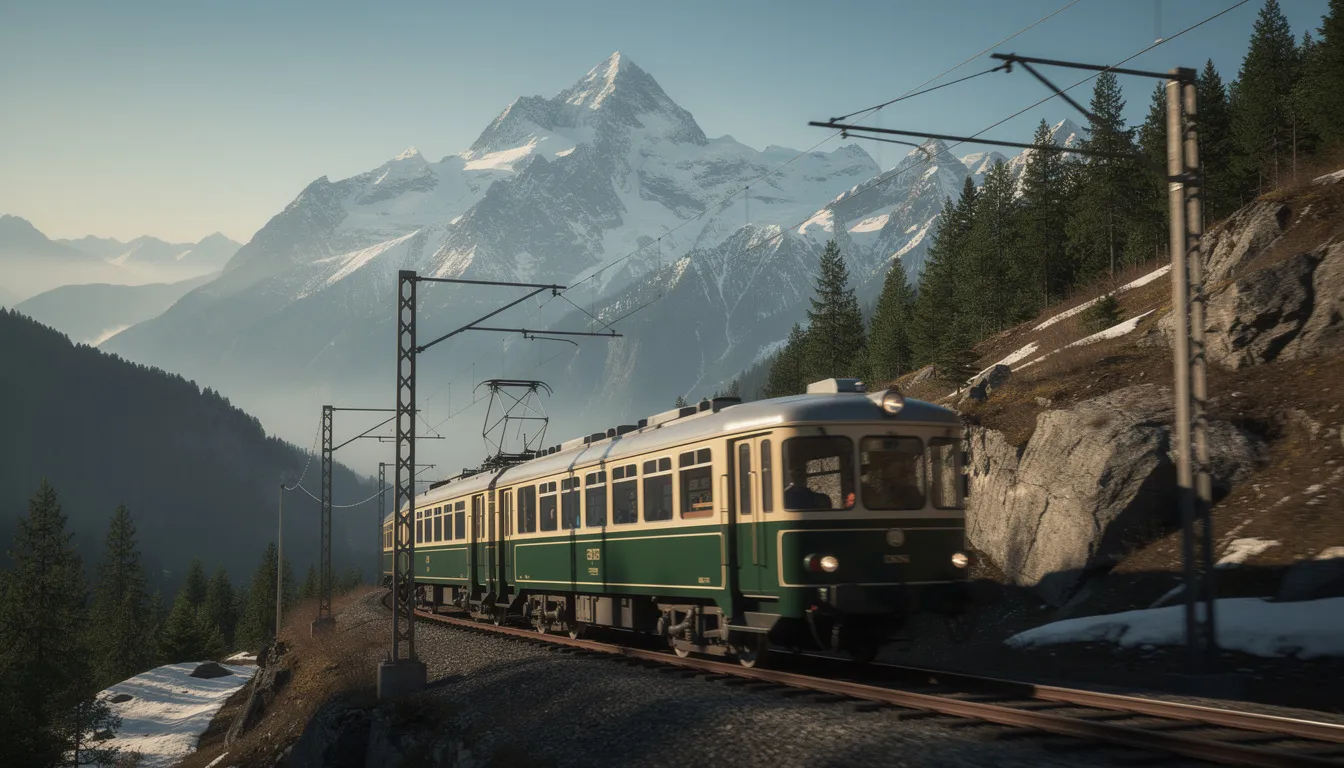
Slovakia’s railway network is your ticket to the country’s best-kept secrets. You’ll glide through towns like Žilina, Poprad, and Levoča – places that’ll show you what Slovakia’s really about. The trains snake through valleys and forests, past mountain peaks that’ll make you forget you’re actually getting somewhere. It’s travel that doubles as sightseeing, and honestly, that’s a win you don’t get with a rental car stuck in traffic.
Let’s talk planning – it’s simpler than you think. Slovak Railways’ website and app are your new best friends here. You can scope out schedules, lock in the smartest routes, and snag your tickets before you even pack. Pro tip: check for discounts while you’re at it. Need to compare connections across the network? Rail Ninja’s got your back for mapping out those multi-stop adventures.
Here’s the thing – whether you’re a student watching every euro, a senior who values comfort over chaos, or just someone who wants to see authentic Slovakia, trains make sense. You skip the stress of unfamiliar roads and parking nightmares. Plus, you’ll actually talk to locals, taste regional food, and catch those small-town moments that make a trip memorable. Book easily, travel comfortably, explore endlessly – Slovakia’s railways don’t just connect destinations, they connect you to experiences you can’t get any other way.
Tips for foreign travelers using trains in Slovakia
Language and signage
Traveling by train in Slovakia is straightforward once you know a few basics. These practical tips address language barriers, ticket checks, and onboard etiquette.
-
Announcements at major hubs often include English, but smaller stations may use only Slovak
-
Learn key words: “odchod” (departure), “príchod” (arrival), “nástupište” (platform)
-
Station signage typically uses standard international pictograms for toilets, exits, and services
Tickets and inspections
-
Always validate printed tickets where required (some station machines stamp tickets; e-tickets don’t need validation)
-
Keep e-tickets accessible on your phone—conductors (sprievodca) typically check shortly after departure
-
If you board without a ticket at an unstaffed station, find the conductor immediately to avoid penalties
Safety and comfort
-
Trains are generally safe, including late-evening services on main lines
-
Standard precautions apply: keep valuables close, don’t leave luggage unattended in corridors
-
Most newer trains have secure luggage racks near seating areas
Seasonal crowding
-
Fridays and Sundays during university term (September–June) are especially busy
-
Routes to Košice, Banská Bystrica, and Prešov fill with students—book seats early on those days
-
Summer weekends see increased traffic to High Tatras destinations
Accessibility
-
Many newer EMUs and major stations offer step-free access and accessible toilets
-
Some older rural stations still have low platforms and no lifts
-
If mobility is limited, contact ZSSK in advance to arrange assistance
Brief history and future of rail transport in Slovakia
Historical milestones
Slovakia’s rail network represents nearly 185 years of development, from horse-drawn wagons to modern electrified lines. Understanding this evolution helps explain both the network’s strengths and its ongoing challenges.
-
1840: The horse-drawn railway from Bratislava to Svätý Jur opened on October 4—the first rail line on Slovak territory. Extensions reached Trnava by 1846 and Sereď by December of that year.
-
1848: The first steam-powered train arrived from Vienna to Bratislava on August 20, marking the beginning of the steam era in the region.
-
1872: Completion of the Košice-Bohumín Railway, which became the backbone of the network and remains crucial today.
-
1889: Introduction of the zone tariff system by Hungarian Interior Minister Gábor Baross slashed fares and dramatically increased both passenger and goods transport.
-
1993: Following Slovak independence, Železnice Slovenskej republiky (ŽSR) was established to manage the inherited network.
Post-2000 reforms
The separation of infrastructure (ŽSR) and passenger operations (ZSSK) in 2005 followed EU requirements for rail liberalization. Private operators entered the market: RegioJet began domestic services on the Bratislava–Komárno route in 2011, and Leo Express launched Prague–Košice services in the mid-2010s.
International freight developments
Slovakia’s geographic position makes it a potential hub for east-west freight. A 2017 trial container train from Dalian (China) to Bratislava via Russia and Ukraine demonstrated this potential. The broad-gauge terminal at Dobrá in eastern Slovakia handles traffic from Ukraine without requiring gauge changes.
Planned and ongoing projects
-
Further electrification and speed upgrades on TEN-T corridors
-
Improved connections with the Czech Republic, Austria, Hungary, and Poland
-
Discussions about extending broad-gauge rail from Ukraine toward Bratislava for freight
Slovakia’s railways have come a long way from the 14-kilometer horse line that opened in 1840. Today, the network offers affordable, comfortable travel across the country and connections throughout Europe. As modernization continues and private operators expand their services, train travel in Slovakia is positioned to become an even more attractive option for both natives and visitors exploring Central Europe.
Whether you’re taking a quick hop from Vienna or embarking on a journey across the entire country, Slovak railways deliver on their promise of practical, accessible transport. Download the Ideme vlakom app, check the ZSSK website for zero-fare eligibility, and start planning your trip.