



Latvia’s compact rail network offers travelers an affordable, comfortable way to explore this Baltic gem. Centered on Riga, the country’s train services connect the capital with historic cities, coastal resorts, and charming countryside towns. Whether you’re a tourist looking to escape to the beaches of Jūrmala or a local commuting between cities, the rail system provides a reliable alternative to bus and car travel. For more details about train routes, schedules, fares, and booking procedures, see the sections below.
This guide covers everything you need to know about train travel in Latvia—from buying tickets and understanding the route network to navigating Riga Central Station and looking ahead to the transformative Rail Baltica project.
Overview of train travel in Latvia
Latvia has a compact, affordable rail network centered on Riga, making it useful for both visitors and locals alike. The network is operated mainly by Pasažieru vilciens (PV) for passenger services, running on infrastructure managed by Latvijas dzelzceļš (LDz), the state railway company (also known as Latvian Railways). The total length of Latvia’s railway lines is approximately 1,860 kilometers.
Domestic routes link Riga with major cities like Daugavpils, Liepāja, Jelgava, Valmiera, and Sigulda. While Ventspils isn’t directly connected by rail, bus connections fill the gap. Passenger trains are generally reliable, inexpensive, and offer a scenic way to see the Latvian countryside and coastal areas like Jūrmala’s famous beaches.
Why travel Latvia by train?
-
Comfort: Modern electric trains on suburban lines offer a smooth, quiet ride
-
Cost: Fares are distance-based and remarkably affordable compared to Western Europe
-
Scenery: Routes pass through forests, farmland, and along the Baltic coast
-
Simplicity: Most services depart from one central hub, making navigation easy
Latvian rail system and main operators
Latvijas dzelzceļš (LDz), also known as Latvian Railways, founded on 2 September 1991, manages Latvia’s public railway infrastructure and is 100% owned by the Latvian state via the Ministry of Transport. This company handles everything behind the scenes—track maintenance, station management, signalling systems, freight infrastructure, and electricity distribution for electrified lines.
Pasažieru vilciens, often shortened to “PV,” operates nearly all domestic passenger trains in the country. The current fleet includes both electric multiple units on suburban routes and diesel units for longer-distance services. PV focuses primarily on suburban connections around Riga and longer-distance routes to cities like Daugavpils, Rēzekne, and Liepāja.
Understanding the division of responsibilities helps when you need information or assistance:
|
Organization |
Role |
|---|---|
|
Latvijas dzelzceļš (LDz) |
Infrastructure: tracks, stations, signals, freight |
|
Pasažieru vilciens (PV) |
Passenger train operations, ticketing, schedules |
This structure means that when you search for train schedules or purchase tickets, you’ll typically interact with PV’s website and services, while LDz works behind the scenes to keep the network running.
Brief history of trains in Latvia
Latvia’s railway history stretches back over 160 years, shaped by the country’s strategic Baltic location and changing political circumstances.
The Russian Empire Era (1860–1918)
The first railway line on Latvian territory opened in 1860, running from Pytalovo to Daugavpils as part of the St. Petersburg–Warsaw Railway. The independent Riga–Daugavpils line followed in 1861, a 232 km route that established Riga as a vital transit hub. By 1880, the network had expanded to roughly 800 km, including connections to Jelgava, Tukums, and coastal ports. The Moscow–Ventspils line, completed by 1904, improved access between inland Russia and Baltic ports, cementing Latvia’s role in imperial trade.
Independence and Interwar Period (1919–1940)
Following independence after the war, the newly formed Latvian State Railways undertook extensive reconstruction. The interwar period saw remarkable modernization—introducing the Nord Express international service to Berlin and Paris in 1923, and installing Europe’s first electrical interlocking safety device at Riga passenger station in 1925. Over two decades, war-devastated lines were transformed into one of Europe’s most extensive regional networks.
Soviet Era and Modern Independence
Soviet occupation after World War II restructured the system as a subsidiary of the USSR Ministry of Transport, prioritizing freight over passengers. In 1963, Latvia’s railways merged with those of Estonia and Lithuania into Baltic Railways. Following independence in 1991, the network reverted to state control under AS “Latvijas Dzelzceļš,” beginning a gradual process of modernization that continues today.
Key dates in Latvian railway history:
-
1861: Riga–Daugavpils line opens
-
1904: Moscow–Ventspils line completed
-
1919: Latvian State Railways established post-war
-
1991: LDz founded after independence
-
1993: Restructured as a joint-stock company
Main railway routes and destinations
Almost all domestic train services start from Riga Central Station, fanning out in several directions across the country. The network offers a mix of suburban commuter lines and longer-distance routes to regional cities. The total length of Latvia’s main railway lines is approximately 1,860 kilometers, highlighting the extensive reach of trains in Latvia.
Main routes from Riga:
-
Riga–Daugavpils–Rēzekne: Connects to the Latgale region in eastern Latvia, passing through historic towns
-
Riga–Jelgava–Liepāja: Runs southwest to the west coast port city of Liepāja
-
Riga–Sigulda–Valmiera–Lugaži: Heads northeast towards Valga/Valka on the Estonian border
-
Riga–Aizkraukle: Follows the Daugava River valley southeast
-
Riga–Ogre: Popular suburban route east of Riga
-
Riga–Tukums: Western suburban line serving Jūrmala resort towns
-
Riga–Skulte: Coastal route northeast along the Gulf of Riga
Trains link Riga with many Latvian towns, including Daugavpils, Krustpils, Lugaži, Tukums, and Jelgava.
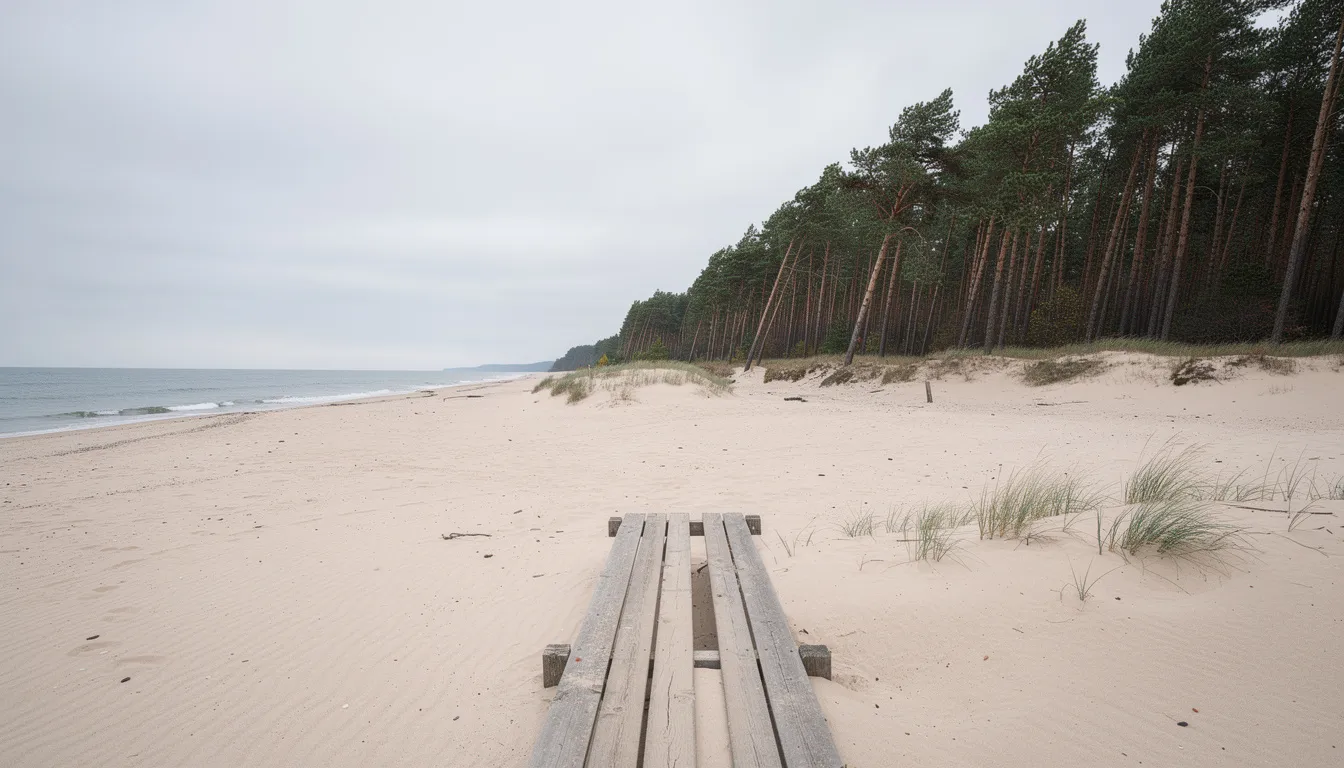
The Riga–Jūrmala journey deserves special mention. Served via the Riga–Tukums line, trains stop at resort towns like Majori and Dzintari, making it perfect for day trips to the Baltic Sea beaches. Trains from Riga to Jūrmala run every 30-60 minutes and the journey takes approximately 30 minutes. This route is particularly busy on sunny summer weekends when passengers flock to the coast.
Service frequency varies significantly. Suburban routes around Riga see multiple trains per hour during peak times, while longer-distance lines to Daugavpils or Liepāja may have only a few trains per day. Always check train schedules before planning your journey.
Train tickets, fares and passes
Purchasing train tickets in Latvia is straightforward, with several options available depending on your preference.
Most tickets can be bought at stations through ticket offices or vending machines, online via the Pasažieru vilciens website or mobile app, or sometimes directly on board—though expect a surcharge for onboard purchases. Domestic fares are distance-based and remarkably affordable. For example, a one-way trip from Riga to Majori in Jūrmala typically costs just a few euros.
There’s no widely used dedicated “Latvia Pass” for domestic travel similar to national rail passes in larger countries. Instead, discount programs exist for students, seniors, people with disabilities, and children according to Latvian law.
International travelers may use broader rail passes like the Eurail Global Pass or Interrail Global Pass to cover cross-border legs that include Latvia. However, you should verify route availability and current operational status, as not all services accept these passes.
Key points about buying tickets:
-
Where to buy: Station ticket offices, vending machines, PV website/app, or on board
-
Prices: Distance-based; budget just a few euros for short trips
-
Validation: Some tickets require validation before boarding—check your ticket type
-
Surcharges: Buying on board may cost extra; purchase in advance when possible
-
Discount eligibility: Students, seniors, children, and travelers with disabilities qualify for reduced fares
Reservations and classes on Latvian trains
Most domestic trains in Latvia do not require seat reservations and operate as open-seating services. You simply board, find an available seat, and enjoy the journey.
The rolling stock is relatively simple compared to Western European train types. Domestic services run in 2nd class only—there are no luxury compartments or first-class carriages on standard routes. Trains are heated in winter and often feature basic onboard information displays showing upcoming stops.
Exceptions where reservations may apply include occasional long-distance or international routes when operating, or special services. In the past, night trains between Riga and Moscow or St Petersburg required reservations, though these services have been suspended.
What to expect:
-
No reservation needed on most domestic lines
-
Mostly 2nd class only—comfortable but basic
-
Open seating on suburban and regional services
-
Check specific route information for any reservation requirements on international connections through Estonia, Lithuania, or Poland
Riga Central Station (Rīga Centrālā stacija)
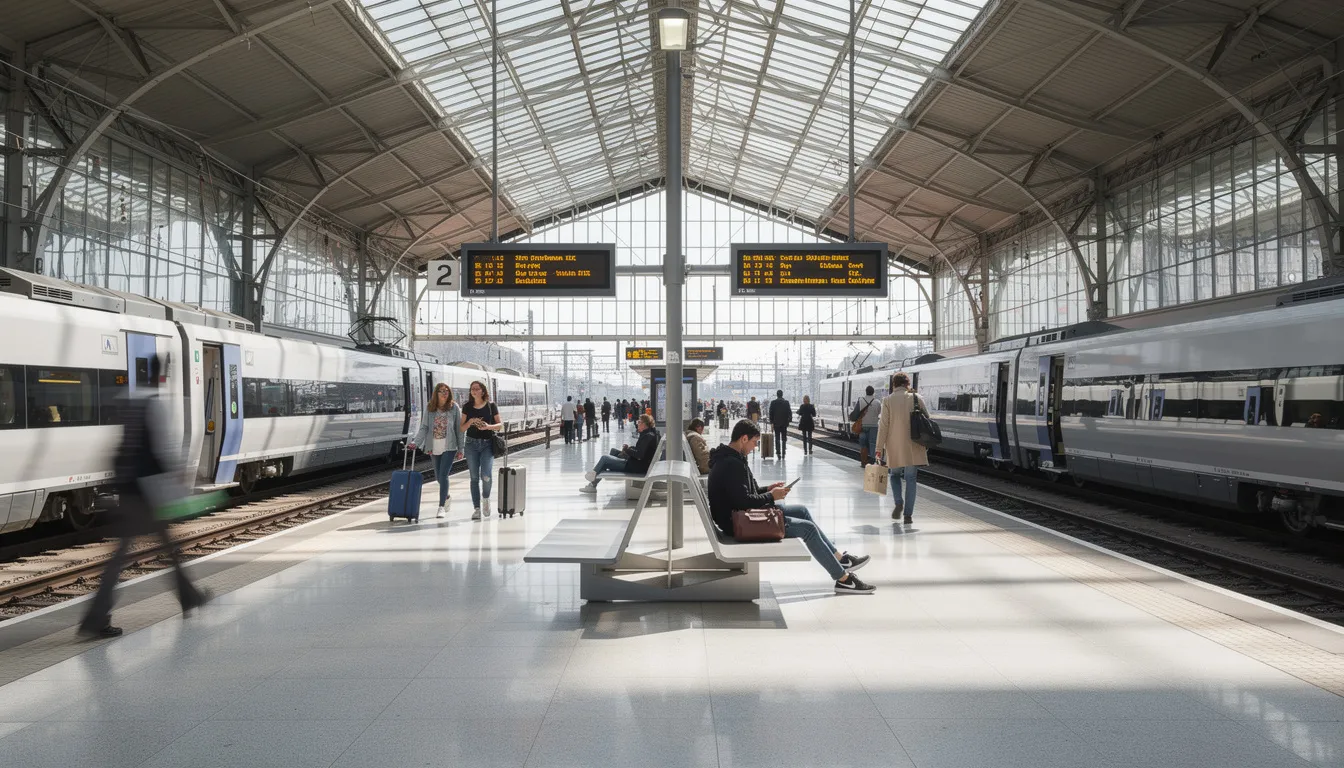
Riga Central Station serves as the main railway hub of Latvia, located at the edge of the Old Town (Vecrīga) and integrated with a major shopping center. Nearly all domestic trains originate or terminate here, making it the essential starting point for rail journeys in the country.
The station offers a range of services to make your journey comfortable. Finding your platform is straightforward, with clear signage and departure boards. The building connects directly to local buses and trams just outside, making onward travel into the city center or to other destinations easy.
Facilities at Riga Central Station:
-
Ticket offices and self-service ticket machines
-
Luggage lockers for day-trippers
-
Waiting areas with seating
-
Food outlets and shops within the connected mall
-
Access to public transport (buses, trams)
-
Customer Service Centre phone: +371 67232135 (typically open daily 7:00–19:00; verify current hours before visiting)
Note: Arriving 10–15 minutes before your departure gives you enough time to find the correct platform, especially during busy periods.
International train connections from Latvia
Latvia historically enjoyed direct train connections from Riga to Moscow, St Petersburg, and Minsk, with onward links towards Warsaw and further into Central Europe via Lithuania. The capital was well connected to destinations across the former Soviet space. International routes from Latvia link to Lithuania and Estonia, with operators like LTG Link and Elron.
The current reality is quite different. All international passenger services from Latvia were suspended in March 2020 due to the coronavirus pandemic. Since then, regular passenger services to Russia and Belarus have been suspended due to COVID-19 and later geopolitical factors stemming from the war in Ukraine. Services to Ukraine were not restarted following the pandemic due to the Russian invasion of Ukraine in 2022. The comfortable and safe daily sleeper train from Riga to Moscow, known as the Latvijas Express, was also suspended due to sanctions and the war in Ukraine. The train from Riga to St Petersburg was suspended due to Covid-19 and remains suspended due to sanctions. The date of any resumption remains uncertain, and travelers should accept that these routes are currently unavailable.
Cross-border travel to Estonia and Lithuania now typically involves a combination of trains and bus services. Rail connections exist near Valga/Valka on the Estonian border, where the Estonian train operator Elron serves the other side. Travel from Latvia to Estonia requires a change of train at the border station in Valga, and travel to Lithuania requires a change at Daugavpils. The direction toward Lithuania via Daugavpils offers some rail connectivity, though bus connections are often more practical. A comfortable daily train links Riga to Vilnius, and fares start at €9.60. In 2025, a daily direct train operated by LTG Link will connect Vilnius and Riga, departing at 7:05 AM. In early 2025, a new service will connect Riga to Tallinn via Valga.
Travelers aiming for wider European destinations like Tallinn, Vilnius, Warsaw, or Berlin usually combine Latvian domestic trains with buses or international trains from neighboring Baltic countries. From Vilnius, connections run toward Poland and onwards to Germany, while ferry options from Stockholm, Denmark, Norway, and Sweden provide alternative routes to the Nordic capitals.
Before planning any international rail trip from Latvia, always check current timetables and political constraints. The situation with connections to Russia and Belarus may change, and services remain suspended until further notice.
Future developments: electrification and Rail Baltica
Latvia is modernizing its rail network through two major initiatives: electrification upgrades and the transformational Rail Baltica project.
Existing electrified suburban lines around Riga—including routes to Tukums, Aizkraukle, Jelgava, and Skulte—are being upgraded with new 25 kV AC systems and modern rolling stock. These improvements will enhance comfort, reduce emissions, and improve reliability on the busiest commuter routes. Over the past few years, investment has accelerated, signaling a commitment to rail modernization.
Rail Baltica represents the most significant change to Latvia’s rail infrastructure since independence. This new standard-gauge (1,435 mm) high-speed line will link Tallinn–Riga–Panevėžys–Kaunas–Warsaw, designed for passenger trains at speeds up to around 249 km/h and high-capacity freight services. The project addresses a fundamental limitation: Latvia’s inherited 1,520 mm Russian broad gauge is incompatible with the rest of Europe, isolating the Baltic countries from seamless rail connections westward.
The Riga Central hub and a separate Riga Airport station are key elements of Rail Baltica in Latvia. Phased construction is expected through the late 2020s and early 2030s, with initial segments potentially operational by 2028–2030.
What Rail Baltica means for travelers:
-
Direct high-speed connections to Tallinn, Vilnius, and Warsaw
-
Journey times dramatically reduced (e.g., Riga–Tallinn in under 2 hours)
-
New Riga Airport rail station for convenient air-rail transfers
-
Integration with European rail network via standard gauge
-
Potential Eurail/Interrail pass coverage for seamless travel

Practical tips for traveling by train in Latvia
A few simple preparations will make your rail journey in Latvia smooth and stress-free.
Before you travel:
-
Arrive at the station 10–15 minutes before departure, especially at Riga Central Station, to locate the correct platform
-
Note your train number and destination in advance—station announcements and information boards are usually in Latvian, with some English
-
Use online timetable tools (official PV website or public transport portals) to check up-to-date schedules and any planned engineering works
-
Save your ticket to your phone or print it to avoid any error at validation
Seasonal considerations:
-
In winter, trains are heated and can be more crowded at commuter times
-
In summer, coastal trains to Jūrmala and Saulkrasti get busy on sunny weekends—travel early to save seats
-
Check for any service changes around public holidays when schedules may be reduced
On board:
-
Most trains don’t have a business class or reserved seating—board early for the best seat options
-
Keep your ticket accessible as conductors may check during the journey
-
Luggage space is limited; travel light when possible
Managing your itinerary:
-
Allow buffer time when making connections, especially if combining trains with bus or ferry services
-
International ferries from Riga to Stockholm run regularly if you’re exploring Scandinavia as part of a broader map of Baltic and Nordic countries
-
Check which train connections currently operate—some routes were suspended and may not yet have resumed
Whether you’re a first-time visitor or a seasoned traveler exploring the Baltic countries, Latvia’s trains offer an authentic, affordable way to experience the country beyond Riga. With Rail Baltica on the horizon and ongoing modernization, the Latvian rail network is poised for an exciting transformation in the coming years.
Start planning your journey by visiting the Pasažieru vilciens website for current schedules and prices. A day trip to Jūrmala’s beaches or an adventure to historic Daugavpils awaits—all just a train ride away.